
Billing vs invoicing: what UK small businesses need to know
Learn the difference between billing and invoicing, including when to send both and some tips to manage payments.


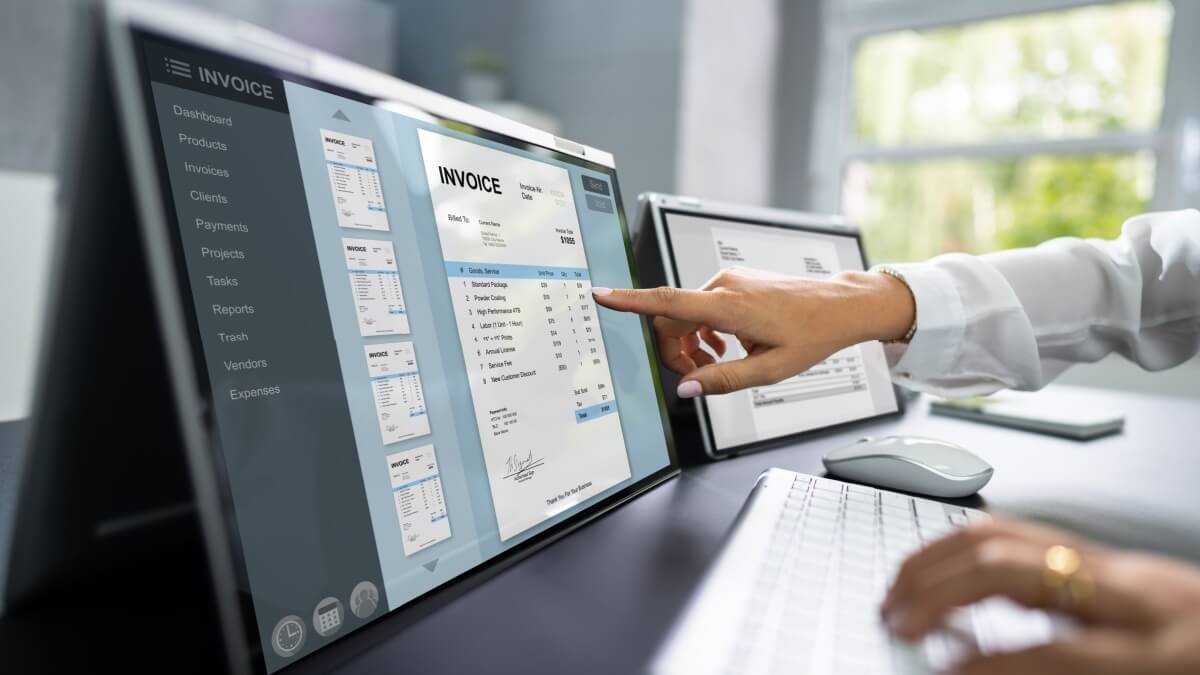
Missed payments, unpaid invoices sitting unnoticed in a spreadsheet, and no clear picture of what money is coming in are all real, everyday problems for UK freelancers and small business owners.
Research shows that 62% of small businesses in the UK have been owed money from unpaid invoices.1 And according to separate research, 50% of small businesses are paid late, costing an estimated £1.6 billion in 2023 alone.2 Disorganised invoicing is not just stressful. It directly threatens your cash flow and your ability to plan.
The good news is that with the right system, tracking invoices and payments does not need to be complicated or time-consuming. By the end of this article, you will know which methods work best for your business, how to stay on top of outstanding payments, and how to handle the added complexity of international transactions.
Opening a Wise Business account can help you manage invoices and payments all in one place. And, allow your business to accept payments in USD, EUR, GBP and other major currencies with no hidden fees.
💡 Learn more about Wise Business
At its core, tracking invoices and payments means knowing at any moment what you have issued, what has been paid, and what is still outstanding. A good system does four things: it creates invoices, records them, tracks their status, and reconciles what comes in against what was expected.
Without this, income can slip through the cracks. An invoice sent but forgotten. A payment received but not matched to the correct job. A late payer who simply never gets chased because there is no reminder in place.
Accuracy and timeliness matter for two reasons. First, your cash flow depends on knowing what money is due and when. Second, HMRC requires UK businesses to keep accurate financial records.3 If your records are disorganised, tax returns become far harder and errors become more likely.
The right tracking system does not need to be expensive or complex. It does need to be consistent.
A spreadsheet is the most accessible starting point. It costs nothing, works offline, and you can set it up in under an hour.
At minimum, your invoice tracker should include the following columns:
Here is a simple example of how a row might look:
| Invoice no. | Client | Date issued | Due date | Amount | Status | Payment date | Notes |
|---|---|---|---|---|---|---|---|
| INV-001 | Acme Ltd | 01/04/2025 | 01/05/2025 | £1,500 | Paid | 28/04/2025 | — |
| INV-002 | Beta Co | 10/04/2025 | 10/05/2025 | £800 | Overdue | — | Reminder sent |
Pros: Free, flexible, no learning curve.
Cons: Manual entry is prone to errors. There are no automatic reminders, no integration with your bank, and no built-in reporting. As your client list grows, spreadsheets become harder to manage.
You can include payment details, such as bank account details or a link to your Wise Business payment page in a notes column so clients have everything they need to pay promptly.
Accounting software automates much of what a spreadsheet requires you to do manually. It can generate invoices from templates, send payment reminders automatically, reconcile incoming payments against outstanding invoices, and produce reports at the click of a button.
For UK businesses, popular options include Xero, QuickBooks, FreeAgent, and FreshBooks — all of which are Making Tax Digital (MTD) compliant.4 This matters because VAT-registered businesses above the threshold are required to keep digital records and file returns digitally using HMRC-approved software.4
The main trade-off is cost. Most accounting software starts from around £8 to £20 per month. Whether that is a worthwhile investment depends on the volume of invoices you handle and how much time you currently spend on manual tracking. For most growing businesses, the time saved quickly justifies the cost.
One significant advantage for businesses is that Wise Business integrates directly with Xero, QuickBooks, FreeAgent, and FreshBooks. Learn how to sync accounting software with your Wise Business account to automate data flow and make reconciliation across multiple currencies far simpler.
💡 Learn more about Wise Business
Dedicated invoicing tools sit between spreadsheets and full accounting software. They focus specifically on creating, sending, and tracking invoices, without the wider bookkeeping and reporting functions of a full accounting platform.
Tools in this category typically offer customisable invoice templates, automated payment reminders, online payment options, and a dashboard showing what is outstanding. They tend to be cheaper than full accounting software and easier to set up.
The limitation is that they do not replace a full financial record-keeping system. If you also need to track expenses, prepare VAT returns, or manage payroll, you will likely need to combine a dedicated invoicing tool with additional software.
Some invoicing tools allow you to link directly to payment options — including adding Wise Business account details to invoices so international clients can pay in their local currency.
| 💡 Compare the: best accounting software options for UK businesses and top invoicing software options for UK small businesses |
|---|
Late payments are a major operational threat to UK small businesses. Research indicates that 50% of small businesses are paid late.2 When invoices go untracked, late payments go unnoticed — and the knock-on effect is a shortfall in cash that can prevent you from paying your own suppliers, meeting payroll, or investing in growth.
Tracking gives you visibility. You can see at a glance which invoices are overdue, act quickly on late payers, and predict cash inflows with greater confidence. For UK businesses, standard B2B payment terms generally range from Net 30 to Net 60. Knowing when each invoice is due means you can plan your outgoings around expected income rather than reacting after the fact. Read our guide on UK invoice payment terms for more detail on what to include.
HMRC requires all UK businesses to keep accurate financial records, and the standard for what counts as accurate is clearly defined. Limited companies must keep records for at least six years from the end of the last financial year they relate to. Self-employed individuals and sole traders must retain them for at least five years after the 31 January Self Assessment deadline for the relevant tax year.
Your invoice records form a core part of these requirements. If you are VAT-registered, accurate records are also essential for your VAT returns. Making Tax Digital is already in force for VAT-registered businesses above the registration threshold, with further rollouts planned.4 Using digital tracking systems now puts you in the best position for compliance.
Poor record-keeping can result in penalties from HMRC and complications during any compliance check. Getting your system right from the start is far less costly than fixing problems later.
| 💡 See our: complete guide to invoicing mangement |
|---|
Good tracking data gives you more than just the ability to chase payments. It gives you insight into your business.
Which clients pay on time? Which consistently pay late? Which services generate the most revenue? Are certain months consistently slow? These are questions that a well-maintained invoice and payment tracker can answer. Over time, this data helps you make better decisions; whether that means adjusting your payment terms with specific clients, dropping unprofitable work, or identifying where to focus your growth efforts.
Most accounting software includes reporting functions that make this analysis straightforward. Even a well-maintained spreadsheet can surface useful patterns if you keep it consistently updated.
If your invoice does not state when payment is due, the default under UK law is 30 days for B2B transactions.5 But even when businesses include a due date, vague or inconsistently applied terms create confusion. Clients may not know whether they are being charged late fees, what payment methods are accepted, or what happens if they raise a dispute.
Set your payment terms before work begins, include them clearly on every invoice, and apply them consistently. This reduces disputes and makes it much easier to chase overdue invoices without ambiguity. Read our guide on payment terms on UK invoices for practical examples.
An invoice sent and then ignored is an invoice that often goes unpaid. A simple reminder before the due date — and another shortly after if payment has not arrived — significantly improves your chances of being paid on time.
Most accounting software automates this. If you are using a spreadsheet, set calendar reminders to follow up manually. For sole traders and freelancers managing their own books, a quick and polite nudge is usually all it takes to prompt payment. Learn more about how to invoice as a freelancer in the UK.
If a client still does not pay after reminders, UK law gives you the right to charge statutory interest on overdue B2B invoices. This is currently set at 8% above the Bank of England base rate.6 You can also claim reasonable debt recovery costs under the same legislation.
If you work with clients outside the UK, tracking gets more complicated. Exchange rates change daily. A payment received in EUR or USD will arrive as a different GBP amount depending on when it is processed and which provider handles the conversion. Hidden fees charged by traditional banks can also mean the amount that arrives in your account is different to what you invoiced.
This creates real challenges for reconciliation. Your records may show you expected £1,200 from a €1,400 invoice, but the amount received differs because of conversion costs applied mid-transaction.
To manage this accurately:
| 💡 See the: Best multi-currency invoicing software |
|---|
Wise Business is a powerful tool to manage incoming and outgoing payments, here's some of the ways it can benefit you:
For UK freelancers and businesses with domestic and international clients, invoicing in the client's currency reduces friction and speeds up payment. Wise Business lets you receive payments in 40+ currencies40+
currencies, with local account details in currencies including GBP, EUR, USD, and more (only with Wise Business Advanced).
You can add these account details directly to your invoices, so overseas clients can pay as if they are making a local transfer. This removes the hassle of international wire transfers on their side and reduces the likelihood of delays caused by currency conversion intermediaries.
Traditional banks often apply significant margins to currency conversion and charge fixed fees on international transfers. These costs are not always transparent until after the money has moved, making it difficult to reconcile what you invoiced against what you received.
Wise Business uses the mid-market exchange rate with low, clearly stated fees. You know exactly what you will receive before confirming a transaction. This makes it much easier to record the correct figures in your books and maintain accurate payment records.
Wise Business provides a consolidated transaction history across all currencies held in your account. You can download account statements and match incoming payments to outstanding invoices. Because Wise Business connects directly with accounting software including Xero, QuickBooks, FreeAgent, and FreshBooks, transactions can sync automatically, reducing the manual steps needed to keep your records up to date.
This is particularly useful for businesses managing payments across multiple currencies, where manual reconciliation would otherwise be time-consuming and error-prone. To explore Wise Business for your payment tracking needs, visit Wise Business.

With Wise Business, you can:
Make the wise choice when selecting a business account for all your domestic and global needs.
Be Smart, Get Wise.
Investments can fluctuate, and your capital is at risk. Interest is offered by Wise Assets UK Ltd, a subsidiary of Wise Payments Ltd. Wise Assets UK Ltd is authorised and regulated by the Financial Conduct Authority with registration number 839689. When facilitating access to Wise investment products, Wise Payments Ltd acts as an Introducer Appointed Representative of Wise Assets UK Ltd. Please be aware that we do not offer investment advice, and you may be liable for taxes on any earnings. If you're uncertain, we urge you to seek professional advice. To find out more about the Funds, visit our website.
Set clear payment terms before starting any work, and include them on every invoice. Send your invoice promptly on completion, delays in invoicing lead directly to delays in payment. Offer multiple payment methods where possible, and use automatic reminders to follow up on overdue invoices without the admin burden. For international clients, offering payment in their local currency via a multi-currency account can also speed up settlement significantly.
Several options offer free entry-level plans, including Zoho Books, which allows up to 1,000 invoices per year on its free plan. For very simple needs, a well-structured spreadsheet combined with a cost-effective payment solution can be a strong starting point. The right choice depends on the volume of invoices you handle, whether you are VAT-registered, and how much automation you need.
Not necessarily. A structured spreadsheet is a valid starting point, particularly for freelancers or very small businesses with a limited number of clients. That said, accounting software offers real advantages: automation, MTD compliance, bank reconciliation, and reporting. For most businesses growing beyond a handful of clients, the efficiency gains quickly outweigh the monthly cost. The key is to have any system, and to use it consistently.
*Disclaimer: The UK Wise Business pricing structure is changing with effect from 26/11/2025 date. Receiving money, direct debits and getting paid features are not available with the Essential Plan which you can open for free. Pay a one-time set up fee of £50 to unlock Advanced features including account details to receive payments in 22+ currencies or 8+ currencies for non-swift payments. You’ll also get access to our invoice generating tool, payment links, QR codes and the ability to set up direct debits all within one account. Please check our website for the latest pricing information.
Sources:
Sources last checked: 13/05/2026
*Please see terms of use and product availability for your region or visit Wise fees and pricing for the most up to date pricing and fee information.
This publication is provided for general information purposes and does not constitute legal, tax or other professional advice from Wise Payments Limited or its subsidiaries and its affiliates, and it is not intended as a substitute for obtaining advice from a financial advisor or any other professional.
We make no representations, warranties or guarantees, whether expressed or implied, that the content in the publication is accurate, complete or up to date.
Learn the difference between billing and invoicing, including when to send both and some tips to manage payments.

Learn how to manage global payment processing for UK businesses. Our guide covers costs, risks, compliance and Wise Business UK tools for growth and scale.

Read this roundup of the best multi-currency invoicing software in 2026 for UK businesses, including Xero, QuickBooks, Sage, FreeAgent and more.
Learn a few quick tips to improve and maintain accounting accuracy, from choosing the right software, managing FX and more.
An essential guide to sending bulk payments internationally as a UK business, including best providers, fees, and steps to send your first bulk transfer.
Learn how invoicing management works, how to optimise it, and how Wise Business can help you streamline international payments.











