
Guide to sending bulk payments internationally
An essential guide to sending bulk payments internationally as a UK business, including best providers, fees, and steps to send your first bulk transfer.



Accurate financial records are the foundation of any well-run business. When your accounts are wrong, the consequences can be serious. Poor decisions, unexpected tax bills, and potential penalties from HMRC are some troubles that can tag along.
So how do you actually maintain accounting accuracy?
It comes down to building reliable systems, sticking to clear habits, and using tools that reduce manual errors. This guide covers the core principles of accurate bookkeeping, practical steps to implement them in the UK, and how to handle the added complexity of international transactions.
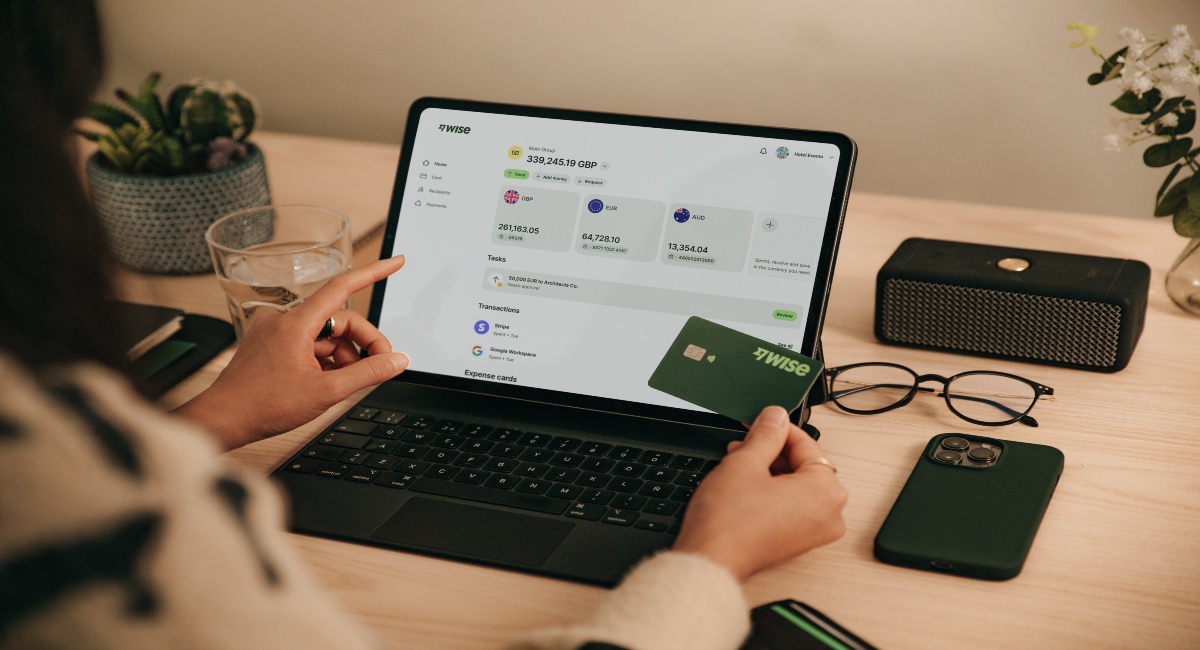
If you operate across borders, having the right financial setup is even more important. Platforms like Wise Business can simplify multi-currency management and international payments. Using this platform makes it easier to keep your records clean and consistent from the start.
💡 Learn more about Wise Business
Reliable accounts give you a clear picture of how your business is performing. Without them, it is difficult to judge whether a product line is profitable. It gets harder to determine where costs are rising or whether you have enough cash to cover your next set of expenses. Poor records also make it harder to plan ahead or apply for funding.
In the UK, accurate records are also a legal requirement.
HMRC expects all businesses to maintain clear financial records. Company directors who fail to keep adequate accounting records can be fined up to £3,000 and, in serious cases, face disqualification.1 Limited companies are generally required to keep records for at least six years from the end of the last financial year they relate to.1 Self-employed individuals and sole traders must retain records for at least five years after the 31 January Self Assessment deadline for the relevant tax year.2
Beyond compliance, well-kept accounts strengthen your position when approaching lenders or investors. They help you meet your VAT obligations accurately and form the basis for any serious business planning. Making Tax Digital (MTD) has also raised the bar. VAT-registered businesses above the VAT threshold must already keep digital records and submit returns using HMRC-recognised software, with further digital requirements on the horizon.3
Building accounting accuracy starts with a small number of habits applied consistently every day.
Mixing personal and business money is one of the most common mistakes made by small business owners and sole traders. It's also one of the easiest ways to lose clarity. When funds are combined, tracking income and expenses becomes far less accurate.
It can lead to complications when preparing your VAT return or Self Assessment tax return.4 The simplest solution is to open a dedicated business account and use it exclusively for business transactions. This creates a clean, auditable record of every financial event tied to your business.
Every financial event should be recorded as soon as it occurs, or as close to the time as possible. Leaving entries until the end of the month increases the risk of missing transactions or of entering incorrect details from memory.
Each transaction should include the date, amount, payee or sender, a brief description, and the correct category. HMRC requires businesses to retain original receipts and invoices to support the figures reported in tax returns, so keeping these alongside your records is important.5
A chart of accounts is the structured list of categories you use to classify every transaction. Common categories include revenue, cost of sales, operating expenses, assets, and liabilities. Getting categorisation right matters because it directly shapes the accuracy of your profit and loss statement, your balance sheet, and your tax calculations.
Miscategorising a capital purchase as a day-to-day expense, for example, can distort your taxable profit and lead to the wrong tax outcome. If you are unsure how to categorise a transaction, reviewing HMRC's guidance on what counts as an allowable expense is a helpful starting point.
Even the best principles fall short without practical systems that make consistency easy to maintain.
Bank reconciliation is the process of comparing your accounting records against your actual account statements to check that every entry matches. It is one of the most reliable ways to catch errors before they multiply.
Monthly reconciliation is standard practice for most businesses. If you process a high volume of transactions, reconciling weekly provides a more updated view and makes it easier to spot discrepancies early. Common issues to watch for include missing entries, duplicate records, and timing differences. These often occur when a payment has cleared your account but has not yet been recorded.
Every transaction in your accounts should have a supporting document. This includes an invoice, a receipt, a bank statement, or a written agreement. Organised documentation means you can resolve any queries quickly and reduce the risk of gaps during tax preparation or a compliance review.
Cloud accounting software and simple document management tools can help you store everything in one accessible place. HMRC accepts digital copies of receipts and invoices, so keeping physical documents is not always necessary, provided the digital version is clear and legible.7
Accounting software reduces manual errors, saves time, and produces financial reports quickly. Popular UK-compliant options include Xero, QuickBooks, FreeAgent, and Sage. All support Making Tax Digital, which is HMRC's requirement for VAT-registered businesses to keep digital records and file returns digitally.6
When choosing software, weigh the cost against the features you need now and may need later. Also consider how intuitive it is to use and how well it connects with other tools your business relies on.
Compare UK accounting software options to find the right fit for your size and sector.
Wise Business integrates directly with Xero, QuickBooks, FreeAgent, FreshBooks, and other popular platforms. Your international transactions can sync automatically into your accounting records, reducing manual data entry and helping keep your books up to date. Find out how to connect your accounting software with Wise Business to streamline this process.
💡 Learn more about the Wise Business account
International transactions add a layer of complexity that domestic-only businesses do not face. If your business pays overseas suppliers, receives income in foreign currencies, or works with contractors abroad, additional accuracy challenges may arise.
For instance, currency conversion is one of the most common sources of error. Exchange rates change daily, and using an outdated rate or relying on a manual calculation can produce figures that do not match what was actually left or entered into your account. Hidden fees charged by some payment providers can also mean the amount you record differs from the amount actually transferred.
Besides this, reconciliation becomes more complicated when multiple currencies are involved. A payment made in euros needs to be recorded in pounds at the correct rate, and that amount must correspond to what moved through your account.
To manage this accurately:
Wise Business can help reduce these risks. It uses the mid-market exchange rate and charges low, transparent fees for international transfers. Since it connects with major accounting platforms, transaction data can flow directly into your records. This reduces the manual steps needed to reconcile cross-border payments. You can send money to over 140+ countries and hold 40+ currencies in one account.
Even with good systems in place, certain habits can quietly undermine the quality of your records over time.
Reviewing your accounts only at year-end means small errors can go undetected for months. For example, a single miscategorised transaction in January can distort every financial report until it is found. Setting aside time each month to review your records helps you catch problems early and maintain a reliable view of your financial position throughout the year.
Manual data entry carries a higher risk of error than automated processes. A transposed digit or a row copied from the wrong line in a spreadsheet can create discrepancies that take time to find and correct. Where possible, connect your accounts and accounting software so transactions are imported automatically rather than typed in by hand.
As a business grows, more people start handling its financial transactions. Without clear controls in place, the risk of both error and fraud increases. Segregation of duties is one of the most effective controls available. So, the person who approves a payment should not be the same person who records it in the books. Clear approval processes and a second pair of eyes on financial entries can catch mistakes that might otherwise go unnoticed.
Fatigue, insufficient training, and unclear procedures all contribute to accounting errors. If your team is unsure how to categorise certain transactions or what documentation to retain, mistakes will happen. Regular training and clearly written procedures reduce this risk significantly and help maintain consistency across your accounts.
Accounting accuracy is not a one-off task. It requires consistent habits, the right tools, and regular checks applied throughout the year.
The key steps are clear: keep business and personal finances separate, record every transaction promptly, and apply categorisation correctly. Regular reconciliation and well-organised supporting documents help ensure your records remain accurate and reliable. If you trade internationally, give extra attention to how you record currency conversions and fees, as these are a common and overlooked source of error.
Wise Business is a multi-currency account designed to help UK businesses manage finances with greater clarity and control.
With Wise Business, you can:
Make the wise choice when selecting a business account for all your domestic and global needs.
Be Smart, Get Wise.
Investments can fluctuate, and your capital is at risk. Interest is offered by Wise Assets UK Ltd, a subsidiary of Wise Payments Ltd. Wise Assets UK Ltd is authorised and regulated by the Financial Conduct Authority with registration number 839689. When facilitating access to Wise investment products, Wise Payments Ltd acts as an Introducer Appointed Representative of Wise Assets UK Ltd. Please be aware that we do not offer investment advice, and you may be liable for taxes on any earnings. If you're uncertain, we urge you to seek professional advice. To find out more about the Funds, visit our website.
Monthly reconciliation is standard practice for most businesses. If your transaction volume is high or your operations are complex, reconciling weekly provides a more up-to-date picture. Eventually, it gets easier to catch and resolve discrepancies before they grow.
Bookkeeping is the process of recording individual financial transactions as they happen. Accounting takes this information further, summarising, analysing, and reporting on it to produce financial statements and help inform business decisions. Accurate bookkeeping is what makes reliable accounting possible.
Accounting software is not a legal requirement for sole traders, but it is strongly recommended. It helps you track income and expenses accurately, makes preparing your Self Assessment return easier, and reduces the risk of errors compared to manual record-keeping. If you are VAT-registered above the VAT threshold, you will also need MTD-compatible software.3
Sources used:
Sources last checked: 19th May 2026
*Please see terms of use and product availability for your region or visit Wise fees and pricing for the most up to date pricing and fee information.
This publication is provided for general information purposes and does not constitute legal, tax or other professional advice from Wise Payments Limited or its subsidiaries and its affiliates, and it is not intended as a substitute for obtaining advice from a financial advisor or any other professional.
We make no representations, warranties or guarantees, whether expressed or implied, that the content in the publication is accurate, complete or up to date.

An essential guide to sending bulk payments internationally as a UK business, including best providers, fees, and steps to send your first bulk transfer.
Learn how invoicing management works, how to optimise it, and how Wise Business can help you streamline international payments.

Learn what the payment approval process is. And, top tips to streamline it to maximise efficiency and reduce errors.

Learn how the payment authorisation process works from start to finish, and what happens behind the scenes in seconds.

Struggling with vendor payment chaos? Learn how to streamline approvals, payments, and manage vendors without the usual headaches.

Learn what payment runs are, how they work, and how to process them efficiently to keep payments accurate and on time.











