
7 Ways to Streamline Payment Approval Processes
Learn what the payment approval process is. And, top tips to streamline it to maximise efficiency and reduce errors.



If your vendor payments feel chaotic, it's not because you're doing something wrong. It's because the process rarely works as neatly as it should. What starts as a simple “pay the invoice on time” quickly turns into mismatched invoices, approval bottlenecks, and wondering where a cross-border payment got stuck.
And the moment you start paying suppliers internationally, that complexity ramps up fast.
This guide covers seven practical ways to improve vendor payments, from automating your accounts payable process to choosing the right payment methods. If you're dealing with global vendors, solutions like Wise Business can simplify things further with multi-currency accounts, batch payments, and transparent fees. This can make cross-border B2B payments feel a lot closer to local ones.
💡 Learn more about Wise Business
A vendor payment is any transfer of funds from a business to a supplier in exchange for goods or services. It is the final step in the purchase-to-pay cycle. The vendor delivers, sends an invoice, and the business settles it.
That sounds simple. In practice, vendor payments involve invoice validation, internal approvals, payment scheduling, and reconciliation. Each step tags along with its own potential for delay.
When done well, a vendor payment system keeps cash flow predictable, supplier relationships healthy, and financial records accurate. But, if done poorly, it can lead to late fees, strained partnerships, and hours lost to manual admin.
Most businesses follow a similar sequence, whether they handle five vendors or five hundred. The steps they typically follow are:
The vendor sends an invoice after delivering goods or services. This might arrive by email, post, or through a supplier portal. The accounts payable (AP) team logs the details, such as vendor name, amount, payment terms, and purchase order number.
The AP team checks the invoice against the original purchase order and any delivery receipts. This two- or three-way matching confirms the business received what it ordered and that the amounts line up.
After validation, the invoice moves through an approval workflow. Depending on the amount, this might require sign-off from a department head, finance manager, or both. Note that larger payments often trigger additional review.
Approved invoices are batched into payment runs. The finance team selects the payment method (bank transfer, card, or electronic payment). Next, it schedules the transaction to align with cash flow and agreed payment terms.
After payment (reconciliation), the transaction is recorded in the accounting system. Credits, discounts, and partial payments are applied. The books are updated, and finally, the invoice is closed.
| 💡 Read more about: invoicing in the UK) |
|---|
A QuickBooks survey found that 73% of businesses are negatively affected by late vendor payments.1 Most of those delays are preventable. Listed below are seven ways to tighten up the process.
Manual data entry is slow and error-prone. AP automation tools use optical character recognition (OCR) to extract invoice details, match them against purchase orders, and route them for approval. All of it happens without someone re-keying numbers into a spreadsheet.
More than half of AP professionals now spend fewer than 10 hours per week on invoice processing, thanks to automation.2 That is the time freed up for work that actually moves the business forward.
Contracts, banking details, tax forms, and payment history should be under the same roof. A centralised vendor payment system reduces the constant back-and-forth between teams. This can speed up onboarding for new suppliers and make audits far less painful.
Ambiguity causes delays. Agree on payment deadlines, accepted methods, invoicing formats, and late payment penalties before any work begins. In the UK, businesses can charge statutory interest of 8% plus the Bank of England base rate on overdue B2B invoices.3 This is a detail worth including in your terms.
Paper cheques are still hanging on in some industries, but they are slow, expensive, and difficult to track. Electronic payments, whether BACS, Faster Payments, SEPA, or international wire transfers, are quicker, more traceable, and easier to reconcile.
And, if you're a business paying international vendors, the choice of payment rail matters. Using local payout networks instead of traditional correspondent banking can reduce fees and speed up settlement. Wise Business uses local rails wherever possible. This helps payments arrive faster and with fewer intermediary charges.
Define who approves what, and at which thresholds. A clear approval matrix removes guesswork and prevents invoices from sitting in someone's inbox for days. Automated payment workflows can accelerate overdue approvals and send reminders, which means you don't need to chase invoices repeatedly. Learn more about the payment approval process.
You cannot fix what you do not measure. Keep an eye on:
Review these monthly. A rising DPO or falling on-time rate signals a bottleneck worth investigating.
Cross-border vendor payments add layers of complexity. Currency conversion, intermediary fees, and unpredictable arrival times are some frequent issues. Holding funds in the vendor's currency and paying out locally can sidestep many of these issues.
Wise Business lets companies hold 40+ currencies and access local account details in 8+. That means a UK business paying a supplier in EUR, USD, or AUD can often avoid the markups and delays that come with traditional international transfers.
The batch payments feature also allows businesses to process up to 1,000 payments in a single transfer. This can be useful for companies managing a large supplier base across multiple countries.
💡 Learn more about Wise Business
Streamlining vendor payments is not just about efficiency. It has a direct impact on the financial health and reputation of a business. Here are some reasons why there should be such a system in place:
When payments are predictable and well-timed, it becomes much easier to forecast outgoing cash. That clarity supports better budgeting and reduces the risk of unexpected shortfalls.
Suppliers notice when they are paid on time, every time. Consistent and reliable payments build trust. This can translate into better pricing. Plus, your business gets priority during supply shortages, and flexible terms become the norm.
Manual processes leave gaps that fraudsters exploit. Duplicate invoices, altered bank details, and business email compromise (BEC) scams are all harder to pull off when payments run through an automated system. The FBI's 2024 Internet Crime Report found that BEC scams accounted for USD 2.77 billion in losses.4
According to Ardent Partners, companies without best-in-class processes and automation spend an average of $12.88 per invoice. It also takes them, on average, around 17.4 days to complete the process. 5. Scale that across hundreds of monthly transactions, and the case for automation quickly becomes hard to ignore.
A structured payment process creates a clear audit trail. That makes it easier to meet tax obligations. Not only that, you can easily respond to auditor queries and stay on the right side of regulations such as HMRC's Making Tax Digital.
| 💡 You may also like our guides on: Accounts Payable transformation, Best ways to pay overseas suppliers and Best payments software |
|---|
A tighter vendor payment process means fewer errors, faster cycles, and healthier supplier relationships. And when those vendors are spread across multiple countries and currencies, the right account makes all the difference.
Wise Business is built for companies that move money internationally. Before every payment, the mid-market exchange rate and the fee are shown separately. This means there are no surprises in the final amount a vendor receives. Behind the scenes, Wise uses local payout rails and in-country accounts wherever possible. These features can reduce unexpected correspondent fees and give clearer arrival estimates for suppliers and partners.
Businesses can hold, send, and receive money in 40+ currencies with local account details in 8+. This means many cross-border B2B payment start to feel more like domestic transactions. There'll be fewer intermediaries and fewer surprises.
On top of that, features like batch payments make a big difference operationally. You'll be paying multiple vendors at once, cutting a task that used to take hours down to just a few minutes. This makes it a great account for domestic payment handling too.
Be Smart, Get Wise.
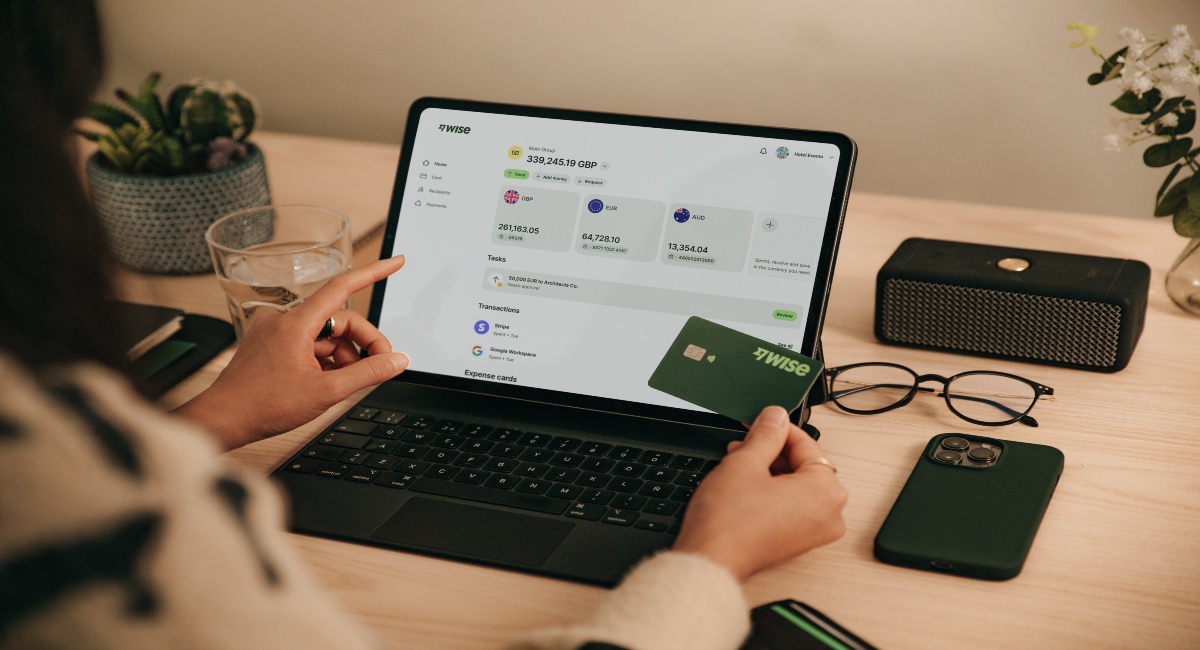
With Wise Business, you can:
Make the wise choice when selecting a business account for all your domestic and global needs.
Be Smart, Get Wise.
Investments can fluctuate, and your capital is at risk. Interest is offered by Wise Assets UK Ltd, a subsidiary of Wise Payments Ltd. Wise Assets UK Ltd is authorised and regulated by the Financial Conduct Authority with registration number 839689. When facilitating access to Wise investment products, Wise Payments Ltd acts as an Introducer Appointed Representative of Wise Assets UK Ltd. Please be aware that we do not offer investment advice, and you may be liable for taxes on any earnings. If you're uncertain, we urge you to seek professional advice. To find out more about the Funds, visit our website.
You can automate vendor payments by following the steps below:
Electronic payments are faster, cheaper, and more traceable than cheques or manual bank transfers. They reduce the risk of lost or delayed payments, simplify reconciliation, and provide confirmation for both parties.
If you want to make cross-border payments, consider electronic methods that use local rails instead of correspondent banking. They can also help to skip intermediary fees.
Look for a platform that covers the essentials without adding complexity. At a minimum, it should offer automated invoice processing, support custom approval workflows, and give you real-time visibility into payments.
If you pay international vendors, multi-currency support and competitive exchange rates should be on top of the list. Security features like role-based access, audit trails, and fraud detection are also essential.
*Disclaimer: The UK Wise Business pricing structure is changing with effect from 26/11/2025 date. Receiving money, direct debits and getting paid features are not available with the Essential Plan which you can open for free. Pay a one-time set up fee of £50 to unlock Advanced features including account details to receive payments in 22+ currencies or 8+ currencies for non-swift payments. You’ll also get access to our invoice generating tool, payment links, QuickPay QR codes and the ability to set up direct debits all within one account. Please check our website for the latest pricing information.
Sources used:
Sources last checked: 18th-May-2026
*Please see terms of use and product availability for your region or visit Wise fees and pricing for the most up to date pricing and fee information.
This publication is provided for general information purposes and does not constitute legal, tax or other professional advice from Wise Payments Limited or its subsidiaries and its affiliates, and it is not intended as a substitute for obtaining advice from a financial advisor or any other professional.
We make no representations, warranties or guarantees, whether expressed or implied, that the content in the publication is accurate, complete or up to date.

Learn what the payment approval process is. And, top tips to streamline it to maximise efficiency and reduce errors.

Learn how the payment authorisation process works from start to finish, and what happens behind the scenes in seconds.

Learn what payment runs are, how they work, and how to process them efficiently to keep payments accurate and on time.

Learn how to improve your invoicing, step-by-step. From automation, supplier relationship tips and more.

Learn about payment settlements, what they mean, and how they impact transactions. Get the essential details for smooth and secure financial transfers.

Learn what Revolut GlobalHire is, how it works, and what businesses should consider before using it for global hiring and payroll.











