
Guide to sending bulk payments internationally
An essential guide to sending bulk payments internationally as a UK business, including best providers, fees, and steps to send your first bulk transfer.



Chasing late payments, fixing data entry mistakes, reconciling invoices across three different spreadsheets… If any of that sounds familiar, your invoicing management process probably needs an overhaul. For UK businesses dealing with suppliers and clients across borders, the complexity only multiplies when different currencies, payment terms, and billing systems enter the picture.
This guide covers what invoice management actually involves, the common challenges that trip businesses up, and practical ways to optimise the whole process. It also explains how Wise Business can simplify bill payment and invoice processing for companies that send, receive, and manage money internationally.
💡 Learn more about Wise Business
Invoice management is the end-to-end process of receiving, verifying, approving, paying, and recording invoices.¹ It covers both accounts receivable (money owed to the business) and accounts payable (money the business owes to suppliers).A solid invoicing management system does more than just track who owes what. It gives finance teams a clear view of cash flow, reduces the risk of errors and fraud, and keeps the business compliant with HMRC requirements.
For smaller businesses, invoice management might fall to the founder or a single bookkeeper. For larger operations, it typically sits within a dedicated accounts payable team. Either way, the goal is the same: pay the right amount, to the right people, at the right time, and keep a clean record of every transaction.
Every business handles invoicing slightly differently, but the core workflow follows a consistent pattern.¹
Invoices arrive through multiple channels, such as email, post, supplier portals, or accounting software. The first step is capturing every single one in a central location so nothing gets lost or overlooked.
Setting up a dedicated email address for invoice submissions helps. So does training the team to recognise and route invoices that arrive through unexpected channels.
Each invoice needs to be checked for accuracy before it moves forward. That means verifying the supplier's details, confirming the amounts match any purchase orders, and checking that VAT calculations are correct.
This is where errors tend to creep in. Duplicate invoices, incorrect pricing, and mismatched line items are all common at this stage, especially when data is entered manually.³
Once validated, the invoice goes to the right person for sign-off. Depending on the amount and type of expense, that could be a department manager, a finance lead, or multiple approvers.
Delays here are one of the biggest bottlenecks in invoice processing. Invoices sitting in email inboxes waiting for approval can push payments past their due dates, triggering late fees and straining supplier relationships.
After approval, the invoice is scheduled for payment. Most UK businesses use electronic methods (BACS, SEPA, or card payments), though some suppliers still request cheques.
Timing matters. Each invoice comes with specific payment terms, whether that is net 30, net 60, or payment on receipt. Under HMRC rules, businesses must pay within 30 days for public authorities and 60 days for B2B transactions.⁴ Missing those deadlines can result in statutory interest charges.
Once paid, the transaction needs to be logged in the accounting system, coded to the correct ledger accounts, and matched against the original invoice. Accurate record-keeping is essential for VAT returns, financial reporting, and audit readiness.²
UK businesses must keep records of all invoices for at least six years, and the new Making Tax Digital (MTD) rules require this is done digitally.⁵ HMRC can request access at any time, so details need to match precisely.
The final component is ongoing monitoring. Tracking metrics like invoice processing time, error rates, and payment timing helps identify bottlenecks and improve the workflow over time.
| 💡 Learn more about: invoice reconciliation, expense tracking and payment approvals |
|---|
Managing invoices sounds straightforward, but in practice it can involve a range of issues that affect cash flow, accuracy, and day-to-day efficiency.
Too much manual data entry is the number one challenge accounts payable teams face, according to research from the Institute of Financial Operations and Leadership (IFOL).⁶ With an average human error rate of 1% to 5% on repetitive tasks, even a small invoice volume can produce dozens of mistakes per month.³
Invoice fraud is a growing concern for UK businesses. Without proper validation controls, fraudulent invoices, from fake suppliers or with altered payment details, can slip through manual processes undetected.² Automated three-way matching (comparing invoices against purchase orders and goods receipts) significantly reduces this risk.
Spreadsheets and email-based approval chains work up to a point. But as invoice volume grows, these tools buckle. Finance teams end up spending more time managing the process than actually managing the business. A 2025 IFOL report found that 63% of finance teams now spend over 10 hours a week on invoice processing alone.⁶ That is time better spent on cash flow forecasting, supplier negotiations, or strategic planning.
Invoices that require multiple sign-offs can stall for days or weeks. When approvers are travelling, on leave, or simply overwhelmed, the entire payment cycle slows down. Late payments damage supplier trust and can trigger penalty charges under UK late payment legislation.⁴
For businesses with international suppliers or clients, invoicing management gets significantly harder. Exchange rate fluctuations, correspondent bank fees, and inconsistent payment rails can all affect the final amount a supplier receives or the amount a business pays.
This is where tools like Wise Business become particularly relevant. Rather than processing international bill payments through traditional banking channels (where hidden markups and intermediary fees are common), Wise Business lets companies send payments to 140+ countries using the mid-market exchange rate* with transparent fees shown upfront.
💡 Learn more about Wise Business
Invoicing, especially at scale, has its challenges, but fortunately, there are strategies you can put in place to help make the process much more manageable.¹
Automation is the single biggest lever for improving invoicing management. Replacing manual data entry with OCR (optical character recognition) and AI-powered capture tools can reduce invoice processing time from an average of 17.4 days to 3.1 days per invoice.³
That frees up the finance team to focus on higher-value work such as analysing spending patterns, negotiating better terms, and planning cash flow, rather than keying in numbers and chasing approvals.
Automated billing systems validate invoice data at the point of capture, flagging duplicates, mismatched amounts, and missing fields before they enter the workflow. AI-driven OCR tools typically achieve 98% to 99% accuracy on invoice data extraction.³
For businesses still relying on manual processes, even small improvements, like standardising invoice formats with suppliers or implementing a simple three-way matching check, can cut error rates significantly.
A centralised invoicing management system gives finance teams real-time visibility into what is owed, what has been paid, and what is coming due. That clarity makes cash flow forecasting more reliable and month-end closes faster.
Integrating invoice management with accounting software like Xero or QuickBooks keeps data consistent across platforms. Wise Business connects with both, so international payment data syncs automatically without manual re-entry, leaving businesses with one less reconciliation headache.
Every invoice that passes through a structured billing system creates a clear audit trail: who approved it, when it was paid, and how it was recorded. That documentation is invaluable during HMRC audits and helps demonstrate that proper controls are in place.
With MTD requirements tightening, the initiative will apply to all UK businesses by the 2026 to 2027 tax year. This means maintaining accurate digital records is no longer optional after a certain threshold.⁵
Paying suppliers consistently and on time builds trust. It can also unlock early payment discounts and more favourable terms.
For international suppliers, receiving the expected amount without unexpected deductions matters even more. When a business uses Wise Business to pay an invoice in EUR or USD, the supplier sees exactly what was sent. There are no hidden correspondent fees eating into the total.
| 💡 You may also like our guides on: improving the invoice process, vendor payment management, invoice payment terms and Best invoice software UK |
|---|
Managing invoices across borders does not need to be complicated. Wise Business gives UK companies a straightforward way to handle international bill payment alongside their domestic accounts payable workflow.
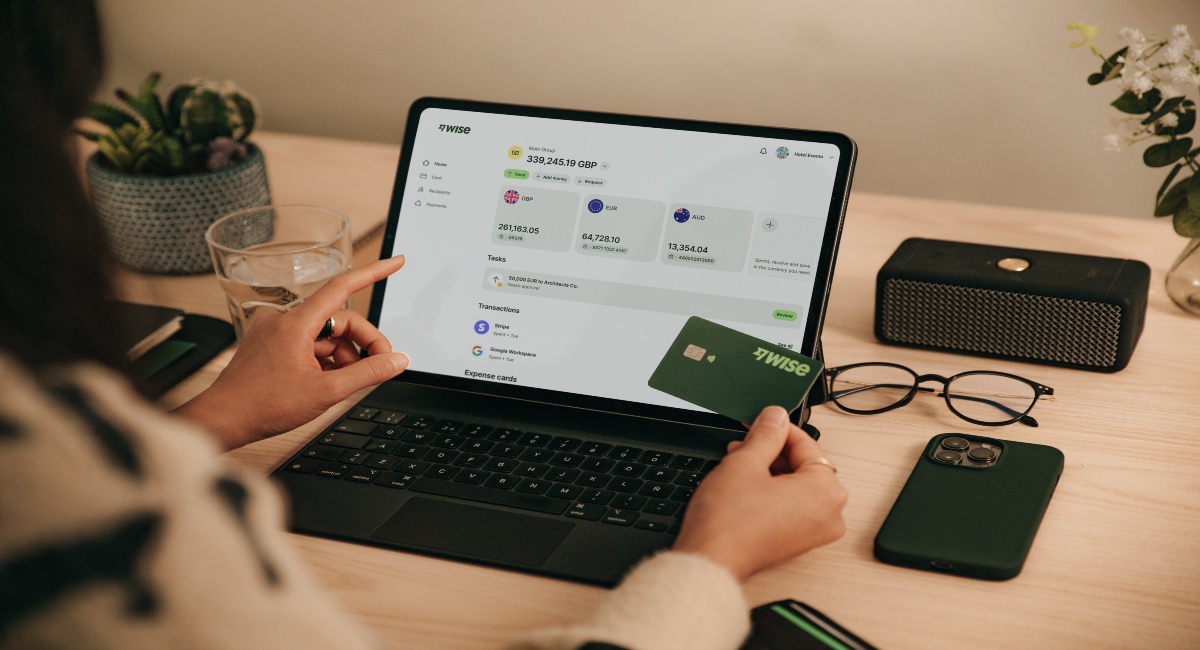
Wise Business converts payments at the mid-market exchange rate* with fees shown before a payment is sent, so there are no surprises on either side of the transaction. Thebatch payments feature allows businesses to pay up to 1,000 suppliers in a single upload, which is useful for monthly invoice runs across multiple currencies.
And with the ability to hold, send, and receive money in 40+ currencies with local account details in 8+ currencies, many international invoice payments start to behave more like domestic ones, with fewer intermediaries and surprises in the final amount received. Wise Business also integrates withaccounting software like Xero and QuickBooks, keeping reconciliation simple and records audit-ready.
With Wise Business, you can:
Make the wise choice when selecting a business account for all your domestic and global needs.
Be Smart, Get Wise.
Investments can fluctuate, and your capital is at risk. Interest is offered by Wise Assets UK Ltd, a subsidiary of Wise Payments Ltd. Wise Assets UK Ltd is authorised and regulated by the Financial Conduct Authority with registration number 839689. When facilitating access to Wise investment products, Wise Payments Ltd acts as an Introducer Appointed Representative of Wise Assets UK Ltd. Please be aware that we do not offer investment advice, and you may be liable for taxes on any earnings. If you're uncertain, we urge you to seek professional advice. To find out more about the Funds, visit our website.
*Disclaimer: The UK Wise Business pricing structure is changing with effect from 26/11/2025 date. Receiving money, direct debits and getting paid features are not available with the Essential Plan which you can open for free. Pay a one-time set up fee of £50 to unlock Advanced features including account details to receive payments in 22+ currencies or 8+ currencies for non-swift payments. You’ll also get access to our invoice generating tool, payment links, QuickPay QR codes and the ability to set up direct debits all within one account. Please check our website for the latest pricing information.
The primary goal is to ensure that every invoice is received, verified, approved, and paid accurately and on time while maintaining a clear record for compliance and financial reporting. Effective invoicing management protects cash flow, prevents errors and fraud, and keeps supplier relationships healthy.
Automation replaces manual data entry, approval routing, and reconciliation with software that handles these tasks faster and more accurately. Research shows that automated invoice processing can reduce cycle times by over 80% and cut error rates significantly.³ It also provides real-time visibility into payment status and outstanding liabilities.
International invoices add complexity through currency conversion, varying payment terms, and cross-border transaction fees. Using a multi-currency account, like the one offered by Wise Business, allows businesses to hold funds in the supplier's currency and pay invoices without unnecessary conversion markups. Transparent fees and the mid-market exchange rate* help ensure the supplier receives the expected amount.
A strong billing system should include automated invoice capture and data extraction, customisable approval workflows, integration with accounting or ERP software, real-time tracking and reporting dashboards, and built-in compliance features for VAT and audit readiness. Multi-currency support is also essential for any business with international suppliers or clients.
Sources used:
Sources last checked: 20 April 2026
*Please see terms of use and product availability for your region or visit Wise fees and pricing for the most up to date pricing and fee information.
This publication is provided for general information purposes and does not constitute legal, tax or other professional advice from Wise Payments Limited or its subsidiaries and its affiliates, and it is not intended as a substitute for obtaining advice from a financial advisor or any other professional.
We make no representations, warranties or guarantees, whether expressed or implied, that the content in the publication is accurate, complete or up to date.

An essential guide to sending bulk payments internationally as a UK business, including best providers, fees, and steps to send your first bulk transfer.

Learn what the payment approval process is. And, top tips to streamline it to maximise efficiency and reduce errors.

Learn how the payment authorisation process works from start to finish, and what happens behind the scenes in seconds.

Struggling with vendor payment chaos? Learn how to streamline approvals, payments, and manage vendors without the usual headaches.

Learn what payment runs are, how they work, and how to process them efficiently to keep payments accurate and on time.

Learn how to improve your invoicing, step-by-step. From automation, supplier relationship tips and more.











