
Top 10 international shipping companies in the Philippines
Discover the top 10 international shipping companies in the Philippines, key factors, and ways to handle cross-border payment challenges.


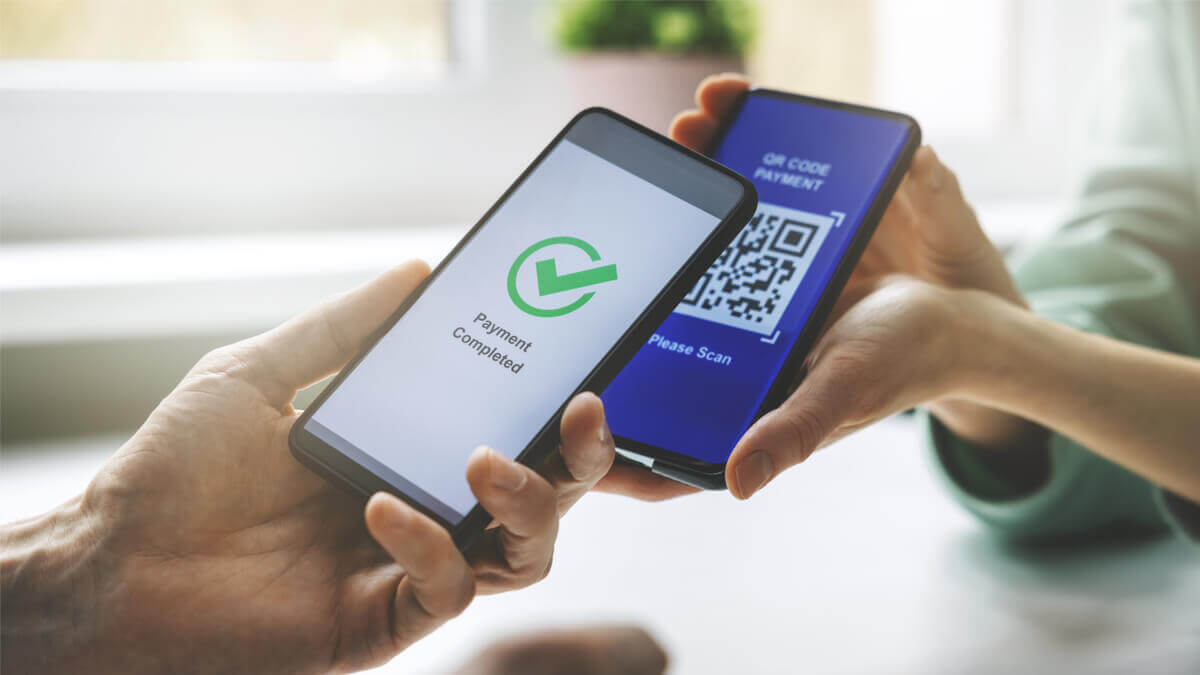
If you’re running a business in the Philippines in 2026, you’ve likely noticed that the clink of coins is being replaced by the "ping" of a successful mobile notification.
As of 2023, digital payments accounted for a staggering 52.8% of total retail payment volume in the country¹. This shift is being driven by three main use-cases: Merchant payments, P2P (Person-to-Person) payments, and B2B (Business-to-Business) supplier payments¹.
Whether you’re a freelancer in Cebu, an e-commerce player in Manila, or a growing enterprise managing a regional supply chain, offering the right online payment methods is the difference between a completed sale and a lost opportunity.
In this guide, we’ll break down the list of online payment methods available today and evaluate the best payment methods online for different business models. We will also have an overview of how Wise Business account helps you bridge the gap between local success and global expansion without the daunting wall of hidden exchange rate markups and unnecessary fees.
| Table of Contents |
|---|


At its simplest, an online payment method is any way a customer can send money to a business over the internet. Instead of physical cash changing hands, data moves through secure digital "rails" monitored by regulatory bodies like the BSP to ensure transaction integrity².
Why would you choose a digital transfer over a traditional over-the-counter deposit? It comes down to four critical business advantages:
The Philippine payment landscape is unique. While Western markets remain card-heavy, the Philippines has leapfrogged straight to mobile-first solutions and interoperable QR standards. As a result, the country has a sizable list of online payment methods available.


If you're a business in the Philippines trying to go global, you've probably hit a wall of confusing foreign exchange fees when collecting payments from international customers. Wise Business helps you cut through all that complexity—be it a local bank transfer or a wire transfer. By simplifying how you receive payments, you're free to pursue what matters—growing a local brand with global sights.
➡️Get started with Wise Business today
Wise Pilipinas Inc. is regulated by the Bangko Sentral ng Pilipinas. You may visit the BSP website for more information about its regulatory framework and consumer protection policies. To reach Wise, visit help center here.
Digital wallets are the primary e-commerce payment solution in the country today. They offer a seamless experience for everything from buying load (i.e. purchasing prepaid mobile credits) to paying for a Grab ride.
Picture this: You have a GCash account, but your customer only uses Maya. In the past, this was a friction point. Enter QR Ph, the Philippines' national QR code standard mandated by the BSP⁴. It allows any participating bank or e-wallet to scan a single code to process a payment.
For B2B online payment methods, direct bank transfers remain the gold standard for high-value transactions and corporate procurement.
While e-wallets lead in volume, cards (Visa, Mastercard, JCB) are still the go-to for high-value online purchases and international payment methods online. That’s why if you are selling premium goods or services to a global audience, a card-enabled payment gateway is non-negotiable for professional operations.
The Philippine BNPL market is no longer a niche trend, but more of an increasingly popular credit layer projected to grow into a $5.37 billion industry by 2030. Driven by a mobile-first younger demographic and the country's low credit card penetration, BNPL is becoming a preferred choice for Filipinos to manage their cash flow for high-ticket purchases⁶.
By integrating major providers like BillEase, TendoPay, Cashalo, and Atome, or platform-native options like SPayLater and GrabPayLater, merchants can effectively:
Choosing the right payment methods online for your specific brand requires a methodical approach because not every business needs every available integration.
We break down the most suitable methods for common Filipino business archetypes below for your convenience.
| Business Type | Suitable Online Payment Methods | Rationale |
|---|---|---|
| Social Sellers / MSMEs | GCash, Maya, InstaPay | Low friction, instant confirmation, and minimal setup fees. |
| B2B Service Providers | PESONet, Bank Transfers, Wise Business | Focus on low fees for large amounts and professional tracking. Wise Business could be especially beneficial if your B2B company frequently handles multicurrency transactions with overseas companies, and you need to pay or get paid fast. |
| Global Freelancers | Wise Business, PayPal | Wise lets you send and receive foreign currency payments from abroad (USD, EUR, etc.) without losing 3-4% in hidden exchange rate markups. \ \ Paypal is a popular payment method due to its wide global reach and is already embedded in several global freelancer platforms. |
| E-commerce Retailers | Cards, E-wallets, BNPL | Diversification reduces cart abandonment for different shopper profiles. |
Key factors to consider:
While local mainstays like GCash and Maya are perfect for domestic transactions, scaling beyond the Philippines often introduces a new set of financial hurdles.
With a Wise Business multi-currency account, you can access over 8+ local account details — far more currency options than the handful most banks offer. Plus, Wise makes it easy to hold, send, receive, and exchange 40+ currencies from a single account.
With the freedom to send and receive payments in more currencies globally, you can focus on what matters most: growing a local business that knows no borders. Here's what you get with a Wise Business account:
➡️Get started with Wise Business today
Wise Pilipinas Inc. is regulated by the Bangko Sentral ng Pilipinas. You may visit the BSP website for more information about its regulatory framework and consumer protection policies. To reach Wise, visit help center here.
Sources
*Please see terms of use and product availability for your region or visit Wise fees and pricing for the most up to date pricing and fee information.
This publication is provided for general information purposes and does not constitute legal, tax or other professional advice from Wise Payments Limited or its subsidiaries and its affiliates, and it is not intended as a substitute for obtaining advice from a financial advisor or any other professional.
We make no representations, warranties or guarantees, whether expressed or implied, that the content in the publication is accurate, complete or up to date.

Discover the top 10 international shipping companies in the Philippines, key factors, and ways to handle cross-border payment challenges.

Learn about invoice payments in the Philippines, essential fields for compliance under the Ease of Paying Taxes Act, and different invoice types.

Learn how to pay international contractors from the Philippines while exploring taxes, compliance, and low-fee tools.
A practical Wise Business Card review for the Philippines covering everything MSMEs need to know about its fees, features, pros and cons.

Complete guide to Citibank's corporate credit card for Philippine businesses. Compare features, fees, benefits, and alternatives for international spending.
Complete guide to RCBC Corporate Credit Card for Philippine businesses. Learn about features and fees, and find alternatives for international spending.











