What is a transit visa? Layover rules, requirements and how to check
What is a transit visa? Learn when you may need one for a layover, how airport transit visas work, and how to save money while travelling overseas with Wise.





Pricing claim based on comparative data for select airports and passes. Live pricing is subject to exchange rate fluctuations.
📱Find out how to get lounge access
You’re overseas, about to pay for dinner, book a ride or withdraw cash. Then the screen asks: pay in Singapore dollars, or pay in the local currency?
Singapore dollars may feel like the easier choice. You know the number. You don’t need to do mental maths. But that convenience can come with extra costs.
That’s where a DCC fee comes in. DCC stands for Dynamic Currency Conversion. It’s when a shop, website or ATM offers to convert your overseas payment into your home currency before you pay.¹
We'll also introduce the Wise card, a handy travel companion to make seamless card payments when you're overseas.
| Table of Contents |
|---|


A DCC fee is a cost that may apply when an overseas card payment or cash withdrawal is converted into your home currency at the point of payment.
For Singapore cardholders, this usually means the transaction is shown in Singapore dollars instead of the local currency. So instead of paying in Japanese yen in Japan, Australian dollars in Australia, or euros in Europe, you’re offered the option to pay in SGD.
This is called Dynamic Currency Conversion.
It can be helpful to see the amount in a familiar currency. The catch is that the exchange rate is usually set by the merchant, ATM operator or their DCC provider and it may be higher than the rate you’d get if you paid in the merchant’s local currency.²
A DCC fee might show up as:
Before you choose DCC, the screen should show key details like the local currency amount, the SGD amount, the exchange rate, and any extra fees or markup. You should also get the choice to accept or decline the conversion.
A DCC transaction happens when your payment is converted into your home currency before it’s processed.
Here’s a common example.
You’re in Thailand and your hotel bill is in Thai baht. When you tap or insert your card, the terminal asks if you want to pay in Thai baht or Singapore dollars.
If you choose Singapore dollars, you’re using DCC. The payment is converted on the spot, using the DCC provider’s rate.
If you choose Thai baht, the transaction stays in the local currency. Your card provider or card network then handles the conversion later, depending on your card’s terms.
That’s the simple meaning of a DCC transaction: your overseas purchase or withdrawal has been converted into your home currency at checkout.
You’ll often see DCC at card terminals in places where travellers spend money, like hotels, restaurants, shops and car rental counters.
The wording can vary. You might see:
The best thing to look at is the currency. If the terminal shows SGD while you’re outside Singapore, that’s usually the DCC option.
DCC can appear at ATMs, too.
The ATM may ask if you want to continue with conversion or without conversion. The converted amount may look clearer because it’s shown in Singapore dollars, but the exchange rate can include a markup.
ATM DCC works by showing the withdrawal amount in the local currency and your home currency. You can then choose whether to accept the displayed exchange rate, or continue without DCC.³
For Singapore cardholders overseas, the exact wording will depend on the ATM. As a general rule, look for the option that keeps the withdrawal in the local currency.
DCC isn’t only a travel issue. It can happen online as well.
Some overseas websites let you pay in SGD even when the merchant or payment processor is based outside Singapore. This can happen when you’re booking hotels, buying flights, shopping online, or paying for an international subscription.
DCC may be offered on overseas websites that provide SGD as a payment option at checkout, so check the selected currency before you confirm your payment.
Here’s the difference in plain English.
| Option | What happens | What to watch for |
|---|---|---|
| Pay in SGD with DCC | The merchant, website or ATM converts the payment into Singapore dollars before you pay | DCC fee, exchange rate markup, less favourable rate |
| Pay in local currency | The payment stays in the merchant’s local currency | Your card’s normal foreign transaction or conversion fees may still apply |
Paying in the local currency doesn’t always mean the transaction is free. Your bank or card provider may still charge a foreign transaction fee.
But it helps you avoid the exchange rate chosen by the merchant or DCC provider.
DCC usually includes a service fee in the exchange rate used. To avoid the DCC rate, choose to pay in the local currency instead.⁴
There isn’t one fixed DCC fee for every card, country or merchant.
The cost depends on:
In practice, there can be 2 cost layers.
First, there’s the exchange rate or markup from the DCC provider. This may be built into the rate you see on the screen.
Second, your card issuer may charge fees when the transaction is processed.
For example, some Singapore card fee schedules list DCC administrative fees on the converted SGD amount at processing. One example is 1.00% for Mastercard and Visa credit cards, and 2.80% for Mastercard and Visa debit cards.
That’s just one example. Your own card may work differently, so check your card’s latest fee schedule before travelling.
The easiest way to avoid DCC is to choose the local currency when you’re given a choice.
Here are 5 simple habits to use when you travel or shop online.
Choose the local currency
If you’re in Japan, choose Japanese yen. If you’re in Australia, choose Australian dollars. If you’re in Thailand, choose Thai baht.
Decline conversion at ATMs
If an ATM asks whether to continue with conversion, look for the option that says no to conversion or keeps the withdrawal in the local currency.
Check the currency before tapping your card
Don’t just look at the amount. Look at the currency symbol or currency code too.
Watch online checkout pages
Some websites may show SGD by default. Check the payment currency before you confirm.
Keep your receipt
Keep a copy of your receipt and check which currency you’ve been charged in before you leave the shop, restaurant or ATM.⁴
For overseas spending, including online spending, paying in the local currency can help you avoid a more expensive DCC rate when the merchant’s payments are processed outside Singapore.⁵
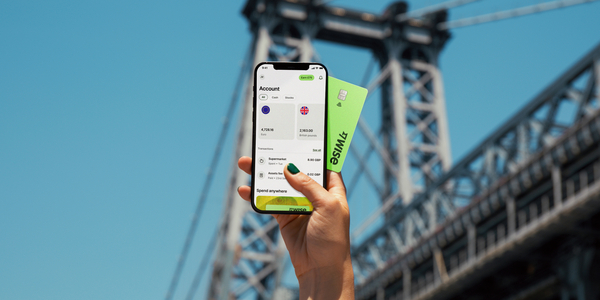
The Wise card lets you spend in 40+ currencies at the mid-market rate including MYR, JPY, CNY, and USD so you know you'll be getting a great deal in over 150+ countries. Simply create a free Wise account, order a card and top-up SGD to get started.
Virtual cards are free and can be added to your Google or Apple Pay wallet, while a physical Wise card can be ordered for a low fee of 8.50 SGD. Having a physical Wise card allows you to make chip and pin payments, as well as free ATM withdrawals up to the value of 100 SGD each month, before low fees start.
While abroad, you can choose to spend with directly in SGD and let auto-conversion do the trick, or convert to your desired currency with your Wise account. Either way, you’ll get the exchange rate you see on Google, with low, transparent fees from 0.26%.
Plus, you can activate Wise Interest to earn returns* on your SGD and other currencies, meaning your travel money could be growing right up until you spend it.
*Growth is not guaranteed. Capital at risk.
A DCC fee in credit card transactions is a cost that may apply when an overseas merchant, website or ATM converts your payment into your home currency at checkout.
For Singapore cardholders, that usually means paying in SGD instead of the local currency.
No. DCC and foreign transaction fees are different.
DCC is the conversion offered at checkout by the merchant, website, ATM or DCC provider.
A foreign transaction fee is usually charged by your card issuer or card network when you spend overseas or in a foreign currency.
In some cases, both types of cost may apply. That’s why it’s worth checking both the checkout currency and your card’s fee terms.
In most cases, choose the local currency.
Paying in SGD overseas usually means accepting Dynamic Currency Conversion. Paying in the local currency keeps the transaction in the merchant’s currency, so your card provider or card network handles the conversion instead.
A DCC transaction on your statement usually means your overseas payment or withdrawal was converted into your home currency at the point of payment.
For example, if you were overseas and chose to pay in SGD, your statement may show the final SGD amount charged, including any DCC-related fees applied by your card provider.
A debit card DCC fee is a cost that may apply when you use a debit card overseas and choose to pay in your home currency instead of the local currency.
The exact cost depends on your card, the merchant or ATM, and the DCC provider. Some banks apply different DCC fees for debit and credit cards.
Yes. DCC can happen on overseas websites that offer SGD at checkout.
Before confirming an online purchase, check the selected currency. If the merchant is overseas and you’re offered a choice, paying in the merchant’s local currency can help you avoid DCC.
For HSBC Singapore customers, selecting home currency for an overseas purchase, online purchase or cash withdrawal may result in a DCC fee charged by the overseas bank.
Check the latest HSBC terms for your specific card or account before you travel.
Sources:
*Please see terms of use and product availability for your region or visit Wise fees and pricing for the most up to date pricing and fee information.
This publication is provided for general information purposes and does not constitute legal, tax or other professional advice from Wise Payments Limited or its subsidiaries and its affiliates, and it is not intended as a substitute for obtaining advice from a financial advisor or any other professional.
We make no representations, warranties or guarantees, whether expressed or implied, that the content in the publication is accurate, complete or up to date.

What is a transit visa? Learn when you may need one for a layover, how airport transit visas work, and how to save money while travelling overseas with Wise.

Travelling from Singapore to Taiwan? Learn how to use your Wise card for payments, ATM withdrawals, and mobile wallet spending, with transparent fees.

Planning a Disney Cruise from Singapore? Compare prices, ticket options, cabin types and booking tips - plus how to avoid hidden FX fees when paying in USD.

Driving overseas? Compare the best travel insurance with car rental excess cover in Singapore. See coverage limits, prices, and top providers for 2026.

Compare the best extreme sports travel insurance in Singapore, including what’s covered, exclusions, prices, and top providers for adventurous trips.

Compare Agoda, Booking.com, Trip.com and Expedia to see how prices, features, rewards and payment options stack up for travellers in 2026.