
7 best PayPal alternatives for freelancers in the Philippines
Compare 7 PayPal alternatives in the Philippines for freelancers, online payments and international transfers, including Wise, Payoneer, GCash and Maya.





PhilHealth is the government corporation which provides universal health coverage to all Filipinos. Contributions to PhilHealth vary depending on how much you earn, but are required for all OFWs. You must send payments back even while you are abroad, as this ensures coverage for yourself and your dependents. If you miss contributions, you will need to pay them with added interest, making it especially important to stay on top of payments.
A recent House bill has proposed making contributions voluntary for OFWs - however, at present, this has not been passed, so payments are currently still mandatory.
This article will take you through everything you need to know about PhilHealth as an OFW, including how much you’ll need to pay and how to make payments from abroad. We'll also introduce the Wise card, a handy travel companion to make seamless card payments when you're overseas.
| Table of Contents |
|---|
PhilHealth is a government corporation that runs the National Health Insurance Program in the Philippines.¹ It helps make healthcare more affordable and accessible for Filipinos, including inpatient, outpatient and mental health benefits.²
All Filipinos can access PhilHealth benefits, but many members, including employed workers and OFWs, need to pay contributions. If you miss payments, you may need to pay them later with added interest.³
For OFWs, keeping PhilHealth contributions updated can help maintain coverage while you’re abroad. Your qualified dependents in the Philippines may also be able to use your PhilHealth coverage when they need care.⁴
Yes, PhilHealth is mandatory for OFWs⁵. You must pay contributions during the time you are abroad. You can pay your contributions before you leave, or while working abroad⁶.
There is currently a bill in the House that would exempt OFWs from mandatory contributions⁷; however, it has not been passed*, so you must still pay contributions. In its current form, the bill would instead split contributions equally between the government and OFW employers, rather than between OFWs and employers. It is currently subject to policy updates and changes.
*Correct at the time of research - 27/03/2026
For 2026, PhilHealth contribution is set at 5% of monthly income for direct contributors, including OFWs. The scheduled increases under the Universal Health Care Law ended in 2025, and PhilHealth has said there will be no premium rate increase from January 2026.
For members earning below ₱10,000 per month, the minimum contribution is ₱500. For those earning ₱100,000 or more per month, the maximum contribution is ₱5,000.
If your monthly salary is between ₱10,000 and ₱100,000, you can calculate your required PhilHealth contribution by multiplying your salary by 5%. If it’s less than ₱10,000, you’ll pay ₱500. If it’s ₱100,000 or more, you’ll pay ₱5,000.
| Monthly salary | Total monthly contribution |
|---|---|
| Less than ₱10,000 | ₱500 |
| ₱20,000 | ₱1,000 |
| ₱30,000 | ₱1,500 |
| ₱50,000 | ₱2,500 |
| ₱100,000 or more | ₱5,000 |
You can pay your PhilHealth contributions online through the PhilHealth portal, by going to Payment Management⁸. This allows you to pay directly using your debit or credit card.
You can also use an Accredited Collection Agent (ACA) - the full list of ACAs can be found on the PhilHealth website⁹, but popular options include GCash and Maya, as well as a variety of banks such as BPI and CitiBank. You can make payments directly through mobile banking apps which support it.
You can easily check your PhilHealth contributions online by going to the PhilHealth portal. Simply log in, open the contribution section, and select the latest month. If this says paid, you’re all caught up on payments.
OFWs can pay PhilHealth contributions online through the PhilHealth Member Portal, accredited banks, or e-wallets like GCash and Maya.
To pay through the PhilHealth portal, you’ll usually need to:
You can also pay through supported banking apps or e-wallets by selecting PhilHealth as the biller and entering your PRN.
For a full walkthrough of each payment method, read the Wise guide on how to pay PhilHealth online.
If you’re working overseas, you may need to send money back to the Philippines for PhilHealth contributions, family support or other bills.
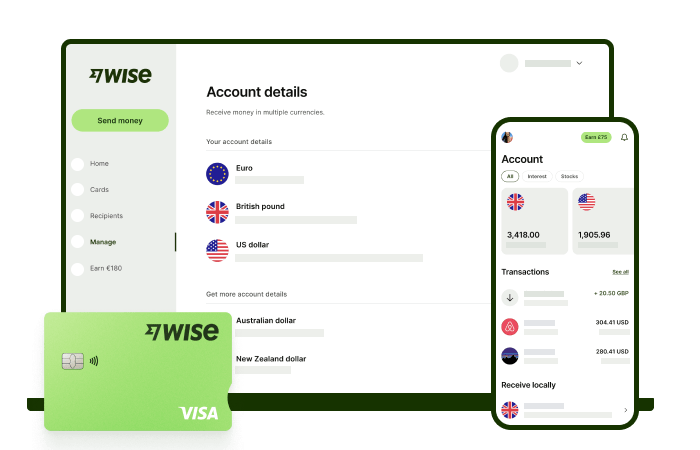
Wise international money transfers can be set up online or within the Wise app with low fees from 0.57% and the mid-market rate, to over 140+ countries. There’s no markup added to the exchange rate that’s used to convert your currency, which makes it easier to see exactly what you're paying for a transfer, and what the recipient will get in the end. Just transfer the amount indicated in PHP and let Wise do the rest.
To make sending foreign currency even easier, create a free Wise account, and you'll be able to manage and convert your money in PHP and 40+ other currencies. You'll get the same great rates, and be able to track your transfers all from one place. You can also get 8+ local account details to be able to receive money in PHP, USD, GBP, and more.
Use the calculator below to estimate how much your money could be worth before sending.
Sources:
*Please see terms of use and product availability for your region or visit Wise fees and pricing for the most up to date pricing and fee information.
This publication is provided for general information purposes and does not constitute legal, tax or other professional advice from Wise Payments Limited or its subsidiaries and its affiliates, and it is not intended as a substitute for obtaining advice from a financial advisor or any other professional.
We make no representations, warranties or guarantees, whether expressed or implied, that the content in the publication is accurate, complete or up to date.

Compare 7 PayPal alternatives in the Philippines for freelancers, online payments and international transfers, including Wise, Payoneer, GCash and Maya.
Learn how to pay PLDT online via Pay Express, GCash, Maya, BPI and credit card, plus posting times, fees, late-payment rules and tips for paying from abroad.
Learn how to pay Home Credit loans via GCash, BPI, Maya, online banking, auto debit and payment centers, plus key steps and tips for paying from abroad.

Learn how to pay Metrobank credit card bills via the Metrobank app, GCash, ATMs, branches and payment centers, plus posting times and overseas payment tips.
Learn how to pay RCBC credit card bills via RCBC Pulz, GCash, Maya, BPI, BDO, branches and payment centers, plus posting times and overseas tips.
Learn how to pay UnionBank credit card bills via UnionBank Online, InstaPay, BPI, branches and other channels, plus posting times, fees and overseas tips.











