
PhilHealth contribution for OFWs: how much to pay, how to pay and check status
Learn the PhilHealth contribution for OFWs, including current rates, payment options, how to pay from abroad and how to check your status.



If you live or work in the Philippines or earn any income there, getting a TIN is required for your dealings with authorities, such as the Bureau of Internal Revenue (BIR). You only need to get your BIR TIN ID one time - the number then stays with you for your entire life. However, as the TIN ID requirements vary depending on your situation and nationality, getting a TIN ID can seem confusing. This guide is here to help.
We’ll cover how to get a tax identification number in the Philippines, including obtaining a TIN through online registration as an employee, self-employed, or mixed-income individual. We'll also introduce the Wise account, a handy companion to make your money go further with low, transparent fees.
| Table of Contents |
|---|
Sign up for a free account now
A Tax Identification Number (TIN)¹ is a unique identifier issued to you in the Philippines and used when you file or pay your taxes.
It’s mandatory to have a Philippine TIN if you are employed there, do business there, or earn an income there. This applies to both Filipinos and foreigners, whether or not you’re a resident in the Philippines.
This guide covers where to get a TIN ID in person, as well as the online application process for a TIN number.
You need a TIN in the Philippines in any of the following circumstances:
This covers both citizens and foreigners, and residents and non-residents, including Non-Resident Aliens Not Engaged in Trade or Business (NRANETB) who earn income from the Philippines.
You can apply for a TIN online or in person, and the processing times can vary depending on the application method and the demand on the system at the time.
If you apply in person, you can ask the issuing officer about the wait time - your TIN may be ready within the day in some cases.
Online applications have varying wait times - if you’re concerned about your application, you can reach out to BIR directly to check on your application status.
If you’re submitting your TIN application online, you’ll usually need to complete BIR Form No. 1901, 1902, or 1904, depending on your employment type. You also have to bring along ID documents to your appointment. The documents needed can vary depending on your situation.
All applicants are asked to bring along:
If you’re a foreign national, you’ll need to use your passport, which should show your date of entry/arrival and exit/departure stamp, if applicable.
Additional documents are likely to be needed in some situations - such as when registering as a sole proprietor, business owner or professional. In this case, you might have to take along professional certifications or business registration documents, or upload copies of these if you’re applying for your BIR TIN ID online.
Let’s look at how to get a TIN number in the most common situations - we’ll cover how to get a TIN ID as an employee, and how to get a TIN ID online if you’re self-employed or need your ID to interact with a government body.
First-time employees in the Philippines may not already have a BIR TIN, but this can be arranged by your employer.
In this case, your employer will create an account on the BIR Online Registration and Update System (ORUS), complete BIR Form 1902 and upload your ID document and an image of the applicant holding the ID for checking. There’s no fee for the employer to pay.
It’s also possible to get your TIN through an in-person appointment at the Revenue District Office (RDO) closest to your place of work, but BIR recommends using the digital system instead.
If you’re self-employed or a freelancer, you’ll need to register for your TIN yourself, using ORUS or in person at your closest Revenue District Office (RDO).
Online, you’re required to register a business on ORUS to generate a TIN - here’s what to do:
In some cases, you may be asked for more documents, such as a work permit if you’re a foreigner in the Philippines.
It’s sometimes necessary to get a TIN to deal with government agencies on a one-off basis, rather than for repeat tax filing. In this case, the process can still be managed online or in person, following the same steps laid out above. Look for BIR Form 1904 when you apply.
Let’s look at how to apply for a TIN ID online - usually the easiest option for applicants, as the whole process is managed remotely with no need for an in-person meeting.
ORUS is the Online Registration and Update System², and the easiest option if you want to get a TIN without going along to an appointment in person.
If you’re an employee, your employer will need to apply for your ORUS TIN, or you can apply yourself if you’re self-employed. In either case, the process is quite straightforward:
There are further steps in some cases, and additional documents may be needed. For example, if you’re registering as a self-employed business owner, you’ll need to upload your own invoices or buy BIR-approved tax invoices, and you might have to provide additional business documentation to support your application.
You can get an ORUS TIN if you’re employed, self-employed, mixed income or need a TIN for a one-time transaction.
Once you have your TIN, you’ll need it for tax filing in the Philippines, and on other occasions when you communicate with government agencies. You won’t be issued any other TIN in the Philippines, so it’s important to keep your details safe.
If you ever find you’ve forgotten your BIR TIN ID, don’t apply for a new one. Instead, you can contact BIR directly and ask for your original TIN to be confirmed to you.
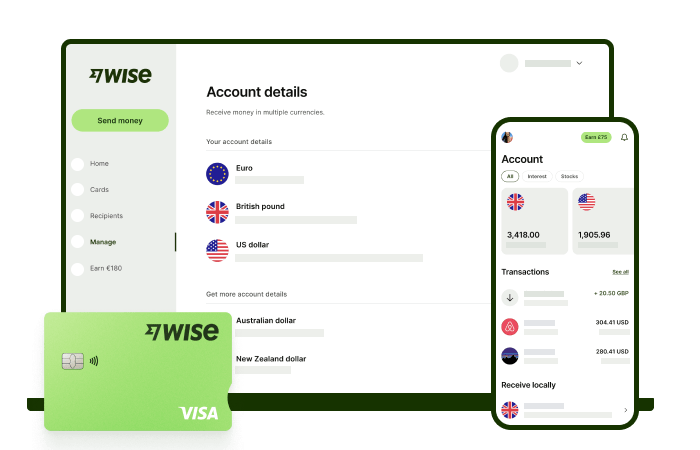
If you’re working, freelancing, or running a business in the Philippines, you may need to send or receive money internationally.
The Wise account is an easy way to hold and exchange 40+ currencies, including PHP, USD, CNY, and more. All you need to do is create a free account to get started.
With Wise, you can exchange currencies at the mid-market rate each time, with low, transparent conversion fees from 0.57% and absolutely no markups. Plus, you can order a Wise card for convenient spending at the same great rate, without any foreign transaction fees.
In supported countries, you can also use Wise to pay with QR codes, which means you can pay like a local without needing cash or a separate local wallet. This can be especially handy when you're travelling in places where QR payments are widely accepted.
At times you need cash, you can also make up to 2 free ATM withdrawals to the value of 12,000 PHP when you're overseas. You'll even get 8+ local account details to get paid conveniently to your Wise account in PHP and a selection of other major global currencies.
Sending money or making payments abroad? Wise also offers fast, low cost transfers to 140+ countries - you can track your transfer in your account and your recipient will also be notified when a transfer reaches them.
✍️ Sign up for a free account now
*Please see terms of use and product availability for your region or visit Wise fees and pricing for the most up to date pricing and fee information.
This publication is provided for general information purposes and does not constitute legal, tax or other professional advice from Wise Payments Limited or its subsidiaries and its affiliates, and it is not intended as a substitute for obtaining advice from a financial advisor or any other professional.
We make no representations, warranties or guarantees, whether expressed or implied, that the content in the publication is accurate, complete or up to date.

Learn the PhilHealth contribution for OFWs, including current rates, payment options, how to pay from abroad and how to check your status.

How much is Pag-IBIG contribution for OFWs? Learn rates, benefits, and how to pay your Pag-IBIG contributions online from abroad.

Applying for a BPI credit card as an OFW? Learn the requirements, documents, income rules, and how to apply online from abroad step by step.

Looking for your first credit card? Compare UnionBank credit cards for beginners, including fees, requirements, and how to apply.

Compare OFW savings accounts in 2026, including BPI, Metrobank, and PNB. Learn fees, requirements, and smarter ways to manage money abroad.

Learn how OFW SSS contribution works, including rates, payment methods, and benefits. See the latest SSS contribution table and manage payments easily.











