
Billing vs invoicing: what UK small businesses need to know
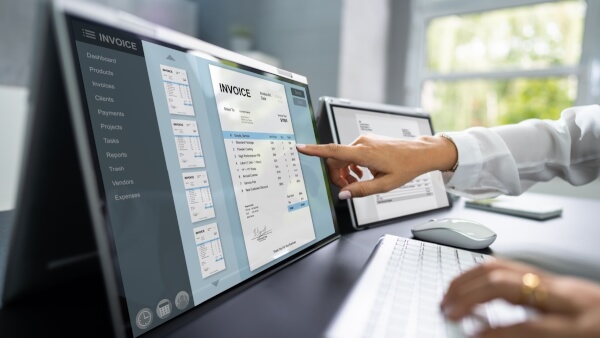
Learn the difference between billing and invoicing, including when to send both and some tips to manage payments.


Setting up a limited company as a contractor in the UK can feel complex when you're balancing tax efficiency, legal responsibilities, and admin tasks. If you're wondering whether switching from sole trader status is the right move as your income or risk profile grows, you're not alone.
In this guide, we've broken down how to decide if a limited company structure suits your contracting business, along with the advantages, potential drawbacks, registration steps, and your ongoing responsibilities as a director.
We've also explained how Wise Business can support your company finances, particularly when managing payments across borders.

| Step | Summary |
|---|---|
| Step 1: Double check whether a Limited Company structure is right for your business | Evaluate whether a limited company suits your contracting style compared to alternatives like sole trader or umbrella company, considering control, risk, and responsibilities. |
| Step 2: Appoint directors and shareholders | Decide who will run and own the company, often the contractor themselves, and set up a registered office address. |
| Step 3: Prepare your registration documents | Gather key documents such as the memorandum and articles of association, and choose a SIC code. |
| Step 4: Register your company | Submit your application to Companies House and pay the registration fee to legally form your company. |
| Step 5: Complete post-registration tasks | Open a business account and assess whether VAT registration is required or beneficial. |
Before jumping into the registration process, it's important to consider whether a limited company fits your contracting style.
The main alternatives are operating as a sole trader or working through an umbrella company, each with different responsibilities, costs, and levels of control.
As a sole trader, you and your business are legally the same entity. This means setup is simple and accounting is straightforward, but your personal assets are not protected if the business incurs debt.
An umbrella company acts as an intermediary, handling your payroll and taxes for a fee, which offers simplicity but less control and potentially lower take-home pay.
A limited company sits in the middle, offering advantages alongside additional responsibilities.
| Category | Details |
|---|---|
| Tax efficiency | Directors may choose to take a combination of salary and dividends. Dividends are not subject to National Insurance Contributions (NICs), which can result in different tax outcomes depending on individual circumstances. This publication is provided for general information purposes and does not constitute legal, tax or other professional advice from Wise Payments Limited, its subsidiaries or affiliates. It should not be treated as advice from, or a communication with, HMRC, and it is not intended as a substitute for obtaining business advice from a tax advisor or any other professional. |
| Limited liability | Your company is a separate legal entity, protecting your personal assets. Owners are responsible for business debts only up to their investment1. |
| Professional credibility | Operating under a company name can present a more established image to clients and agencies. |
| Financial control | Directors decide how and when to pay themselves and manage company funds. |
| Ownership and succession | Companies can be sold or transferred, and shares issued to bring in partners or investors. |
| Category | Details |
|---|---|
| Increased administration | Annual accounts and Company Tax Returns must be filed, often requiring an accountant. |
| Costs | Ongoing expenses include accountancy, software, and filing fees. |
| Director responsibilities | Legal duties include accurate reporting and timely submissions. |
| IR35 complexity | Contracts inside IR35 may change how income is taxed. |
For many contractors, this involves being both the sole director and shareholder, but you can appoint additional directors or issue shares to other individuals if needed.
A director is legally responsible for running the company and making sure it complies with statutory obligations, including filing accounts and paying taxes. A shareholder (or member) owns the company and may receive a share of profits through dividends.
In small contractor setups, the same person often performs both roles, but separating them can be useful if you plan to bring in partners or investors later.
You will also need to provide a registered office address, which is the official address for receiving legal correspondence. This address is publicly available on the Companies House register, so many contractors use an accountant’s address or a registered office service for privacy.

To register a limited company in the UK, you must prepare two key legal documents:
Memorandum of association – This is a legal statement signed by all initial shareholders (also known as subscribers) confirming that they agree to form the company. It’s essentially a declaration of intent to create the company and become its members.
Articles of association – This is a much more detailed document that sets out how the company will be run. It includes rules on decision-making, director powers, shareholder rights, and how shares can be issued or transferred.
Both documents are required when forming a company — one cannot replace the other. The memorandum confirms the creation of the company, while the articles govern how it operates on an ongoing basis.
Most contractors use standard ‘model articles’ provided by Companies House, which are suitable for straightforward company structures. However, you can customise these if your business has more complex requirements.
You’ll also need to select a SIC code (Standard Industrial Classification), which describes your business activity. This helps categorise your company for official records.
You can register online with Companies House. The process is typically quick, and it currently costs £100 and can be paid by debit or credit card2.
Once approved, you’ll receive a Certificate of Incorporation, confirming your company legally exists.
After setting up your company, you’ll need to consider whether VAT registration applies to you.
If your taxable turnover exceeds £90,000 in a 12-month period, you must register for VAT3. Even if you’re below this threshold, voluntary registration may be beneficial — for example, if you work with VAT-registered clients or want to reclaim VAT on business expenses.
Choosing the right VAT scheme (such as the Flat Rate Scheme) can also affect your tax position, so it’s worth reviewing your options carefully.
Once your company is registered, opening a dedicated business account is an essential next step. Keeping your business finances separate from your personal finances helps with accounting, compliance, and maintaining a clear audit trail.
If you work with international clients or suppliers, having a multi-currency solution can also simplify payments and reduce conversion costs.
This is where Wise Business comes into the picture.

With Wise Business, you can:
Make the wise choice when selecting a business account for all your domestic and global needs.
Be Smart, Get Wise.
Register for Wise Business ✍️
*Disclaimer: The UK Wise Business pricing structure is changing with effect from 26/11/2025 date. Receiving money, direct debits and getting paid features are not available with the Essential Plan which you can open for free. Pay a one-time set up fee of £50 to unlock Advanced features including account details to receive payments in 22+ currencies or 8+ currencies for non-swift payments. You’ll also get access to our invoice generating tool, payment links, QR codes and the ability to set up direct debits all within one account. Please check our website for the latest pricing information.
Sources:
Sources last checked on 01/05/2026
*Please see terms of use and product availability for your region or visit Wise fees and pricing for the most up to date pricing and fee information.
This publication is provided for general information purposes and does not constitute legal, tax or other professional advice from Wise Payments Limited or its subsidiaries and its affiliates, and it is not intended as a substitute for obtaining advice from a financial advisor or any other professional.
We make no representations, warranties or guarantees, whether expressed or implied, that the content in the publication is accurate, complete or up to date.
Learn the difference between billing and invoicing, including when to send both and some tips to manage payments.
Learn how to keep track of invoices and payments, including powerful tools and common mistakes.

Learn how to manage global payment processing for UK businesses. Our guide covers costs, risks, compliance and Wise Business UK tools for growth and scale.

Read this roundup of the best multi-currency invoicing software in 2026 for UK businesses, including Xero, QuickBooks, Sage, FreeAgent and more.

Learn how UK residents can form and manage a US LLC remotely. Our guide covers state costs, tax, banking, compliance and Wise Business payment support tips.

Learn about the best business accounts for freelancers in Denmark. Our guide covers features and fees of each provider to help you make an informed decision.











