
Business Tax Return Form: Your US Filing Guide
Find out how to complete your US business tax return form for small businesses and self-employed individuals to file accurately and avoid penalties.



| This publication is provided for general information purposes and does not constitute legal, tax or other professional advice from Wise US Inc. or its affiliates, and it is not intended as a substitute for obtaining business advice from a Certified Public Accountant (CPA) or tax lawyer |
|---|
Being self-employed means you are responsible for your own taxes. This includes paying Social Security and Medicare taxes, which employees usually have withheld from their paychecks. The IRS requires a specific form for this purpose.
This guide explains the self-employment tax form, who must file it, and how to calculate the amount you owe based on 2025-2026 rates.
Need to send and receive cross-border business payments?
Try Wise Business ->
| Table of contents |
|---|
| Topic | Requirements |
|---|---|
| Primary Form | Schedule SE (Form 1040) |
| Filing Threshold | $400 or more in net self-employment earnings. |
| Standard Rate | 15.3% (12.4% Social Security + 2.9% Medicare). |
| Social Security Cap | Applies only to the first $176,100 of 2025 earnings (rising to $184,500 for 2026).2 |
| New for 2026 | Potential deductions for qualified tips and overtime under recent tax law changes.3 |
Self-employment tax is how the US government collects Social Security and Medicare taxes from individuals who work for themselves.
The primary form is Schedule SE (Form 1040).1 Its purpose is to report your net earnings and calculate the tax due. You are generally considered self-employed if you are an independent contractor, a sole proprietor, or a partner in a business.
Tip: If you receive income in multiple currencies, all amounts must be converted and reported in US dollars based on the exchange rate at the time the income was received.
You must file Schedule SE if your net earnings from self-employment were $400 or more during the tax year.2 This applies to:
Even if you worked as a freelancer for only part of the year while holding a W-2 job, you must file if you meet that $400 threshold.

The tax is calculated on 92.35% of your net earnings, not the full amount. This adjustment is designed to make the tax burden comparable to that of a W-2 employee.
If your total self-employment income (combined with any W-2 wages) exceeds certain thresholds, you may owe an Additional Medicare Tax of 0.9%.3
You can deduct 50% of your calculated self-employment tax on your Form 1040. This deduction reduces your overall Adjusted Gross Income (AGI), lowering your income tax.
Under recent legislation (like the OBBBA), certain self-employed individuals may be eligible for new deductions:3
Note: These benefits phase out for high earners (e.g., above $150,000 for single filers).
The IRS operates on a "pay-as-you-go" system. If you expect to owe $1,000 or more in taxes, you must typically make quarterly estimated payments using Form 1040-ES.4
Failing to make these payments throughout the year can result in underpayment penalties, even if you pay the full amount by the April deadline.
Wise Business can help you save big time on international payments.
Wise is not a bank, but a Money Services Business (MSB) provider and a smart alternative to banks. The Wise Business account is designed with international business in mind, and makes it easy to send, hold, and manage business funds in 40+ currencies.
Signing up to Wise Business allows access to BatchTransfer which you can use to pay up to 1000 invoices in one go. This is perfect for small businesses that are managing a global team, saving a ton of time and hassle when making payments.
Some key features of Wise Business include:
Mid-market rate: Get the mid-market exchange rate with no hidden fees on international transfers
Global Account: Send money to 140+ countries and hold multiple currencies, all in one place. You can also get major currency account details for a one-off fee to receive overseas payments like a local
Access to BatchTransfer: Pay up to 1000 invoices in one click. Save time, money, and stress when you make 1000 payments in one click with BatchTransfer payments. Access to BatchTransfer is free with a Wise Business account
Auto-conversions: Don't like the current currency exchange rate? Set your desired rate, and Wise sends the transfer the moment the rate is met
Free invoicing tool: Generate and send professional invoices
No minimum balance requirements or monthly fees: US-based businesses can open an account for free. Learn more about fees here

Navigating self-employment taxes can feel like a full-time job in itself, but staying organized from day one is the best way to protect your business. By understanding Schedule SE and staying ahead of quarterly estimated payments, you avoid the stress of surprise penalties and keep your startup’s finances on a steady growth trajectory.
Making the right choices for your tax strategy is a vital step toward longevity. For freelancers with a global reach, integrating a tool like Wise Business can simplify the "math" behind your taxes by streamlining international income and providing clear records for your USD conversions. With the right systems in place, you can spend less time on tax forms and more time building your business.
Yes. You owe self-employment tax on your freelance income specifically. However, your W-2 wages count toward the Social Security wage base cap ($176,100 for 2025).2
Schedule SE is attached to your annual Form 1040. You can file electronically via tax software or through an IRS-authorized e-file provider.1
Sources:
*Please see terms of use and product availability for your region or visit Wise fees and pricing for the most up to date pricing and fee information.
This publication is provided for general information purposes and does not constitute legal, tax or other professional advice from Wise Payments Limited or its subsidiaries and its affiliates, and it is not intended as a substitute for obtaining advice from a financial advisor or any other professional.
We make no representations, warranties or guarantees, whether expressed or implied, that the content in the publication is accurate, complete or up to date.

Find out how to complete your US business tax return form for small businesses and self-employed individuals to file accurately and avoid penalties.

Discover how to accurately complete the US Schedule C tax form. Learn to report income, claim expenses, and minimize your tax liability.
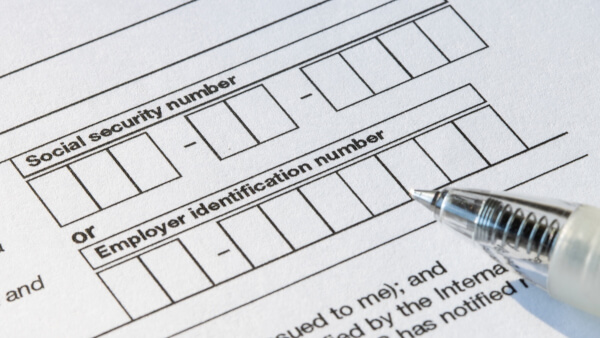
Learn why Wise asks for your SSN to comply with regulations and keep your money safe. Understand our security measures and privacy policy.

Compare Wix Payments vs Square to find the best payment processor for your business. Explore fees, features, and integrations in our guide.

This guide breaks down the best business credit cards for travel with a focus on general travel cards as well as airline and hotel-specific options.

Learn about corporate card with built-in spending controls. Empower your team while maintaining budget oversight and financial security.











