
How to close a Hargreaves Lansdown account
Find out how to close a Hargreaves Lansdown account in the UK, including the steps involved, how long it takes and info on account closure fees.


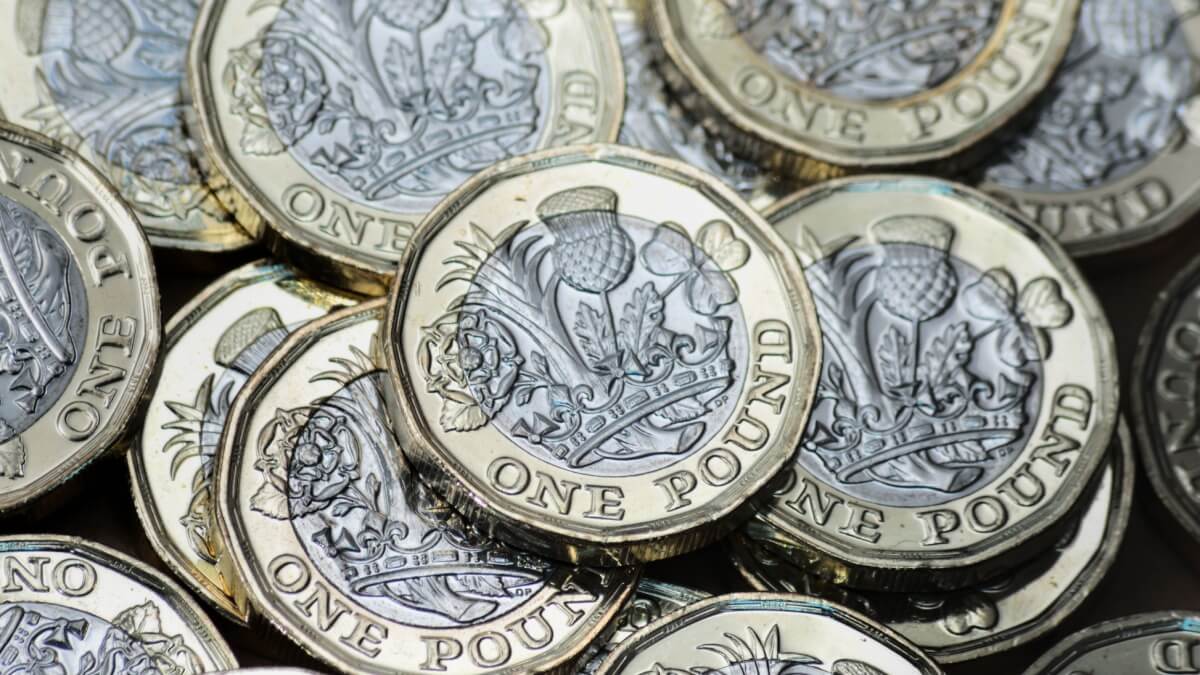
The pound is most closely associated with the UK, but it is not the only pound currency in use. Other countries and territories also use currencies called the pound, including the Egyptian pound and the Falkland Islands pound.
This guide explains where the pound sterling (GBP) is used, which territories peg their pound to sterling, and which countries issue their own independent pound currencies.
So, let’s begin.
The pound sterling (GBP) is the official currency of the United Kingdom, issued and regulated by the Bank of England.¹ It is one of the most traded and strongest currencies in the world and has been in use for over 1,200 years.
GBP also sits behind several local pound currencies used in Crown dependencies and British Overseas Territories. These are separate local currencies, but they are pegged to sterling.
The British pound is used across all 4 nations of the United Kingdom: England, Scotland, Wales and Northern Ireland. In England and Wales, only the Bank of England issues banknotes. But in Scotland and Northern Ireland, 6 commercial banks can also issue their own notes.²
These notes are all in pounds sterling and circulate alongside Bank of England notes. **Scotland and Northern Ireland do not have separate currencies; **all banknotes issued across the UK are part of the same monetary system.
Banks that issue notes in Scotland and Northern Ireland must hold assets to match their value by law. This ensures the same level of protection as Bank of England notes.²
Also, Scottish and Northern Irish banknotes are not legal tender in England, and Bank of England notes are not legal tender in Scotland. This can sound more restrictive than it is, as legal tender mainly refers to settling debts through the courts, not everyday payments.
In practice, when you’re paying in shops, cafés or taxis, businesses can choose which notes they accept. Most retailers across the UK will take these banknotes, but acceptance isn’t guaranteed.³
Several Crown dependencies and British Overseas Territories issue their own pound currencies, all tied to GBP at a 1:1 rate.⁴
None of these are independent currency. Each one maintains a fixed rate with sterling, meaning their value moves in lockstep with GBP. Unlike a floating currency, whose value shifts with market forces, these local pounds cannot fluctuate independently.
That is what a pegged currency means in practice: local authorities issue and regulate the notes, but monetary policy stays tied to the Bank of England. UK pounds are widely accepted across these territories, but local notes are generally not accepted back in the UK.
Egypt, Lebanon, Syria, South Sudan and Sudan each have their own pound, with independent central banks and monetary policies.
The name comes from historical ties, but the currencies are not linked today. Several of these, including the Lebanese and South Sudanese pound, feature among the world’s weakest currencies due to sustained depreciation and economic instability.
The Egyptian pound is the official currency of Egypt, issued and regulated by the Central Bank of Egypt (CBE).⁵ The bank sets monetary policy independently, with a committee that meets regularly to review interest rates and inflation.
Egypt now uses a flexible exchange rate, introduced after years of pressure on the currency. Between 2022 and 2024, the Egyptian pound lost more than 70% of its value against the US dollar, driven by foreign currency shortages and rising inflation.⁶
Currently, the central bank is working to stabilise the currency under an IMF-backed programme, with inflation targets set at 7% by the end of 2026.⁷ If you’re sending money to Egypt or converting EGP, mind that rates can change quickly, so it’s worth checking before you transfer.
The Lebanese pound is issued by Banque du Liban (BDL), the country’s central bank, established in 1964.⁷ For over 2 decades, the LBP held a fixed peg to the US dollar at 1,507.5 pounds per dollar. That peg fell apart in 2019 during a severe liquidity crisis, which led to one of the worst currency collapses in modern history.
According to BDL's own figures, real GDP contracted by an estimated 6.4% in 2024, and the pound lost over 98% of its pre-crisis value.⁷
Currently, most everyday transactions in Lebanon take place in US dollars. Reform efforts are ongoing, including parliamentary approval of a Banking Sector Recovery Law in 2025, but the path to full stabilisation remains uncertain.
The Syrian pound is issued by the Central Bank of Syria and has been the country's official currency since the Lebanese and Syrian currencies formally split in 1948.⁸ Over a decade of conflict has devastated its value.
The official exchange rate fell from around 47 Syrian pounds per US dollar in 2011 to thousands by the mid-2020s, as sanctions cut Syria off from much of the global financial system.
The SYP is not freely traded on international markets, and accessing reliable exchange rate data remains difficult. For anyone needing to send money involving Syrian pounds, checking the latest available rates is essential.
The South Sudanese pound is the official currency of the world's youngest nation, issued by the Bank of South Sudan.⁹
It was introduced in July 2011 following independence from Sudan, replacing the Sudanese pound at par.
The currency has faced severe pressure almost from the start. Civil conflict, oil dependency, and monetary financing have driven sustained depreciation, with the SSP losing over 99% of its value against the US dollar between 2013 and 2023, according to IMF data. Inflation has remained in triple digits in recent years, reaching over 112% in late 2024.¹⁰
The Bank of South Sudan continues to manage exchange rate auctions, though a wide gap between official and parallel market rates has persisted.
The Sudanese pound is issued by the Central Bank of Sudan and has been the country's official currency since 2007, when it replaced the Sudanese dinar.¹¹ It is divided into 100 piastres.
The SDG has experienced sustained depreciation over many years, compounded by US sanctions first imposed in 1997, the secession of South Sudan in 2011, which removed a significant share of oil revenues, and ongoing conflict that has continued to destabilise the economy.
The currency is not freely traded internationally, and exchange rate conditions remain volatile.
Around 11 countries and territories use a currency called the pound as their primary unit. That includes the UK, six Crown dependencies and British Overseas Territories that issue local pounds pegged to GBP, and 5 independent nations: Egypt, Lebanon, Syria, South Sudan, and Sudan. Each of the latter 5 operates a fully separate currency with its own central bank and exchange rate.
No, Ireland uses the euro. GBP is not legal tender there, and most retailers will not accept it. If you are travelling from Northern Ireland into the Republic, you will need to exchange your pounds or use a card that converts at the mid-market rate to avoid paying over the odds.
The UK uses the pound sterling (GBP). Other countries, including Egypt, Lebanon, Syria, South Sudan, and Sudan, have their own currencies called the pound, but these are separate and not linked to sterling.
GBP is also used in six Crown Dependencies and Overseas Territories, including Jersey, Guernsey, the Isle of Man, Gibraltar, the Falkland Islands and Saint Helena. These places issue their own local pound currencies, which are fixed to GBP at a 1:1 rate.
Generally no. Even in destinations with strong historical ties to the UK, the local currency is the standard. GBP is accepted in Gibraltar and across the Crown dependencies, but beyond that, you should plan to pay in local currency.
With Wise, you can hold and convert money in 40+ at themid-market rate, so you are never caught out by hidden markups when you spend abroad.
Learn about the Wise account 🌍
Sources used:
Sources last checked on date: 6-APR-2026
*Please see terms of use and product availability for your region or visit Wise fees and pricing for the most up to date pricing and fee information.
This publication is provided for general information purposes and does not constitute legal, tax or other professional advice from Wise Payments Limited or its subsidiaries and its affiliates, and it is not intended as a substitute for obtaining advice from a financial advisor or any other professional.
We make no representations, warranties or guarantees, whether expressed or implied, that the content in the publication is accurate, complete or up to date.

Find out how to close a Hargreaves Lansdown account in the UK, including the steps involved, how long it takes and info on account closure fees.
Find out which countries use the euro, including the 21 eurozone members, and learn where else the euro is used or accepted.

See which countries use the dollar and understand the difference between using the US dollar and having a separate local dollar currency.

Find out how to close a Vanguard account in the UK, including the steps involved, how long it takes and whether there are any account closure fees.

Find out how to close an eToro account in the UK, including the steps involved, how long it takes and info on account closure fees.

Read this for the lowdown on Vanguard minimum investment requirements in the UK, for its General Investment Account and Stocks & Shares ISA.











