
Can Australians Buy Property in Indonesia: All You Need to Know
Can Australians buy property in Indonesia? Learn everything you need to know before your property purchase.




*Pricing claim based on comparative data for select airports and passes. Live pricing is subject to exchange rate fluctuations.
📱Find out how to get lounge access
Canada is an attractive destination to live, work and study, with a large population of expats and newcomers. If you’re considering a move there you might be wondering: can a foreigner buy property in Canada, and if so how? While buying a property in Canada as an Australian is possible, strict rules have been in place for the past few years which may limit your options.
This guide walks through how to buy property in Canada as a foreigner - including some important restrictions which apply to Australians buying property in Canada. We'll also share how Wise can help you move your funds to Canada with the mid-market rate if you need to finance your purchase from abroad. Plus, you’ll get dedicated support and volume discounts when sending large amounts.
Whether or not you can buy property in Canada as an Australian depends on your residency and the property location. Strict rules apply which mean not all properties are available to non-resident buyers.
From January 2023, the Prohibition on the Purchase of Residential Property by Non-Canadians Act¹ came into effect in Canada which set out the rules for foreigners buying properties in Canada. This is expected to run until 2027 and prevents non-residents from buying property in Canada in many cases.
Aussies may be able to buy property in Canada if they’re already permanent residents of Canada, or temporary residents on select visas who intend to settle in Canada permanently. It is also sometimes possible to buy properties in more rural areas with fewer restrictions compared to urban properties.
The Prohibition on the Purchase of Residential Property by Non-Canadians Act doesn’t usually apply in a few situations, which can include:
If you’re at all unsure whether or not this law applies to you, get advice early on in your journey. As the law is set to be reassessed in future, it’s also helpful to check the most up to date details on government websites before you decide to buy.
No. You can not get Canadian residency through buying real estate or investments.
If you’re planning on going to Canada you’ll need to get an ETA in advance, which will usually allow you to stay for 6 months as a tourist². Other visa conditions and options may apply if you want to work or study in Canada, or if you have US residency.
The restrictions on foreign ownership of property in Canada were brought about in part by the increasing costs of housing, to ensure Canadian citizens are able to afford homes of their own. This measure among others has led to a correction in pricing of Canadian real estate over the past few years, with most areas fairly stable in price or showing only modest change.
The Canadian average house price is up under 1% in the year to March 2026, although some areas have seen larger growth or decline in this time³.
| Pros | Cons |
|
|
The Canadian Real Estate Association publishes data on house prices regionally⁴ which can help give a flavour of the costs in different areas of the country:
| Area | Main cities/towns | Average house price |
|---|---|---|
| Yukon | Whitehorse | 606,000 CAD |
| Northwest Territories | Yellowknife | 464,000 CAD |
| British Colombia | Vancouver, Surrey | 940,000 CAD |
| Alberta | Calgary, Edmonton | 529,000 CAD |
| Saskatchewan | Saskatoon, Regina | 374,000 CAD |
| Manitoba | Winnipeg | 390,000 CAD |
| Ontario | Toronto, Ottawa | 812,000 CAD |
| Quebec | Montreal, Quebec City | 557,000 CAD |
*Correct at time of research - 13th May 2026
Generally the most expensive homes - often above 1 million CAD in value are to be found in Vancouver and Toronto, while cheaper properties may be available in Quebec, more rural locations, and cities like Edmonton and Winnipeg.
If you’ll be searching for your new property in Canada from Australia, you’ll definitely want to start out online. In fact, even if you’re already a resident of Canada, an online search is a smart way to set about your property hunt.
Umbrella websites like these aggregate listings from many realtors and allow you to filter and search to find those which interest you:
Once you’ve narrowed down your preferred areas and properties you’ll need to engage an agent in person to support your search.
If you’re eligible to buy a property in Canada, the process you follow will feel quite familiar. However, it’s still essential to have local advice and legal support to make sure the purchase goes smoothly.
Here’s an overview looking at how to buy property in Canada as an Aussie, step by step⁵.
Step 1: Calculate Costs and Set Your Budget
Make sure you consider all possible costs when deciding on your budget for a new place in Canada, including legal fees and taxes. You can get a mortgage in principle offer if you want to fund your purchase with a loan, which demonstrates what a bank may lend you based on your personal situation, to help you plan.
Step 2: Find a Real Estate Agent and View Properties
Look for a realtor who has experience in dealing with foreign buyers as this can help you navigate the process smoothly. Make sure you’re also up to date with the latest on the rules for foreign property ownership in Canada which are set to be updated in 2027.
Step 3: Negotiate Your Offer and Downpayment
Once you’ve found the right place for you, your agent will help you to make an offer. You’ll also need to engage a lawyer or notary, who will take over the legal side of the purchase process. Once your offer is accepted it’s time to make a down payment which is usually 5% - 10% of the property value.
You may need to take out mortgage insurance at this stage if you have a deposit of less than 20% of the purchase value.
Step 4: Complete Due Diligence Inspections
Your agent and legal representative will carry out due diligence checks to ensure the property can legally be sold. You may also choose to get a home inspection, particularly for an older property.
Step 5: Close the Deal and Take Over the Property
The final step is closing day - usually one or two months after you’ve agreed the sale price. You’ll need to pay all owed money to the seller and your legal team, as well as any taxes required. Your property will be transferred to your name, and you’ll get your keys, ready to move in.
The Canada Mortgage and Housing Corporation suggests you consider the following costs of buying when you build your budget to buy a property in Canada:
| Fee type | Average costs⁶ |
|---|---|
| Appraisal fee | 250 CAD - 350 CAD |
| Home inspection fee | About 500 CAD |
| Estoppel certificate fee (condos only) | Up to 100 CAD |
| Land registration fee | Depends on the area |
| Survey or certificate of location (where required) | 1,000 CAD - 2,000 CAD |
| Legal fees | About 500 CAD |
*Correct at time of research - 13th May 2026
The options to get a mortgage in Canada as an Aussie depend on your residency among other things.
Many banks in Canada offer mortgage products to newcomers to the country who may be on permanent residency paths. There are also options such as the Scotiabank temporary resident mortgage⁷ for eligible buyers who do not have PR status in Canada.
Because your options to buy a property in Canada as a non-resident are limited, there are not many banks which can support a mortgage if you’re not an official Canadian resident. The options may be better for Aussies who are US Green card holders, who might be able to take a mortgage from a bank working across both Canada and the US - but for others, using a broker may be the best bet.
If you’re taking out a mortgage in Canada as a non-resident you can expect to have higher down payment requirements - often up to 35% of the purchase price. Available interest rates may also not be as competitive as for resident buyers.
- Get up to date on the laws covering foreign home ownership in Canada before you start to plan - strict restrictions on non-resident ownership are set to run until 2027
- Use a local agent and legal advisor, and consider finding a mortgage broker in Canada if you need a home loan - local support can make all the difference
- Some property taxes can vary based on the location of your property so check out they full range of costs to purchase and run a home in Canada before you buy
- Consider using Wise to send your CAD to Canada and when paying your downpayment, fees and mortgage - you’ll get the mid-market rate with low, transparent costs
Use the calculator below to estimate how much your money could be worth in GBP before making an international property payment.
If you’re buying property in Canada, you may need to send money internationally from Australia for your deposit, stamp duties, legal fees or final property payment. Wise is an easy way to save up to 5x when sending money overseas. You can make extra secure transfers to 140+ countries, which are easy to set up with no physical paperwork and completed usually in seconds.
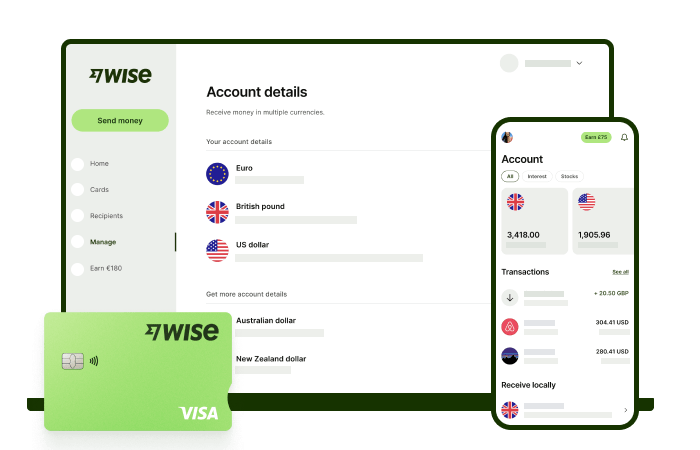
With low, transparent pricing and the mid-market exchange rate for all your currency conversions for your foreign transfers, you'll usually get the best value for your money. Wise lets you see exactly what you're paying for a transfer, and what the recipient will get, with no hidden fees.
For managing foreign currencies even easier, create a free Wise account, and you'll be able to manage and convert your money in AUD and 40+ other currencies. Plus, you'll get local account details in 8+ currencies, including GBP, USD, and more making it easy to receive money from abroad whenever you need. You'll be able to track your transfers all in one place.
When it comes to international transfers, Wise makes things easier and cheaper.
This general advice does not take into account your objectives, financial circumstances or needs and you should consider if it is appropriate for you. Savings claim based on our rates vs. selected Australian banks and other similar providers in Jan 2026. To learn more please visit https://payout-surge.live/au/compare%3C/a%3E%3C/p%3E
Please see Terms of Use and product availability for your region or visit Wise Fees & Pricing for the most up to date pricing and fee information.
*Please see terms of use and product availability for your region or visit Wise fees and pricing for the most up to date pricing and fee information.
This publication is provided for general information purposes and does not constitute legal, tax or other professional advice from Wise Payments Limited or its subsidiaries and its affiliates, and it is not intended as a substitute for obtaining advice from a financial advisor or any other professional.
We make no representations, warranties or guarantees, whether expressed or implied, that the content in the publication is accurate, complete or up to date.

Can Australians buy property in Indonesia? Learn everything you need to know before your property purchase.

Can Australians buy property in the UK? Learn everything you need to know before your property purchase.
Can Australians buy property in Vietnam? Learn everything you need to know before your property purchase.
Can permanent residents buy property in Australia? Learn everything you need to know before your property purchase.

*Pricing claim based on comparative data for select airports and passes. Live pricing is subject to exchange rate fluctuations. 📱Get your lounge...

*Pricing claim based on comparative data for select airports and passes. Live pricing is subject to exchange rate fluctuations. 📱Get your lounge...











