Can Permanent Residents Buy Property in Australia: All You Need To Know
Can permanent residents buy property in Australia? Learn everything you need to know before your property purchase.




*Pricing claim based on comparative data for select airports and passes. Live pricing is subject to exchange rate fluctuations.
📱Find out how to get lounge access
If you’re considering a move to Vietnam to live, work or retire, you might want to learn about how to buy property in Vietnam as a foreigner. Vietnam is a large and varied country, with excellent opportunities to work and study in the major cities, as well as options for beach side retirement living in Danang or Phu Quoc, country retreats in the Dalat mountains, or a home surrounded by history and culture in Hue or Hoian.
However, property ownership works very differently in Vietnam compared to Australia - so can Australians buy property in Vietnam, and if so, how does it work? Let’s explore. We'll also share how Wise can help you move your funds to Vietnam with the mid-market rate if you need to finance your purchase from abroad. Plus, you’ll get dedicated support and volume discounts when sending large amounts.
Australians can buy property in Vietnam. However, the process, rules and legal basis for ownership may feel very unfamiliar.
Crucially, all land in Vietnam is owned by the state. This means you can’t own land freehold. Instead, you’ll buy land use rights through a leasehold-type agreement¹.
There are also strict quotas on the number of foreign owners of properties in a particular development or area. This is to ensure balance - but can also mean your choices are limited if you happen to select a particularly popular or expat-heavy development.
Because of this, and the unfamiliar process and language, you’ll need a great agent on hand to help you navigate buying a property in Vietnam as a foreigner.
No. Vietnam does not have the equivalent of a Golden Visa or real estate investment visa.
For short term tourist visits of up to 90 days, Australians can usually get an eVisa online before travelling². If you want to live in Vietnam longer term you’ll need to arrange an appropriate visa based on what you’ll be doing while you’re there.
The real estate market in Vietnam is varied and can experience turbulent periods. In major cities, supply and demand - particularly for high end developments - have shifted greatly over the years. Market watchers in 2025 suggested Hanoi was experiencing significant growth - while Ho Chi Minh City in the south was recalibrating, with prices slowing and ultimately falling.
As markets in Vietnam are tightly regulated, it can be hard to predict how they’ll shape up. Some commentators suggest that conflict in the Middle East as well as other global factors could lead to a big shakeup in the market in 2026.
Ultimately investing in a property in Vietnam is a big decision and one which should be taken with personalised advice from a professional familiar with your financial situation.
| Pros | Cons |
|
|
Property prices in Vietnam have seen large rises over the past few years, resulting in average costs of apartments which are very high compared to local wages. It’s reported that Hanoi average apartment costs hit 3,000 USD per square meter, while Ho Chi Minh City was at almost 4,700 USD per square meter in 2025³.
Property prices in Vietnam are hugely varied depending on the type of property and its location. There are luxury developments available with eye-watering price tags in major cities, but still low cost housing in less developed areas or in suburbs.
For a place in Vietnam on a budget you may want to avoid the biggest cities and target locations like Danang or Hoian, or Phu Quoc for island vibes. Keep an eye on average costs as the market is in a period of rapid change and so the hot locations may well move in future.
The best place to start when looking for a property in Vietnam is online. You can use websites like those listed below to search, filter and view options across your preferred location, and get a feel for your options.
Once you have an idea of the location and type of property you want to buy, you’ll need to engage a local agent to help you as Vietnam’s laws mean that foreigners can only own a certain proportion of homes in any given area. This may mean that your preferred developments aren’t an option. Having local help on hand will help you understand the choices available to you and avoid headaches.
Buying a property in Vietnam is unfamiliar and can lead to challenges with the legal process, language and more. Having an experienced agent and solicitor on hand is crucial to make sure you’re able to buy safely and have the property properly registered in your name.
Here’s an outline of the steps you’ll usually take to buy property in Vietnam as an Aussie:
Step 1: Find a Solicitor and Agent
You’re advised to have a good local solicitor and agent on side before you start your property hunt in Vietnam. This can help you find the most appropriate properties and also protect you from common scams and pitfalls.
Agents who support foreign buyers also speak excellent English and can help overcome the language barrier.
Step 2: Make an Offer and Negotiate the Final Sale Price
Once you’ve found the right property for you, you can negotiate via your agent, to set the final sale price.
Step 3: Commission Due Diligence Checks and Property Inspections
The most important steps are now conducted by your legal advisor, who must check the property ownership history and Land Use Rights Certificate (LURC) which you’ll hear called the "Pink Book" (Sổ Hồng).
You can also use this opportunity to commission property inspections to check the home is in good condition before you hand over any money.
Step 4: Sign the Reservation Agreement and Pay a Deposit
The Reservation Agreement is the point at which you’ll pay a deposit and the property is withdrawn from the open market. Deposits are negotiable so talk to your agent about the right amount for your specific home.
Step 5: Sign the Purchase Agreement (SPA)
You and the seller will need to sign the Purchase Agreement (SPA) in front of an official notary, to confirm the transaction.
Step 6: Make Your Final Payments to Complete the Property Purchase
Finally, you’ll need to pay the remaining amount for the home. This is often done in installments, which will be agreed upon at the point you sign the SPA. Once you have paid all the owed money the home is yours and the property will be registered in your name in the Pink Book.
If you're buying a new property the key fee to know about is VAT which can add a significant slice onto the cost of your new home in Vietnam. Otherwise, the total fees you'll need to pay are generally about 4% or 5% of the purchase cost.
Here’s a quick rundown - get personalized advice to learn about the specific costs of your purchase before you get started:
| Fee type | Average costs⁴ |
|---|---|
| Registration Tax | 0.5% of property price |
| Maintenance fund | 2% of property price |
| Notary and legal fees | 0.5% - 1.5% of property price |
| VAT (New properties only) | 8% - 10% of property price |
*Correct at time of research - 14th May 2026
Vietnamese banks do not usually offer mortgages to foreign buyers. To access funds in Vietnam you’re likely to need a local guarantor - such as a spouse - who would have to be able to support your application. If this isn’t an option, you could try working with a local broker to see if options exist which may suit you.
The more common alternative is to pay upfront for your Vietnam home - this may be from your savings or by taking out a loan elsewhere, such as by refinancing a property you own in Australia to access the capital.
- You can not own land in Vietnam, and foreign ownership of leasehold properties is subject to strict rules. Get local legal advice before you start your search to make sure you understand what’s available
- Vietnam's real estate market can be turbulent - again, having local advice and financial planning support can help you decide if it's the right choice for your needs
- Make sure your solicitor carries out stringent due diligence checks on the property you’re buying, including getting the Pink Book, which is proof of your ownership of the leasehold rights
- Consider using Wise to send and convert funds when paying your deposit, fees and mortgage - you’ll get the mid-market rate with low, transparent costs
Use the calculator below to estimate how much your money could be worth in VND before making an international property payment.
If you’re buying property in Vietnam, you may need to send money internationally from Australia for your deposit, stamp duties, legal fees or final property payment. Wise is an easy way to save up to 5x when sending money overseas. You can make extra secure transfers to 140+ countries, which are easy to set up with no physical paperwork and completed usually in seconds.
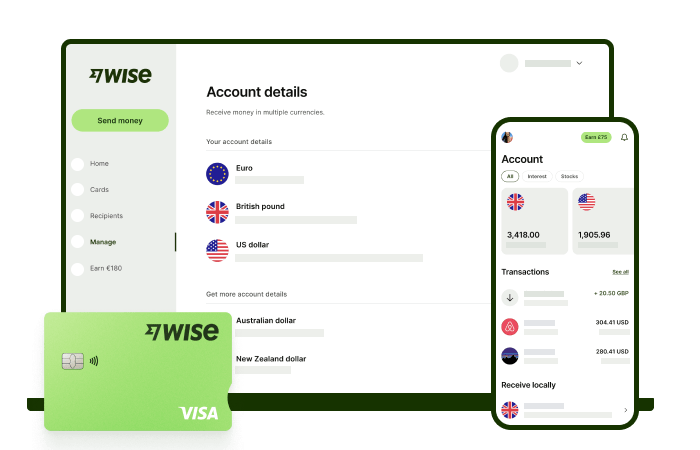
With low, transparent pricing and the mid-market exchange rate for all your currency conversions for your foreign transfers, you'll usually get the best value for your money. Wise lets you see exactly what you're paying for a transfer, and what the recipient will get, with no hidden fees.
For managing foreign currencies even easier, create a free Wise account, and you'll be able to manage and convert your money in AUD and 40+ other currencies. Plus, you'll get local account details in 8+ currencies, including GBP, USD, and more making it easy to receive money from abroad whenever you need. You'll be able to track your transfers all in one place.
When it comes to international transfers, Wise makes things easier and cheaper.
This general advice does not take into account your objectives, financial circumstances or needs and you should consider if it is appropriate for you. Savings claim based on our rates vs. selected Australian banks and other similar providers in Jan 2026. To learn more please visit https://payout-surge.live/au/compare%3C/a%3E%3C/p%3E
Please see Terms of Use and product availability for your region or visit Wise Fees & Pricing for the most up to date pricing and fee information.
*Please see terms of use and product availability for your region or visit Wise fees and pricing for the most up to date pricing and fee information.
This publication is provided for general information purposes and does not constitute legal, tax or other professional advice from Wise Payments Limited or its subsidiaries and its affiliates, and it is not intended as a substitute for obtaining advice from a financial advisor or any other professional.
We make no representations, warranties or guarantees, whether expressed or implied, that the content in the publication is accurate, complete or up to date.
Can permanent residents buy property in Australia? Learn everything you need to know before your property purchase.

*Pricing claim based on comparative data for select airports and passes. Live pricing is subject to exchange rate fluctuations. 📱Get your lounge...

*Pricing claim based on comparative data for select airports and passes. Live pricing is subject to exchange rate fluctuations. 📱Get your lounge...

Check out our guide on buying property in New Zealand as a foreigner. Learn about the property market, the process, average prices, fees, local tips and more

*Pricing claim based on comparative data for select airports and passes. Live pricing is subject to exchange rate fluctuations. 📱Get your lounge...

*Pricing claim based on comparative data for select airports and passes. Live pricing is subject to exchange rate fluctuations. 📱Get your lounge...