
What Is an RSU? Meaning, Tax and How Restricted Stock Units Work
What is an RSU? Learn how restricted stock units work, how they’re taxed in Singapore, and how they compare to stock options and ESOPs.




Pricing claim based on comparative data for select airports and passes. Live pricing is subject to exchange rate fluctuations.
📱Find out how to get lounge access
For many Singaporeans, using a credit card overseas is convenient, whether you’re travelling or shopping online. However, hidden fees and unexpected costs make it important to use your card carefully, so you get the most from it.
This guide helps you get the most bang for your buck whilst spending in foreign currencies, by helping you understand the fees you could be charged, and how to minimise them. We'll also introduce the Wise card, a handy travel companion to make seamless card payments when you're overseas.
| Table of Contents |
|---|
Whilst you may be familiar with the charges associated with your credit card whilst spending at home, it’s important to be aware that there are likely to be additional fees when travelling and spending abroad.
Overseas charges on your credit card are added because you are spending in a foreign currency - and may be imposed on top of any other charges you’d usually face.
These charges may come from:
- Your bank
- The card network
- The merchant
- Or a combination of the three
Most overseas fees are linked to converting your money from Singapore dollars (SGD) into the local currency. This conversion usually comes with additional costs, which we’ll explain below.
Banks charge these fees to cover the extra processing involved in currency conversion. International purchases require a network of banks to buy and sell currency.
Because these charges aren’t part of your everyday spending, they’re easy to miss, until your next credit card bill arrives. That’s why it’s important to understand when you’ll be charged, and how to reduce these costs.
There are many types of credit card overseas charges, which vary depending on your card. It’s important to understand how each one may affect you, and bear in mind that you might be charged more than one fee for any given card or transaction.
Foreign transaction fees apply when you spend in a currency other than your home currency - so SGD in this case. This is generally a percentage of the amount you spend, and covers currency conversion costs and processing fees.
Most banks charge between 1% and 3%. For example, HSBC charges 2.25% on all credit card transactions in foreign currencies1.
Many banks also add a foreign currency exchange rate markup.
This means that they give you a less favourable rate than the mid-market rate - what you’ll see if you look up the exchange rate on Google.
The marked-up rate is often advertised as a ‘retail rate’ and the markup is a type of hidden fee. How this works is that banks sell their currency for more than the price they buy it at, allowing them to keep the difference. It is easily missed, as, unlike upfront fees, a foreign currency conversion markup is simply a part of the exchange rate offered.
Dynamic currency conversion (DCC) lets you pay in your home currency instead of the local currency when you’re overseas².
It may seem convenient. You don’t need to calculate exchange rates, and you’ll see the charge in SGD. However, the exchange rate and fees are set by the merchant or DCC provider, not your bank³.
This is usually less favourable than your bank’s rate⁴, or the mid-market rate offered by Wise. As a result, your conversion - and the product or service you’re buying - will be more expensive than if you were to pay in the local currency.
Overseas credit card charges typically range from 1% to 3%, depending on your card.
Before travelling, check the fees that apply to your specific card. Consider how those fees might add up based on how you plan to use it.
For example, if you plan on taking cash out of an ATM using your credit card, be aware that this is likely to be treated as a cash advance.
This is different from normal card spending:
Using HSBC as an example, the fee may be the higher of approximately 6% of the amount withdrawn or 15 SGD, plus annual interest of around 26%⁵.
You also won’t earn rewards or rebates on cash advances. On top of that, both your bank and the ATM operator may charge additional fees. These costs can add up quickly over a trip.
Before you travel, compare your options. It may even be worth opening an account designed specifically for international spending, especially if you travel often.
For many Singaporeans, a trip to Europe can be an exciting adventure - but making sure you’ll get the most from your trip might come down to having the right card, with minimal fees.
Below is an example comparing 1,000 EUR spending on a Visa credit card versus a Wise card. This assumes a typical 3% bank fee.
| Provider/network | Visa credit card* | Wise |
|---|---|---|
| Amount spent in EUR | 1,000 | 1,000 |
| FX/Conversion cost included in the final amount (SGD) | 45.04 | 3.44 |
| Final cost in SGD | 1,546.09⁶ | 1,496.05⁷ |
*Assuming a 3% bank fee - this varies by card and is for illustrative purposes only. Details correct at the time of research - 24th February 2026.
Whilst it might seem like credit card fees are hidden around every corner when spending overseas, there are also ways to minimise them.
When paying abroad, select the local currency instead of SGD. This helps you avoid DCC, which often comes with higher and less transparent conversion fees.
If you’re using your card to earn rewards, check its overseas fee first.
Extra FX costs may outweigh any miles or cashback you earn. Sometimes, using a cheaper card makes more sense, even if you miss out on rewards.
You may want to open an account with a provider like Wise, which is designed for international spending. By using a specialist provider, you’ll likely receive a better exchange rate and lower fees overall, which may mean you spend less in the end when you travel abroad. More on that, next.
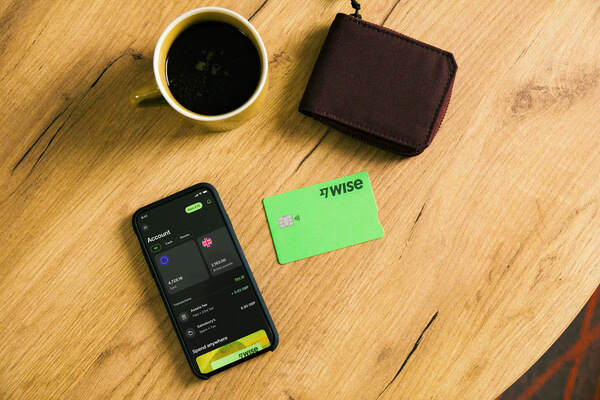
The Wise card lets you spend in 40+ currencies at the mid-market rate including MYR, JPY, CNY, and USD so you know you'll be getting a great deal in over 150+ countries. Simply create a free Wise account, order a card and top-up SGD to get started.
Virtual cards are free and can be added to your Google or Apple Pay wallet, while a physical Wise card can be ordered for a low fee of 8.50 SGD. Having a physical Wise card allows you to make chip and pin payments, as well as 2 free ATM withdrawals to the value of 350 SGD each month, before low fees start.
While abroad, you can choose to spend with directly in SGD and let auto-conversion do the trick, or convert to your desired currency with your Wise account. Either way, you’ll get the exchange rate you see on Google, with low, transparent fees from 0.26%.
Plus, you can activate Wise Interest to earn returns* on your SGD and other currencies, meaning your travel money could be growing right up until you spend it.
*Growth is not guaranteed. Capital at risk.
Sources:
*Please see terms of use and product availability for your region or visit Wise fees and pricing for the most up to date pricing and fee information.
This publication is provided for general information purposes and does not constitute legal, tax or other professional advice from Wise Payments Limited or its subsidiaries and its affiliates, and it is not intended as a substitute for obtaining advice from a financial advisor or any other professional.
We make no representations, warranties or guarantees, whether expressed or implied, that the content in the publication is accurate, complete or up to date.

What is an RSU? Learn how restricted stock units work, how they’re taxed in Singapore, and how they compare to stock options and ESOPs.

Find the best expat health insurance in Singapore. Compare coverage, costs, and providers like AIA or NTUC, and learn how you can stay protected.

Learn how Singapore income tax works for foreigners, including tax rates, residency rules, reliefs and how to file your return with IRAS.

Learn how to get new notes from banks in Singapore for Chinese New Year, including release dates, booking steps, ATM options, and alternatives if you miss out.
Compare the best no foreign transaction fee credit cards in Singapore, including fees, rewards, eligibility, and overseas spending benefits.

Looking to start trading? Check out our guide which compares top platforms like Moomoo, Tiger Brokers, and more to help you start investing











