
Is dividend income taxable in Singapore? A 2026 guide
Is dividend income taxable in Singapore? Learn the tax rules for local, foreign and REIT dividends, plus what to report to IRAS.




Pricing claim based on comparative data for select airports and passes. Live pricing is subject to exchange rate fluctuations.
📱Find out how to get lounge access
Exchanging crisp banknotes is a long-standing Chinese New Year tradition in Singapore, which is why demand peaks in the weeks before the festive season. New notes aren’t issued year-round, so they can run out quickly.
This guide explains how to get new notes from a bank in Singapore, what to expect during Chinese New Year, and how the process works across major banks. We'll also introduce the Wise account, a handy companion to make your money go further with low, transparent fees.
| Table of contents |
|---|
Banks usually release new notes two to four weeks before Chinese New Year, depending on the year’s festive calendar¹. Availability is tied to the CNY period, and once allocations are fully taken up, banks typically don’t issue additional supplies.
Banks also distinguish between two types of notes:
Both are commonly used for hongbao, but truly new notes are more limited and often require advance planning.
Closer to the festive period, banks publish official announcements on their websites and apps with details on booking windows, collection dates, and eligibility.
The process is fairly straightforward, but it varies slightly by bank and year.
Some banks still allow over-the-counter exchanges at selected branches during the CNY period. However, walk-in exchanges are restricted. From 3 February, only those aged 60 and above and people with disabilities may walk into bank branches to exchange new or fit-for-giving notes². For everyone else, advance online booking is required.
What to expect:
Because of these limitations, many banks now encourage customers to book in advance online instead.
Online reservations are now the main way to secure new notes in Singapore during Chinese New Year. For most banks, reservation windows open from 27 January, with a dedicated booking page or in-app feature available for a limited time³.
Most banks follow a similar process during Chinese New Year:
Booking windows are often short, so it helps to act early once reservations open.
Most major retail banks in Singapore follow a similar schedule for Chinese New Year new-note exchanges, combining online reservations, branch collections, and pop-up ATMs during the festive period.
- 27 January: first online reservation window opens
- 3 February: second reservation window opens and pop-up ATMs begin operating
- 3 to 15 February: selected pop-up ATMs dispense new or fit-for-giving notes
Outside of Chinese New Year, ATMs in Singapore do not dispense new notes. During the festive period, only specially designated or pop-up ATMs are enabled for this purpose.
Pop-up ATMs operate only during the festive window, typically from 3 to 15 February, dispensing new or fit-for-giving notes in fixed denominations. Locations are announced closer to Chinese New Year and may vary by bank and day
Pop-up ATMs work on a first-come, first-served basis, and note availability can differ by location.
Checking official bank announcements before booking or heading to an ATM can help avoid wasted trips.
Missing the booking window doesn’t mean you’re out of options.
You could consider:
If you’re sending money digitally, physical cash isn’t always necessary. Whether you’re gifting locally or to friends and family overseas, you can send money online, learn more in our guide on how to send an e-hongbao.
This can be a practical alternative when banknote supplies are limited, or when loved ones are celebrating Chinese New Year overseas.
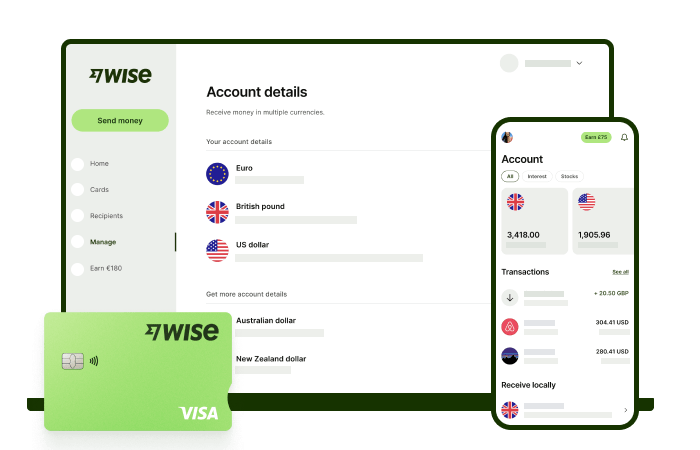
Wise international money transfers can be set up online or within the Wise app with low fees from 0.26% and the mid-market rate, to over 140+ countries. There’s no markup added to the exchange rate that’s used to convert your currency, which makes it easier to see exactly what you're paying for a transfer, and what the recipient will get in the end. Just transfer the amount indicated in SGD and let Wise do the rest.
Track your transfers easily when you create a free Wise account, and manage, hold, and convert your money in SGD and 40+ other currencies. You'll get the same great rates, and be able to track your transfers all from one place. As a bonus, you can also get 8+ local account details to be able to receive money in SGD, USD, GBP, and more.
It’s best to reserve as soon as banks open their booking systems — usually two to four weeks before CNY.
Some banks restrict exchanges to existing customers, especially during peak demand periods.
Most banks exchange notes at face value, but limits apply.
Banks usually release new or good-as-new notes annually for Chinese New Year, subject to availability.
$10 and $50 notes are the most commonly requested and tend to run out first.
Sources used:
*Please see terms of use and product availability for your region or visit Wise fees and pricing for the most up to date pricing and fee information.
This publication is provided for general information purposes and does not constitute legal, tax or other professional advice from Wise Payments Limited or its subsidiaries and its affiliates, and it is not intended as a substitute for obtaining advice from a financial advisor or any other professional.
We make no representations, warranties or guarantees, whether expressed or implied, that the content in the publication is accurate, complete or up to date.

Is dividend income taxable in Singapore? Learn the tax rules for local, foreign and REIT dividends, plus what to report to IRAS.

Read our OCBC MyOwn Account review for parents. Compare fees, features and kids card options.

Looking for the best debit card for kids in Singapore? Compare features, fees and travel-friendly options from Wise, OCBC and POSB.

What is an RSU? Learn how restricted stock units work, how they’re taxed in Singapore, and how they compare to stock options and ESOPs.

Find the best expat health insurance in Singapore. Compare coverage, costs, and providers like AIA or NTUC, and learn how you can stay protected.
Using your credit card overseas? Learn about foreign transaction fees, FX markups and DCC, and how to avoid extra charges when spending abroad.











