
Direct and indirect expenses: A simple guide for business owners
Understand direct and indirect expenses with examples. Learn cost classification for better pricing, profit analysis, and tax compliance for Indian businesses.


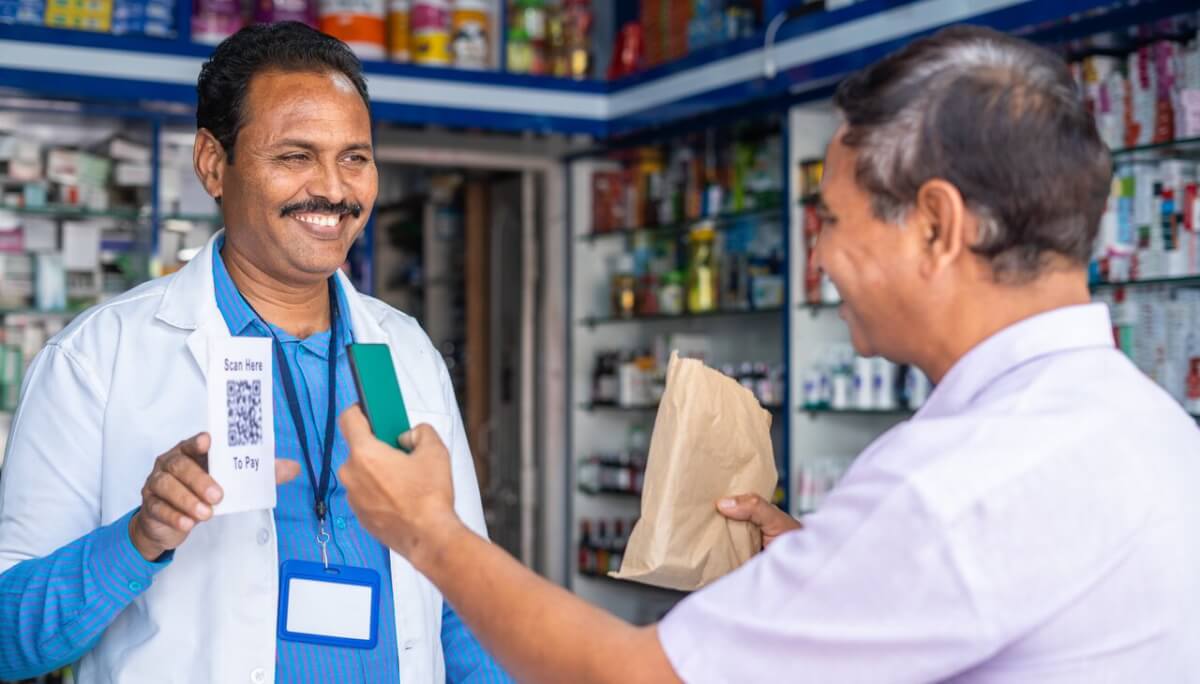
Over 21 billion UPI transactions were processed in January 2026 in India1. Small stores, service providers, and online sellers now depend on digital payments to close sales and manage cash flow. The challenge is choosing a payment gateway that matches how a small business actually works. Read on to understand which payment gateways in India tend to suit small businesses, and why.
| Table of Contents |
|---|


A payment gateway allows a business to accept digital payments and route them to its bank account. It collects payment details from the customer, checks that the payment is valid, and sends it to the bank for approval. Once approved, the payment gateway confirms the transaction and begins the settlement process. Most small businesses use payment gateways through website checkouts, payment links, QR codes, or card machines.
Small businesses use payment gateways at the point where a customer decides to pay. For an online store, this is the checkout page. For a service provider, it may be a payment link sent before work begins. For a physical store, it could be a QR code at the counter. The gateway sits at the final step of the customer journey.
If this step is slow or confusing, the sale often stops there. Beyond the payment itself, gateways also affect how quickly money reaches the business, how refunds are handled, and how easily payments can be tracked.
Payment gateways are widely used across Indian industries where digital payments are part of daily operations.

Across these sectors, payment gateways help small businesses collect payments faster and keep records organised.
Razorpay is a payment gateway provider that enables businesses to accept online payments through a single platform. It supports UPI, credit and debit cards, net banking, wallets, and payment links for collecting payments without complex setup.
Key features include self-serve onboarding, ready-made checkout, payment links, refunds handling, and settlement dashboards for tracking payouts.
Pricing is transaction-based, starting from 2% per successful transaction, plus 18% GST, and no mandatory setup fee on the standard plan2. This pay-as-you-go pricing and low operational overhead make it suitable for small businesses with limited volumes or variable cash flow.
PhonePe Payment Gateway enables businesses to accept payments via UPI, credit/debit cards, and netbanking through hosted checkout pages and APIs. It is closely integrated with the PhonePe UPI ecosystem, which is widely used by consumers in India, reducing friction at checkout.
Based on PhonePe’s published pricing3, the Standard Plan is listed as Free, with zero setup fee, zero annual maintenance fee, and no hidden charges, with T&Cs applicable. For higher-volume businesses, an Enterprise Plan offers personalised pricing, priority onboarding, and a dedicated account manager.
This zero-fixed-cost entry and optional scale-up model suits small businesses that want to begin accepting payments without upfront financial commitment and move to customised pricing only as volumes grow.
Cashfree Payments enables businesses to accept online payments through UPI, cards, netbanking, and wallets using a single payment gateway. It focuses on helping businesses receive payments and settlements efficiently, with tools to track transactions and payouts in one place.
Cashfree offers a 1.6% gateway fee4 for new merchants for a limited period (valid for up to 12 months, subject to T&Cs), with international card transactions listed at 2.69%. Along with the discounted fee, features such as integrated payouts, refund handling, and reconciliation dashboards help small businesses manage cash flow and operations from a single platform.
This combination of lower entry pricing and operational tooling suits small businesses that want to control costs while minimizing manual payment processing effort.
Instamojo enables small businesses to sell online without building a custom website or integrating a separate payment gateway. It allows merchants to create an online store, smart page, or payment link and accept payments via UPI, cards, netbanking, and wallets from a single interface.
Pricing includes a ₹0/year Lite plan for businesses that are just starting, with paid store plans at ₹6,999/year (Starter) and ₹14,999/year (Growth) offering additional features, while the Growth plan provides lower transaction fees5. Fixed annual pricing, built-in storefronts, and no-code setup reduce dependence on developers and recurring tech costs.
This suits small businesses that need a predictable budget, quick setup, and a way to start selling immediately without ongoing platform or infrastructure overhead.
PayU enables businesses to collect payments online across multiple customer payment preferences, including UPI, cards, netbanking, wallets, and EMI-based payments. It offers ready-to-use checkout options and integrations that let businesses add payments to websites or apps without building custom payment flows.
PayU uses a pay-as-you-use pricing model, charging 2% per successful domestic transaction for cards, netbanking, BNPL, and wallets, and 3% for EMI, American Express, Diners Club, and international transactions6, plus 18% GST.
With no setup fee and the ability to support EMI and international payments from the outset, PayU suits small businesses that want flexibility to increase ticket sizes or expand to cross-border customers as they grow, without switching providers later.
Wise payment gateway
Made for ecommerce with low fees and local currencies. Coming soon.
Register for updates

UPI is the most widely used payment method in India, especially for small and local businesses. The gateway should support major UPI apps and handle high transaction volumes during peak hours such as sales or festival periods.
Transaction charges in India typically attract 18% GST. Small businesses benefit from gateways that clearly show base transaction fees, GST, and any additional charges, so there are no surprises during settlement.
Many Indian small businesses operate without dedicated legal or technical teams. Gateways with paperless onboarding, clear KYC requirements, and step-by-step documentation reduce delays in going live.
Settlement timelines vary based on banks and holidays. Faster settlements or predictable T+1 cycles are important for Indian businesses that rely on daily cash flow to manage vendors, salaries, or inventory.
In India, failed or pending transactions are common due to network issues or UPI timeouts. The gateway should provide clear status tracking, automated reversals, and easy refund initiation to reduce customer support burden.
Payment gateways in India must comply with RBI guidelines such as tokenisation of card data and data localisation. Using a compliant gateway reduces regulatory risk for small businesses.
Access to India-based customer support, regional working hours, and clear escalation processes helps small businesses resolve payment or settlement issues quickly.
For Indian businesses selling services or products overseas, it is important to understand international card support, foreign currency settlement options, and how foreign exchange conversion and cross-border fees are applied.
While payment gateways help Indian small businesses collect domestic digital payments through UPI, cards, and wallets, they are primarily designed for India-based transactions. When businesses start working with overseas clients, they often encounter high bank fees, slow inward remittances, and unclear foreign exchange costs. This creates a gap once a business moves beyond India-only payments.
Expanding a business globally opens up exciting opportunities, but also new challenges like receiving payments across borders. Hidden foreign transaction fees and hefty markups involved with international payments can eat into your profits and time.

Wise Business addresses this gap by enabling Indian businesses to receive money from abroad using local account details in supported foreign currencies. Conversions are offered mid-market exchange rates with no hidden markups and a transparent upfront fee.
Are you a small business or freelancer receiving payments from overseas? Transform the way you receive global payments with Wise Business:
Sign up for the Wise Business account! 🚀
Sources:
*Please see terms of use and product availability for your region or visit Wise fees and pricing for the most up to date pricing and fee information.
This publication is provided for general information purposes and does not constitute legal, tax or other professional advice from Wise Payments Limited or its subsidiaries and its affiliates, and it is not intended as a substitute for obtaining advice from a financial advisor or any other professional.
We make no representations, warranties or guarantees, whether expressed or implied, that the content in the publication is accurate, complete or up to date.

Understand direct and indirect expenses with examples. Learn cost classification for better pricing, profit analysis, and tax compliance for Indian businesses.

Understand corporate bank accounts in India, their key features, and the opening process. Learn how they differ from current accounts to find the right fit.

Know what qualifies as a foreign company under Indian law, the available registration options, key approvals and documents required. Read here to know more

Explore business travel insurance options in India. Learn about coverage, costs, providers, and how to protect employees during business trips.

Explore foreign business ideas which are not in India. Identify proven global models, assess demand locally, and understand challenges. Read more here.

Learn how to start an online business in India. From ideas and registration to payments, logistics, and selling internationally. Read here to find out more.











