
Cost of Outsourcing Social Media: A Guide for UK Businesses
Learn how much it can cost to outsource social media in the UK. Our guide explains average rates, pricing models, cost drivers, and more.


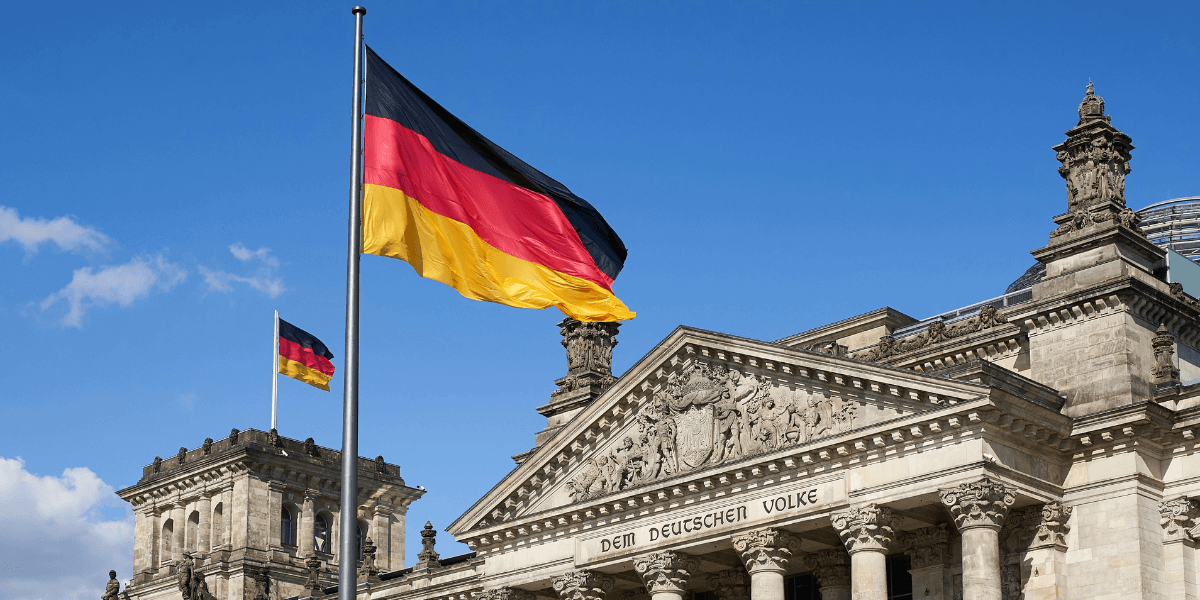
Want to start or expand your business in a country with access to the EU market, a highly skilled workforce and world-class infrastructure? Germany could be a strong option, with global strength in machinery and automobile exports1, a thriving SME-backed economy2 and a high-income market.
In this guide, we've explained how to start a business in Germany, the costs involved, the legal entities available and the key practical points UK business owners may need to consider.
We've also explained how Wise Business can help with international payments when doing business in Germany.

| Step | Summary |
|---|---|
| 1. Decide whether Germany is right for your business | Decide whether Germany is right for your business |
| 2. Choose your German business structure | Choose your German business structure |
| 3. Check costs and share capital requirements | Check costs and share capital requirements |
| 4. Check licences, visas and permits | Check licences, visas and permits |
| 5. Register your business locally | Register your business locally |
| 6. Register for tax via ELSTER | Register for tax via ELSTER |
| 7. Enter your company in the Company Register, if required | Enter your company in the Company Register, if required |
| 8. Open a Wise Business account to transfer starting capital at the mid-market exchange rate with low, hidden fees | Open a Wise Business account to transfer starting capital at the mid-market exchange rate with low, hidden fees |
Germany continues to be one of the UK's largest trading partners. Last year, it was the UK’s 2nd-largest trading partner, with total trade of goods and services worth £152.8 billion3.
Germany ranks at number 22 out of close to 200 countries listed in the World Bank Doing Business report4. That means it’s considered to be a relatively easy place to operate in terms of regulations and processes.
Generally UK business owners and entrepreneurs could consider expanding into Germany in sectors such as manufacturing, engineering, chemical and electrical5.
German business culture can be somewhat more formal compared to the UK, and is considered efficient and well organised.
Before deciding, consider potential challenges:
| Challenge | Details |
|---|---|
| Regulatory complexity | Since Brexit, additional administrative effort may be required6 |
| Language barrier | Legal filings and communication may be in German |
| Travel and residency | Visas such as the national D visa may be required7,8 |
| Director requirements | Residency permits may be needed9 |
| Tax obligations | You may need to file in both UK and Germany10 |
| Banking requirements | Stricter KYC processes may apply11 |

Before you can start your German business, you’ll need to decide which type of entity structure suits your specific needs. There are a lot of different options for structure type12.
The right structure can affect your liability, registration obligations, tax position, costs and the way your business is perceived.
| Business structure | Key features |
|---|---|
| Small business | May not need to be entered onto the commercial register depending on turnover, transactions and size. Cannot operate under a commercial name if unregistered. Businesses can still choose to register voluntarily. |
| Registered commercial business | Must be registered depending on business size and scope. Can offer tax advantages and reduced personal financial risk compared to unregistered structures. |
| Sole proprietor | Designed for individuals working alone. Full personal liability and combined personal/business taxation. |
| General partnership (OHG) | Partners share full liability for the business. Can include individuals or companies. Roles and responsibilities are defined in a partnership agreement. |
| Limited partnership (KG) | At least one partner has unlimited liability, while others limit liability to their investment. |
| Limited liability company (GmbH) | Separate legal entity with limited liability. Requires a minimum share capital of €25,000. |
| Entrepreneurial company (UG) | Simplified version of a GmbH. Can be started with as little as €1 in share capital. Often used by startups. |
| Joint-stock company (AG) | Requires at least €50,000 in share capital. Has a more complex structure with management and supervisory boards. |
| Branch office | Extension of an existing UK or international business. Operates under the parent company’s name with some local operational independence. |
Costs vary depending on the structure.
| Legal form | GmbH | UG |
|---|---|---|
| Notary fees | €352–€826 | €176–€826 |
| Commercial register | €150 | €300 |
| Minimum share capital | €25,000 | €1 |
You should also budget for ongoing costs like accounting, compliance and licences.
Get expert support on making large transfers using Wise 💷
Request a call-back from our team
You may need licences depending on your business type13.
If you’re a UK entrepreneur, you may also need to check visa and residency requirements before working in Germany7,9.
You can find local authorities using the German government tool14.
Registration requirements vary depending on your location and business activity.
Register via ELSTER15. You may also need professional tax advice if operating across both the UK and Germany.
This publication is provided for general information purposes and does not constitute legal, tax or other professional advice from Wise Payments Limited, its subsidiaries or affiliates. It should not be treated as advice from, or a communication with, HMRC, and it is not intended as a substitute for obtaining business advice from a tax advisor or any other professional.

Most companies must be entered into the Company Register16.
Very small businesses may be exempt, depending on their size and activity.

For UK businesses expanding into Germany, transferring starting capital from GBP to EUR may incur unforeseen expenses, such as hidden exchange rate mark-ups. This isn't the case with Wise Business, as you can exchange GBP to EUR at the mid-market rate with low, transparent fees.
With Wise Business, you can:
Make the wise choice when selecting a business account for all your domestic and global needs.
Be Smart, Get Wise.
*Disclaimer: The UK Wise Business pricing structure is changing with effect from 26/11/2025 date. Receiving money, direct debits and getting paid features are not available with the Essential Plan which you can open for free. Pay a one-time set up fee of £50 to unlock Advanced features including account details to receive payments in 22+ currencies or 8+ currencies for non-swift payments. You’ll also get access to our invoice generating tool, payment links, QuickPay QR codes and the ability to set up direct debits all within one account. Please check our website for the latest pricing information.
Typically, it takes between two and eight weeks to start a business in Germany, but the exact timeline depends on your chosen business structure and how prepared you are with documentation.
Germany is generally considered a straightforward place to start a business, especially compared to many other large economies.
Yes, foreigners — including UK residents — can start a business in Germany, and there are no general restrictions on foreign ownership of companies.
Sources:
Sources last checked on April 30, 2026
*Please see terms of use and product availability for your region or visit Wise fees and pricing for the most up to date pricing and fee information.
This publication is provided for general information purposes and does not constitute legal, tax or other professional advice from Wise Payments Limited or its subsidiaries and its affiliates, and it is not intended as a substitute for obtaining advice from a financial advisor or any other professional.
We make no representations, warranties or guarantees, whether expressed or implied, that the content in the publication is accurate, complete or up to date.

Learn how much it can cost to outsource social media in the UK. Our guide explains average rates, pricing models, cost drivers, and more.
Startups today have never faced tougher competition. With investor expectations as sky high as valuations, nearly 20% fail because they are outcompeted and...

Learn how much it costs to start a business in Japan as a UK entrepreneur. Our guide breaks down setup fees, capital needs, and ongoing expenses.

It’s never too early to start getting your business finances in order to simplify your tax admin. To help you start the new tax year on the right foot, we sat...

Learn how much outsourcing software development costs in 2026 and what drives pricing. Our guide explains rates, models, hidden costs, and more.

Learn how much it costs to start a business in Finland as a UK entrepreneur. Our guide breaks down fees, taxes, and ongoing expenses.











