PayPal Invoicing Guide for UK Businesses
Learn how to create and send PayPal invoices as a UK businesses. Our guide explains fees, invoice details, payment options, billing costs, and more.



A successful sale depends on a smooth payment experience, yet many UK businesses still face frustrating ‘declined’ messages at checkout that can disrupt conversions and revenue. These failed payments often stem from issues within the payment authorisation process, a key metric that directly impacts revenue and customer trust.
In this guide, we've explained what a payment authorisation rate is, why it matters for your business performance, and the practical steps you can take to reduce declines and improve transaction success.
We've also explained how Wise Business can support UK businesses in managing international payments more efficiently.

| Topic | Notes |
| What is a payment authorisation rate? | The percentage of attempted card transactions that are successfully approved by the customer's bank, a key metric for business performance and customer experience. |
| Why authorisation rate is important | A low rate can result in lost revenue and a poorer customer experience, and may affect how payment providers assess your business risk profile. |
| Understanding the authorisation process | A multi-step sequence involving data entry, gateway transmission, network routing, issuer review, decision, and customer notification, typically completed in seconds. |
| Factors impacting authorisation success |
|
| Common reasons for declines |
|
| Actionable steps to improve rates |
|
| The Wise Business advantage | Supports international payments by providing local account details in currencies, which may help reduce friction for overseas transactions. |
| Fee transparency | Wise Business uses the mid-market exchange rate and transparent fees, helping businesses better understand international payment costs. |
A payment authorisation rate, also known as a payment approval rate, measures the percentage of attempted card transactions that are approved by the customer's bank.
To calculate it, divide the number of approved transactions by the total number of attempted transactions over a given period. A higher rate generally indicates fewer payment issues during checkout.
Your authorisation rate can affect both revenue and customer experience. A lower rate may mean missed sales opportunities and increased cart abandonment.
Over time, consistently high decline rates may influence how payment providers assess your business, which could affect fees or processing conditions. Monitoring this metric can help identify opportunities to improve payment performance.
When a customer pays with a card online, a rapid sequence of events happens in the background:1
This process typically takes only a few seconds.
Approval outcomes depend on several variables, including data accuracy, available funds, fraud checks, and technical performance of your payment systems.
Common causes include:
Decline codes provide insight into why a transaction failed and can help guide next steps.2
| Decline Code | Meaning | What to do |
| 05 | Generic decline | Ask customer to contact their bank or try another method |
| 14 | Invalid number | Check and re-enter details |
| 51 | Insufficient funds | Use another payment method |
| 54 | Expired card | Use a valid card |
Improving authorisation rates involves refining your checkout experience, fraud controls, and payment options over time.
Use clear forms and validation tools such as AVS and CVV to reduce input errors.
Adjust fraud rules to reduce false positives while maintaining appropriate security.
3D Secure can improve approval rates by giving issuing banks additional confidence in transactions.
Providing alternative payment options and local currencies can improve customer experience and reduce friction in international transactions.
Work with reliable providers and keep systems updated to minimise technical failures.
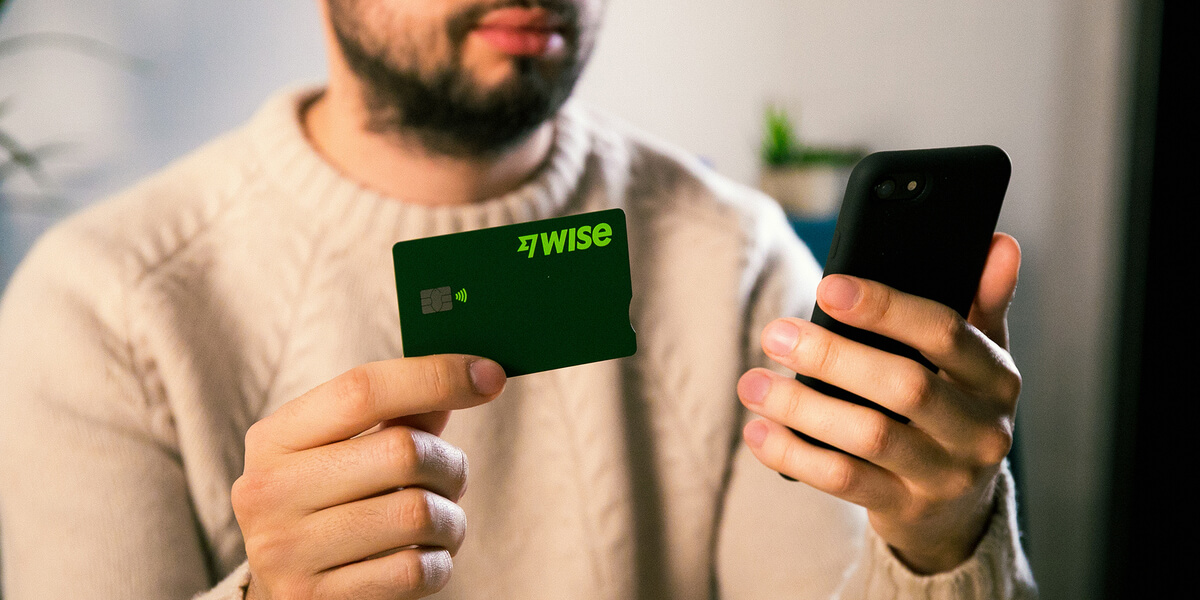
For UK businesses handling international transactions, managing cross-border payments efficiently can help reduce friction and improve payment experiences.
Wise Business offers a way to manage international payments with transparent fees and local account details.
With Wise Business, you can:
Make the wise choice when selecting a business account for all your domestic and global needs.
Be Smart, Get Wise.
*Disclaimer: The UK Wise Business pricing structure is changing with effect from 26/11/2025 date. Receiving money, direct debits and getting paid features are not available with the Essential Plan which you can open for free. Pay a one-time set up fee of £50 to unlock Advanced features including account details to receive payments in 22+ currencies or 8+ currencies for non-swift payments. You’ll also get access to our invoice generating tool, payment links, QR codes and the ability to set up direct debits all within one account. Please check our website for the latest pricing information.
Sources:
Sources last checked on 17-Mar-2026
*Please see terms of use and product availability for your region or visit Wise fees and pricing for the most up to date pricing and fee information.
This publication is provided for general information purposes and does not constitute legal, tax or other professional advice from Wise Payments Limited or its subsidiaries and its affiliates, and it is not intended as a substitute for obtaining advice from a financial advisor or any other professional.
We make no representations, warranties or guarantees, whether expressed or implied, that the content in the publication is accurate, complete or up to date.

Learn how to create and send PayPal invoices as a UK businesses. Our guide explains fees, invoice details, payment options, billing costs, and more.

A comprehensive guide to the best international payment gateways for UK businesses in 2026, including features, fees, supported currencies and more.

Learn about the best business accounts for freelancers in Sweden. Our guide covers features and fees of each provider to help you make an informed decision.

Learn how marketplace payment processing works for UK businesses. Our guide explains associated fees, how to optimise payouts, and more.

Learn how pre-authorisation payments work and how they affect business operations. Our guide explains holds, timings, managing customer expectations, and more.

Learn how multi-currency payment gateways work, how they benefit global businesses, and what factors to consider when choosing one in our guide.