

Revolut GlobalHire vs Papaya Global: Features, Costs and Differences
Compare Revolut GlobalHire and Papaya Global across features, pricing and payroll capabilities to find the right solution for your business.



For many UK businesses importing goods from China, a telegraphic transfer remains one of the most common ways to pay suppliers overseas. But traditional international bank transfers can also come with hidden costs and payment delays making supplier management harder.
This guide explains what T/T payments are, how businesses can make supplier payments to China, what fees to expect and how solutions like Wise Business can help you manage cross-border payments with more transparency - and accuracy.
A T/T payment is a bank-to-bank international money transfer that’s commonly used by businesses to pay overseas suppliers.1 T/T stands for telegraphic transfer although the process is now electronic rather than telegraph based.
Today, most T/T payments are processed through the SWIFT network which allows banks around the world to send secure payment instructions to one another.1
For UK businesses working with Chinese manufacturers, telegraphic transfers are often used for:
- Supplier deposits
- Final balance payments
- Procurement invoices
- Manufacturing orders
- Cross-border service payments
- Wholesale inventory purchases
T/T payments remain a popular choice because they’re suitable for larger transaction amounts and widely supported by international banks.
You might be wondering what TT stands for? As mentioned above, T/T stands for telegraphic transfer which historically referred to payment instructions sent between banks using telegraph systems.1
While the technology has changed, the term is still commonly used in international trade and procurement.
In most cases, yes. A T/T payment, wire transfer and SWIFT payment are closely linked terms and all used to describe international bank transfers.
In short:
- T/T payments is a traditional trade term for an international bank transfer
- Wire transfer is a general banking term for electronic bank transfers
- SWIFT payments are transfers sent through the SWIFT banking network.
For supplier payments to China, businesses will usually send funds via SWIFT using the supplier’s bank details and SWIFT code.1
If you’re wondering how to make a TT supplier payment to China, the process usually follows a standard set of steps.
- Receive the supplier invoice or proforma invoice
- Verify the supplier’s business and banking details
- Confirm payment terms and currency
- Collect required payment information
- Submit the international transfer through your bank or payment provider
- Share the payment confirmation with the supplier
- Track settlement and reconciliation.
Most Chinese suppliers work on 30/70 T/T payments terms which means buyers typically pay a 30% upfront deposit before production begins and 70% before shipment.2
This payment structure helps suppliers manage production costs while allowing buyers to spread cash flow across the manufacturing timeline.
Those businesses handling recurring supplier payments may also benefit from payment platforms that support batch payments, invoice reconciliation and multi-currency management.
This is where Wise Business comes in, allowing eligible businesses to send international supplier payments with upfront fee visibility and multi-currency support from one account.
Before making a T/T payment to China, you should carefully collect and verify the supplier’s payment details. This includes:
- Supplier company name
- Supplier registered address
- Bank name and branch
- SWIFT/BIC code
- Bank account number
- CNAPS code (for some RMB payments)
- Invoice or purchase order number
- Payment purpose
- Currency and payment amount.
For payments into mainland China in Chinese yuan (CNY), businesses may also need a purpose code.3 Without it, the recipient bank may delay or reject the payment while additional checks are carried out. It’s important to confirm the correct purpose code with both the payment provider and supplier before sending funds.
Supplier verification is one of the most important parts of international procurement. Unlike card payments, T/T payments can be hard to reverse once funds are sent.
Some of the most common supplier verification checks include:
- Confirming the company registration details
- Matching the supplier name to the bank account name
- Verifying invoice authenticity
- Reviewing trade documentation
- Checking business licences
- Confirming shipping details independently.
Some teams may even send a small test payment before transferring large balances to a new supplier. In addition, businesses importing high-value goods often use third-party supplier verification before approving production payments.
| 💡 Read More About 9 ways to pay Chinese Suppliers |
|---|
One of the biggest challenges with traditional international bank transfers is hidden costs. Unfortunately, many businesses only discover the true cost of a T/T payment after the transfer has been processed.
Common costs include:
- Sending bank fees
- Receiving bank fees
- FX conversion mark-ups
- Correspondent bank fees
- Intermediary bank lifting fees
- SWIFT processing charges.
Delays are common too as a result of compliance reviews, missing information, incorrect details, Chinese banking regulations, bank routing and currency conversion processing.
Businesses commonly focus on the transfer fee but forget about FX costs. However, exchange rate mark-ups can sometimes be more than the visible transfer fee itself. This is especially concerning for businesses making regular procurement payments or managing tight supplier margins.
Traditional banks may also use intermediary banks to route payments internationally. This can come with fees during processing, meaning the supplier receives less than expected.
Wise Business helps businesses to understand the transfer fee and exchange rateupfront before sending any money. Even better, depending on the route and currency, some payments may even avoid traditional banking chains.
Finance teams need visibility over how much the supplier will receive, expected delivery timelines, FX conversion costs, payment tracking and invoice reconciliation. Without it, businesses may experience delayed shipments, supplier disputes, duplicate payments, cash flow issues and additional work.
This is why visibility is so important and for businesses managing multiple suppliers across China and other markets, payment visibility can become a major operational challenge.
Thankfully, Wise Business offers centralised payment management tools helping businesses track supplier payments and manage international transfers more efficiently.
Many businesses now use modern payment platforms alongside traditional banking services to manage global procurement. This can be especially beneficial for businesses working with suppliers across multiple currencies and countries.
In doing so, many businesses enjoy upfront FX pricing, multi-currency balances, batch payments, API integration, centralised payment approvals, digital invoice tracking and automated reconciliation - plus more.
Discover more about cross-border B2B payments at Wise. 🔍
Businesses sourcing products internationally often work with suppliers using different currencies. For example, a UK importer may pay Chinese suppliers in USD or CNY, European suppliers in EUR and US suppliers in USD.
Managing multiple international bank accounts can create additional admin and FX exposure. Wise Business allows eligible businesses to hold and manage 40+ currencies in one account and send payments to 140+ countries. This can boost payment efficiency and cash flow management.
Those businesses that process multiple invoices every month likely find it takes a significant amount of time. Wise’s batch payment functionality can reduce repetitive admin tasks by allowing your teams to upload and process multiple payments at once. This can improve efficiency, internal approvals, supplier reconciliation, visibility and month-end financial reporting.
Why not compare different global payment methods here? 🔍
If your business manages international procurement and supplier payments, Wise Business can provide an alternative to traditional bank transfers. In fact, Wise Business allows eligible businesses to send international payments, manage multiple currencies and track supplier payments - all from one account.
One key feature of a Wise Business account is that it shows the transfer fee and exchange rate before a business confirms payment. This means your finance team will understand the total cost of any supplier payments upfront.
Businesses can also manage international payments alongside multi-currency balances and team permissions plus a whole host of additional features for a one-off fee of £50 (Advanced plan) or for free (Essential plan).
Wise Business can help businesses track international supplier payments with real-time payment notifications. This can boost operational visibility and efficiency across finance teams, reducing admin and improving payment oversight.
In short, for businesses looking for more visibility and streamlined international payment management, Wise Business offers tools to manage supplier payments, multiple currencies and international transfers from one account.
T/T payments (telegraphic transfers) are widely used by UK businesses to pay suppliers in China. However, before initiating any payment transfers, businesses should be aware of FX costs, intermediary bank fees and uncertainty over final settlement amounts.
Therefore, it’s essential that finance teams carefully manage supplier verification, payment terms and visibility of the total cost before sending funds. Tools like Wise Business can help provide clearer upfront pricing and more streamlined international payment management.
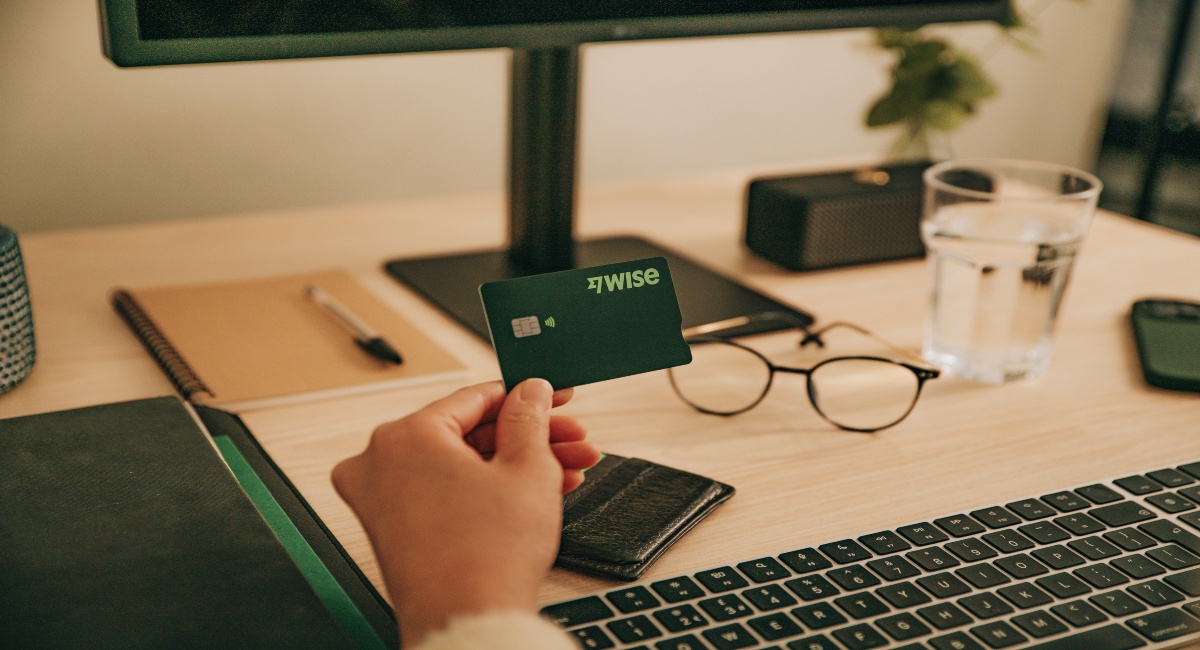
With Wise Business, you can:
Make the wise choice when selecting a business account for all your domestic and global needs.
Be Smart, Get Wise.
Once a T/T payment has been processed through the SWIFT network, reversing the transfer can be challenging as it requires cooperation from intermediary banks and the recipient bank. This is why supplier verification is important before sending large international payments.
Many Chinese suppliers use T/T payments because they’re widely accepted, familiar for international trade and suitable for larger transaction values.
A proforma invoice is commonly used before production or shipment to confirm product details, payment amount, supplier banking information, agreed payment terms and shipment timelines. It’s often needed for a T/T payment.
While many international T/T payments use the SWIFT network, some payment providers use local payment rails or alternative payment networks depending on the destination country and currency.
30/70 T/T payment terms usually mean a 30% deposit paid upfront before production and 70% balance paid before shipment.2
A CNAPS code is a Chinese domestic bank routing code used for payments within mainland China.4 Some international supplier payments into China may require the recipient’s CNAPS code in addition to the SWIFT code.
Traditional SWIFT payments to China often take between two and four business days,1 depending on banking cut-off times, compliance checks, currency conversion times, intermediary bank routing and Chinese banking regulations.
Yes, certain banks and providers allow transfers to China, but additional compliance checks and purpose codes may be required.
Payments may be delayed, rejected or returned, and in some cases intermediary fees may still apply if you input the wrong details.
Yes, any business can use T/T payments, but smaller businesses should be careful with FX costs and supplier verification to avoid costly errors.
Yes, most T/T payments can be tracked using a SWIFT reference provided by your bank or payment provider. This allows businesses to see when funds are processed, which intermediary banks are involved, and when the payment is received by the supplier’s bank.
*Disclaimer: The UK Wise Business pricing structure is changing with effect from 26/11/2025 date. Receiving money, direct debits and getting paid features are not available with the Essential Plan which you can open for free. Pay a one-time set up fee of £50 to unlock Advanced features including account details to receive payments in 22+ currencies or 8+ currencies for non-swift payments. You’ll also get access to our invoice generating tool, payment links, QuickPay QR codes and the ability to set up direct debits all within one account. Please check our website for the latest pricing information.
Sources used:
Sources last checked on date: 11-May-2026
*Please see terms of use and product availability for your region or visit Wise fees and pricing for the most up to date pricing and fee information.
This publication is provided for general information purposes and does not constitute legal, tax or other professional advice from Wise Payments Limited or its subsidiaries and its affiliates, and it is not intended as a substitute for obtaining advice from a financial advisor or any other professional.
We make no representations, warranties or guarantees, whether expressed or implied, that the content in the publication is accurate, complete or up to date.

Compare Revolut GlobalHire and Papaya Global across features, pricing and payroll capabilities to find the right solution for your business.

Learn how much it can cost to outsource social media in the UK. Our guide explains average rates, pricing models, cost drivers, and more.

Startups today have never faced tougher competition. With investor expectations as sky high as valuations, nearly 20% fail because they are outcompeted and...

Learn how much it costs to start a business in Japan as a UK entrepreneur. Our guide breaks down setup fees, capital needs, and ongoing expenses.

It’s never too early to start getting your business finances in order to simplify your tax admin. To help you start the new tax year on the right foot, we sat...

Learn how much outsourcing software development costs in 2026 and what drives pricing. Our guide explains rates, models, hidden costs, and more.











