
Guide on selling a business in Australia: Tips, steps & more
Considering selling a business in Australia? From valuations to negotiating with buyers and fulfilling tax obligations, we’re covering the need-to-know info.



Across Australia, invoices move quietly through inboxes every day. A technician finishes a repair, a designer hands over a final draft, an online business completes another sale. Each invoice looks simple enough, until you notice the small code printed at the top. The invoice number.
You may not pay much attention to the invoice number at first, but it plays an important part in your financial process. It identifies each invoice, keeps payments organised, and supports accurate bookkeeping. Without it, managing invoices becomes far more complex.
This guide covers what an invoice number is, why businesses rely on it, and how to build a numbering system that stays simple, consistent, and audit-ready.
| Table of contents |
|---|


An invoice number is a unique code that identifies a specific invoice. It separates one invoice from another and helps both the business and the customer keep track of what the invoice refers to.
You can use numbers, letters, dates, or a mix of all three, as long as each invoice carries a number that you never repeat.
Invoice number tells you
Examples:
These formats differ, but they all meet one requirement: Unique Identification
An invoice number shows a request for payment. It tells the customer what they owe and helps you track the amount until it is paid. A receipt number confirms the payment. It shows that the customer has paid and acts as proof of the completed transaction.
| Invoice Number | Receipt Number |
|---|---|
| Identifies money owed | Identifies money received |
| Appears before payment | Appears after payment |
| Used to track outstanding invoices | Used to confirm completed payments |
| Helps organise billing and follow-ups | Acts as official proof of payment |
| Part of the invoicing process | Part of the payment/recordkeeping process |
Example:
Every business runs differently, so the best invoice number format depends on your workflow. Some common methods that Australian businesses use for invoicing across trades, services, retail, and online operations are below.
The simplest and most universal method.
Examples: 001, 002, 003
This is more suitable for sole traders, freelancers, and businesses dealing with a low to moderate quantity of invoices. It keeps everything straightforward and easy to follow.
Each invoice follows the next in clear order, so you always know which one came first. This way, customers can also refer to and pay the correct invoice more easily. Accountants like this method because it creates a neat, organised record with no gaps or confusion.
This format includes the date in the invoice number.
Examples:
This method applies to companies that issue a large number of invoices in one day and to industries where time is essential, such as logistics, compliance, or building trades.
It makes recordkeeping more transparent and efficient, as the date is combined with the invoice number. You can tell at a glance when it went out without opening the file or checking your system. This helps teams organise documents by day and keep track of workload without mixing up invoices from different periods. For fast-moving businesses, everything stays organised and traceable.
Each client gets a unique code.
Example:
It works well for agencies, consulting firms, and service businesses with long-term clients. Each customer gets a separate numbering sequence that keeps their invoices neatly grouped. When preparing statements or reviewing past work, you will be able to find all the invoices for a particular customer in one spot.
It also makes account reconciliation easier, as clients frequently send multiple payments across the year. Overall, it provides clarity of structure for businesses involved in ongoing relationships.
Used when billing happens across large projects.
Example:
Project Code: PRJ27 → Invoices: PRJ27-001, PRJ27-002
This method is ideal for construction firms, IT development teams, and engineering and design firms, as well as marketing agencies that handle big, long-term projects. It sets each project up with its own unique invoice sequence, segregating revenue from the rest of the business for that project alone.
This makes the review of progress easier, along with the billing history, to measure profitability per project. It also supports clearer reporting, especially when multiple projects run at the same time.
A well-designed numbering system does not have to be complex. It must only stay consistent, scalable, and easy to follow.
1. Select a format that can grow
Use a numbering style that can handle higher volumes later on. A four-digit sequence like 0001 keeps the format stable as your invoice count rises and avoids issues when the numbers start to scale.
2. Use prefixes for structure
Prefixes help sort invoices by type, year, or category. Codes such as AUS-0001, SERV-0100, or 2024-INV-015 give quick context and make your records easier to navigate as the list gets longer.
3. Keep the format consistent
Stick to one format across all invoices. When the pattern stays the same, your team, customers, and accountant can reconcile payments and track records without second-guessing anything.
4. Never repeat an invoice number
Give each invoice its own unique number, even if you cancel or void it later. A clear, uninterrupted sequence maintains transparency and reduces the risk of duplicate or mismatched entries.
5. Avoid overly complex codes
Overly long or complicated invoice numbers slow down processing and increase mistakes. Use simple formats like INV-0256 and avoid confusing codes like XJ72-PL8-9293-ALPHA-INV-004 or long descriptive strings. A clean number keeps invoicing fast and easy for everyone.
6. Store invoices digitally
Digital copies are easier to search, protect, and share, especially during tax reviews or BAS lodgements. PDF invoices provide a clear, consistent record that stays intact over time. Digital storage keeps your financial history tidy and accessible.
7. Use software that assigns numbers automatically
Automation removes the risk of typos, skipped numbers, or duplicates. Software creates a clean sequence and links invoices to payments, making reconciliation much smoother. It also saves time and reduces manual admin work.
Wise Business helps streamline this global workflow by providing an solution tailored for international clients. You can issue invoices that include your own local account details for major currencies, allowing customers to pay in their local currency without high transfer fees or confusing exchange rate markups.
This makes it easier to match incoming funds to the correct invoice number, ensuring your global bookkeeping remains just as tidy as your local records.
Expanding a business globally opens up exciting opportunities, but also new challenges like receiving payments across borders. Hidden foreign transaction fees and hefty currency conversions involved with international payments can eat into your profits and time.
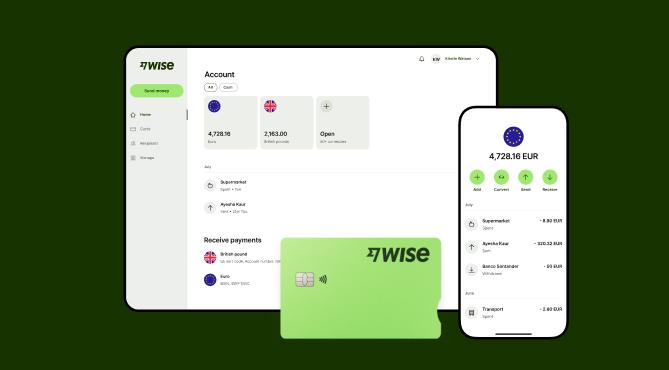
Wise Business serves as a cost-effective solution where you can receive money from around the world at the speed and price of local payments.
Transform the way you receive payments with Wise Business:
Sign up for the Wise Business account! 🚀
This general advice does not take into account your objectives, financial circumstances or needs and you should consider if it is appropriate for you.
1. Where do I place the invoice number on a document?
Place it at the top of the invoice, usually near the invoice date, invoice title, or seller details. This makes it easy to identify.
2. What happens if I accidentally skip an invoice number?
You do not need to fix the gap. Just continue with the next number. The skipped number stays unused but does not break compliance.
3. How long should an invoice number be?
There is no fixed length. Most businesses use 4–10 characters to ensure enough room for growth.
4. Can I use letters in my invoice number?
Yes. You can use letters for prefixes, client codes, or project codes. They help with organisation and tracking.
5. Do proforma invoices need a unique invoice number?
No. A proforma invoice is a quote, not a record for payment. You can label it “Quote” or “Proforma” without assigning an invoice number.
*Please see terms of use and product availability for your region or visit Wise fees and pricing for the most up to date pricing and fee information.
This publication is provided for general information purposes and does not constitute legal, tax or other professional advice from Wise Payments Limited or its subsidiaries and its affiliates, and it is not intended as a substitute for obtaining advice from a financial advisor or any other professional.
We make no representations, warranties or guarantees, whether expressed or implied, that the content in the publication is accurate, complete or up to date.

Considering selling a business in Australia? From valuations to negotiating with buyers and fulfilling tax obligations, we’re covering the need-to-know info.

Searching for the best small business payment gateway in Australia? We’re comparing the top options in this explainer guide.

Compare Pty Ltd vs sole trader in Australia. Learn the key differences, tax implications, and costs, and how to choose the right structure for your business.

Learn how to secure a small business loan in Australia. Explore loan types, eligibility requirements, and a guide to preparing your application and docs.

Learn about retained earnings, the formula, balance sheet impact, and how to use accumulated profits for sustainable growth. Read here.

Learn how to calculate GST in Australia. Understand inclusive vs exclusive pricing, claim GST credits, and avoid common pitfalls to ensure business compliance.











