
Guide on how to calculate break even point
Learn how to calculate your break-even point. Discover the standard formula, step-by-step methods, and managing global costs.


Australia’s payments market is projected to double in just five years from USD 1.07 trillion in 2025 to USD 2.29 trillion by 2030, at a CAGR of 16.441. This isn't just about the numbers, it shows people really want payments to be fast, safe and easy.
From small startups to large enterprises, businesses rely on payment platforms to process transactions efficiently. Payment gateways power every tap, click and transfer, enabling seamless checkouts and valuable transaction insights.
Let's go deep into payment gateways: how they work, typical fees involved, providers in the Australian market and other business considerations.
| Table of contents |
|---|
A payment gateway allows businesses to simplify how digital payments work. This includes payments made through credit or debit cards, e-wallets, Buy Now Pay Later (BNPL) services and other online payment methods.
Think of it like a toll gate. It verifies your customer's payment details before allowing the transaction to go through. It checks if they have enough funds, confirms the details with the bank and ensures the money reaches your account safely.
To protect sensitive payment information, the gateway encrypts data, such as credit card or digital wallet details while securely transmitting it between your business, the customer and the acquiring bank.
Wise payment gateway
Made for ecommerce with low fees and local currencies. Coming soon.
Register for updates
Here’s a simple breakdown of how it all works:
Imagine you run an Australian e-commerce store. A local customer purchases a handbag from your website and pays using their preferred digital payment method such as a Wise Business Card. Your payment gateway (e.g: Stripe, or eWAY) encrypts the payment details and transmits them to your acquiring bank (e.g: Westpac). Westpac's payment processor then forwards the request to the card network (Visa, Mastercard, or eftpos), which verifies the transaction with Wise. Once confirmed, the amount is instantly deducted from the customer’s account and transferred to your merchant account.
In the case of a credit card payment, for instance, if the customer is using an ANZ credit card and ANZ approves the transaction but places a temporary hold on the funds. The customer sees a 'pending' charge, and you won’t receive the money immediately. At the end of the day, the e-commerce platform submits a batch request and once processed, the funds are released and deposited into your Westpac merchant account.
Sign up for the Wise Business account! 🚀
Different payment gateways offer varying features, costs and integration methods. Selecting the right one depends on your business’s operational needs, budget, and customer preferences.
Redirects customers to an external payment page (e.g: PayPal, Stripe). A hosted payment gateway is suitable when you:
Factors to consider: The payment settlement may take longer due to the redirection, which could affect customer experience and increase drop-off rates. On top of that, external payment gateway factors prohibit the merchant from monitoring the entire consumer journey.
Merchants collect customer payment data on their website and send it to the payment processor. Go for a self-hosted payment gateway when you:
Factors to consider: With a self-hosted payment gateway, you shoulder the responsibility for PCI-DSS compliance and secure data storage as the customer data will be stored on your server. It also requires technical expertise for integration along with high setup costs and ongoing security and compliance expenses.
This enables businesses to process payments directly through the payment gateway’s API, allowing seamless integration with their website or app. Go for an API Hosted Payment Gateway when you:
Factors to consider: API integration demands technical expertise, secure implementation and an SSL certificate. PCI-DSS compliance is mandatory, and monthly fees may apply. Both the business and the payment gateway share security responsibilities.
A Local Bank Integration Gateway allows businesses to process payments directly through local banks. Go for a Local Bank Integration Gateway when you:
Factors to consider: While this is straightforward, this method may not support international payments and customization options are limited. You also rely on the bank’s system, which may result in slower payment settlements.
Payment gateway fees cover transaction security, fraud prevention and seamless bank integrations, ensuring smooth payment processing. These fees help merchants protect customer data, reduce chargeback risks and maintain a reliable checkout experience.
Let's take an example of two fictional characters: Robert and Lindsey. When Robert buys a product with his credit card, Lindsey’s website relies on a payment gateway to process the transaction securely. The fee she pays covers encryption, fraud protection and bank verification. Without it, her business risks fraud, and Robert loses a secure checkout experience.
In short, Lindsey pays these fees to make use of the gateway's secure infrastructure and expertise, enabling her to offer a hassle-free, trustworthy online shopping experience to customers like Robert. Let's take a look at the different types of gateway payment fees involved:
| Fee type | Description |
|---|---|
| Setup fees | A one-time fee to get started with the payment gateway. Covers account creation, system setup and integration with the business’s website or POS system. |
| Transaction fees | Charged every time a customer makes a purchase. This can be a flat fee, a percentage of the sale, or both. It’s the cost of processing each payment securely. |
| Monthly fees | A recurring fee that some payment gateways charge for continued access to their services. This may include customer support, software updates and system maintenance. |
| Chargeback fees | Applied when a customer disputes a transaction and requests a refund from their bank. This fee covers the costs of investigating and handling the dispute. |
| Refund fees | Charged when a business processes a refund for a customer. Covers the cost of reversing the transaction and returning the money to the customer. |
| PCI compliance fees | Businesses handling card payments must meet strict security standards (PCI DSS). Some gateways charge a fee to help merchants maintain compliance and avoid penalties. |
| Termination fees | If a business cancels its contract with the payment gateway before the agreed period, a termination fee may apply to compensate for early cancellation. |
| Payment method fees | Some payment methods, like credit cards, have higher processing fees than bank transfers or debit cards. Businesses may pay extra depending on the payment type used. |
| Settlement fees | Charged for transferring funds from the payment gateway to the merchant’s bank account. Some gateways offer standard settlement times (e.g: 2–3 days) for free, while faster payouts may come with additional costs. |
| Miscellaneous fees | Other optional fees may include fraud protection services, faster payout options, or custom integrations. These vary depending on the gateway provider and the business’s needs. |
| Cross-border fees | When selling to international customers, extra fees may apply for currency conversion and cross-border processing. These fees cover the additional banking and processing costs. |
Australia offers a range of payment gateways, each for different business needs. Below are some of the key providers available in the market.
A trusted platform that supports multiple currencies across the globe and integrates easily with e-commerce sites. PayPal is known for its strong security and fraud prevention and has been a reliable choice for businesses of all sizes.
Stripe is popular for its developer-friendly APIs and support for various payment methods. It is scalable and secure which makes it ideal for startups and large enterprises alike.
eWAY is designed for Australian businesses, and offers localized payment solutions and customizable checkouts. It provides strong security and compliance with dedicated customer support.
Square is simple and affordable and combines POS systems with online payments. Transparent fees and built-in tools for small businesses make it a popular choice.
Braintree offers advanced features like recurring billing and split payments. Its developer-friendly APIs help businesses create seamless payment experiences.
Adyen is a global solution supporting over 250 payment methods. It is a good fit for businesses needing omnichannel support and advanced fraud protection.
Pin Payments is an Australian-based gateway with simple pricing and easy integration. Its security features, including tokenization and SSL encryption, protect sensitive payment information, instilling confidence in merchants and customers.
Not all payment gateways are created equal. Here’s what businesses should keep in mind when choosing one that fits their needs:
Choosing the right payment gateway is key to smooth transactions. And if your business operates globally, having the right business account to receive your payments is just as important. You don’t want to lose money to unfair conversion fees, and let’s be real, those rates might often be manipulated.
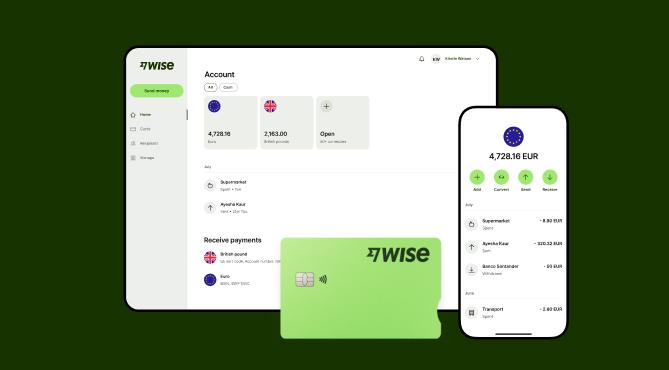
That’s where Wise Business comes into play. Wise Business gives you local business account details in 8+ currencies (like USD, EUR, GBP, and AUD), so your international customers can pay you like you're just down the street. That means faster transfers, fewer conversion fees, and no surprise charges. Plus, once the money lands, you can use it to pay your team, suppliers, or contractor; all from one place.
Expanding a business globally opens up exciting opportunities, but also new challenges like receiving payments across borders. Hidden foreign transaction fees and hefty currency conversions involved with international payments can eat into your profits and time.
Wise Business serves as a cost-effective solution where you can receive money from around the world at the speed and price of local payments.
Transform the way you receive payments with Wise Business:
Sign up for the Wise Business account! 🚀
Source:
*Please see terms of use and product availability for your region or visit Wise fees and pricing for the most up to date pricing and fee information.
This publication is provided for general information purposes and does not constitute legal, tax or other professional advice from Wise Payments Limited or its subsidiaries and its affiliates, and it is not intended as a substitute for obtaining advice from a financial advisor or any other professional.
We make no representations, warranties or guarantees, whether expressed or implied, that the content in the publication is accurate, complete or up to date.

Learn how to calculate your break-even point. Discover the standard formula, step-by-step methods, and managing global costs.

Learn about expense reimbursement in Australia. ATO rules, FBT compliance, setting up a clear policy, and streamlining business payouts.

Understand the meaning of liquid assets, how they differ from illiquid holdings. Optimizing business cash flow and global liquidity buffer. Read here

Learn how to build a global go-to-market framework. Discover step-by-step strategies, key operational components, and common financial pitfalls to avoid.

Learn the types of business liquidation, the step-by-step winding up process, asset realization, and proactive financial strategies for directors.

Discover how to build an end-to-end invoice automation workflow, avoid the pay-out gap, and scale your business with integrated payment solutions.











