Guide on selling a business in Australia: Tips, steps & more
Considering selling a business in Australia? From valuations to negotiating with buyers and fulfilling tax obligations, we’re covering the need-to-know info.


Thinking about how to start an Airbnb business in Australia? The process is exciting, but knowing where to begin can feel overwhelming. In this blog, we’ll break down how to start your Airbnb business. We’ll cover the groundwork for long term success as well as answer frequently asked questions to help you launch with confidence.

| Table of contents |
|---|
An Airbnb business functions through hosts renting out their properties to guests through the Airbnb platform. Most rentals are short-term stays. The host uploads photos of their accommodation, sets a price, lists the house rules, and updates the availability of their property. Guests are then able to browse these listings and book a property or room through the website or app. Both guests and hosts are able to leave reviews after their stays.
Airbnb works as the middle-man who handles payment and enables communication between the host and guest.
Thorough research is key before starting any business, as it will help to establish a foundation for future success. The following step-by-step guide provides everything you need to know to start your Airbnb business in Australia.
Market research is key to identifying factors like your target audience and the level of demand. Have a look on Airbnb in your local area for spaces that are similar to your room or property. Review the pricing and availability, then compare these different pricing models to determine which approach will position your space most competitively within the market.
This is also a great opportunity to find your property’s main selling factor. Consider what makes your property unique from the other competition. Highlight distinctive features like pool access, outdoor space, and beach views to market your space effectively. Additionally, research price points of similar properties to make sure your rates are competitive.
Adhering to local laws and regulations is essential for operating a compliant Airbnb business. There are short-term rental laws that are local to each state along with general regulations that you must follow. Here are the main laws and regulations to be aware of:
You can use the Australian Government’s Business Registration Service3 for easy business applications, and to gain a Goods and Services Tax number (GST). Find the local council for your property on the Australian Local Government Association.4
Make sure your property is clean and well-equipped for guests to stay. Check the smoke alarms work and stock some basic essentials like toilet paper and soap. Once everything is ready, take high-quality photos to upload in your listing. Capture the charm of your space and include clear shots of every room.
Create your listing on Airbnb’s website. Include a clear description that outlines exactly what your property offers and what guests can expect. Upload high-quality, well-lit photos that accurately represent each room and highlight your listing’s best features. Use your earlier market research to set a competitive price.
Opening a dedicated business bank account helps maintain financial transparency and scale your Airbnb to international heights. If you mix personal and business accounts, it becomes harder to keep track of your Airbnb transactions and might also run into issues while filing your tax report.
A dedicated business account helps you keep personal and business finances separate. It also makes it easier to track income, manage expenses, and handle tax reporting. You stay organised and avoid confusion.
For hosts welcoming international guests, a multi-currency account is a smart choice. It lets you accept payments in different currencies, making it easier to manage global transactions for those with properties in multiple locations.
A Wise Business account gives you local account details in over 8+ currencies. With the Wise Business multi currency account, businesses can access local payment methods with ease, hold over 40+ currencies, and send payments to over 140+ countries. Currency conversion with Wise Business is made at the mid-market exchange rate with no hidden markups, allowing simple foreign currency transactions without paying more than required.
Sign up for the Wise Business account! 🚀
The capital required may vary, but there are some important expenses to keep in mind:
Launching your Airbnb business and setting up the accommodation is often the most expensive part, so you may want to consider applying for a start up business grant to cover these initial costs.
Owning an Airbnb can be a lucrative business that enables a better work life balance and flexibility. According to Airtbtic’s data, the average income of an Airbnb owner with a single listing stands at $62,388 per year.6
Despite this, how much you make generally depends on the property’s availability, its price point, location, and number of positive reviews.
Yes - you are required to pay tax on your Airbnb income. It’s important to declare these earnings when filing your annual tax return. All income is subject to Australian tax laws so this applies to any overseas properties listed on Airbnb too.
It’s simple to manage bookings, guest communication, and pricing remotely using the Airbnb app. Leveraging a multi-currency bank account is an effective way to handle different currencies as though you are a local, streamlining your finances.
A trusted local co-host can then handle on-site tasks like check-ins, cleaning, and general maintenance.
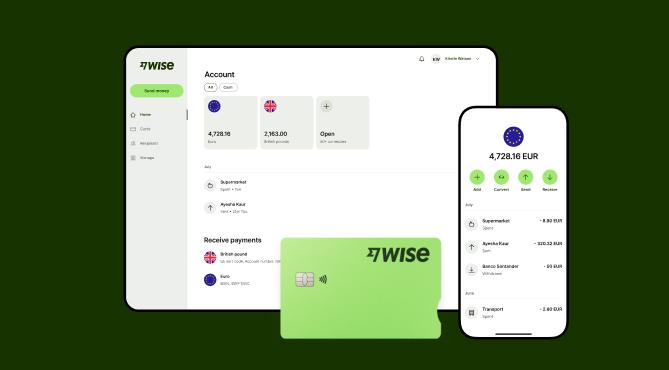
Scale your Airbnb business internationally and manage global transactions easily with Wise Business. Connect with guests around the globe without losing money on cross-currency transactions, manage international payments effectively, and receive funds at the real exchange rate.
What's more, you'll benefit from the following with a Wise Business account:
Sign up for the Wise Business account! 🚀
Some parts of Australia only allow Airbnbs to host guests for up to 90 nights each year. These rules depend on where the property is, so it’s important to check with your local council.
An Airbnb can be very profitable! Your profit depends on factors like the location of your property, your pricing, and your general overhead costs.
Yes, you can get a business loan to kickstart your Airbnb business. Operating an Airbnb constitutes a business. Therefore, you can apply for grants and business loans. Learn more about Australian business start-up loans with our comprehensive guide.
Running an Airbnb business in Australia as a sole trader does not require a business license. The Australian Securities and Investments Commission1 requires registration and an Australian Business Number application for businesses operating under a business name with employees.
You can start an Airbnb business without owning the property, though you must get permission from your landlord before subletting. Alternatively, you can try co-hosting. This is where you manage Airbnb listings for a property owner.
Sources:

Want more insights? Sign up to the Wise Business newsletter 💼
*Please see terms of use and product availability for your region or visit Wise fees and pricing for the most up to date pricing and fee information.
This publication is provided for general information purposes and does not constitute legal, tax or other professional advice from Wise Payments Limited or its subsidiaries and its affiliates, and it is not intended as a substitute for obtaining advice from a financial advisor or any other professional.
We make no representations, warranties or guarantees, whether expressed or implied, that the content in the publication is accurate, complete or up to date.

Considering selling a business in Australia? From valuations to negotiating with buyers and fulfilling tax obligations, we’re covering the need-to-know info.
Searching for the best small business payment gateway in Australia? We’re comparing the top options in this explainer guide.

Compare Pty Ltd vs sole trader in Australia. Learn the key differences, tax implications, and costs, and how to choose the right structure for your business.

Learn how to secure a small business loan in Australia. Explore loan types, eligibility requirements, and a guide to preparing your application and docs.

Learn about retained earnings, the formula, balance sheet impact, and how to use accumulated profits for sustainable growth. Read here.

Learn how to calculate GST in Australia. Understand inclusive vs exclusive pricing, claim GST credits, and avoid common pitfalls to ensure business compliance.