France tax residency rules explained
France tax residency rules: understand what it entails, exceptions, and who does it apply it to – plus practical examples to help you assess status.



If you've inherited real estate or bought an investment property in France, you may now want to sell it. But selling overseas property from the US comes with many important questions, such as:
How do you price and market it right? What paperwork does France require for property sales? And how do you get your money back to the US without losing a big chunk to fees?
Selling French property comes with important considerations and requirements, but it's definitely possible to coordinate a successful deal, as long as you educate yourself on all the nuances.
Here's everything you need to know about how the process works.
We'll also introduce Wise — your international money transfer alternative. Use Wise to send stress-free transfers to over 140 countries - all at the standard mid-market exchange rate.
Getting the price of your French property right is important because overpricing keeps it sitting on the market, and underpricing leaves money on the table. Both aren't great scenarios.
You can start by researching comparable sales in your area. Real estate websites often show recent sales by neighborhood and property type.
But most sellers eventually request a formal appraisal from a French real estate agent or an independent appraiser (expert immobilier).
To give you an idea, the average price per square foot to buy an apartment in a city center in France is 469 EUR, and apartments outside the center average 310 EUR per square foot.¹
However, these are just averages. Naturally, high-end real estate properties or apartments in sought-after locations can sell for much more.
Working with a French real estate agent makes the process much simpler, especially if you're trying to handle the sale from abroad. They'll handle all viewings, negotiate with buyers, and manage the paperwork.
You also get to tap into their network, and they'll often have recommendations for real estate lawyers, notaries, and other important professionals you'll likely be using during your French property sale.
However, agent fees typically run 3% to 10% of the sale price, usually paid by the seller but sometimes split with the buyer.²
Selling privately cuts out commission but requires you to handle everything yourself, including marketing, showings, negotiations, and coordinating with the notaire. If you're in the US and don't speak a lot of French, this is usually an unrealistic route.
Overall, most Americans selling from abroad use an agent.
Selling French property triggers tax obligations in both France and the US, which surprises some Americans.
France charges capital gains tax on the profit you make, calculated as the difference between your purchase price and sale price.
The rate is 36.2% total, with 19% capital gains tax plus 17.2% social charges.³
The US also taxes your worldwide income, including gains from selling foreign property. However, there are ways to avoid capital gains tax on foreign property sales, such as claiming a Foreign Tax Credit for the French taxes you paid.
Capital gains tax rules can be quite confusing, especially if you're not French, which is why many Americans decide to work with a real estate lawyer or a tax professional.
French law requires sellers to do property diagnostics before listing.
The most important is the Diagnostique de Performance Énergétique (DPE), which rates your property's energy efficiency on a scale from A (most efficient) to G (least efficient).
You must hire an approved specialist to conduct this assessment.
The results show things like energy consumption, greenhouse gas emissions, insulation levels, and estimated heating costs, and you'll need to include this information in your listing.
All property sales are unique, so there's no one universal list of legal documents that you'll need to complete your transaction.
That said, here's what you'll typically need to prove your ownership and give your buyer full disclosure about the property's condition and legal status:
- Deed of sale to prove that you own the property
- All required property diagnostics
- Property tax statements from recent years
- Building plans and permits for any renovations or additions
- Homeowners' association documents if the property is in a shared building
- Energy bills
- Proof of identity, such as your US passport
If you can't locate your original deed, you can usually request a copy from the notaire who handled your purchase or from the French land registry.
For properties in apartment buildings, you may also need documents from your property manager showing your building's financial health, upcoming major works, and your share of common charges.
The French notaire handling your sale will verify all of these documents and make sure that everything meets legal requirements before the final signing.
Before you can list your property, you need to complete all of the required property tests. Start this early because some tests, such as septic tank inspections, can take a long time to arrange.
These diagnostic surveys typically include tests for lead and asbestos in older properties, electrical and gas safety checks, natural disaster risk assessments, termite inspections, and sewerage compliance. Properties with pools will need security compliance certificates.
For apartments, you'll also often need surface area measurements.
Some of these results are purely informational for buyers, but you may also have to fix certain issues before you can start the selling process.
Once you have your diagnostics underway, select a French real estate agent to represent your property. It's a good idea to interview a few agents who know your area.
When you settle on an agent, you'll sign a sales mandate. This document authorizes them to market your property and specifies their commission, the listing period, and whether the mandate is exclusive.
Your agent will photograph the property, write descriptions, and list it on French real estate websites and portals. The listing must include your DPE energy rating, and your agent will handle that, too.
If you're in the US, you'll coordinate with your agent on viewings, price adjustments, and buyer questions by email or video call.
If you're doing a private sale, you'll need to handle all of these logistics yourself.
When a buyer makes an offer, your agent negotiates on your behalf. French buyers often include conditions like obtaining mortgage approval or completing additional inspections.
Once you agree on terms, both parties sign either a compromis de vente or promesse de vente, which is the preliminary sales contract. The buyer pays a deposit at this stage, but they still have a 10-day cooling-off period to withdraw without penalty.⁴
After that, both sides are legally committed to the sale.
A notaire (public legal official) handles the final transaction. The buyer usually chooses the notaire, but you can have your own work alongside theirs.
The notaire verifies property ownership, checks for liens or legal issues, calculates taxes, and prepares the final deed. Sometimes this part can take quite a long time.
The final signing typically happens at the notaire's office in France.
If you can't attend in person, you can usually grant power of attorney to someone to sign on your behalf. However, make sure to take care of this in advance.
At the signing, the buyer pays the remaining balance, the* notaire *deducts any taxes and fees, and you receive your proceeds. The property officially transfers to the new owner, and you hand over the keys (or your representative does).
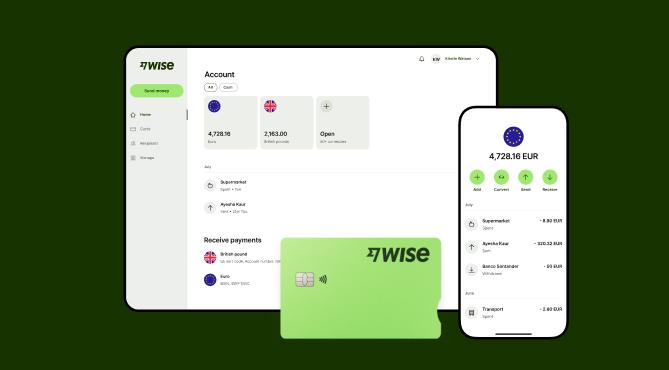
A smart option if you’re sending money overseas: meet Wise.
| With Wise, you can send up to 1,000,000 USD per wire transaction to 140+ countries, with the mid-market exchange rate and low, transparent fees. |
|---|
Over 70% of Wise payments arrive instantly* — and all Wise transfers are deposited directly into your recipient's bank account for convenience.
No ongoing fees, no hidden charges and no hassle — just fast, transparent international transfers that can beat the banks.
🚀Get started with high amount transfers
| See how Wise compares with international bank transfers in our full guide |
|---|
*Transaction speed claimed depends on funds availability, approval by Wise’s proprietary verification system and systems availability of our partners’ banking system, and may not be available for all transactions.
Potentially, yes.
The French real estate market has stabilized after a challenging 2023-2024 period, with conditions improving throughout 2025.
Market projections for 2026 suggest that prices will grow by 2% to 3% nationally.⁵
Big cities with limited housing supply are seeing better prices, but rural areas may still be more flat.
That said, whether you should sell now really comes down to your own situation. For example, if you inherited a house, and the taxes and upkeep are eating into your budget, waiting for a slightly better market won't help much.
At the same time, if you're holding an investment property and can afford to keep it, prices should continue their slow climb over the next few years.
And if you're close to the 22-year ownership mark, waiting a bit could eliminate a big chunk of the capital gains tax.³
Most properties take 3 to 4 months from listing to getting an accepted offer and signing the preliminary contract.⁶
That's the national average, but your timeline largely depends on where the property is and how it's priced. For example, a 1-bedroom apartment in a good location in Paris can often sell faster.
Generally speaking, houses typically take longer to sell than apartments, especially small ones. But good pricing and professional photos can make a big difference even for "slower" properties.
Selling a property in France, like in most countries in the world, comes with costs that cut into your final proceeds.
Many of these are paid from the sale proceeds at closing, so you don't need cash upfront, but you should know what to expect.
Here's a snapshot:
| Cost | Typical amount²³⁷ |
|---|---|
| Real estate agent commission | 3% to 10% of the sale price |
| Property diagnostics | 200 EUR to 600 EUR, depending on property size and location |
| Fiscal representative (for US sellers) | 0.4% to 1% of the sale price |
| Capital gains tax | 36.2% of profit (19% tax + 17.2% social charges) |
| Notaire fees | 6% to 8% of the sale price (often paid by the buyer) |
| Need to send a large amount? With Wise, you can send up to 1,000,000 USD per wire transfer to 140+ countries — and we automatically apply a discount when you send over 25,000 USD (or equivalent)*. |
|---|
🚀Send high-amount transfers with Wise
*For more information, please visit https://payout-surge.live/us/large-amounts/%3C/a%3E.%3C/small%3E%3C/p%3E
This person or company ensures your French taxes are calculated and paid correctly. They're liable if the calculations are wrong, which is why they charge for this service.
Fiscal representative fees typically run 0.4% to 1% of your sale price and are deducted from your capital gains.⁷
The fiscal representative is separate from and in addition to the notaire. Their roles somewhat overlap, but the French law requires both for non-EU sellers.
The main fees you'll pay as a seller are your agent's commission (if you use one), property diagnostics, and the fiscal representative fee.
Another high cost to consider is the capital gains tax at 36.2% of your profit, but you can often reduce this through allowable deductions and ownership duration relief.³
When you sell your French property, you'll receive EUR from the buyer. Typically, most US sellers will want to convert these EUR to USD, which means dealing with exchange rates and transfer fees.
Banks often add 3% to 5% in hidden markups to the exchange rate, which can cost you thousands on a large property sale.
This is why it's important to research different money transfer service providers to get your sales proceeds back to the US without losing too much on the exchange rate.

As an American selling property in France, you'll have to deal with taxes in both countries.
There are taxes that come with selling a property in France. France charges a 36.2% capital gains tax on your profit. That's 19% capital gains tax plus 17.2% social charges.³
Your profit is the difference between what you paid for the property (plus certain costs like notaire fees and major renovations) and what you sell it for.
This can sound like a very large tax, but luckily, France reduces it the longer you own the property.
In fact, after 22 years of ownership, you're exempt from the 19% capital gains tax. After 30 years, you're exempt from the social charges, too.³
Plus, if the property was your primary residence in France, you might qualify for a full exemption regardless of how long you owned it.
In addition to the French capital gains tax, you also owe taxes in the US. This is because the US taxes your worldwide income, which includes gains from selling property anywhere.
You're required to report your French property sale on your US tax return.
However, you can usually claim a Foreign Tax Credit for the French taxes you already paid.
This credit reduces your US tax bill dollar-for-dollar, often eliminating what you owe to the IRS, or at least lowering your US tax burden by a lot. Many Americans who pay French capital gains tax end up owing little or nothing additional to the US.
You may also have to file informational reports like FBAR (FinCEN Form 114) and FATCA if your foreign bank accounts and assets go over certain thresholds.
| Selling an inherited foreign property? Learn more in our full guide, as sometimes that comes with additional tax obligations. |
|---|
Selling property in France from the US can be a complicated process that involves a few different steps. You'll have to get property diagnostics done, work with a French agent, and go through a notaire to complete the final sale.
You'll also need to appoint a fiscal representative if your property sells for more than 150,000 EUR.⁷
That said, it's definitely possible to have a successful property sale, even if you live in the US and have to coordinate everything from a distance.
While you may diligently research the costs of hiring a real estate agent and legal fees, one cost that many American property owners overlook is currency exchange.
If you have to convert EUR from your sale into USD, you'll most likely have to pay exchange rates that can seriously eat into your proceeds. Assuming a typical 3% to 5% exchange rate markup, you can lose 9,000 EUR to 15,000 EUR on a 300,000 EUR property sale.
That's a lot of money, which is why it's important to look for money transfer services that use the mid-market exchange rate, such as Wise.
With Wise, you can send secure and trackable large amount transfers to 140+ countries worldwide with transparent fees and the fair mid-market exchange rate.
Have a look at the main benefits for using Wise to send large transfers:
Sources
*Please see terms of use and product availability for your region or visit Wise fees and pricing for the most up to date pricing and fee information.
This publication is provided for general information purposes and does not constitute legal, tax or other professional advice from Wise Payments Limited or its subsidiaries and its affiliates, and it is not intended as a substitute for obtaining advice from a financial advisor or any other professional.
We make no representations, warranties or guarantees, whether expressed or implied, that the content in the publication is accurate, complete or up to date.

France tax residency rules: understand what it entails, exceptions, and who does it apply it to – plus practical examples to help you assess status.

Take a look at the full in-depth guide for Long Stay Visa France requirements and prepare for the next exciting international chapter of your life.

Moving to France? Navigate financial changes seamlessly with insights from our blog. From banking to budgeting, prepare for your move with confidence.

Interested in buying land in France? Here’s everything you need to know about buying a plot of land abroad as an American.

Learn all about buying a car in France as an American, including costs, requirements, and how to import your vehicle back to the US.

Are you looking for the best Airbnb management companies in Paris? Find out all about the top local providers to take care of your rental property overseas.