
Boat import duty from Canada to the US
Learn the boat import duty from Canada to the US: rates, taxes, paperwork and required documentation, NAFTA/USMCA rules, exemptions, and timeline.


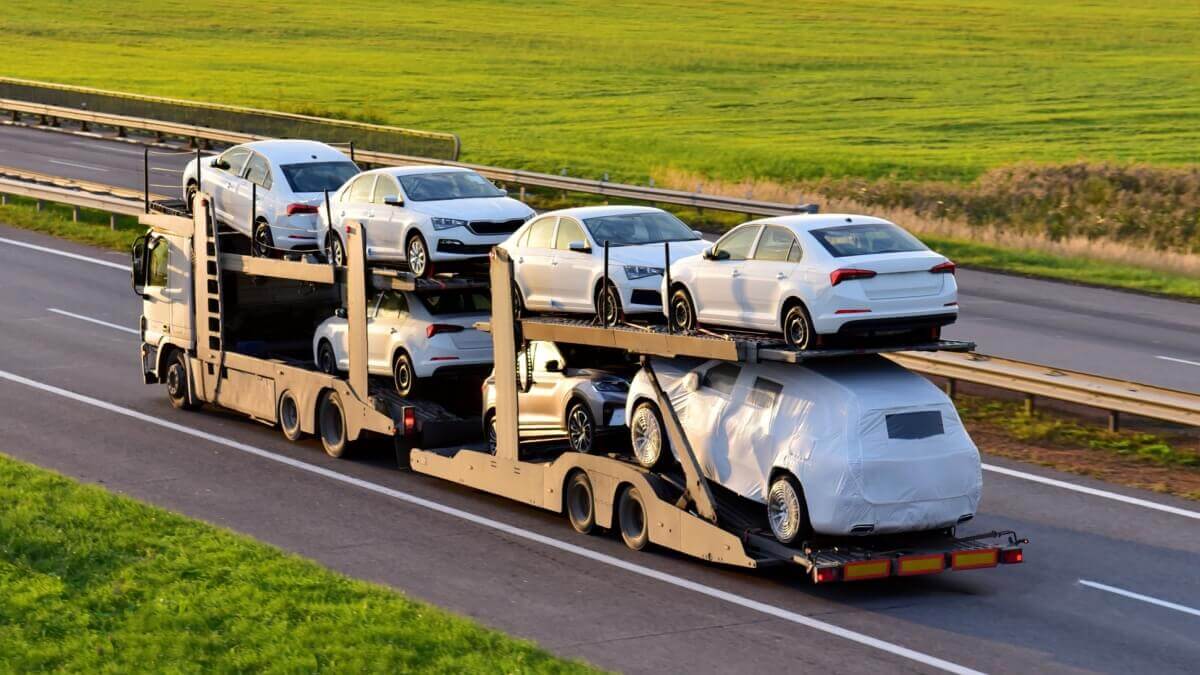
Whether you’re moving down south or have another reason to import a car from Canada to the US, we can help you figure out how to get it done. Sure, there’s a lot of paperwork. But after you spend a few minutes getting familiar with the process, it won’t seem so intimidating.
The process of bringing a car into the US from Canada depends a lot on the specific vehicle you’re bringing. If it’s newer than 25 years old, it has to meet requirements of two federal agencies, along with Customs and Border Protection (CBP). Let’s dive in.
We'll also introduce Wise — your international money transfer alternative. Use Wise to send stress-free transfers to over 140 countries - all at the standard mid-market exchange rate.
| Table of contents |
|---|
The short answer is: Of course! People bring their cars across borders all the time, and if you get the paperwork together and pay the requisite fees, you can absolutely import a car from Canada to the US.
How much of a hassle and expense, the process will be depends greatly on the car that you’re wanting to bring over from Canada.
Here’s an overview of the steps you’ll need to follow to bring a car from Canada to the US. You’ll want to research all of these steps before you get the process going; otherwise, you could experience significant delays and disruptions.
To enter the US from Canada, your car has to satisfy requirements from two US federal agencies: the Department of Transportation (DOT) and the Environmental Protection Agency (EPA). Let’s break down how to determine compliance for each one.
The USDOT requires cars coming into the US to meet its safety protocol, which is called the Federal Motor Vehicle Safety Standard (FMVSS).¹ If your car is 25 years old, these standards don’t apply. That’s a lot of effort saved!
Otherwise, look on the inside of the driver’s side door for a label that demonstrates FMVSS certification.²
If your car doesn’t have this label and instead says that the vehicle conforms to Canadian vehicle safety standards, you’re one step away. You only need to contact your vehicle’s manufacturer to obtain a letter stating that the car also conforms to FMVSS standards.
Luckily, manufacturers are used to these requests, and you shouldn't have too much trouble getting the right letter if your car indeed qualifies to be imported from Canada to the US.
If you can’t meet these requirements but your car still qualifies for importation, you’ll need to contract a registered importer to modify the car within a 120-day period after you bring the car to the border. You’ll also need to post a bond worth 150% of the car’s value and forfeit the car if the modifications aren’t done in time.³
Form HS-7 from the National Highway Traffic Safety Administration certifies that you’ve met the FMVSS requirements.
A car entering the US needs to comply with EPA emissions standards. If your car is at least 21 years old, these requirements don’t usually apply.⁴ Here’s how to handle newer cars:
Open the hood of your car and look around for labels with statements relating to EPA emissions standards. The label will say “Vehicle Emission Control Information.”⁵ If your car has a label that states clearly that it satisfies the EPA’s requirements for emissions, then your car is ready to import as far as the EPA is concerned.
If there’s no such label, here are some alternatives:⁶
Once you’ve determined your car’s conformity to EPA emissions standards and made a plan to get it into compliance, the form that you need for importation is EPA Form 3520-1.

Once you’ve determined that your car is eligible in the eyes of the EPA and the DOT — phew! — it’s time to get your documents ready.
| Here’s the documentation you should have ready:⁷ |
|---|
|
To ship your car, its undercarriage will have to be cleaned thoroughly to meet safety standards. Also, you won’t be able to fill your car with other stuff you’re moving with — it’s got to be empty, unless you want unexpected costs and delays.⁷
Make sure to arrange a carrier or shipper to bring your car into the US —you can’t drive it to the checkpoint yourself — and plan your crossing with CBP in advance.
Make sure you have an appointment with the CBP checkpoint that’s receiving your car and that you’ve confirmed everything you need, including your necessary documents.
You’ll need to have the correct amount of fees in a proper payment method for your car to be processed smoothly.
| Need to send a large amount? With Wise, you can send up to 1,000,000 USD per wire transfer to 140+ countries — and we automatically apply a discount when you send over 25,000 USD (or equivalent)*. |
|---|
🚀Send high-amount transfers with Wise
*For more information, please visit https://payout-surge.live/us/large-amounts/%3C/a%3E.%3C/small%3E%3C/p%3E
Once you’re through, celebrate. Importing a car is a complex process, and you’ve aced it.
Lastly, you’ll need to get your car’s US registration up to date. This varies highly by state and will involve a visit to a DMV office. You’ll almost always need to purchase a US car insurance policy before registration.
No matter what, you’ll need to cancel your car’s Canadian insurance and registration and dispose of the old plates. Make sure your US and Canadian insurance policies don’t have a gap between them.
Here are the fees required to bring a car from Canada to the US. The total amount you actually pay will depend on the value of your car and other factors.⁷
- A duty of 2.5% of the car’s value (this can vary and may be waived for newer cars)
- CBP merchandising fees (.3464% of the car’s value, up to 651.50 USD)⁸
- Registration fees (vary by state)
- Sales tax (varies by state and may be waived)
- Gas-guzzler tax (varies by car; applies on your tax return)⁷
- Importer fees to bring the car into DOT and EPA compliance (and bonds in the meantime)
- Carrier/shipping fees
A smart option if you’re sending money overseas: meet Wise.
| With Wise, you can send up to 1,000,000 USD per wire transaction to 140+ countries, with the mid-market exchange rate and low, transparent fees. |
|---|
Over 70% of Wise payments arrive instantly* — and all Wise transfers are deposited directly into your recipient's bank account for convenience.
No ongoing fees, no hidden charges and no hassle — just fast, transparent international transfers that can beat the banks.
🚀Get started with high amount transfers
| See how Wise compares with international bank transfers in our full guide |
|---|
*Transaction speed claimed depends on funds availability, approval by Wise’s proprietary verification system and systems availability of our partners’ banking system, and may not be available for all transactions.
You certainly can bring a car from Canada to the US, provided it meets EPA and DOT standards. The economics and logistics of meeting these conditions will depend on the situation.
If a car is at least 25 years old, it doesn’t have to meet US safety standards, which makes the process of importing the car significantly easier.
To bring a Canadian vehicle into the US, you’ll need to transfer its registration from a Canadian one to its US state of destination. So, you can bring it to the US and trade it in, but you’ll have to undergo the importation and registration process first.
There is a duty of 2.5% of the car’s value on most imported cars. For some cars newer than 2020, this could be waived.⁷
Importing a car from Canada to the US can be a convoluted process. You’re dealing with multiple agencies and strict regulations. Still, thanks to trade agreements and parallel manufacturing standards between the US and Canada, for many cars, the process could be smooth — and maybe even duty-free.
Still need to buy your car in Canada? Use Wise.
With Wise, you can send secure and trackable large amount transfers to 140+ countries worldwide with transparent fees and the fair mid-market exchange rate.
Have a look at the main benefits for using Wise to send large transfers:
Sources
*Please see terms of use and product availability for your region or visit Wise fees and pricing for the most up to date pricing and fee information.
This publication is provided for general information purposes and does not constitute legal, tax or other professional advice from Wise Payments Limited or its subsidiaries and its affiliates, and it is not intended as a substitute for obtaining advice from a financial advisor or any other professional.
We make no representations, warranties or guarantees, whether expressed or implied, that the content in the publication is accurate, complete or up to date.

Learn the boat import duty from Canada to the US: rates, taxes, paperwork and required documentation, NAFTA/USMCA rules, exemptions, and timeline.

Are you looking for the best property management companies in Ottawa? Find out all about the top local providers to take care of your home overseas.

Are you looking for the best Airbnb management companies in Toronto? Find out all about the top local providers to take care of your rental property overseas.

Moving to Canada from the US? This guide covers all the essential information for relocating to Canada as an American, including tips and insights.

Want to learn about property taxes in Canada? This guide covers types of property taxes and how they are calculated to help you navigate the process.

Are you looking for the best property management companies in Toronto? Find out all about the top local providers to take care of your home overseas.











