
Top Business Credit Cards for Travel in 2026
This guide breaks down the best business credit cards for travel with a focus on general travel cards as well as airline and hotel-specific options.


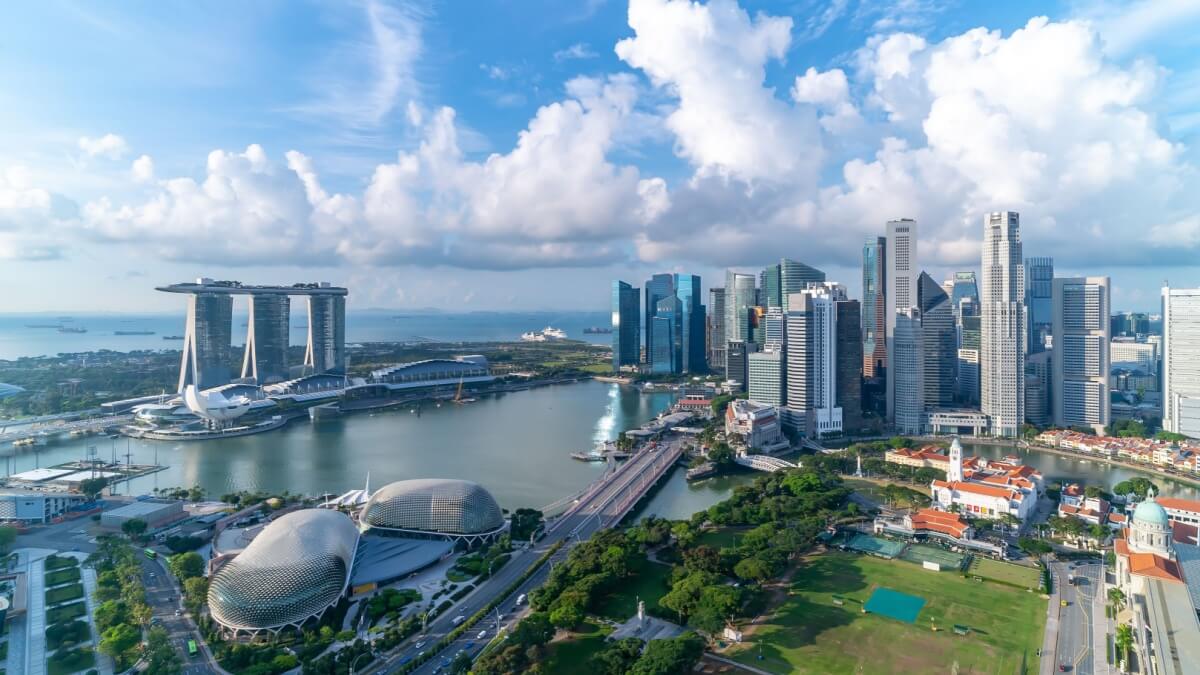
Singapore is one of Asia’s most established commercial property markets. For US investors, it can offer stable returns, strong legal protections, and access to a major regional business hub.
That said, buying property from abroad comes with extra layers. You’ll need to understand local ownership rules, navigate Singapore’s stamp duties and tax structure, and plan for large cross-border transfers in SGD.
This guide walks through the process step by step. We’ll explain what US buyers can purchase, how the Option to Purchase (OTP) system works, what taxes apply, and what to consider when moving funds internationally.
| Discover Wise Business: Simplify Your International Finances |
|---|
| Wise makes it easier to manage your business finances. You can manage everything from one app, there are no monthly fees, and international payments use the mid-market rate. It also integrates smoothly with accounting software to keep your operations running efficiently. |
| Find out more about Wise Business |
Singapore is often considered one of Asia’s most stable business environments. It has a transparent legal system, clear property regulations, and a well-established commercial real estate market. For US investors, that predictability can reduce some of the uncertainty that comes with buying overseas.
One important factor is that foreigners are generally allowed to purchase commercial property in Singapore.¹ Restrictions are stricter for certain types of residential property, but commercial real estate is typically open to foreign buyers.
As a result, the process is much more straightforward compared to markets where foreign ownership is limited.
Singapore is also a major financial and logistics hub in Southeast Asia. Many multinational companies operate regional offices there, which supports demand for office, retail, and industrial space.
Depending on the property type and location, investors may earn rental income or benefit from long-term capital appreciation. The market includes a range of options from central business district office units to retail spaces and industrial properties.

Buying commercial property in Singapore from the US involves several legal, financial, and administrative steps. While the overall process is structured and transparent, timing and compliance matter.
Below is a more detailed breakdown of how a typical transaction works.
Start by clarifying your objective. Are you:
Your goal will influence the type of property you choose, whether office space, retail units, business parks, or industrial properties such as warehouses.
Next, establish a comprehensive budget. Many first-time overseas buyers focus only on the purchase price, but total costs typically include:
If you’re funding the purchase from the US, you’ll also need to consider exchange rate movements between USD and SGD. Even small currency fluctuations can affect the total cost of a large transaction.
Planning for these variables early helps reduce surprises later in the process.
Foreign buyers usually work with two key professionals in Singapore:
Your agent helps you identify listings, understand market pricing, and negotiate terms with the seller. Commercial property pricing can vary significantly depending on location, tenure (freehold vs leasehold), and building classification.
Your lawyer plays a more technical role. They will:
Because many payments must be made within strict timelines, coordination between your legal team and your financial institution is important.
Once you’ve identified a potential property, your lawyer will begin due diligence. This typically includes:
Singapore has a well-regulated property system, but formal verification is still essential before committing funds.
If your offer is accepted, the seller issues an Option to Purchase (OTP), a legally binding document that gives you the exclusive right to buy property within a specified timeframe.
To secure the OTP, you typically pay an option fee of around 1% of the purchase price, and the OTP usually grants about 14 days to decide whether to proceed.² During this period, your lawyer completes final checks and confirms the terms of the sale.
Because the OTP is time-sensitive, you’ll need to ensure funds can be transferred properly.
If you decide to proceed, you must formally exercise the OTP within the agreed period.
At this stage, you typically pay an additional 4% deposit, bringing the total initial payment to 5% of the purchase price.³
For example, on a S$5 million property, this means transferring S$250,000 during the OTP stage.
For US buyers, this often involves a substantial cross-border transfer. Planning ahead for transfer timelines and exchange rates can help prevent delays.
Two primary taxes may apply to commercial property purchases in Singapore:.
Because these payments are deadline-driven, buyers typically coordinate closely with their bank or payment provider to ensure funds are available in SGD on time.
Completion usually takes place 8 to 12 weeks after the OTP is exercised.⁶
At this stage, you pay the remaining balance of the purchase price, which is typically the largest transfer in the entire process.
US buyers often plan this transfer carefully, as exchange rate movements between the initial deposit and final payment can affect the total USD cost.
After the final payment is made, your lawyer registers the property transfer with the Singapore Land Authority (SLA).
Once registration is completed:
At that point, the transaction is complete.
Understanding the legal step is only half the battle. For US investors, cross-border payments and currency exchange can also affect the overall cost of a property purchase.
Large international transfers require planning, particularly when converting USD to SGD.
The USD to SGD exchange rate directly affects how much you ultimately pay.
For example, if you’re purchasing a property valued at S$3 million, even a small movement in the exchange rate between your initial budget and final completion can significantly change the USD cost.
Exchange rates fluctuate daily. If the US dollar weakens against the Singapore dollar between signing and completion, your property becomes more expensive in USD terms.
When converting currency, it’s also important to understand the real rate being applied. Some financial institutions apply a margin to the exchange rate in addition to charging a transfer fee. Reviewing the full cost can help you compare options more accurately.
Commercial property transactions involve strict deadlines, particularly when paying the option fee, exercising the OTP, and settling stamp duties.
Traditional international wire transfers may involve:
Processing times can vary depending on the banks involved and the currencies being sent.
Because of this, many buyers confirm transfer timelines in advance to avoid delays during time-sensitive stages of the transaction.
The time between securing the OTP and completing the purchase can span several weeks.
During this period, exchange rate movements may affect your final cost in USD.
Some payment providers offer tools such as:
These tools can help buyers plan more precisely, particularly for larger transfers.
Buying commercial property often leads to ongoing local expenses, including:
If you plan to lease the property, you may also receive rental income in SGD.
In these cases, holding and managing SGD locally can simplify operations. Some international payment providers offer multi-currency accounts that allow businesses to hold balances in SGD and make local payments without converting funds each time.
For example, Wise Business offers multi-currency account details that allow US businesses to send, receive, and hold funds in SGD alongside other currencies. Easy access to multiple currencies can make it easier to manage property-related payments while maintaining visibility into exchange costs. Wise also lets you lock in exchange rates for a period of time and receive rate alerts, so you’re always on the pulse of market movements.
Wise Business can help you save big time on international payments.
Wise is not a bank, but a Money Services Business (MSB) provider and a smart alternative to banks. The Wise Business account is designed with international business in mind, and makes it easy to send, hold, and manage business funds in 40+ currencies.
Signing up to Wise Business allows access to BatchTransfer which you can use to pay up to 1000 invoices in one go. This is perfect for small businesses that are managing a global team, saving a ton of time and hassle when making payments.
Some key features of Wise Business include:
Mid-market rate: Get the mid-market exchange rate with no hidden fees on international transfers
Global Account: Send money to 140+ countries and hold multiple currencies, all in one place. You can also get major currency account details for a one-off fee to receive overseas payments like a local
Access to BatchTransfer: Pay up to 1000 invoices in one click. Save time, money, and stress when you make 1000 payments in one click with BatchTransfer payments. Access to BatchTransfer is free with a Wise Business account
Auto-conversions: Don't like the current currency exchange rate? Set your desired rate, and Wise sends the transfer the moment the rate is met
Free invoicing tool: Generate and send professional invoices
No minimum balance requirements or monthly fees: US-based businesses can open an account for free. Learn more about fees here

For many US investors, yes. Singapore's stable economy, strong legal protections for property owners, and potential for rental yields make it a compelling choice.\2\ However, success depends on thorough due diligence and a clear understanding of all costs, including the financial impact of cross-border transfers.
Yes. Generally, US citizens and foreign-owned entities can purchase commercial property in Singapore. Commercial real estate is typically more accessible to foreign buyers than certain types of residential property, as they may be subject to additional restrictions under the Residential Property Act.
US buyers typically need to consider exchange rate movements between USD and SGD, transfer fees, currency conversion costs, and payment timing. Because property transactions involve large international transfers, some businesses use services like Wise to convert and send funds with transparent fees and exchange rates.
Buyer’s Stamp Duty is calculated on the purchase price or market value, whichever is higher, using tiered rates. For example, on a S$2 million commercial property, BSD would be approximately S$69,600. A 9% GST may also apply if the seller is GST-registered.
Sources:
*Please see terms of use and product availability for your region or visit Wise fees and pricing for the most up to date pricing and fee information.
This publication is provided for general information purposes and does not constitute legal, tax or other professional advice from Wise Payments Limited or its subsidiaries and its affiliates, and it is not intended as a substitute for obtaining advice from a financial advisor or any other professional.
We make no representations, warranties or guarantees, whether expressed or implied, that the content in the publication is accurate, complete or up to date.

This guide breaks down the best business credit cards for travel with a focus on general travel cards as well as airline and hotel-specific options.

Having trouble deciding which Wise Business account is best for your business? We’re breaking down the differences between the ‘Essential’ and ‘Advanced’...

Find the best tax preparation software for your small business. Simplify your filing process and ensure accuracy with top-rated tools.

Unlock Canadian commercial real estate opportunities. A complete guide for US residents on legal compliance, 35% down payment rules, and cross-border tax tips.

Learn how to buy commercial property in Australia with our expert guide to the process, costs, FIRB, and saving money on international payments.

Ready to diversify? Discover how US investors can navigate the Indian commercial real estate market, from legal compliance to closing the deal. Read more.









