
Can foreigners own land in Thailand?
Can foreigners own land in Thailand? Learn what US buyers can do, key risks, typical costs, and how to handle large international transfers for property.


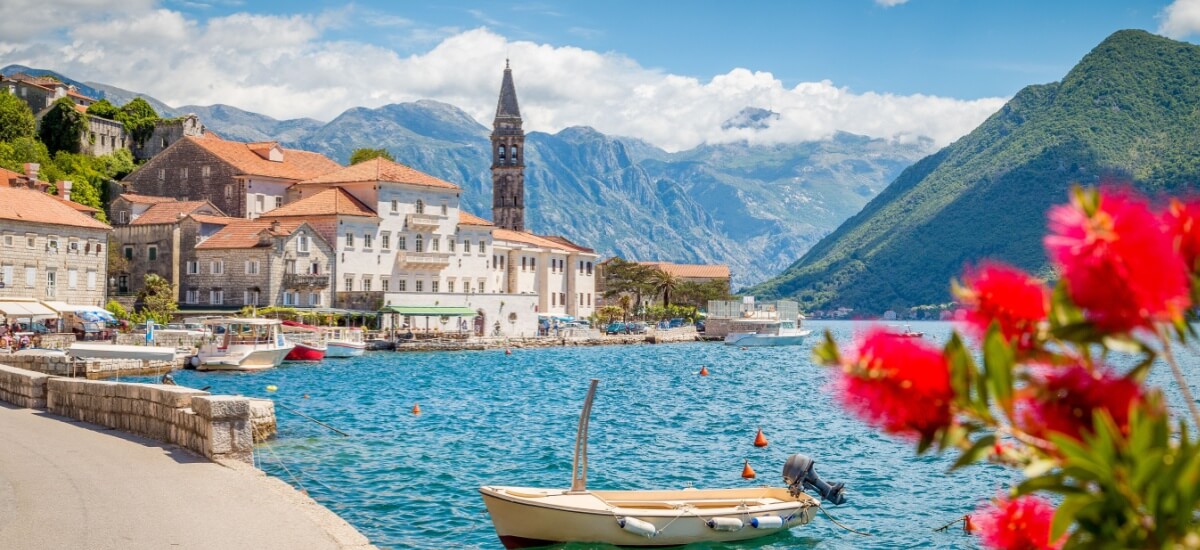
Montenegro is a popular option for Americans looking to buy property in Europe. It's a small country on the Adriatic coast with a mix of beach towns, historic spots like Kotor, and modern marina developments.
Real estate prices in Montenegro tend to be lower than in Western Europe, and the property buying process is typically straightforward for foreigners.
Still, there are a few quirks you need to be aware of before you get started. Here's everything you need to know to successfully buy real estate in Montenegro.
We'll also introduce Wise — your international money transfer alternative. Use Wise to send stress-free transfers to over 140 countries - all at the standard mid-market exchange rate.
Yes, foreigners can buy property in Montenegro without any restrictions. Americans can purchase apartments, houses, and villas with the very same ownership rights that Montenegrin citizens enjoy.
If you're buying a property as an investment, the average net yield on property investments in Montenegro sits around 4.5%, helped along by strong summer tourism demand on the coast.¹
Buying a real estate property may also qualify you for temporary residency if your property has a value of at least 150,000 EUR. With residency, you'll be able to live in Montenegro year-round.²
Do you want to buy a property in Montenegro as a holiday home for you or purely as a rental investment? Do you want your purchase to qualify you for residency, or is that something that doesn't matter to you?
Answering these questions will help you shape your budget and figure out which types of properties make the most sense.
Work out your full budget too, not just the sticker price. On top of the purchase amount, you'll also have transfer tax, legal fees, and registration costs to cover.
Montenegro is small, but you have quite a few options for where to buy your property. Kotor, Budva, and Tivat are all popular options with foreign buyers. Spend some time in a couple of areas if you can to get an accurate idea of the lifestyles in different spots.
Once you know where you want to buy your property, a local real estate agent can help you find listings that fit your budget and set up viewings.
Once you find a property you want to move forward with, your lawyer should pull the property's cadastre extract to confirm that the seller owns it and that there are no mortgages, liens, or other claims attached.
They'll also check the urban planning paperwork to confirm that the property is legal and built with the right permits, as well as do any other necessary checks.
Once everything checks out, you'll typically sign a reservation agreement and put down a deposit to take the property off the market.
You'll also need to get a Montenegrin tax identification number (TIN). It's mandatory for foreigners, and you can't register the property, pay taxes, or open a local bank account without it.³
Most foreign buyers in Montenegro pay for their property in cash. Local banks almost never lend to non-residents, and when they do, the terms are tough. However, Americans can sometimes fund the purchase from the US instead by borrowing against a US property.
Once you have the funds, the purchase is finalized with a notarized sales and purchase agreement. If you don't speak Montenegrin, a licensed interpreter has to be present at the signing to translate the agreement and everything discussed in the meeting.⁴
After signing, your lawyer registers the transfer at the cadastre, and that registration is the step that legally makes you the owner.
Once the property is in your name, you'll need to switch the utilities and, if the property is in a building or complex with shared areas, get set up with the management and its fees.
If you bought a rental or won't be around full-time, you may also want to hire a local property manager to take care of the property.
Real estate in Montenegro has been going up in price.
Currently, apartments in town centers average around 295 USD per square foot, falling to about 215 USD outside the center.⁵
However, properties in coastal hotspots like Tivat can sit well above that.
Here's what to expect:
| Location | Town center (per sq ft) | Outside center (per sq ft) |
| Tivat⁶ | 561 USD | 254 USD |
| Budva⁷ | 394 USD | 285 USD |
| Kotor⁸ | 373 USD | 267 USD |
| Herceg Novi⁹ | 344 USD | 236 USD |
| Podgorica¹⁰ | 293 USD | 217 USD |
Tivat is the priciest market by a wide margin. Budva and Kotor follow as coastal favorites, but you'll be able to find more affordable property prices in the capital, Podgorica.
In addition to the price of the property, plan for a handful of one-time costs at purchase. The big one is the transfer tax, which applies to resale properties and is charged on a sliding scale.
Here's a snapshot:
| Cost | Typical amount¹ |
| Montenegro property transfer tax |
|
| Notary fees | Around 0.01% of the property value |
| Translation fees | Roughly 50 EUR per hour, if you attend the signing in person |
The translation fee only comes up if you handle the signing yourself in person, since notaries work in Montenegrin. If you instead grant power of attorney to your lawyer, you'll pay a certification fee for that document rather than translation costs.
The recurring costs of owning property in Montenegro are pretty modest.
The main one is the annual real estate tax, which is charged on a sliding scale from 0.25% to 1% of the property's value. If you rent the property out, rental income is taxed at a flat 15%.¹
On top of that, budget for the usual costs of owning a property, such as utilities and home insurance.
Montenegro isn't a risky market to buy property, even if you're a foreigner. Most pitfalls come down to hiring a good lawyer and doing your homework before you sign.
Here's what to watch out for:
Overall, these problems are rare. Montenegro is well-regulated, so your chances of getting scammed in any way, especially if you have an independent lawyer on your side, are low.
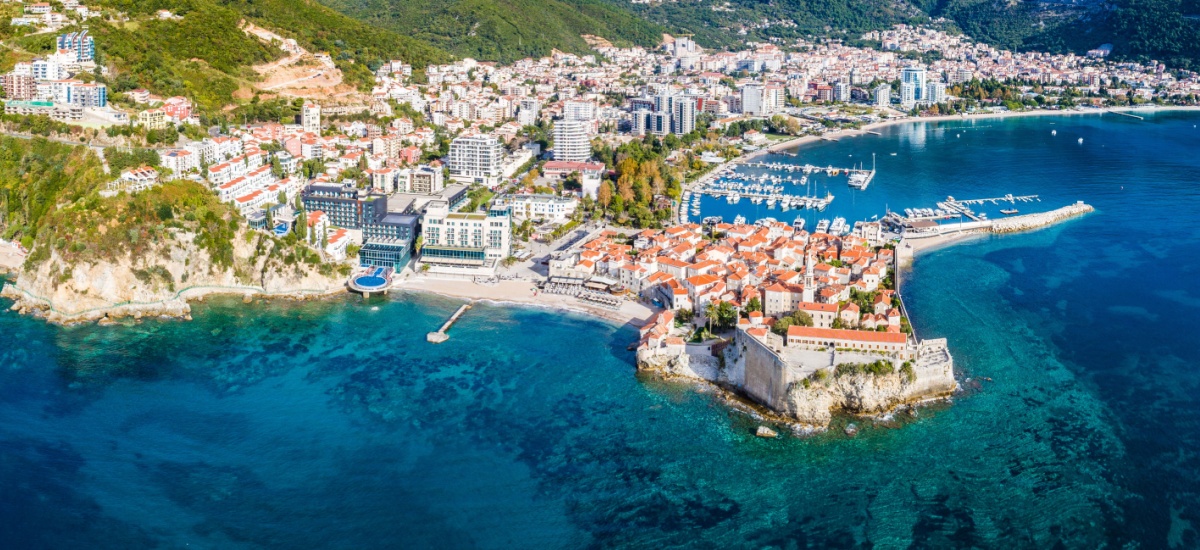
Budva is Montenegro's busiest coastal town with lots of summer tourism. It has a walled old town, a long stretch of beaches, and a lively, crowded scene in peak season, which makes it a strong bet for rental income.
Prices run around 394 USD per square foot in the center and 285 USD outside it.⁷
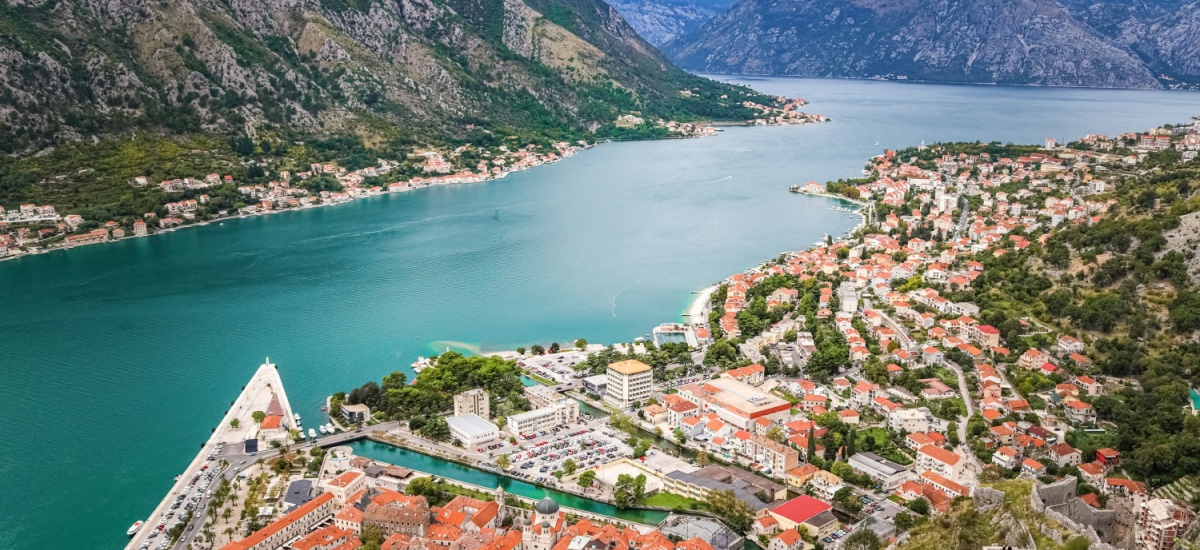
Kotor sits at the end of a bay and is best known for its UNESCO-protected medieval old town. Because of those heritage protections, new construction is limited, which keeps quality properties scarce and helps them hold their value.
Prices sit around 373 USD per square foot in the center, but you'll also be able to find properties in less central locations for 267 USD per square foot on average.⁸
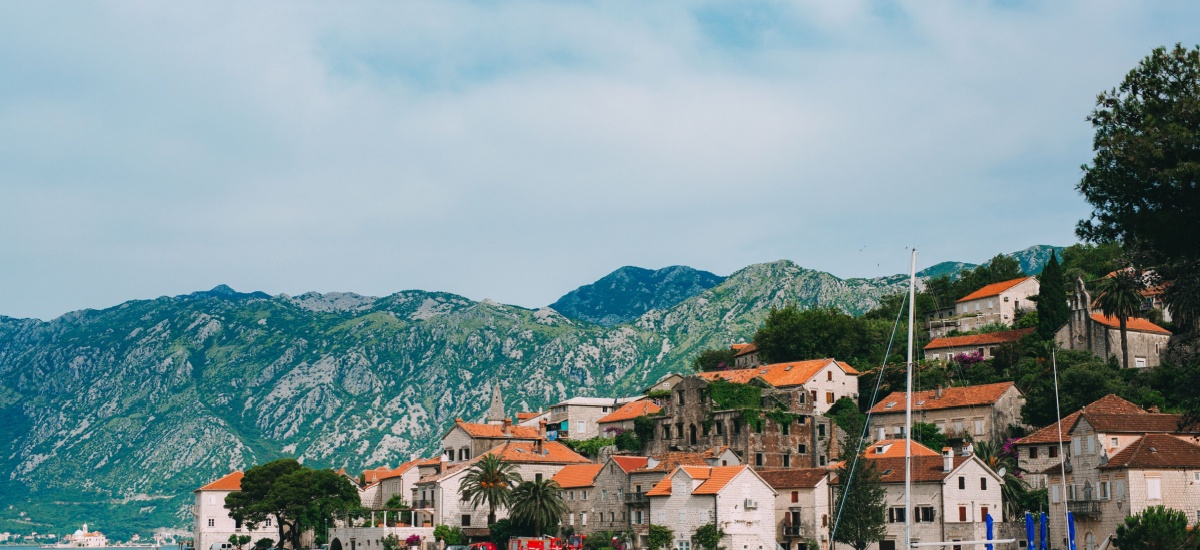
Tivat is one of the most upscale places to buy property in Montenegro. It's anchored by the Porto Montenegro marina and its luxury apartments, shops, and yacht berths. It also has an international airport, which supports a year-round expat community and steady rental demand.
The prices in Tivat are premium, averaging 561 USD per square foot for central properties. However, outside the center, prices drop to around 254 USD per square foot, so there's value to be found away from the marina if you're open to it.⁶
Since Montenegro is a cash market for most foreign buyers, you'll likely be sending the full purchase amount over from the US.
As of 2026, any property payment above 10,000 EUR has to go through a bank rather than by cash, and at least one party in the deal needs a Montenegrin bank account.¹¹
You should watch what it costs you to get your money across borders, though. Montenegro uses the EUR, so your USD have to be converted, and many Americans lose a lot of money on this exchange.
Banks tend to tack on a transfer fee and then bake a markup into the exchange rate they give you. On a home purchase, that margin can run into the thousands.
Now that we covered some of the basics, the only question left is how to send money to pay for your property overseas.
Wise offers you a quick, secure and transparent way of sending money abroad. You get the mid-market exchange rate for your payments and see how much it’s charged for the transfer before sending the money from your bank.
With the Wise Account you can also hold 40+ currencies, spend money in 150+ countries, and receive like a local in 8+ different currencies.
Please see Terms of Use for your region or visit Wise Fees & Pricing for the most up to date pricing and fee information
Montenegro is an attractive real estate market for Americans, and the buying process is pretty simple and similar to what you'd expect in the US.
However, many Americans don't realize how much moving a large amount from a US bank and converting it into EUR will cost them, especially when it comes to currency exchange rate markups.
Consider using a more transparent, lower-cost option like Wise.
With Wise, you can send secure and trackable large amount transfers to 140+ countries worldwide with transparent fees and the fair mid-market exchange rate.
Have a look at the main benefits for using Wise to send large transfers:
*Please see terms of use and product availability for your region or visit Wise fees and pricing for the most up to date pricing and fee information.
This publication is provided for general information purposes and does not constitute legal, tax or other professional advice from Wise Payments Limited or its subsidiaries and its affiliates, and it is not intended as a substitute for obtaining advice from a financial advisor or any other professional.
We make no representations, warranties or guarantees, whether expressed or implied, that the content in the publication is accurate, complete or up to date.

Can foreigners own land in Thailand? Learn what US buyers can do, key risks, typical costs, and how to handle large international transfers for property.

Can US citizens buy real estate in Cyprus? Learn about Council of Ministers approval, property taxes, and the complete buying process in our guide.

Foreigners owning land in the Philippines: a practical guide for US buyers on property rules, buying steps, costs, and large international transfers.

Can US citizens buy real estate in Switzerland? Learn about strict Lex Koller restrictions, residence permit rules, cantonal quotas, and the buying process.

Renovating a house in Sicily? Plan scope, budget, and living considerations for US buyers-plus how to manage international transfers for renovation payments

Can US citizens buy real estate in Malta? Learn about AIP permits, property taxes, popular locations, and the buying process in this complete guide.











