
Buying property in Montenegro
Can US citizens buy real estate in Montenegro? Discover progressive property taxes, foreign ownership restrictions, and how to safely secure a deed.


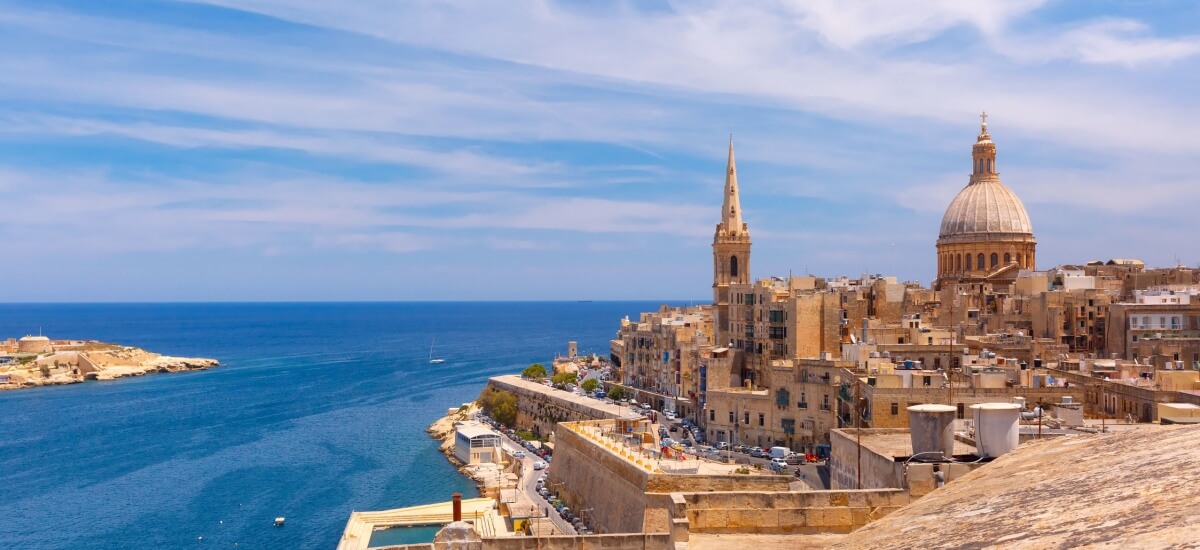
Malta has a lot going for it as a place to own property, including year-round Mediterranean sun, English as an official language, a stable EU economy, and a healthy, walkable lifestyle.
Many Americans are drawn by the idea of a holiday home in the islands, but you can also buy property in Malta as a rental investment or a retirement base.
However, there are important things that you should know about the process first, such as how Special Designated Areas (SDAs) and Acquisition of Immovable Property (AIP) permits work.
Here's everything US citizens need to know to buy a property in Malta successfully.
We'll also introduce Wise — your international money transfer alternative. Use Wise to send stress-free transfers to over 140 countries - all at the standard mid-market exchange rate.
Yes, US citizens can buy property in Malta.
However, the process will look different depending on where you buy. Malta divides its property market into two categories for foreign buyers: Special Designated Areas (SDAs) and everything outside them.¹
Special Designated Areas (SDAs) are government-approved developments (usually upscale residential complexes) where foreign buyers have the same rights as Maltese citizens.
In an SDA, you don't need any special permits to buy property. You can also buy more than one property, and you're free to rent it out. For most American buyers, this is the simplest route.
Outside an SDA, as a non-EU citizen, you'll need an Acquisition of Immovable Property (AIP) permit to buy. The permit costs you money, and it comes with pretty strict conditions:
Generally speaking, most foreign buyers prefer to buy property in a Special Designated Area (SDA) because it's a lot easier to do.
Buying property in Malta can connect to residency, but it's not automatic.
The main route is the Malta Permanent Residence Programme (MPRP), which grants EU residency to people who buy or rent a property and meet the program's investment and contribution requirements.
Under the MPRP, the property purchase threshold currently starts at 375,000 EUR, on top of government fees and a charitable donation.²
There's also the Global Residence Programme (GRP) that's built around a special tax status.
Malta no longer offers citizenship by investment. Its previous passport-by-investment scheme was suspended in 2025 following a European Court of Justice ruling.³

You'll need to decide early whether you're buying in cash or financing with a mortgage, since that affects how much you can spend and shapes your timeline.
Factor in more than the purchase price, too, including stamp duty, notary fees, and the AIP permit if you're buying outside an SDA.
This is also a good time to build a team of professionals who'll be helping you with your property purchase. Typically, you'll need a real estate agent and a notary who'll run legal checks, draft agreements, and register the sale. You may also want to get a lawyer, too.
Next, think about where you want to buy.
This is where the SDA question comes back into play. If you want the freedom to own multiple properties or rent your place out, make sure to focus your search on Special Designated Areas only.
If you're buying a single home for personal use, you can search outside the SDAs, as long as you don't mind the AIP permit as an added step.
Work with your agent to shortlist properties that fit your budget and goals, and make sure to see them in person before making any decisions.
Once you and the seller agree on a price, the notary drafts a preliminary agreement, known as the Konvenju.
At this stage, you'll typically pay a 10% deposit, along with 1% of the 5% stamp duty upfront.¹
The Konvenju legally binds both sides. If you back out without a valid reason, you lose your deposit, and if the seller backs out, they owe you double.
This is also when the due diligence happens. Your notary and lawyer should confirm that everything checks out before you commit. Key things to verify include:
Once everything checks out, you can move into closing the deal.
If you're financing, Maltese banks are sometimes open to lending to foreign buyers. You can generally get a loan for up to 80%, so plan for a down payment of at least 20% or more.¹
Some Americans fund their purchase from home, for example by refinancing a US property. If you go that route, keep currency fluctuations in mind, since your Maltese property and ongoing costs will all be in EUR.
At closing, you'll sign the final deed in front of the notary, pay the remaining 4% stamp duty, settle notary fees, and transfer the balance of the purchase price (90% if you put down a 10% deposit).¹
The keys are handed over, and the notary registers the sale in your name.
Once the property is yours, there are a few loose ends to tie up.
You'll need to set up utilities, arrange home insurance (if you haven't already), and get connected with the condo or building management if your property has shared facilities.
Make sure you receive the property's Energy Performance Certificate (sometimes called an Energy Compliance Certificate) when you sign the Contract of Sale. It's the seller's responsibility to provide it.⁴
Property in Malta isn't cheap by Mediterranean standards, but it can look affordable to Americans.
Across the country, apartments in town centers average around 417 USD per square foot. This average pricing drops to about 318 USD per square foot in less central areas.⁵
Sought-after coastal and urban spots come with premium pricing well above the average property prices.
Here is what you can expect across a few of Malta's cities:
| Location | Town center (per sq ft) | Outside center (per sq ft) |
| Sliema⁶ | 518 USD | 341 USD |
| Valletta⁷ | 511 USD | 384 USD |
| Birkirkara⁸ | 385 USD | 259 USD |
Sliema and Valletta are the priciest markets, which makes sense. Valletta is the historic capital and Sliema is a popular seafront hub for both residents and tourists.
Birkirkara, one of Malta's larger inland towns, comes in noticeably lower and gives you more space for your money if being in the thick of the action isn't a priority for you.
On top of the purchase price, here's what to expect from one-time costs that come due during the buying process:
| Cost | Typical amount¹ |
| Stamp duty | 5% of the purchase price |
| Notary fees | Roughly 1% to 2% of the transaction value |
| AIP permit | 233 EUR |
Stamp duty is the big one to plan for. As covered earlier, you typically pay 1% upfront when you sign the preliminary agreement, with the remaining 4% due at closing.¹
Luckily, Malta doesn't charge an annual property tax.¹
This means that your regular costs will be limited to monthly utilities, condo or building fees if your property has shared facilities, and home insurance.
The one tax to keep on your radar applies when you sell.
If you sell a property that hasn't been your primary residence for at least 3 years, an 8% final withholding tax applies to the sale price. But if you've lived in the property as your main home for 3 years or more, you may be fully exempt from that tax.¹
Malta is a stable and well-regulated place to buy property. The risks are low, and most come down to the particular quirks of an old, dense island property market.
Here's what to watch out for:
To avoid these risks, make sure to lean on your notary and lawyer for thorough due diligence, and to view properties in person so you can spot practical issues like dated wiring or a lack of climate control.
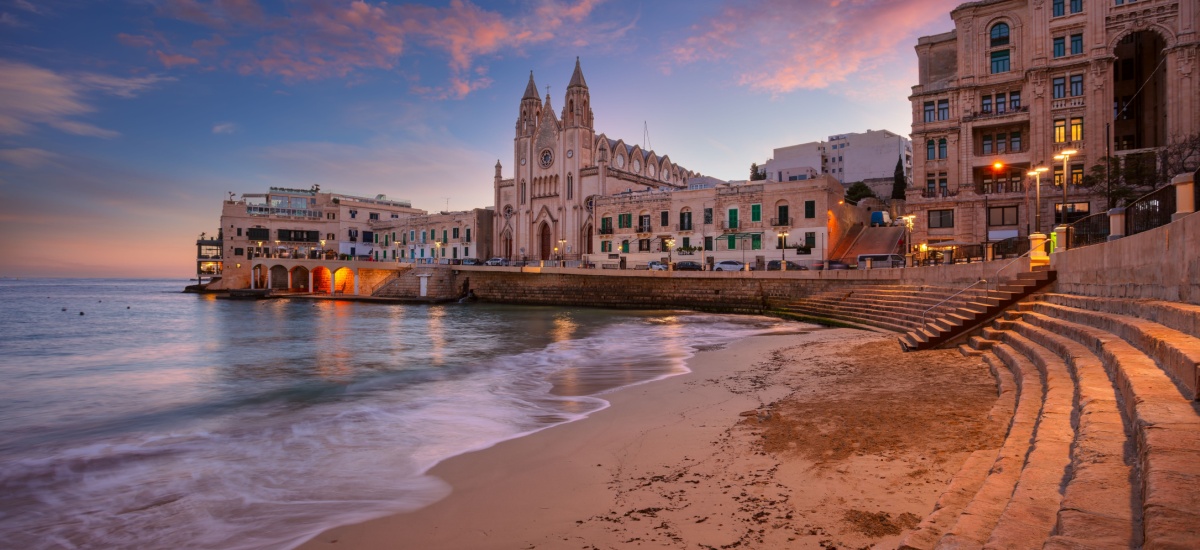
Sliema and the neighboring St. Julian's are one of the most popular areas for international buyers. This stretch of coast is the island's modern hub, packed with seafront promenades, shopping, restaurants, and nightlife, plus a large and well-established expat community.
It's also home to two of Malta's best-known Special Designated Areas, Tigné Point and Portomaso, which makes buying here simpler for foreigners.
However, be aware of pretty high property prices.

Malta's capital is a UNESCO World Heritage Site. If you're drawn to culture, architecture, and a walkable, atmospheric city, you'll likely find a property you like in Valletta.
However, many properties are centuries old, so factor in both the rules and the cost of bringing an older home up to modern standards before you fall for a place.
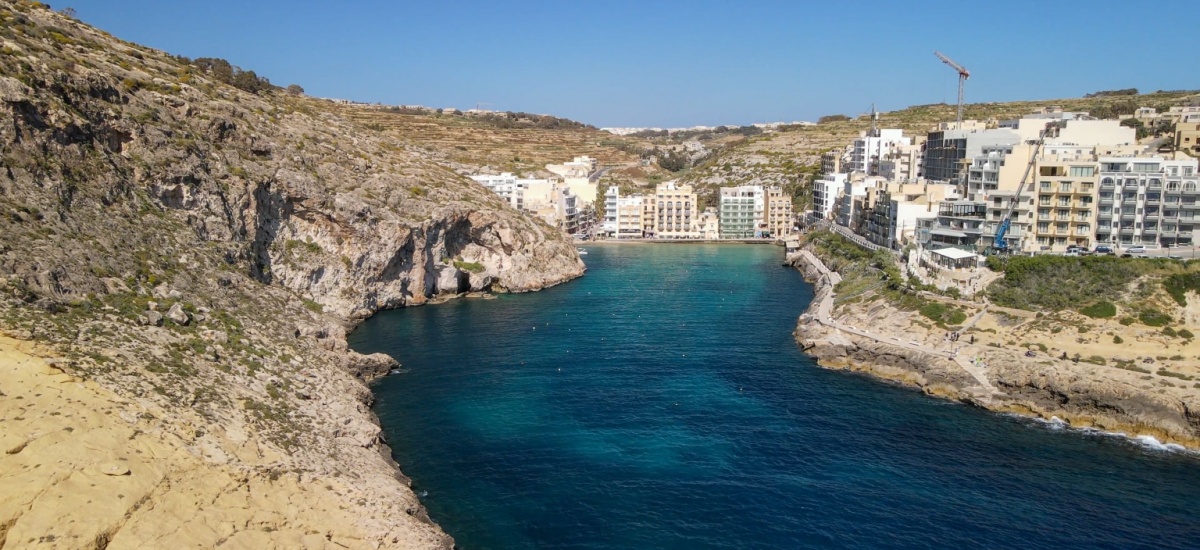
For a slower pace of life, Malta's sister island of Gozo is the standout option. It's greener, quieter, and usually more affordable than the main island. Gozo appeals to retirees, second-home buyers, and anyone after a rural Mediterranean lifestyle, and it has its own SDA at Fort Chambray.
The trade-off is fewer amenities and a ferry ride to reach the main island.
When buying a property in Malta, you'll need to put down a deposit when you sign the preliminary agreement, make payments to your notary and lawyer, cover stamp duty, and transfer the final balance at closing.
All of these payments need to get there on time, and it's important to remember that international money transfers come with a cost, too.
Now that we covered some of the basics, the only question left is how to send money to pay for your property overseas.
Wise offers you a quick, secure and transparent way of sending money abroad. You get the mid-market exchange rate for your payments and see how much it’s charged for the transfer before sending the money from your bank.
With the Wise Account you can also hold 40+ currencies, spend money in 150+ countries, and receive like a local in 8+ different currencies.
Please see Terms of Use for your region or visit Wise Fees & Pricing for the most up to date pricing and fee information
Once you get your head around SDAs and AIP permits, buying property in Malta becomes relatively straightforward, especially with a good notary and lawyer by your side.
However, many American buyers are surprised at how much it costs them to move money from the US to Malta to buy their property.
In addition to transfer fees, since your money starts in USD and the purchase happens in EUR, every payment runs through a currency conversion, too. Most banks add a margin on top of the exchange rate they give you, and it can be as high as 3% or even 5%.
On the kind of amounts involved in buying property, that margin can end up costing you thousands of USD.
But choosing a transparent option like Wise can help you save on fees and currency exchange rate markups.
With Wise, you can send secure and trackable large amount transfers to 140+ countries worldwide with transparent fees and the fair mid-market exchange rate.
Have a look at the main benefits for using Wise to send large transfers:
*Please see terms of use and product availability for your region or visit Wise fees and pricing for the most up to date pricing and fee information.
This publication is provided for general information purposes and does not constitute legal, tax or other professional advice from Wise Payments Limited or its subsidiaries and its affiliates, and it is not intended as a substitute for obtaining advice from a financial advisor or any other professional.
We make no representations, warranties or guarantees, whether expressed or implied, that the content in the publication is accurate, complete or up to date.

Can US citizens buy real estate in Montenegro? Discover progressive property taxes, foreign ownership restrictions, and how to safely secure a deed.

Can foreigners own land in Thailand? Learn what US buyers can do, key risks, typical costs, and how to handle large international transfers for property.

Can US citizens buy real estate in Cyprus? Learn about Council of Ministers approval, property taxes, and the complete buying process in our guide.

Foreigners owning land in the Philippines: a practical guide for US buyers on property rules, buying steps, costs, and large international transfers.

Can US citizens buy real estate in Switzerland? Learn about strict Lex Koller restrictions, residence permit rules, cantonal quotas, and the buying process.

Renovating a house in Sicily? Plan scope, budget, and living considerations for US buyers-plus how to manage international transfers for renovation payments











