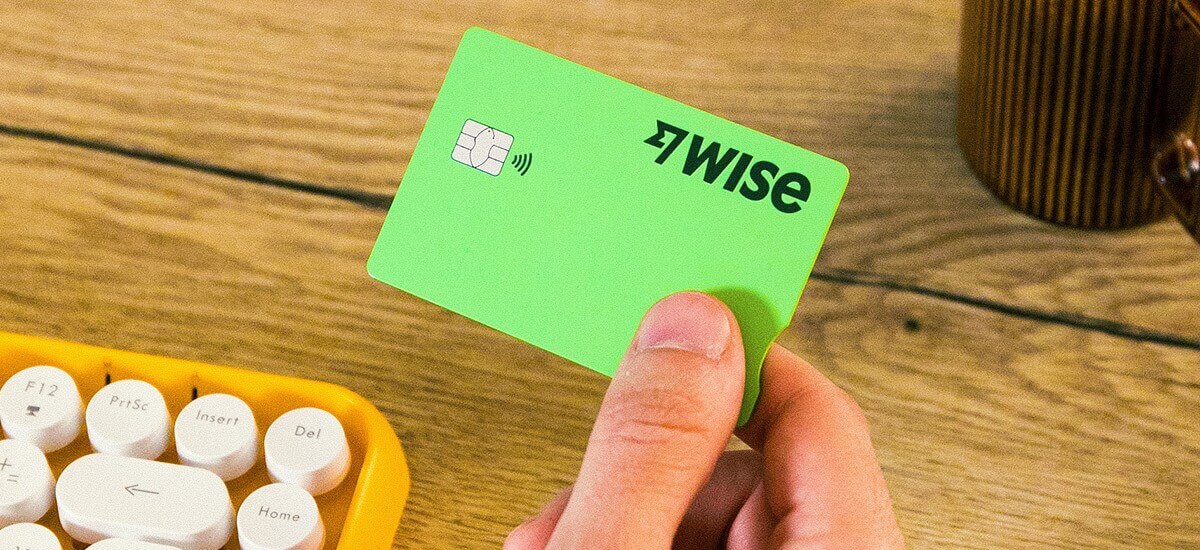
The Wise card has become a popular way to spend money internationally in multiple currencies. But, if you’re thinking about getting one, you might be wondering: is the Wise card a debit card or credit card?
In this guide, we’ll walk you through all about how the Wise card works, including where you can use it and the fees involved.
Pay in +40 currencies
with the Wise card 💳
Is Wise card debit or credit?
The Wise card is a debit card, not a credit card. This means that when you spend, the money is coming directly from the balance in your Wise Account, you’re not borrowing any money.
Just like other debit cards, you can use the Wise card in Ireland and abroad to pay for goods and services, and also withdraw money.

Wise card:
- Accepted in over 150 countries
- Spend in 40+ currencies
- Use it online, in store and at ATMs
- Connect it to compatible digital wallets like Apple Pay and Google Pay
As well as the physical Wise card there are also virtual Wise cards. These can be generated for free and used to pay online or using a contactless mobile wallet. When you want a new virtual card, simply delete it and generate a new one online or using the Wise app.
Is the Wise card Mastercard or VISA?
Whether your Wise card is Visa or Mastercard depends on which country it was issued in. In Ireland and across the EEA, the Wise card is a Visa debit card. This applies to both the physical cards and digital version.
Where can you use the Wise card?
The Wise card can be used in +150 countries, anywhere that Visa is accepted, including online retails, shops, ATMs, contactless machines and subscription services.
That said, there are some countries where use is restricted due to international regulations or local laws. You can find the current list of countries where the Wise card won’t work on the Wise FAQ, but at the moment for Irish people it includes countries like Russia, Belarus, Cuba and Myanmar.¹
Get your Wise card 🚀
Wise debit card fees 💰
Here’s a breakdown of the main fees for Wise card users in Ireland.
| Action | Fee |
|---|
| Ordering a physical card | €7 |
| Replacing a card | €4 - unless it was expiring in which case it’s free |
| Generating digital cards | Free |
| Withdrawing cash | Free ATM withdrawals up to €250 per month. After €250, a 2.69% fee applies. |
| Spending money | Free if you have the currency in your account. From 0.61% (depending on the currencies) if a currency conversion is needed |
*Wise will not charge you for these withdrawals, but some additional charges may occur from independent ATM networks.
Difference between debit and credit cards

If you’re not sure of the difference between a credit card and a debit card, like Wise offers, here’s a summary of the key things that set them apart.
| Feature | Debit card | Credit card |
|---|
| Source of the funds | Your money is held in a linked account | Money borrowed from the bank |
| Interest charged | No interest charged on your spending | Depending on the conditions, interest of around 10-20% can be charged on the money owed |
| Debt risk | Most debit cards don’t allow overdraft so no debt accumulates | All spending is debt which needs to be paid off |
| International fees | Usually a fixed or percentage based fee for spending and cash withdrawals | Usually a fixed or percentage based fee for spending and cash advances (but normally higher than debit card ones) |
| Perks and rewards | Generally don’t have any perks or rewards programs | May have additional perks like complimentary travel insurance or rewards programs for spending |
Sources used:
- Wise - Where will my Wise card work?
Sources last checked on date:
*Please see terms of use and product availability for your region or visit Wise fees and pricing for the most up to date pricing and fee information.
This publication is provided for general information purposes and does not constitute legal, tax or other professional advice from Wise Payments Limited or its subsidiaries and its affiliates, and it is not intended as a substitute for obtaining advice from a financial advisor or any other professional.
We make no representations, warranties or guarantees, whether expressed or implied, that the content in the publication is accurate, complete or up to date.