What the Supreme Court’s tariff decision means for your business

Madi Corr

Last month, the United States (US) Supreme Court ruled that many of the government’s tariffs were unconstitutional. The 6-3 decision found that the International Emergency Economic Powers Act (IEEPA) that the administration used to apply the tariffs fell short of granting it with the “power to unilaterally impose tariffs of unlimited amount, duration, and scope.”

As a result of the court ruling, many of the tariffs applied since 2 April 2025, were halted on 24 February 2026. Industry-specific tariffs on products like steel, aluminium, lumber and automotives — which were enacted under section 232 of the Trade Expansion Act of 1962 — are still in place.

In immediate response to the ruling, the administration imposed a global tariff of 10%, before saying they would increase it to 15% (not yet live), on all trading partners.

Here’s what your business should know.

Which tariffs are no longer in place?

  • The ‘reciprocal tariffs’ announced in April 2025 — a baseline 10% global tariff on nearly all imported goods and country-specific higher tariff rates, including:
    • European Union (EU): 15%
    • India: 18%
    • Indonesia: 19%
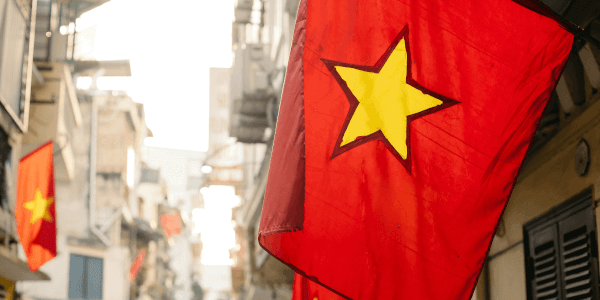
    • Vietnam: 20%
    • Brazil: 40%
    • Bangladesh: 19%
  • The ‘trafficking and immigration tariffs’ first introduced in February 2025, including:
    • Canada: 35%
    • Mexico: 25%
    • China: 10%

Which tariffs are still in place?

  • Industry-specific tariffs, including:
    • Steel & Aluminum: 50% tariff on imports, except for those from the UK (25%) and specific USMCA (Canada/Mexico) goods that are exempt
    • Copper: 50% tariff on semi-finished and derivative copper products
    • Automobiles & Parts: 25% tariff on most imported cars and parts
    • Commercial Vehicles: 25% tariff on medium/heavy-duty trucks and parts, 10% on buses
    • Lumber & Wood Products: 10% tariff on softwood lumber; 25%–50% on kitchen cabinets, bathroom vanities and upholstered furniture
  • The new, global tariff (effective 24 February): 10% on all countries imports, set to increase to 15%

What’s happened to the trade deals?

  • Over the past eleven months, several countries and organisations — including the UK, Canada and Japan — have penned trade agreements with the US to secure lower tariff rates. As of today (3 March 2026), it is unclear how these deals will be impacted by the court’s decision and new global tariff. In the meantime:

Are businesses being refunded?

  • There is a potential route for businesses to be refunded the amount they paid under the IEEPA tariffs (estimated to be over $175 billion). That said, the legal process is unclear, likely to be complex and could take years to finalise.
  • So far, many companies — including FedEX, the global delivery services company — have filed lawsuits against the administration for tariff refunds.

Will new tariffs be applied?

  • In the State of the Union address on 24 February, the administration said they would find new ways to apply tariffs without the oversight of the US Congress. This could include utilising laws pre-approved by Congress, like Section 122 of the Trade Act of 1974, Section 232 of the Trade Expansion Act of 1962, Section 301 of the Trade Act of 1974, or Section 338 of the Tariff Act of 1930.
  • The current 10% (set to increase to 15%) global tariff will expire after 150 days on 24 July 2026.

Will the new global tariff also be overturned?

  • The new global tariff may be overturned. The tariff was placed under Section 122 and can therefore only be applied temporarily without congressional oversight. Without further action, the tariff will expire on 24 July 2026.

How can I prepare my business for tariff uncertainty?

  • Beyond staying informed, it’s important for businesses to be proactive about managing their exposure to tariffs and subsequent foreign exchange (FX) volatility. If your business exports goods to the US, you will likely be impacted by the new global tariff. If you’re based in the US and purchase goods from suppliers overseas, consider your provider’s exposure to tariffs and make informed decisions about how their pricing may change or increase as a result of new policies.
  • The Wise Business account is designed to make navigating uncertainty less stressful. That includes the ability to to receive money like a local business in 9+ currencies to improve flexibility and reduce the risk of funds lost in the conversion process amid currency fluctuations. If you do need to exchange currencies, you can set up Auto-Conversions to automatically convert your money between two currencies once they reach your desired exchange rate. If you change vendors or suppliers, it’s easy to pay them via direct debits in 40+ currencies at low, competitive fees. All in one account.

Want to read more about how tariffs could impact your business? Learn more on our blog.

How Wise Business can help

In addition to providing customers with access to local account details in currencies like USD, GBP, EUR and SGD, Wise Business makes sending, receiving and spending money in 40+ currencies fast, easy and affordable so businesses can react quickly and scale globally.

Create your account to:

  • Get paid from overseas in 9+ currencies, just like your business is based there
  • Pay suppliers and invoices in 40+ currencies and 160+ countries — 74% of payments arrive in under 20 seconds
  • Sync with leading accounting software, including Xero and QuickBooks
  • Get multi-currency debit cards for you and your team
  • Access 24/7 English-speaking customer support

And more. Ready to get started?

Create a Wise Business account


*Please see terms of use and product availability for your region or visit Wise fees and pricing for the most up to date pricing and fee information.

This publication is provided for general information purposes and does not constitute legal, tax or other professional advice from Wise Payments Limited or its subsidiaries and its affiliates, and it is not intended as a substitute for obtaining advice from a financial advisor or any other professional.

We make no representations, warranties or guarantees, whether expressed or implied, that the content in the publication is accurate, complete or up to date.

Money without borders

Find out more

Tips, news and updates for your location