
Wise Business Pricing Explained (Global)
Having trouble deciding which Wise Business account is best for your business? We’re breaking down the differences between the ‘Essential’ and ‘Advanced’...


In 2025, just 2.3% of global VC funding went to all-female founding teams. Despite research showing that women-led businesses deliver 35% better returns, the gender funding gap isn't narrowing — it's growing.
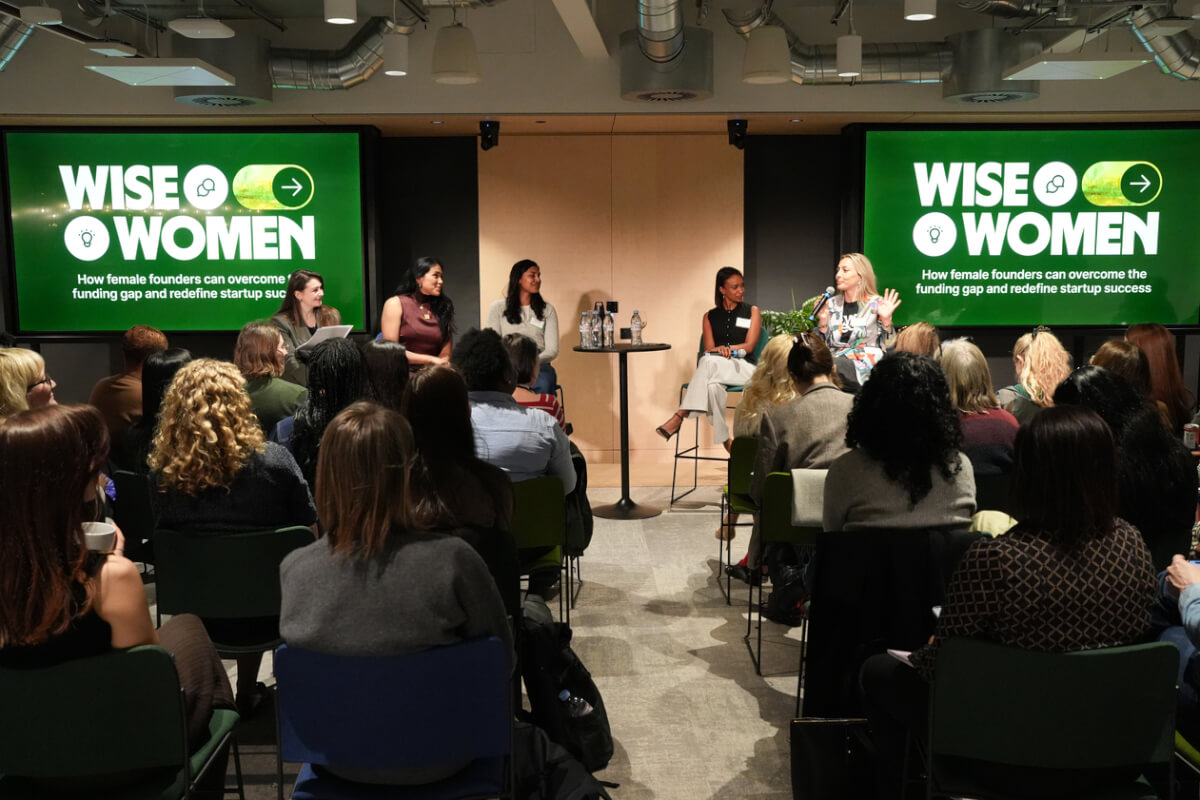
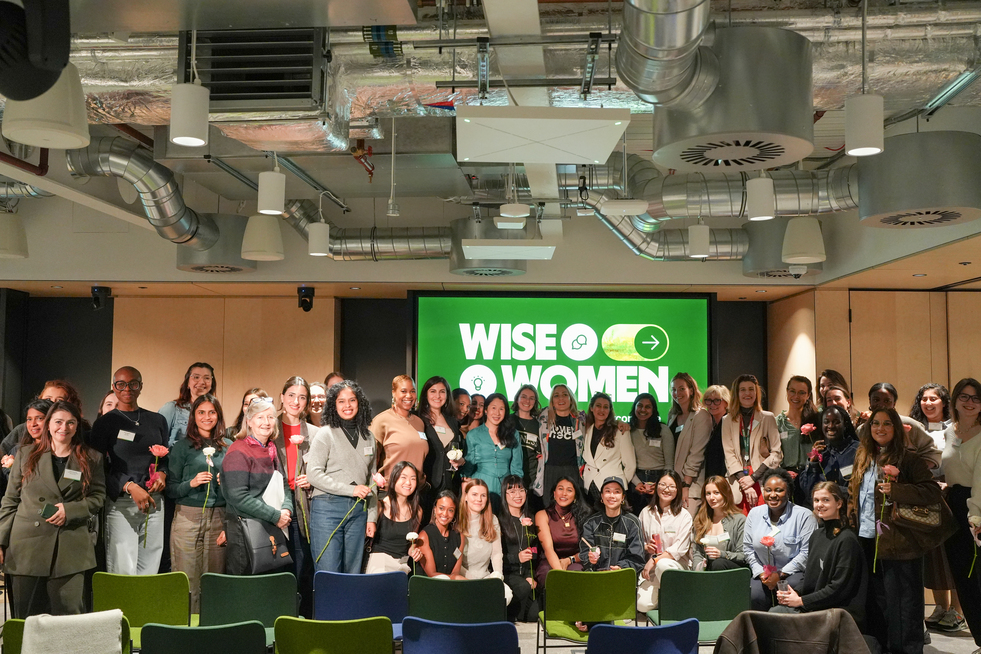
To bring this problem into focus, we brought together founders and investors for an open conversation on the structural barriers faced by women-led startups. To get the discussion started, we hosted a panel discussion with female leaders in the startup ecosystem, Nina Tumanishvili, UK Chapter Lead at Women in Tech, Nina Mohanty, Founder at Bloom Money, Sangi Unantenne, Delivery Director at Wise and Meera Bissoondeeal, Fintech Investor at 13books Capital. The conversation was hosted by Hannah McGrath, Business Content Lead at Wise.
The panel, titled ‘Wise Women: How female founders are redefining startup success' addressed everything from raising investment and demonstrating ambition to alternative investment opportunities and founder loneliness.
We’ve summarised the key takeaways from the session below. If you’d like to watch the panel in-full, you can find it on YouTube.
| Meet the panellists | |
|---|---|
| Nina Tumanishvili, UK Chapter Lead at Women in Tech | Nina is currently advising start-up’s at the intersection of location and social as well as in the Web3 space. Beside her work as an entrepreneur and advisor she also leads the UK Chapter for Women in Tech Global — the largest non-profit of its kind working toward the mission of empowering 5 million women in the STEM field by 2030. Nina was shortlisted by Computer Weekly magazine as one of the most influential women in UK tech and has spoken on stage at Bloomberg Europe HQ, The Chartered Institute of IT and BBC London. |
| Nina Mohanty, Founder at Bloom Money | Nina Mohanty is the co-founder and CEO of Bloom Money, an app that builds tools for diaspora communities to build generational wealth. Before leaving to found Bloom Money, Nina worked at Klarna making payments smooth and reimagining a better way to pay. She is a recipient of the TechWomen 100 award, has been recognised for four years by Innovate Finance on the Women in FinTech Power List and in 2023 was recognised on the Forbes 30 under 30 list in the European Finance category. |
| Sangi Unantenne, Delivery Director at Wise | As Global Delivery Director, Sangi leads a team of delivery specialists across EMEA, NAM, and APAC to ensure the successful delivery of Wise Platform empowering banks, fintechs and enterprises to seamlessly integrate our leading, scalable infrastructure to provide their customers with fast, convenient and transparent cross-border payments. With over 15 years in financial services, she brings a wealth of expertise in product development, payments and delivery. |
| Meera Bissoondeeal, Fintech Investor at 13books Capital | Meeta is a fintech investor at London-based venture capital firm, 13books Capital. In her role, she specialises in investing in startups from late Seed to Series A stage and on exception in later rounds. Prior to joining 13books Capital, Meera was an Investment Banking Analyst at RBC Capital Markets. |
With statistics as stark as those shared above, it’s impossible to ignore the structural biases that exist for women launching and scaling startups in today’s ecosystem.
Nina Mohanty, who founded Bloom Money after an impressive career working in the fintech space, said she spent months assuming the investor rejections she received had something to do with her pitch. When she began to catalogue the rejections, she saw a pattern,
“The most common things were: 'Do you think you have what it takes to build a billion-dollar business? Why don't you just start Bloom as a charity? Would anyone use this, do you think? Let me ask my wife or my secretary.' I finally had to come to the realisation that the body in which I live is going to dictate the way people interact with me.”
This suspicion was only amplified when she added her male CTO's photo to her pitch deck and finally started receiving traction.
Sangi has had some similar experiences in her own career. She remembered that during the pandemic, she was working with a partner overseas and only communicating via email. When it came time to get on a call, the team were surprised, she recalled: “I jumped on a call and they're like, ‘Oh, you're female?’ My assumption was because of the way that I worked, for whatever reason, their perception was I'm going to be male. Maybe it's because I was quite direct or fairly action-oriented. Whatever biases that they had.”
The panel agreed that acknowledging these biases and documenting them is important but directing your energy toward what you can control will lead to the most beneficial outcomes. Meera, who is principal at 13 Books capital and makes investment decisions every day, agreed that the structural problems are hard to argue against,
“When you know the statistics are just so stark, it wouldn't be honest of me to say I don't think there isn't something structural. I do think that if money sat in many more people from different backgrounds, it would change things.”
Nina Tumanishvili spent two years and significant personal funds trying to build an app called ‘Tube Chat,’ an offline messenger for the London underground. Building the app took significant sacrifice, including working multiple jobs, waitressing in the evenings, hiring student developers and working out of a temporary space. Not long after it launched, she watched a stranger go viral with a similar concept for almost nothing, “This guy just had badges that said 'Tube Chat?' He gave them to strangers and ended up on The Huffington Post, doing interviews with the BBC. And I thought, it doesn't always have to be an app. Validate with experiments.”
Her experience has given her a new perspective on building: spend less time building the product and more time figuring out if anyone wants it. She suggests,
“Build WhatsApp communities. Run experiments. Get your target customers involved before you write a single line of code. Get investors involved early and get them genuinely invested in your success before you ask them to write a cheque. And in the age of AI, it is so cheap and fast to test things now. There's no excuse not to.”
She also pushed back on the instinct to spend all your budget on talent, “What happened to me is I was raising money to hire people who ultimately left as soon as the funds ran out. Find people who will join you on equity, people who will be with you in the trenches even when the money is gone. Focus on that instead of using angel investment to hire someone for two months who then leaves you with no one.”
Once you’re ready to raise investment, it’s important to spend time researching each investor you meet with. This approach allows you to prioritise messages and information that you know will land.
Sangi spoke about her positive experiences using this strategy,
"I really enjoy making sure I have the data, the narrative, or the story that I think that person is going to ask. Not only understanding my product, but really understanding who's going to be at that other side of the table. If I know someone is going to ask me technical questions, I prepare enough to speak to the tech — even though I'm not an engineer by background."
From the investor side, Meera explained that taking the extra time to understand your potential investors’ perspective can make a big difference. She shared that two funds both listed as "Series A investors" can have fundamentally different return requirements and those differences are often not on their website: “A fund that is $150 million needs to underwrite very differently from one that is $500 million. And yet if you quickly search 'who invests in Series A?' both names pop up. Understanding those nuances gives you a sense of what their mental map looks like when they're evaluating an opportunity.”
By uncovering the investors’ goals, you can stop wasting time on conversations that are unlikely going to work out for you or the fund. Meera suggested that the best way to get this understanding is by leveraging your network — talk to founders who've already taken meetings with the same fund and find out what questions came up. As Meera put it,
“You need someone who's a trusted source that will also tell you straight up what the rules of the game are.”
Nina Mohanty reminded the audience to consider ‘back channels’ throughout the fundraising process, “One thing that you'll find if you raise from VCs, you're always back-channeling. Get that WhatsApp number, because you're going to be like texting people like, ‘Is this person legit? Or how do we feel about this?’”
When it comes to raising investment, there’s no such thing as being too ambitious. Nina Mohanty shared that during her fundraise, she was told that her revenue projections needed to be tripled to close the round. When she consulted her female founder friends, they often thought this seemed unrealistic but when she spoke to her male founder friends, she found “They were like, 'Yeah, we all do it. 5x that. Or at least tell them you're going to do it.' And for them, it's not lying. It's just — the objective is to get the funding, so we tell them what we need to get the funding. And it hadn't even occurred to me.”
While rewriting your projections may feel wrong, Meera offered important context on why it could work. Investors don’t always expect their portfolio companies to hit their projected numbers, instead it’s a signal of the founders’ ambition and how big they think their idea could scale. It’s important for an investor to believe your idea could make them money and going into a conversation with conservative numbers could be a non-starter. She explained, “I would rather we set the goal to 3x and land at 2x, than go for the 2x and wonder if there was something else. As long as you set those goals and everyone is aligned, missing the 3x and hitting 2.3 is not what you will be penalised for.”
Nina Mohanty highlighted the bottom line:
“Short answer is — have more audacity, ladies.”
In today’s startup environment, VC investment can be treated like the be-all and end-all But Nina Mohanty made an interesting point, “Not every business needs to be venture capital-backed. It's really nice for the ego to say 'Oh, TechCrunch, look at me, I've raised so much money.' But when we talk about VC-backed businesses, we're talking about billions and at this point trillion-dollar markets. Your total addressable market has to be so massive for VC to say yes. I highly recommend you figure out and understand the economics of venture capital before you go knocking on those doors.”
Meera reinforced the point,
“VC gets a lot of the space because it's mostly what is talked about in the news but it's not the fit for many companies. If I say no to a company, it doesn't mean what they've built isn't credible. It just means we don't fit each other. And I'm very mindful that founders shouldn't take that as meaning their business isn't worth building.”
So what are the alternatives? The panel walked through some additional options, including crowdfunding (where women often outperform men), revenue-based financing, venture debt, grants and EIS and SEIS.
During the Q+A, one audience member described their own success moving to revenue-based finance after years of chasing VC investment. She shared,
"I went to a revenue-based finance company. They looked at our stats and within 24 hours we had some money in the bank. I wish more people talked about that aspect — where you're not on one side and you're not on the other. There is a bit in the middle that still helps you scale."
One in seven women entrepreneurs in the UK report loneliness as their biggest challenge and for solo founders this is a significant problem.
Loneliness is something Nina Tumanishvili is deeply passionate about, not only as a female founder but as a citizen of our rapidly changing world. She shared,
“My journey as a female founder was very lonely because I was a solo entrepreneur. And whenever I was working, it was mostly men in the co-working space who were all tagged up with their other co-founders. There aren't many people to share the lows with and the highs with.”
For Nina, finding her community was vital to sustaining her motivation “I was lucky enough to find incredible male allies along my journey. I had incredible mentors. I had incredible investors. It's really important that you have people who say your name in rooms you're not in and I feel I had that.”
Knowing where to start when you’re new to entrepreneurship can be tricky but Nina Mohanty offered some advice on building your network effectively, “Make it as easy as possible for other people to help you. If you want someone to connect you to a VC they know, send them the email you want forwarded. Include a one-paragraph description of your business, your deck and your Calendly link. All they have to do is hit forward. Minimise the number of steps it takes for someone to help you.”

The panel made it clear that while structural inequality in startup funding is real, documented and growing, it doesn’t mean scaling a startup as a woman is impossible.
As we continue to fight for more representation in the technology and investment sectors, there are plenty of ways to accelerate your own growth and support the growth of your fellow female founders now. We encourage you to watch the full-length panel to get all the insights from our incredible panellists.
Wise Business has all the tools startups need to start operating in 40+ currencies. With dedicated account managers for VC-backed startups, we’ll help you reach new customers, investors and opportunities in 160+ countries.
Learn more about Wise Business
*Please see terms of use and product availability for your region or visit Wise fees and pricing for the most up to date pricing and fee information.
This publication is provided for general information purposes and does not constitute legal, tax or other professional advice from Wise Payments Limited or its subsidiaries and its affiliates, and it is not intended as a substitute for obtaining advice from a financial advisor or any other professional.
We make no representations, warranties or guarantees, whether expressed or implied, that the content in the publication is accurate, complete or up to date.

Having trouble deciding which Wise Business account is best for your business? We’re breaking down the differences between the ‘Essential’ and ‘Advanced’...

Learn how to apply for the Switzerland self-employed permit from the UK. Our guide covering eligibility, documents, timelines, permits, and renewal rules.

Learn everything needed to launch your Dubai e-commerce business from the UK. Our step-by-step guide explains rules around ownership, licensing, and much more.

Find out the cost of starting a business in Vietnam as a UK resident. Our guide covers capital rules, legal fees, visa fees, and more.

Learn how to apply for and obtain a residence permit for self-employment in Sweden. Our guide explains application steps, requirements and more.

Ready to launch your Canadian business? Read our guide to find out the full cost of getting set up, from registration fees to inventory and more.









