Buying property in Como as a foreigner: Complete UK guide (2026)
UK buyer’s guide to buying property in Como, Italy. Read on about real estate prices, taxes/fees, mortgages, and where to start your search.


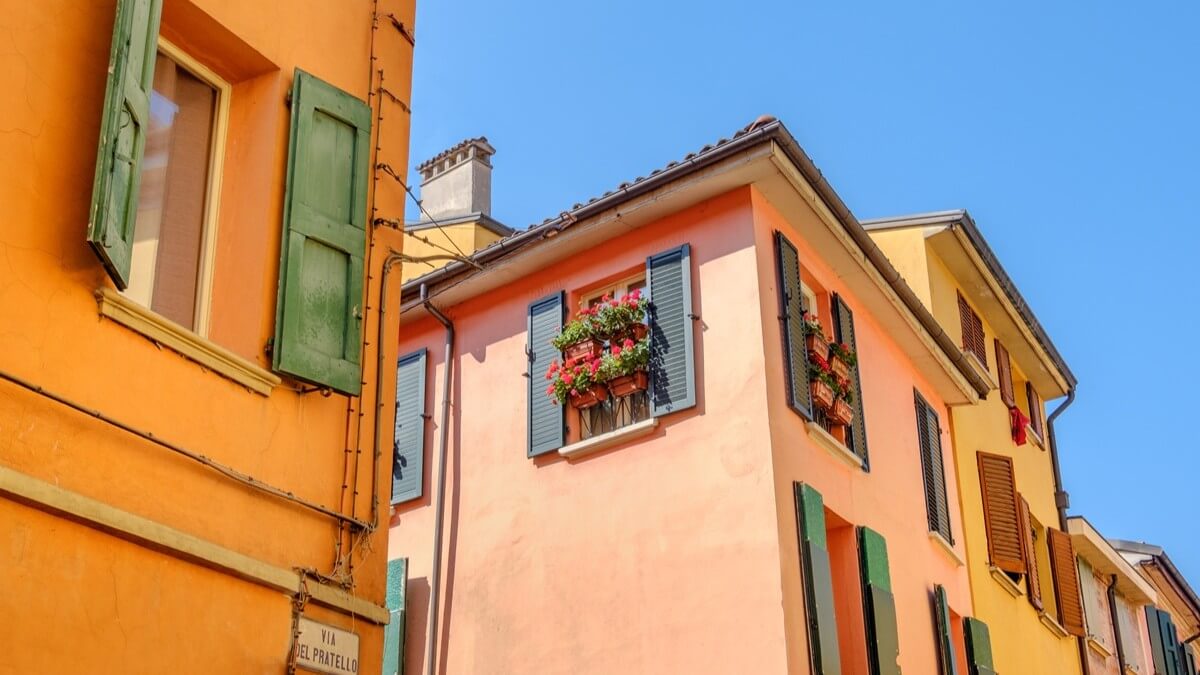
Italy has attracted expats for decades with its incredible food, wine, rich history and stunning natural landscape. Whether you’re drawn by the gorgeous countryside, a new job opportunity or the chance to start a business, one of the biggest hurdles you’ll face is finding an apartment.
We’ve put together a guide to renting in Italy, covering popular destinations, average rental prices and an overview of the rental process. We’ll walk you through the most important things to know as you begin your rental search.
We’ll also point out a cost-effective way to manage your money across borders from Wise. Open a Wise account and you can send large transfers between the UK and Italy for low fees* and at the mid-market exchange rate. This makes it a reliable option for secure international payments.


Yes, UK citizens can rent property in Italy. Some additional documentation or proof of status may be required, but there is no law preventing UK citizens from renting.1
You don't always need a residence permit (permesso di soggiorno) in order to rent a flat in Italy. However, you’ll need proof of legal stay, such as a long-stay visa or a valid residence permit.1
The rental process in Italy starts with finding potential properties and contacting landlords or real estate agents. It’s highly recommended to visit the property in person before making a decision.
Once you've chosen a place, you can negotiate the lease terms, such as the monthly rent, security deposit, and whether utilities are included. You'll then sign a written lease, known as a contratto di locazione.
Before moving in, you’ll need to pay the first month’s rent and a security deposit (cauzione). All terms agreed upon with the landlord should be clearly stated in the rental contract.
When renting in Italy, knowing where and how to search can make a big difference. The most common ways to find available properties are through real estate agencies and online listings.
Using a real estate agent helps simplify the rental process, especially if you are not familiar with the language or local rules. Many private landlords rely on agencies to manage their property, making this a reliable way to find a suitable place to live.1
Agency fees can be quite high, but agents help ensure that the landlord is legitimate and the rental process is handled correctly. Typically, the tenant pays the agency fee, which is usually equal to one month’s rent plus 22% VAT as a finder’s fee.1
Here are some popular real estate agencies in Italy:
You can start browsing online listings even before moving to Italy. This helps you get a sense of average rent prices in different neighborhoods and gives you a clearer picture of what's available.
Online platforms offer a variety of options, detailed descriptions and photos, allowing you to compare properties and narrow down your choices.
Some popular online rental platforms include:
Property types in Italy vary widely, each offering something different depending on how you want to live. Whether you’re seeking extra space, lower costs or a low-maintenance home, there’s something to fit every need.
Here's a look at the most common options and who they're best suited for.
There are different types of houses in Italy, depending on their location, size and whether they share walls with other buildings. Popular types include the semi-detached house or casa gemella, the country house or casa padronale, the detached house with a garden or villa and a small house, known as casetta.2
Since houses are often found outside dense city centres, they’re a great choice for families, those seeking outdoor space or a quieter environment.
Apartments in Italy range from studios to multi-bedroom units. They can be rented furnished, partially furnished or unfurnished, in which case they don’t even come with light fixtures. Fully furnished apartments are usually geared towards students and working professionals.1
Studio apartments are called monolocale, while three- and four-bedroom flats are known as trilocale and quadrilocale.1
Living in an apartment is a good option for many people, including couples and small families looking for easy-to-manage living spaces in the city.
Short-term holiday rentals are a good option for your first few weeks in Italy. Although temporary, you may still need to sign a rental contract. This contract doesn’t need to be registered with the Revenue Agency, but you might be required to pay a security deposit.2
Holiday rentals come fully furnished and include everything you need for your stay. Keep in mind, however, that a tourist tax is usually charged at the end of your visit.2
If you’re studying at an Italian university, you’ll usually be offered dormitory accommodation on or near campus. These accommodations are generally affordable, though you may need to leave during a short summer break.1
Student housing is both convenient and budget-friendly, allowing you to focus on your studies and connect with other students.
Flatshares are a popular choice for students and newcomers to Italy, often serving as a next step after living in dormitories. While sharing a flat can significantly cut costs and offer social opportunities, it also means navigating different habits, dividing chores and managing shared bills with your roommates.
Living in the city centre comes at a premium in Italy, with one-bedroom apartments averaging around €722 per month and three-bedroom flats reaching about €1,250. If you're open to living farther from the centre, you could save anywhere from €150 to €300 monthly. Rental costs also depend heavily on the property's condition and amenities.3
Big cities in Italy come with higher rental costs, and Rome is no exception. In the city centre, a one-bedroom apartment rents for around €1,250 per month, while a three-bedroom can cost more than €2,300.4
Wondering how much that would cost in GBP? Check out this handy conversion calculator.
Rent is rarely your only monthly cost. You’ll typically be responsible for paying all your own utilities in an Italian rental, including gas, electricity, water, cable and internet. There’s also an additional TV tax that costs around €110 per year.2
Utilities for an 85 m² apartment in Italy average around €200 per month, but costs can be higher in larger cities.3 Energy suppliers in Italy are public and private and many also provide gas. The main national energy provider in Italy is Enel, but other well-known companies include A2A, Edison, and Eni. If you prefer to use green energy, providers such as Alperia, NeN, and Sorgenia specialise in renewable sources.5
The leading internet providers in Italy are Fastweb, Tiscali, Virgin Fibra and WINDTRE. The prices start at €20 for more basic packages, but the costs also depend on your location.5
Tenants in Italy also pay a waste tax called tassa sui rifiuti (TARI). You won’t need to calculate the rates yourself, as each municipality sets the charges based on your property’s size and the amount of waste produced. However, if your lease is shorter than six months, you are usually exempt from paying the waste tax.6
Rent and bills can be paid in various ways, including bank transfers and direct debits. The easiest option is to open an Italian bank account, which allows you to make local payments and deposit euros without extra fees. Although you can sometimes keep your UK bank account, international transfers with some banks often involve high fees and unfavourable exchange rates.
Another convenient choice is using a money transfer service like Wise. You can use Wise to pay bills manually or set up direct debits. It's a great choice for sending larger amounts since it offers transparent fees* and the mid-market exchange rate, so you always know what you’re paying.
Landlords might ask for different documents, but here are the main ones:
You might also need references from previous landlords and a guarantor, but it’s not required by law.
The four main types of contracts when renting property in Italy are unrestricted, conventional, transitory and student contracts.
Unrestricted contracts or contratto di locazione a canone libero are long-term agreements lasting four years, with an option to renew for another four. Conventional contracts or contratto a canone concordato last three years with the possibility of a two-year renewal.8
Transitory contracts (contratto di locazione ad uso transitorio) are designed for short-term rentals ranging from one month up to 18 months. Finally, student contracts (contratto di locazione a favore degli studenti universitari) are established through agreements with university cities. They last between six months and three years and renew automatically unless terminated.8
In Italy, rent is agreed between the landlord and tenant and usually stays the same for the full lease. It can only increase if the contract allows for annual cost-of-living adjustments and the landlord hasn’t chosen the flat tax.8
Landlords can ask for up to three months’ rent in advance and a security deposit of up to three months. This means tenants often pay six months’ rent before moving in. The deposit is returned with interest, currently set at 3%, when the contract ends.
Tenant rights in Italy are strong. Landlords cannot easily evict tenants, even if rent isn’t paid. The process can take a long time and must follow legal procedures.
Here’s a step-by-step guide to renting property in Italy:
When renting in Italy, keep the following things in mind:
Here are some tips to help for renting property in Italy:
Here are some popular cities to consider when renting in Italy:
Rome is Italy’s capital and a major cultural centre, known for its museums, historic landmarks and lively piazzas. Living in central neighbourhoods can be pricey, with one-bedroom flats typically costing around €1,250.4
If you opt for neighbourhoods outside the city centre, the average rent for a one-bedroom flat is around €790, while a three-bedroom typically costs about €1,500.4
Milan is Italy’s economic powerhouse, known for its trendy neighbourhoods and modern city life. However, it’s also one of the most expensive cities in Italy, with high rents in prime areas.
A one-bedroom apartment in central Milan averages around €1,500 per month, while a three-bedroom typically costs about €2,900. Choosing to live further from the city centre can save you between €400 and €1,000 on rent.9
Florence offers a range of rental options thanks to its compact size and walkable neighbourhoods. While rent tends to be more affordable in the outer areas, getting around the city is easy and these locations still provide a great quality of life.
The average rent for a small apartment in central Florence is just under €1,000, while moving outside the city centre can bring costs down to under €800. A three-bedroom apartment in the heart of the city typically rents for around €1,700.10
Renting in Italy often involves encountering Italian words that might be unfamiliar at first. To help you navigate contracts and listings, here are some useful terms:
| Italian | English |
|---|---|
| Appartamento in affitto | Apartment for rent |
| Contratto di affitto | Rental contract |
| Arredato | Furnished |
| Servizi | Amenities |
| Spese di utenza | Utilities |
| Monolocale | Studio apartment |
| BIlocale | One-bedroom apartment |
| Riscaldamento | Heating |
| Locatore | Landlord |
| Caparra confirmatoria / Deposito cauzionale | Deposit |
Renting in Italy gives you the chance to live in beautiful cities with rich culture, but navigating the rental process can be challenging. Knowing what to expect beforehand can make everything go smoothly and make the experience more enjoyable.
If you’re looking for a simple way to manage your rental expenses, Wise can be a great option. Open a Wise account and you can send money between the UK and Italy for low, transparent fees* and at the mid-market exchange rate.
You can also spend in euros using your Wise card. It works in more than 150+ countries and automatically converts your pounds to the local currency, only adding a tiny, upfront currency conversion fee*.
Sources used:
1. Expatica - renting in Italy
2. InterNations - renting and housing in Italy
3. Numbeo - cost of living in Italy vs the UK
4. Numbeo - cost of living in Rome
5. Expatica - utilities in Italy
6. Expatica - internet in Italy
7. Confcommercio - TARI
8. Global Property Guide - rental contracts
9. Numbeo - cost of living in Milan
10. Numbeo - cost of living in Florence
Sources last checked on date: 17-Nov-2025
*Please see terms of use and product availability for your region or visit Wise fees and pricing for the most up to date pricing and fee information.
This publication is provided for general information purposes and does not constitute legal, tax or other professional advice from Wise Payments Limited or its subsidiaries and its affiliates, and it is not intended as a substitute for obtaining advice from a financial advisor or any other professional.
We make no representations, warranties or guarantees, whether expressed or implied, that the content in the publication is accurate, complete or up to date.
UK buyer’s guide to buying property in Como, Italy. Read on about real estate prices, taxes/fees, mortgages, and where to start your search.

Read our guide explaining the resident permit in Italy, including different types of permits, how to apply and how much it costs.

Everything UK investors need to know about the Italy Golden Visa, including requirements, costs, benefits, risks, application process and more.

Read our comprehensive guide to getting a mortgage in Italy from the UK, covering everything you need to know.
Read our complete guide to selling your property in Italy, including info on the process, fees, taxes, legal requirements and more.

Getting married or settling down in Italy? Here, we look at how to register marriage in Italy, including documents required and legal processes.