
Is there stamp duty in Ireland? Guide for Brits
Complete guide to stamp duty in Ireland for British buyers. Check current rates, the 15% surcharge, new build VAT rules, and when the tax is due.


Have you found a property in Portugal with great potential but in need of renovation? Or perhaps you’re dreaming of a Portuguese renovation project down the line? We’ll take you through the essentials of renovating a house in Portugal, explaining the process from start to finish.
In this guide, we’ll cover the pros and cons of renovating a house in Portugal, break down all the costs and help you create a renovation schedule. We’ll also tell you what you should consider before even starting.
Finally, since renovation can be costly and chaotic, you may want to make this process less stressful. The Wise account will allow you to send large amounts of money between the UK and Portugal for low fees*.
That means you could use what you save in fees or hidden markups to cover any upfront renovation payments. It can even auto-convert your pounds to euros at the mid-market rate and help you save even more.
For large amounts, Wise has a dedicated team of experts to guide you through every step of your transfer so you can move bigger amounts of money to Portugal with ease.
Get expert support for your large transfer 📞
There are many reasons why you might be considering renovating a house in Portugal. Perhaps you’re planning to move to Portugal, sell your property, rent it out, or turn it into a second residence or holiday home.
However, before moving forward, it’s important to step back and decide whether renovation is truly the right choice for you. Just like building a home from the ground up, renovating involves careful planning, budgeting, and a range of costs to consider.
To sum it up, here are the pros and cons to renovating a house in Portugal:
Pros:
Cons:
📚Pitfalls of buying property in Portugal
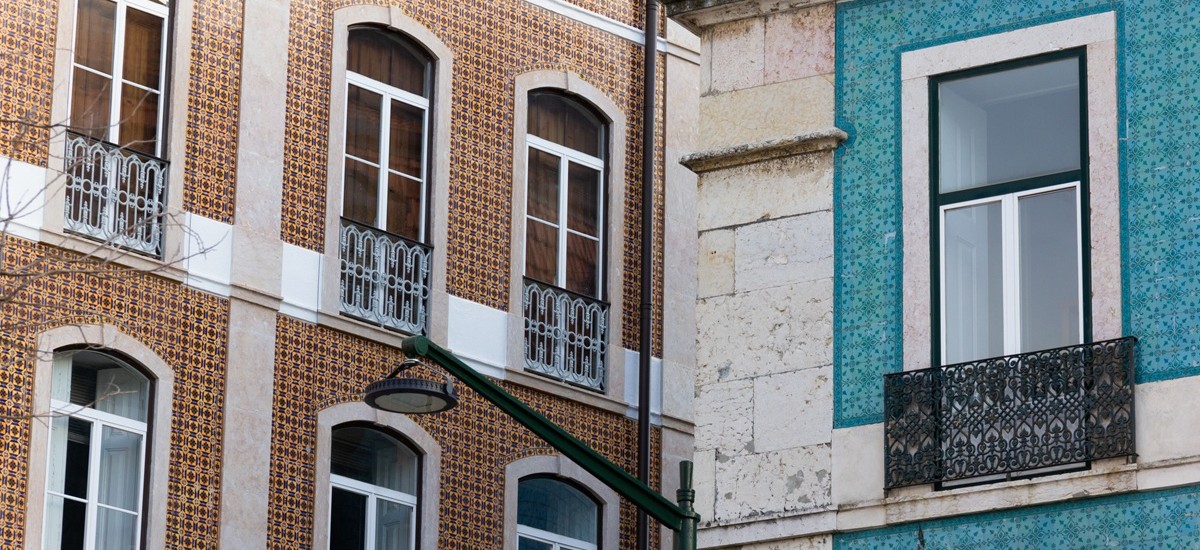
If you’re unfamiliar with the Portuguese real estate market or would like professional guidance, working with an agent can be helpful. If you prefer to search independently, here are some well-known Portuguese property websites:
There are also several government and municipal support programmes available for renovating historic buildings in Portugal. One of the most significant is IFRRU 2020, which offers loans on highly favourable terms for renovation projects located in Urban Rehabilitation Areas.2
Many municipalities run their own schemes, providing support such as direct co-funding for façade restorations and other rehabilitation works.2
Home renovations can be challenging even in the UK, and taking on a project abroad adds an extra layer of complexity. Along the way, you may encounter delays or challenges, such as permit issues or keeping to your original schedule.
It’s important to consider carefully whether you’re prepared for the process, including any potential setbacks. If you decide to move forward, here are some key points to keep in mind to help make your renovation in Portugal run more smoothly:
To check whether a Portuguese property is located in a protected area, you can use the DGPC Atlas. This is the official heritage mapping system from the Directorate-General for Cultural Heritage, showing classified buildings, heritage protection zones, and historic monuments.3
You can also confirm the status with the local city hall or by reviewing the municipal plan, since protected areas are often included in urban planning and zoning maps.
Planning rules vary by municipality, but you generally start by checking whether construction is allowed through Viabilidade de Construção, issued by the local Câmara Municipal.4
Your architect then submits a Projecto de Arquitectura, followed by a Projecto de Especialidade with technical details for approval. Once both are accepted, you apply for the Licença de Obras to begin work.4
After construction is complete, you obtain a Licença de Habitação to legally occupy the property.4
Property evaluations in Portugal are carried out by licensed professionals, usually engineers, architects or real estate management experts. They assess the property’s condition, size, location and legal status to determine the fair market value.5
Creating a detailed renovation schedule is essential for a successful project. A typical timeline looks like this:
The quality and pace of your renovation will rely heavily on your contractor team. They should hold certifications from Instituto da Construção e do Imobiliário (InCI) or be registered on the Plataforma de Registo de Técnicos e Empresas (PRTE).6
Consider hiring a translator, especially in the initial stages or when talking about international invoices.
It’s important that your contractor has insurance covering any liability or damages. This should include third-party damages, worker injuries or different construction-related incidents.7
Renovations rarely go exactly to plan, so it’s important to prepare for changes. Consider including change order rules in the contract, so you know how any changes will be approved and how costs will be handled.
In case of delays from weather, material shortages or other unexpected issues, setting some extra money aside can be helpful.
The main costs you’ll encounter are the required building permit fees. Some banks have hidden markups in their exchange rate fees. With Wise, the exchange rate is the mid-market one (this is the one you’ll normally find on Google) and you’ll see all fees upfront so using Wise to pay your renovation costs may be cheaper, since your pounds will be automatically converted at the mid-market exchange rate and fees are low*.
If you renovate property in Urban Rehabilitation Areas (ARU), you may get temporary municipal property tax (IMI) exemption, as well as property transfer tax (IMT) exemption. You may also get a reduced VAT rate of 6% instead of 23% on renovation work and deductions on personal income tax (IRS) for renovation expenses.8
📚Tax implications of buying property abroad
If possible, it’s best to hire professionals for renovating a house in Portugal. At the very least, consult an expert to ensure the work complies with all legal and regulatory requirements.
If you encounter a problem, seek independent legal advice right away and make sure you gather all relevant documents, such as contracts and invoices.
Keep in mind that the Foreign, Commonwealth & Development Office (FCDO) can’t intervene in private legal disputes abroad. However, they could give you a list of translators, interpreters and English-speaking lawyers.9

Now that we’ve covered the key considerations, let’s look at renovation costs in Portugal. We’ll break down the main refurbishment expenses and give you an idea of what you can expect to pay on average.
Roof structural problems are often one of the biggest expenses when renovating a house in Portugal. The reconstruction could cost anywhere from €5,000 to €25,000, which is roughly between £4,300 and £21,700.10
Roof insulation upgrades cost an additional €20–€40 per square metre, or £17–£35.10
The price of new flooring depends on the material. For example, quality vinyl flooring costs around €23 per square metre or around £20, while labor is another €25–€30, or £22–£26.10
Full kitchen renovations in Portugal cost €7,000–€15,000 on average, or approximately £6,000–£13,000. The final cost will be higher if you get custom cabinetry or premium appliances, but it can also rise due to higher labour costs in certain regions.10
Remodelling a bathroom in your Portuguese house can cost between €2,500 and €5,000 on average, or £2,100–£4,300. The exact price depends on how much plumbing work you need and whether you’re changing the layout significantly.10
Layout changes might require additional permits, which might add up to €800 or £690 in costs.10
On average, you’ll pay €18 per square metre for exterior painting, although it can cost up to €65/sq.m.11 The average price of interior painting is €9/sq.m, although it can cost up to €12.12
This is between £16–£56 for exterior painting and £8– £10/sq.m. for painting the inside of the house.
Electricians in Portugal charge €15 per hour on average, or £13. However, working with old structures costs up to €40 per hour (£35).10
The cost of converting a loft can vary significantly depending on the size and current state. On average, this can set you back between €5,000 and €12,000, which is £4,300– £10,400.13
Let’s list the main expenses in your Portuguese renovation:
| Renovation type 🔨 | Average cost 💶 |
|---|---|
| New roof | €5,000–€25,000 (£4,300–£21,700) |
| Flooring | €25–€30 per square metre (£22–£26) |
| New kitchen | €7,000–€15,000 (£6,000–£13,000) |
| Bathroom renovation | €2,500–€5,000 (£2,100–£4,300) |
| Painting | €18–€65 per sq.m. (££8– £10) for exterior €9–€12 per sq.m. (£8– £10) for interior |
| Rewiring | €15–€40/hour (£13– £35) |
That covers the main points to consider before renovating a house in Portugal, giving you a clearer idea of likely costs and what the process involves.
Renovating a house in Portugal can be expensive, with costs ranging from contractors and materials to permits and approvals. A Wise account can help you avoid any hidden fees and help you cut costs on foreign currency transactions.
The Wise account is an alternative to traditional bank accounts. It will allow you to send money between the UK and Portugal at the mid-market exchange rate, for low, transparent fees*.
There’s even a dedicated support team for all large amount transfers to help put your mind at ease when transferring high amounts of money to Portugal.
Get expert support for your large transfer 📞
Let’s answer some common questions about renovating a house in Portugal:
Architectural plans which you need for permit applications cost between €2,000 and €5,000 (£1,700–£4,300).10
Portugal offers several government-backed financial support programmes for renovating houses in designated Urban Rehabilitation Areas. Many municipalities also provide incentives for renovating older properties, especially in historic town centres.2
Many properties in Portugal are abandoned due to various reasons, such as high renovation costs, rural depopulation and issues like inheritance disputes that make restoration or sale difficult.14
Sources used:
1. Be Global Properties - Urban Regeneration Areas
2. Portugal Property - renovation grants in Portugal
3. Ministry of Culture, Youth and Sports - DGPC Atlas
4. P.P.Property - planning permission
5. Portugal Mortgage Brokers - property evaluation
6. Your Overseas Home - renovating a home in Portugal
7. Riviera Renovations - what to check before signing a renovation contract
8. Supercasa - support for home renovation
9. Gov.uk - guidance for buying property abroad
10. Investropa - Portugal renovation costs
11. Fixando - exterior painting
12. Fixando - interior painting
13. Idealista - converting a loft
14. With Portugal - why are there so many abandoned buildings in Portugal?
Sources last checked on date: 19-Jan-2026
*Please see terms of use and product availability for your region or visit Wise fees and pricing for the most up to date pricing and fee information.
This publication is provided for general information purposes and does not constitute legal, tax or other professional advice from Wise Payments Limited or its subsidiaries and its affiliates, and it is not intended as a substitute for obtaining advice from a financial advisor or any other professional.
We make no representations, warranties or guarantees, whether expressed or implied, that the content in the publication is accurate, complete or up to date.

Complete guide to stamp duty in Ireland for British buyers. Check current rates, the 15% surcharge, new build VAT rules, and when the tax is due.

Read our essential guide to buying land in Spain as a UK foreigner, covering land prices, fees and taxes, land types, and where to start your search.
Read our essential guide to buying land in Thailand as a UK foreigner, covering land prices, fees and taxes, land types, and where to start your search.

Read our essential guide to buying land in Turkey as a UK foreigner, covering land prices, fees and taxes, land types, and where to start your search.

Read our guide to find out where’s the cheapest place to buy a house in the world and make the most of your property search.

Read our guide to discover the cheapest country to buy land and explore the best locations abroad.











