
Best savings accounts for non-UK residents
Read our roundup of the best savings accounts for non-UK residents, including options from Barclays, HSBC Expat, NatWest and Skipton International.


Monaco may be a tiny country, but it packs in a lot of glamour. The place brings to mind luxurious yachts, Formula 1 races and sumptuous James Bond movies with Monte Carlo backdrops.
But life in Monaco isn’t all glitz. If you decide to spend some time there, you’ll still need to deal with the everyday questions of life: How will you get paid by your new employer? Can you set up direct debits for your rent? What’s the easiest way to pay utility bills?
Banking is at the heart of all of these. And in Monaco, money matters come with a few quirks you’ll want to understand before you arrive.
If you’re moving from the UK, here’s what to know about opening a bank account in Monaco as an expat. We’ll go over how Monaco’s banking system works overall, plus the specific documents you’ll need and fees to pay for your own account.
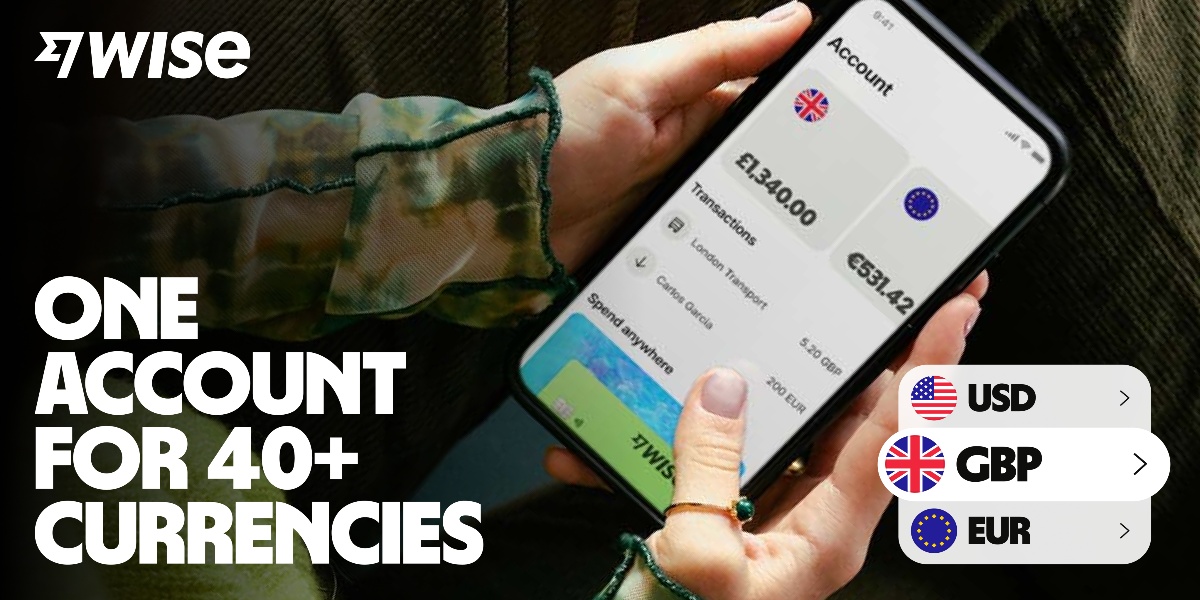
We’ll also show you an alternative from the money services provider Wise - the Wise account. It’s not a bank account but offers some similar features, and your money is safeguarded.
Over 14.8 million people worldwide use Wise to send, spend and convert money in pounds, euros and 40+ more currencies – for low, transparent fees* and no-markup exchange rates close to what you can see on Google. Plus, you’ll get dedicated support and volume discounts when sending large amounts.
➡️ Learn more about the Wise account
For foreigners who aren’t official residents of Monaco, opening a bank account in the Principality is possible, but harder than in many other European countries.
The reason is simple: The small country is home to some of the world’s most exclusive banks, and most of these have a serious focus on private banking and wealth management.
That means that unless you’ve got serious money to bank, opening an account won’t be easy. The typical bank account in Monaco isn’t the kind of entry-level current account you might be used to in the UK, where a few forms and a small deposit get you started. In fact, minimum deposits in Monaco for non-residents run from €250,000 EUR to €1 million or more.
On top of that, due to Monaco’s strict anti-money laundering laws, you’ll be required to show proof of where your wealth came from and what your income is.
And you’ll need to make your way over to Monaco at some point. Some banks allow you to start the process of opening an account remotely, but you’re typically required to show up in person at some point to finalize things.
It isn’t a legal requirement to have a Monegasque bank account just to spend time or even live in Monaco. As a visitor, or even a new arrival, you can get by for a while using your UK accounts and cards.
If you’re not planning to become a long-term resident of Monaco, it’s also common to open an account just across the border in France, in towns like Cap d’Ail and Menton. SEPA rules, which harmonize electronic euro payments, mean transfers in euros between Monaco and France work just like domestic payments.
The situation’s different if you’d like to become a Monaco resident, in which case the government requires you to prove you can support yourself. If you have a Monaco job contract, that usually covers it, though you may still find it useful to open a local account to handle your salary and bills more smoothly. If you’re seeking residency without a local job, the standard route is to show a certificate from a Monaco bank confirming that you’ve deposited at least €500,000.¹
Most UK-issued bank cards are widely accepted in Monaco, including for withdrawing money from ATMs. But if you move permanently to Monaco, your UK bank sets the rules on whether or not you can keep your UK account.
Barclays UK, for example, restricts accounts if you’re moving abroad permanently,² but other banks do let you continue using existing UK accounts. You’ll need to check your bank’s policy.
Even if you can and do keep your UK account, you may not want to use it for local transactions in Monaco. With an out-of-country account, you could face high international fees when receiving your salary in euros or paying local bills.
Yes, British nationals can open accounts in Monaco. You just need to meet the bank’s requirements for initial deposits and other rules.
If you’re an official resident of Monaco, you’re legally entitled to open a bank account there, regardless of how much money you have to deposit. Specific banks can still refuse to take you on as a customer, but if that happens, Monaco’s Department of Budget and Treasury can designate a bank to open an account for you.³
Just expect stricter requirements and to have to show up in person to open your account. Local banks will generally want proof of residence (or intention to reside) and full documentation on your income and financial background.
It generally isn’t possible to open your bank account in Monaco entirely online, unless you are a very high-net-worth individual who can get the bank to make special arrangements for you. Some banks do let you start the process digitally, but your account remains provisional until you drop by in person for identity and compliance checks.¹
| 📚 Read more: Moving to Monaco from the UK: Complete guide |
|---|
Banking in Monaco is limited, especially for those on a student visa and aren’t official residents. The International University of Monaco (IUM), the Principality’s main higher education institution, advises its students to open a compte courant (current account) in nearby French towns like Cap d’Ail or Beausoleil. Some banks may require a small initial deposit.⁴
Document requirements vary by bank, but you’ll generally be asked to provide and submit copies of at least one document from each of these categories:
Let’s first define what we mean by a bank account in Monaco. These don’t refer strictly to accounts at banks that are truly incorporated in Monaco, although such banks do exist. Typically, we’re talking about an account in a Monaco branch or subsidiary of a foreign bank like BNP Paribas or Société Générale headquartered elsewhere.
On the one hand, Monaco has plenty of banks, many with a wide range of account types and very personalized services. On the other hand, the vast majority of accounts are made for and only open to wealthy clients. If you don’t meet the minimum deposit requirements, access won’t be easy.
And because services are often tailored to each client, you often have to reach out to the bank directly to get details. That said, there are a few expat-friendly banks with English-speaking staff and services worth considering, including:
BNP Paribas has a strong presence in Monaco, with its main branch in Monte Carlo on Boulevard des Moulins. You’ll find all the basics here; current accounts, cash and cheque deposits, currency exchange, safe deposit boxes, and everyday money transfers.
The entry bar is high for private banking, but for expats living and working in Monaco, BNP’s standard current accounts tend to be more straightforward and accessible than what’s offered at the ultra-exclusive private banks.⁵
Banque Populaire Méditerranée has been in the region over a century and serving clients in Monaco for over a decade. This bank works with both residents and non-residents and offers everything from everyday banking to personalized wealth management.⁶
One of the few local banks with a historic presence in Monaco, CMB Monaco primarily markets itself as a private bank and wealth manager. It promises five-star private banking with online and mobile banking services.⁷
A branch of the French banking giant, this Monegasque arm of Société Générale offers personal and business accounts, along with wealth management services. To access their private banking services, you’ll need to make a minimum investment of €1,000,000.⁸
Barclays has been in Monaco since 1922, and today operates as a private bank, focused on wealth management for high-net-worth clients. Minimum deposit requirements are high and generally suited for wealthy individuals rather than everyday expats.⁹
| 📚 Read more: A list of the top banks in Monaco |
|---|
Because Monegasque banks mostly target wealthy clients, many expats often look to alternatives, including:
Bank fees in Monaco run the gamut. We’ve put together a rough idea of the typical costs in the chart below, but your actual fees might vary quite a bit depending on the type of account you choose and the amount of money you put into it.⁹ ¹⁰
| Transaction/fee type | Typical fee |
|---|---|
| Opening an account | Free at some retail banks, €500 or more for private banking |
| Account maintenance | As low as €30 per year for an inactive account, €1,400 per year or more for private banking |
| Monthly fee | €10 to €30 for everyday accounts, much higher for private banking) |
| Basic banking services | About €4 to €5 per month for the “right to account” package |
| Debit card | Free or included in monthly package for retail banks; bespoke pricing for private banks |
| International transfers | About €0 to €12 for SEPA transfers at retail banks, typically €40 to €90 plus currency exchange markups of up to 0.5% for Non-SEPA transfers |
Most banks in Monaco charge monthly fees or ask you to keep a minimum balance. A truly free everyday account is pretty much unheard of, so should you ever run into one, think of it as the rare exception rather than the norm.
Few of us have an easy half million euros lying around, waiting to be banked. If opening a bank account in Monaco feels daunting, with the high minimum balances and strict due diligence, a Wise account could be a useful alternative. It's not a bank account but offers some similar features and your money is safeguarded.
It covers most everyday transaction needs and you can also use it to convert currencies or send money to and from the UK, Monaco and many other countries.
| Here’s an overview of the main benefits of using Wise: |
|---|
|
**Investments in funds are never guaranteed and your capital can be at risk. In the UK, Interest and Stocks are provided by Wise Assets — this is the trading name of Wise Assets UK Ltd, a subsidiary of Wise. Wise Assets UK Ltd is authorised as an investment firm and regulated by the Financial Conduct Authority (FCA). Our FCA number is 839689. We do not give investment advice, and you may be subject to pay tax. If you're not sure, seek qualified advice. You can find more information about the funds on our website.
Sources used:
Sources last checked 24-Sep-2025
*Please see terms of use and product availability for your region or visit Wise fees and pricing for the most up to date pricing and fee information.
This publication is provided for general information purposes and does not constitute legal, tax or other professional advice from Wise Payments Limited or its subsidiaries and its affiliates, and it is not intended as a substitute for obtaining advice from a financial advisor or any other professional.
We make no representations, warranties or guarantees, whether expressed or implied, that the content in the publication is accurate, complete or up to date.

Read our roundup of the best savings accounts for non-UK residents, including options from Barclays, HSBC Expat, NatWest and Skipton International.

Check out our essential guide on how to open a bank account online, including bank types, required documents, fees, and more.

Check out our essential guide on how to open a bank account in Jersey as a British expat, including documents, fees, banks and much more.

Check out our essential guide on how to open a bank account in Andorra as a British expat, including documents, fees, banks and much more.

Read our rundown of the best Nationwide USD account alternatives available in the UK, including HSBC, Lloyds, Wise, Barclays, Revolut and more.

Read our essential guide to the Revolut USD Account, including info on features, fees, rates, limits and how to apply.











