
Inheritance tax in Poland: What you need to know
Discover everything you need to know about inheritance tax in Poland. Our comprehensive guide covers the rates, who pays, how to calculate, and much more.


| The contents of this article is for informational purposes only and does not constitute legal or tax advice. Decisions related to tax should be made after thorough research, consultation and verification from a qualified financial and legal advisor. |
|---|
Considering buying property in Poland? It might be a holiday home, investment property or maybe even a permanent family home - if you’re planning a move to Poland from the UK.
Whatever your plans, one of the first things you’ll need to get sorted is your financing.
We’re here to help, with the complete guide to getting a mortgage in Poland for foreigners. This includes info for UK expats and non-residents on the types of mortgages available, interest rates, fees, eligibility requirements and how to apply.
And if you’re looking for ways to save money on currency exchange when sending a down payment or mortgage fees to Poland, check out the money services provider Wise.
You can send large transfers with Wise for low fees* (E.g. On a £50,000 transfer, you could save up to £1,000 with Wise vs your bank.) and mid-market exchange rates - making it ideal if you’re sending a secure international transfer.


Yes, it may be possible to get a mortgage in Poland if you’re not living there (i.e. you’re still resident in the UK). However, you may need to use a specialist broker to help you navigate the eligibility requirements and processes.
Generally speaking, Polish banks and lenders require applicants to have Polish residency - or earn at least some of their income in Poland (in the local currency of Polish zloty). If you don’t tick either of these boxes, you’ll need to prove that you have strong links to the country, such as work, business or family. ¹
Without any of the above, you may struggle to get a mortgage. So, you may need to wait until you’ve moved to Poland to apply for the financing you need.
If you do qualify for a non-resident mortgage in Poland, you may face additional requirements, restrictions and paperwork compared to Polish citizens and residents.
Ultimately though, it all depends on the individual lender and their eligibility criteria and processes. You may need to contact a few banks and lenders for more information. It’s also well worth seeking specialist advice or using a broker with knowledge of the Polish financial market.
You may be wondering whether it’s more difficult for British citizens to get a mortgage in Poland following the UK’s exit from the European Union.
In truth, it is a little harder - as there are more restrictions for non-EU applicants compared to EU citizens. One example is the residency requirement, where EU citizens can simply show their EU Certificate of Registration rather than having to provide extensive residency documents.¹
As a UK national, you're likely to be treated the same as any other foreign national.
Unfortunately, this may mean more paperwork, stricter requirements and less favourable rates compared to Polish and EU nationals.
The eligibility criteria for mortgage applications will vary between lenders.
You’ll usually need to meet the following requirements:¹
- Be a legal resident of Poland - with a temporary or permanent residence card
- Have a PESEL number (Polish identification number)
- Have the required funds to afford the deposit, which may be around 10% to 20%, or maybe higher
- You have 6-12 months of continuous employment in Poland and earn your income in Polish zloty (PLN), or 2-3 years of operation within the country if you’re self-employed
- You have a Polish bank account with which to make mortgage repayments
- You have a steady income, of which your mortgage repayments won’t exceed 40% to 50%
- You have a clean credit score
- You’ll need to have a Polish bank account.
The process for getting a mortgage in Poland is similar to the UK, but you can expect lots of extra paperwork. It can be particularly complicated and time-consuming if you’re a foreign citizen or non-resident.
Like in other countries, the approval process for mortgages in Poland is heavily focused on affordability and financial risk - with foreign applicants considered by lenders to be in the ‘most risky’ category.
There are strict rules and conditions to meet, and you’ll need to provide accurate and extensive details about your income, earnings, outgoings and assets.
There are some additional challenges that can make it more difficult.
For starters, you may struggle if you’re not a fluent Polish speaker. It could be sensible to enlist the services of an English-speaking broker, translator or Polish-speaking friend. And if your documents are in another language, they will need to be translated and certified.
You may also face complications if you have a poor credit history or too many debts.
To give you an idea of what to expect, here’s how to get a mortgage in Poland, step-by-step:

The exact documents you’ll need to apply for a mortgage in Poland will vary between lenders. But remember - you’re unlikely to be accepted if you don’t live and work in the country, so you’ll need to have residency documents.
Here’s an idea of what you’re likely to need:³
- Your completed mortgage application form
- Valid ID, such as your passport
- Proof of address, such as recent utility bills
- Your PESEL number (Polish identification number)
- A permit from the Ministry of Interior, if applicable - this may be needed if buying property in Poland as a foreign national
- Your Polish residence permit and other residency documents
- Proof of income - such as recent payslips, employment contracts, employer-certified income documents and/or tax returns. If you’re self-employed, you’ll need financial statements, audited accounts and/or tax returns.
- Recent bank statements
Remember that all of your documents will need to be translated into Polish and notarised.
On average, it takes around 2-8 weeks to get approved for a mortgage in Poland.¹ However, it can be quicker if you have a straightforward financial situation and the lender is efficient in its processes.
It’s crucial to make sure all your paperwork is in order before starting the process, to help you avoid any delays.
Applying for a mortgage in Poland usually involves some fees.
The main ones to know about are valuation fees, arrangement fees and notary fees. If you use a broker or legal services, they will also charge their own fees.
If the lender requires a valuation of the property, you can expect a valuation fee of between 500 and 1,000 PLN.¹
It’s important to note that this valuation survey usually only looks at the value of the property, and won’t identify any structural, maintenance or other issues. You’ll need to commission your own building survey for that.
This is the main fee paid to the bank or lender for processing the application and issuing the mortgage. The fee typically ranges from 1% to 2% of the total loan amount.¹
In Poland, the notary plays a key role in property transactions. This may include the signing of the mortgage agreement, along with certifying translated documents.
The fee for a notary’s services varies depending on the property value, but is typically between 1,000 to 5,000 PLN.¹
You may also encounter some of these other costs when applying for a mortgage in Poland:
- Broker fees (if you’re using a broker) - these costs vary by provider, so you’ll need to get quotes.
- Legal fees - if you need documents reviewing and/or translating, you can expect to pay around 1,000 to 3,000 PLN in additional legal fees.¹
- Transfer fees - if you need to make payments between countries to pay the down payment or the fees above, you may incur fees.
If you’re a Polish resident, you should have the same choice of mortgages as a Polish citizen. The requirements for application are also likely to be similar.
But if you’re not living there, you might find that you have many fewer options as a foreigner. You may also have to meet a higher eligibility threshold.
To help you start your search, here are a few Polish banks which do offer mortgages to foreign applicants:¹
- PKO Bank Polski
- Bank Pekao
- mBank
- ING Bank Śląski
Not all will offer non-resident mortgages in Poland though, so you may need to shop around and perhaps use a specialist broker if you’re applying from outside the country.
As of September 2025, the average mortgage interest rate in Poland is 7% to 9%.¹
However, rates vary considerably by lender and product type. The rate you’re offered will also depend on your circumstances and eligibility, the amount you’re borrowing and how much of a deposit you have.
And remember that mortgage rates fluctuate regularly - so you’ll need to check the updated rates when you’re ready to apply for your mortgage.
You might find it difficult to get a mortgage in the UK to finance your property purchase over in Poland. Not many UK banks and lenders offer what are often known as ‘overseas mortgages’ secured against property in other countries.
You could potentially look at remortgaging an existing property you own in the UK, borrowing more to raise funds for your purchase in Poland.
Crucially, you should only do this if you can afford the repayments. It could also be a good idea to seek professional financial advice first.
Mortgages in Poland work a little differently to here in the UK.
Lenders there don’t typically place restrictions on whether you can rent out your property once you’ve purchased it.
So, there’s not really any such thing as a buy-to-let mortgage in Poland. You can simply get a residential mortgage and let your property out if you choose.
However, it’s still best to get professional advice to make sure you get the most suitable loan for your needs.
It’s possible to refinance your mortgage in Poland. You may be able to get a refinance loan and transfer the mortgage to another bank, to get a better interest rate.
Remortgaging can also help you borrow more money, such as to fund another property purchase without having to sell your first property.
You’ll just need to make sure you can afford the repayments and aren’t overstretching yourself.
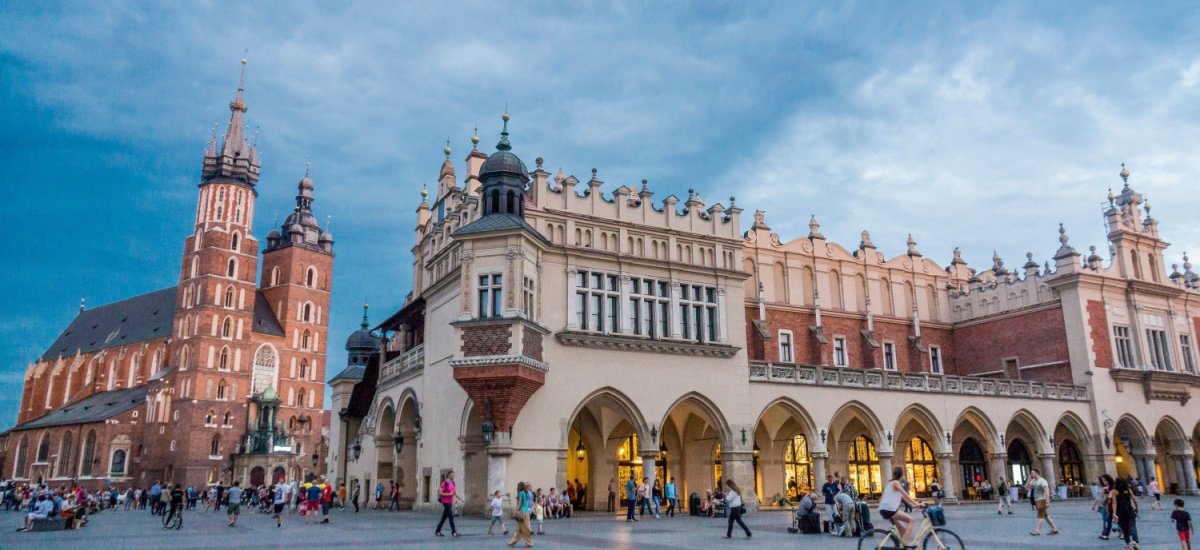
You can find some of the same types of mortgage in Poland as in the UK, with the most common options being fixed term, variable rate and mixed-rate mortgages.
Here’s a little more about each:
One of the most popular repayment mortgages around, fixed-rate deals in Poland typically offer low rates for the entire loan period. This means fixed monthly payments and greater financial security.
However, there are some potential downsides. These include missing out on cheaper repayments if rates go down, and being stuck with a higher interest rate compared to variable rate mortgages.
In Poland, variable rate mortgages often have lower rates than fixed term mortgages. But of course, these rates fluctuate in line with market conditions, as they’re linked to the WIBOR (Warsaw Interbank Offered Rate).
This means less security and certainty over payments, as they can go up and down.
Another option for home buyers in Poland is a mixed-rate mortgage. These combine fixed and variable elements - for example, they may start with a fixed rate for the first few years before switching to a variable rate.
To stand the best chance of getting accepted for an Polish mortgage as a non-resident, bear these tips in mind:
- Ensure you have a large enough deposit
- Get tailored advice for foreign applicants, to help you find suitable non-resident mortgages in Poland.
- Make sure you have all your documentation in order, especially relating to your residence status, income, employment and savings. You may also need to have some documents translated and notarised.
If you’re sending your deposit and mortgage fees to Poland from the UK, you may incur hefty transfer and exchange fees when converting your British pounds to Polish złoty (PLN). This is where Wise and the Wise account can help you save money.
Open a Wise account online and you can start managing your money in 40+ currencies. It’s not a bank account and offers customers an alternative option to a conventional bank account, but has similar features.
Here’s an overview of the main benefits for using Wise: |
|---|
|
Here are some of the most common questions:
Yes, having a Polish bank account is a key requirement to get a mortgage in Poland.¹
Even if it wasn’t a legal requirement, it would still be sensible to have some kind of international account in Polish zlotys - as it can make the process of buying and selling property much easier.
It’s unlikely that you’ll be able to get a 100% mortgage in Poland, especially if you’re a foreign citizen or non-resident. In most cases, mortgages are limited to a maximum of 80% of the property value - or up to 90% in rare exceptional cases.⁴
Lenders in Poland may refuse applications from people who will be over 70-75 years old at the end of the mortgage term.⁵
Sources used:
Sources last checked on date: 24-Oct-2025
*Please see terms of use and product availability for your region or visit Wise fees and pricing for the most up to date pricing and fee information.
This publication is provided for general information purposes and does not constitute legal, tax or other professional advice from Wise Payments Limited or its subsidiaries and its affiliates, and it is not intended as a substitute for obtaining advice from a financial advisor or any other professional.
We make no representations, warranties or guarantees, whether expressed or implied, that the content in the publication is accurate, complete or up to date.
Discover everything you need to know about inheritance tax in Poland. Our comprehensive guide covers the rates, who pays, how to calculate, and much more.

Everything you need to know about moving to Poland from the UK. Read about visas, popular expat destinations, healthcare and more.

UK buyer’s guide to buying property in Poland: Read on about real estate prices, taxes/fees, mortgages, and where to start your search.
The government of Poland has opened its borders to refugees arriving from the ongoing war in Ukraine. So anyone who is escaping from Ukraine and reaches the...
Poland, as well as other EU member states on the border with Ukraine, opened on February 24, 2022 to receive refugees. The Government of Poland, state...
A complete guide to selling your property in Poland, including the process, fees, taxes and more.











