
Wise Business Pricing Explained (Global)
Having trouble deciding which Wise Business account is best for your business? We’re breaking down the differences between the ‘Essential’ and ‘Advanced’...


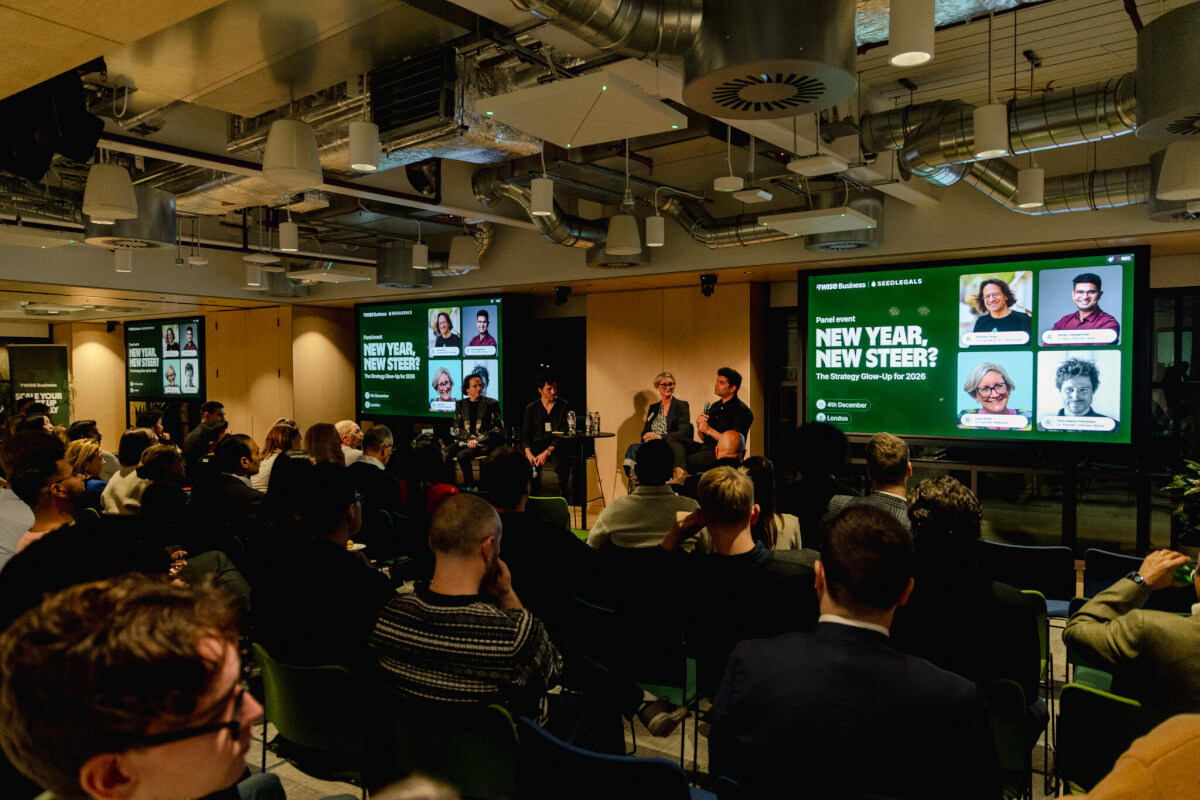
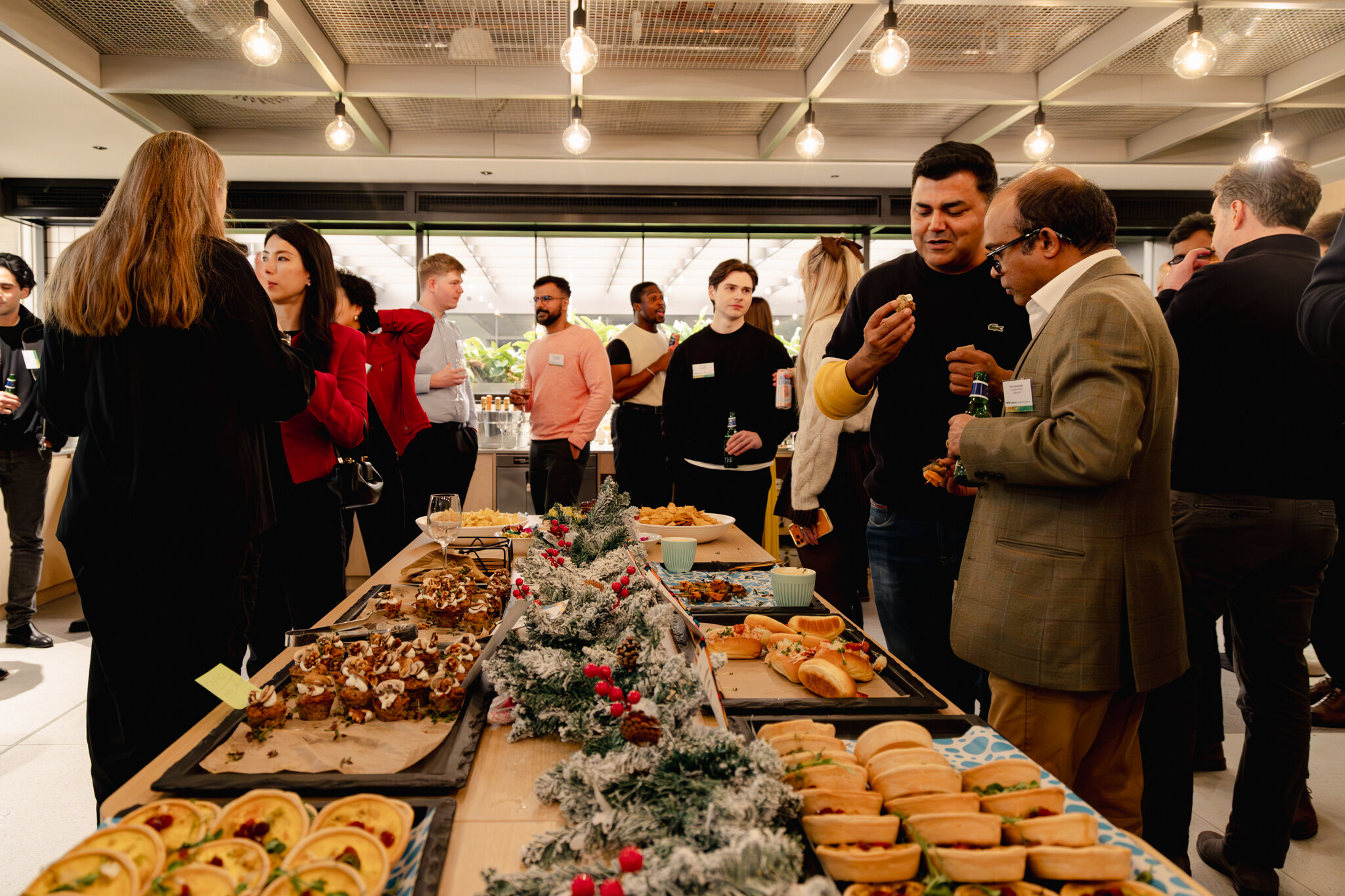
Earlier this month, we hosted a festive end-of-year event with our partners at SeedLegals. The evening brought together an inspiring group of founder and technology leaders for conversation, networking and reflection at Wise’s Headquarters in London.
The event focussed on the ways startups can achieve a strategy glow-up for 2026, starting with a panel discussion featuring Anthony Rose, Founder and CEO at SeedLegals, Rohan Vadgaonkar, Product Director at Wise, Lucy Smith, Co-founder at Welleness and Theo Games Petrohilos, Director and Co-Founder at Unknown Works.
Each panellist reflected on their experiences building their businesses and shared insights on how founders can win in 2026 — whether you’re just beginning the fundraising process, scaling your business to new markets or developing new products.
We’ve broken down their lessons and advice into key takeaways so you can refer back to them in 2026 and beyond.

| Introducing the panellists | |
|---|---|
| Anthony Rose Co-founder & CEO, SeedLegals | Known as “The man behind BBC iPlayer”, Anthony Rose is a seasoned entrepreneur and the driving force behind SeedLegals, the platform powering a third of all early-stage SEIS/EIS funding rounds in the UK. With a background in internet video, P2P tech, and social platforms — plus a patent portfolio spanning content discovery and interactive TV — Anthony brings a rare mix of technical depth and commercial know-how to the startup world. |
| Rohan Vadgaonkar Product Director, Wise Business | Rohan is the product director for Wise Business, where he leads a team of product managers and engineers scaling and rolling out new features for 700,000+ business account customers globally. Before joining Wise, Rohan was co-founder and CEO of Carnot Technologies, a data science platform for agricultural technologies, which was acquired by Mahindra after Series B funding round in 2022. He is also co-founder at Viviva Colours LLC, a global paint and art supplies company used by 50,000 artists and Hobbyists in more than 40 countries. |
| Theo Games Petrohilos Co-founder, Unknown Works | Theo co-founded Unknown Works after leaving Studio Egret West (SEW), where he led a wide portfolio of large-scale architecture and urban design projects. He represented SEW on the TfL Design Governance Board and undertook an extensive feasibility study for Lewisham Station and Interchange (LSI). Theo also co-authored the London Underground Design Idiom and led SEW's work on LU's Integrated Station Program (ISP), which focused on the reimagining and rebuilding of stations across the network. Theo is a Masters tutor at the London School of Architecture and a visiting critic at the Bartlett, University College London. |
| Lucy Smith Co-founder, Welleness | Lucy is the Co-founder of Welleness, a pioneering financial wellness app helping women take control of their finances with confidence. Her mission is simple but urgent: by 2030 women will control over $113 trillion in wealth globally, yet 53% of female-held assets remain unmanaged. Welleness is changing that by blending AI-powered insights with trusted, female-led financial advice to make financial guidance accessible, personal, and genuinely supportive. |
Securing funding for a new venture is no easy feat and without a deep bench of investors in your network, or at least an introduction, it can feel close to impossible.
To attract investors, Anthony said most founders take one of two courses of action, there’s “spray and pray” in which a founder “writes to 300 investors,” or there’s “the laser approach,” where they “follow up and meet with the perfect three investors.” Knowing the right path for your business can be difficult — while the first approach may seem to have a higher success rate, since there are more chances to connect. But it could also have the opposite effect and mean that you're missing out on an investor who is committed to your idea and can offer guidance and a network, in addition to investment.
Anthony stressed that impersonal emails are more likely to be overlooked. In his own experience as an angel investor, he says that “any email that starts with, ‘hope you're having a good day’” is sure to be deleted. Anthony argues that creating a personal and considered message for the investor, which shows you’ve done your research, can be more fruitful. You may even get bonus points for picking up on details like which LinkedIn Groups they’re active in or what they’ve been discussing lately. He says, “if they've genuinely made some sort of connection, then I’ll probably want to accept it.”
Lucy and her team at Welleness started their fundraising journey on the SeedLegals’ platform. After they launched their MVP product on 20 November, they quickly put their SeedLegals page live and “within a couple of days of starting our outreach, we had contacted a few accelerators.” But for Lucy and her team, finding the right investor is just as important as securing investment, “we’re concentrating on finding the right angels and impact folks who instinctively get why women deserve accessible, affordable financial advice.”
Learn more about being selective during the fundraising process
Even if an investor responds to your outreach, it can be difficult to decipher their feedback. Anthony says that cryptic feedback from an investor can mean a multitude of things, perhaps “they don't think you can build it, or they don't think you can market it, or the market size isn't large enough.”
To put investors' worries at ease, Theo suggests that founders go into pitching situations “believing that you are awesome and you can learn what you don't know already.” Part of this is communicated through your initial pitch, but the message also has to meet the audience. Theo says that he and his team “have to sell a dream and change our language in a way that is palatable.” Staying adaptable and adjusting their pitches on the go means that as much as “80% of what the team does today is communication.”
Getting your storytelling right can be difficult since all investors have different criteria for funding a startup. Anthony reminded the audience of this, saying “some investors are the spreadsheet gurus. They’ll say ‘show me the business plan, and the TAM, and the SAM, and the cost of goods, and I'll work it out’. Others will go, ‘have you got Seed Enterprise Investment Scheme assurance? Great, what do you do again?’ For others, the gut drives things in a big way.”
Since you can never truly know what’s motivating an investor, Theo stressed that the most important thing is to remain persistent, “you can’t be angry that no one knows who you are but they can't read your mind. You have to prove your value.” Being bullish on your business only excites investors more. If they know you’re passionate about scaling your idea, they’re more likely to want to get on board.
Once you’ve raised investment, it’s important to maintain momentum with innovative product developments. As Product Lead at Wise, Rohan leads a team of 150 people doing exactly this.
His secret? Speaking to customers. Rohan said, “I spoke to a few folks right now, and the first question that I was asking is, what is the most annoying thing about the Wise product? These sorts of conversations are very useful and often enough it's a small tactical thing in the product.”
Despite being a publicly listed company, Rohan stressed that Wise’s bold vision and startup culture enables it to stay on the forefront of innovation. Recently, this came to light when they were working on a new product “to help e-commerce customers receive card payments on WooCommerce platforms.” Rohan and his team set out to get 6 beta customers to the product before they built it, then they said “what would it take for you to shift to Wise? We literally did a service project for these 6 customers. But we knew at the end of this journey, there are 6 customers who are guaranteed to use the product.”
He knows that the work doesn't stop there, adding “Then 6 has to become 600,000” but he argued that “those baby steps actually build effective products for your customers.”
Register to learn more about upcoming e-commerce developments
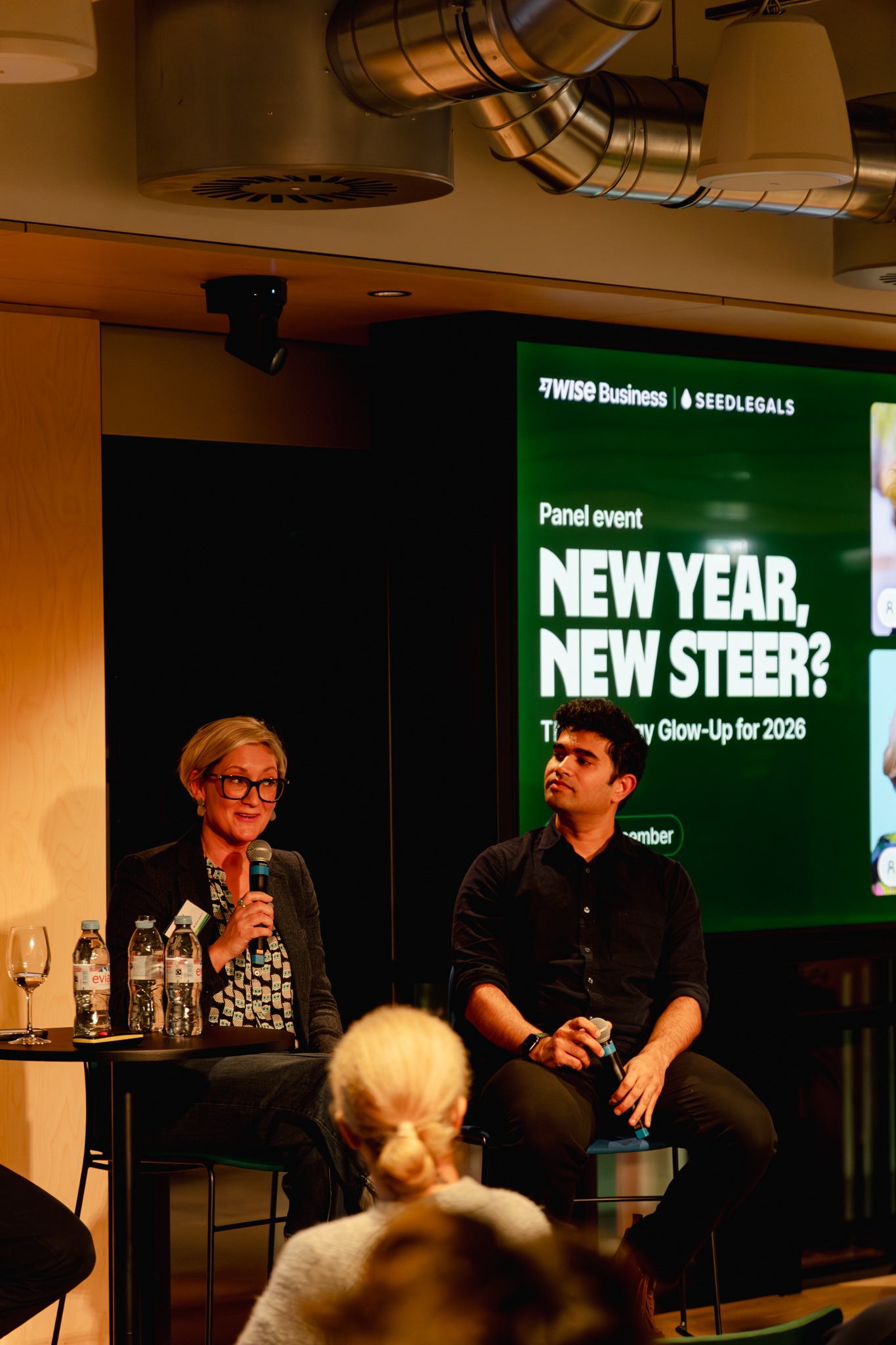
Once you have your funding and your product timeline in place, knowing when and how to hire can be a challenge. Lucy says that “At this early stage, Welleness has been built by a small, focused core team. In the immediate future, we’ll likely hire through our networks.” In the short term, Lucy shared that they’re likely to “bring in fractional or specialist expertise where needed, allowing us to move fast while maintaining a high bar for quality.”
As the company grows however, Lucy and her team are agnostic to their employee’s locations.
She says, “location is less important than finding highly skilled people who can make an impact quickly. As we grow and introduce new products and features, our hiring approach will naturally evolve. We’re not limiting ourselves to the UK; we want to bring in the best talent for each role, wherever they’re based.”
Lucy believes that a global team can also help further Welleness’ global ambitions, saying that, “In the long term, our product has global ambition – tapping into the $60 trillion women’s wealth market, growing 10% annually – and we expect our hiring footprint to grow globally alongside it.” By leaving the door open to hiring employees abroad, Lucy and her team could simplify their expansion into new regions with boots on the ground expertise.
Once a startup has found success in its home market, it’s inevitable that its founders will look overseas for additional growth opportunities. But wanting to expand your business internationally, doesn’t always mean it will be straightforward.
After Anthony and his team made massive strides in improving startup legals in the UK, he and his team were faced with a few key questions: “Do we sell more to your current customer base? Do we move into adjacent product spaces, or do we move into new countries?” In the end, they decided to enter the biggest market they could: the US.
Now, Anthony faces many of the same challenges he faced when he first launched SeedLegals seven years ago. “When I get on a plane and go to New York, it's like going back in time seven years. Startups don’t know SeedLegals,” said Anthony. Plus, their target audience in the US wants different things than the businesses they work with in the UK and Europe.
“In the US, the legal documents are different. People want different solutions. Many things we built in the UK aren't applicable in the US. So our challenge now is learning how to build something we can sell quickly, ideally before spending years working on a complete product suite and then realising nobody wanted it, or our competitors already had it.”
To ensure they get started on the right foot and can achieve product market fit as quickly as possible, Anthony moved to the US himself. Now, he says he spends his days “talking to customers, finding out what they want, looking at what the competition is doing, and seeing how we can create a differentiated and successful product.”

Startups like SeedLegals have simplified scaling globally with Wise Business. Wise Business makes it easy to manage all of your business financials on one easy-to-use platform, so you can spend less time worrying about FX risk, opening foreign bank accounts or processing foreign payroll and more time on growth.
With dedicated account managers for VC-backed startups, we’ll help you reach new customers, investors and opportunities in 160+ countries.
Ready to get started? Learn more about Wise Business.
Like 2025, 2026 is sure to have its challenges but with a clear vision and strategic mindset, there are plenty of opportunities for startups to launch and scale this coming year. As Anthony, Rohan, Lucy and Theo shared throughout the panel, there’s no set path to startup success. Instead, founders and their teams should stay agile, open-minded and confident to see the new year through.
Here’s to a successful 2026!
*Please see terms of use and product availability for your region or visit Wise fees and pricing for the most up to date pricing and fee information.
This publication is provided for general information purposes and does not constitute legal, tax or other professional advice from Wise Payments Limited or its subsidiaries and its affiliates, and it is not intended as a substitute for obtaining advice from a financial advisor or any other professional.
We make no representations, warranties or guarantees, whether expressed or implied, that the content in the publication is accurate, complete or up to date.

Having trouble deciding which Wise Business account is best for your business? We’re breaking down the differences between the ‘Essential’ and ‘Advanced’...

Learn how to apply for the Switzerland self-employed permit from the UK. Our guide covering eligibility, documents, timelines, permits, and renewal rules.

Learn everything needed to launch your Dubai e-commerce business from the UK. Our step-by-step guide explains rules around ownership, licensing, and much more.
In 2025, just 2.3% of global VC funding went to all-female founding teams. Despite research showing that women-led businesses deliver 35% better returns, the...

Find out the cost of starting a business in Vietnam as a UK resident. Our guide covers capital rules, legal fees, visa fees, and more.

Learn how to apply for and obtain a residence permit for self-employment in Sweden. Our guide explains application steps, requirements and more.









