USA Startup Visa: application guide for UK founders
Planning to launch a business in the US? This guide covers visa routes for UK entrepreneurs, and how to transfer capital without losing money.


Are you planning to do business in Ireland? Then it’s essential to understand how corporate income tax (CIT) works and what it means for your company.
In this guide, we’ll break down everything you need to know about corporate taxes in Ireland, from setting up your business to staying compliant. Whether you’re launching a new venture or expanding your business, understanding your tax obligations is key to running a successful operation.
And if you're looking for smart ways to save money and manage international payments, we’ll also show you how Wise Business can help simplify cross-border transactions and keep your finances running smoothly.
💡 Learn more about Wise Business
This publication is provided for general information purposes and does not constitute legal, tax or other professional advice from Wise Payments Limited, its subsidiaries or affiliates, and it is not intended as a substitute for obtaining business advice from a tax advisor or any other professional.
The basic corporate income tax rate in Ireland is 12.5%¹ since 2003. Which is significantly lower than the OECD average of around 23%.² The tax is levied on a company’s profits over an accounting period of below 12 months.
Ireland also offers certain companies that qualify for the Knowledge Development Box (KDB) scheme a reduced corporation tax rate on profits earned from qualifying IP, lowering the rate from the standard 12.5% to as low as 10% (or previously 6.25%), depending on the period.³
Additionally, there’s a higher tax rate of 25%¹ for non-trading (or passive) income from rentals, investments, mining, and petroleum. For example, if a company earns income from renting out properties, that income is considered passive and taxed at a rate of 25%.
Companies resident in Ireland are taxed on all their income and gains worldwide. A company is deemed to be tax resident if it was incorporated in Ireland on or after 1 January 2015.⁴
Non-resident companies are only taxed on trading profits of an Irish branch or agency and on certain Irish income, typically via withholding tax (for example, tax deducted before paying dividends or royalties).
For most companies registered in Ireland, you're required by Revenue (Ireland’s tax authority) to use their online system called Revenue Online Services (ROS)11 to file and pay your corporate tax.
ROS is a 24/7 online system that allows you to check your details, pay taxes you owe, file tax returns, and even claim refunds. Using ROS to pay and file your corporate tax may also give you an extension of existing deadlines for paying tax and filing returns.
The majority of businesses are legally obliged to use ROS to file and pay their corporate tax. Failure to use ROS to file your returns and make payments can attract a penalty of €1,520 each time you don’t use it.12
Corporate taxes in Ireland are paid in Euros. If your company’s functional currency is not the Euro, it must be exchanged into Euros. However, the Irish Revenue may waive interest charges on underpaid preliminary Corporation Tax if the underpayment occurred solely due to changes in currency exchange rates.13
A company in Ireland is expected to file its corporation tax return and pay any tax it owes later than nine months after the end of its accounting period. Specifically, a company must file and pay by the 23rd day of the ninth month electronically.14
If a company pays its corporate tax late or does not pay the full amount, interest will apply at a daily rate of 0.0219%.14 The interest is calculated by multiplying together:
Let’s say your company has a turnover of €1.5 million and operates with a profit margin of 10%, giving it a taxable profit of €150,000.
At Ireland’s standard corporation tax rate of 12.5%, the tax owed would be:
€150,000 × 12.5% = €18,750
Now, if your company misses the tax payment deadline by 30 days, it will be charged daily interest at a rate of 0.0219%.
The interest is calculated as:
€18,750 × 30 × 0.0219% = €123.28
So, the total amount the company would owe is:
€18,750 (tax) + €123.28 (interest) = €18,873.28
Note: You cannot appeal interest charges to the Tax Appeals Commission. Once interest has been charged, you must pay the full amount owed, and it cannot be reduced.
In addition to interest, if a company submits its tax return after the deadline, there will also be a surcharge of:14
Filing your taxes late can also impact your ability to claim certain tax reliefs, depending on how late the return is. This can result in restrictions on capital allowances, loss relief, and group relief.
When incorporating your business in Ireland, having the right financial tools will make the process easier. Using a platform like Wise Business makes it easy for international businesses to expand with local EUR account details (only with Wise Business Advanced) . Having a local account makes it easy to pay for incorporation, registration fees, and government fees in local currency without paying high fees.
Get started with Wise Business 🚀
Here are some helpful tips to keep your company fully compliant with the Irish tax regulations:


Ireland provides a supportive environment for companies expanding internationally.
First of all, Ireland has one of the lowest corporate tax rates, at 12.5%. This is significantly below the average of developed markets, such as the EU (approximately 21%)5 and the UK (approximately 25%)6. This has helped Ireland attract more than 1,800 multinational companies across various sectors.7
Non-EU companies gain direct access to the European Union’s single market, approximately 446 million consumers, by setting up a shop in Ireland. This means your non-EU company can conduct business operations across all EU member states without trade barriers or restrictions.
With the UK no longer being part of the EU, Ireland remains the only native English-speaking nation within the EU. Companies from English-speaking countries like the UK or the US overcome language barriers when conducting their business operations.
Lastly, Ireland has a highly skilled and educated workforce, which attracts investments. More than 65% of 25-34-year-olds in Ireland have a third-level qualification, making Ireland one of the most educated countries in Europe.8
Here’s a quick walkthrough of how businesses can set up a company in Ireland:
Now that you have a roadmap for setting up a company in Ireland, let’s take a closer look at the business incorporation process.
To incorporate a business in Ireland, you’ll need to visit the Companies Registration Office (CRO) website.
Additionally, you need the following information to incorporate a company in Ireland:
Note: The Irish company law requires at least one director to be resident in a European Economic Area (EEA) member state to ensure local accountability for compliance with regulations. If this condition is not met, the company must secure a €25,000 bond or obtain a certificate showing a real and continuous economic link to Ireland.9
According to the Companies Act 201410, here are some of the major types of business entities in Ireland:
Here are some of the best strategies to ensure compliance with local tax laws, save more money, and reduce tax burdens.
Complete the legal registration process in every country where your business operates. File all required tax returns on time to avoid penalties, and ensure you stay up to date with local tax laws to remain fully compliant.
In the same vein, companies should understand and adhere to global standards set by organisations like the Organisation for Economic Co-operation and Development (OECD). With frameworks like Base Erosion and Profit Shifting (BEPS) and Pillar Two Global Minimum Tax, companies can ensure they are transparent, prevent tax avoidance, and avoid legal risks.
DTTs are essential in making sure that you’re not taxed on the same income twice. Therefore, CFOs and Directors need to have a clear understanding of these treaties between the countries in which your business operates and how they can potentially relieve your tax burden. Ireland has Double Taxation Agreements (DTAs) with 78 countries (75 of which are in effect).15
Maintaining clear and up-to-date financial records helps companies prepare accurate tax returns, reducing the risk of errors that could lead to penalties. Additionally, having organised financial records simplifies the process during financial audits.
Researching corporate tax is a crucial step when expanding your business into a new country. The next step is setting up the financial infrastructure to handle the complexities of operating across borders, from managing multi-currency cash flow to mitigating FX risk.
The Wise Business account provides the financial tools to make your international expansion to Ireland efficient and simple. It's the one account for managing your money globally.


With a Wise Business account, you can:
Wise is designed to support every step of your journey, from paying your first registration fee to receiving international payments and managing your global treasury.
Get started with Wise Business 🚀
Resident and non-resident companies are liable for corporate tax in Ireland.
Companies considered tax residents in Ireland are required to pay corporate tax on their worldwide profits. This includes a tax rate of 12.5% on trading income and a 25% tax rate on non-trading or passive income.
Non-resident companies are also liable for corporate taxes of 12.5% on trading income earned through a branch or agency in Ireland. Additionally, they are required to pay a non-trading fee on passive income generated in Ireland.
In addition to the low corporate fees that Ireland offers, there is also a wide range of tax incentives, such as:
The Irish government taxes dividend income at a 25% rate. Also known as Dividend Withholding Tax (DWT). It is deducted at the source before dividends are paid to the shareholder.
You are obliged to pay tax on the dividends at your marginal tax rate before the DWT, including16:
You can request a refund if the DWT exceeds your tax liability on the dividend income.
To register for corporate tax in Ireland, first incorporate your company with the Companies Registration Office (CRO). Then, submit a TR2 form (or TR2(FT) for non-resident companies) to Revenue to register your business for Corporation Tax.
Here are some common issues to watch out for:
Sources used in this article:
Sources last checked 13/08/2025
*Disclaimer: The UK Wise Business pricing structure is changing with effect from 26/11/2025 date. Receiving money, direct debits and getting paid features are not available with the Essential Plan which you can open for free. Pay a one-time set up fee of £50 to unlock Advanced features including account details to receive payments in 22+ currencies or 8+ currencies for non-swift payments. You’ll also get access to our invoice generating tool, payment links, QR codes and the ability to set up direct debits all within one account. Please check our website for the latest pricing information.
*Please see terms of use and product availability for your region or visit Wise fees and pricing for the most up to date pricing and fee information.
This publication is provided for general information purposes and does not constitute legal, tax or other professional advice from Wise Payments Limited or its subsidiaries and its affiliates, and it is not intended as a substitute for obtaining advice from a financial advisor or any other professional.
We make no representations, warranties or guarantees, whether expressed or implied, that the content in the publication is accurate, complete or up to date.

Planning to launch a business in the US? This guide covers visa routes for UK entrepreneurs, and how to transfer capital without losing money.
Learn key considerations when exporting to the US from the UK. From regulation, managing payments and tax.
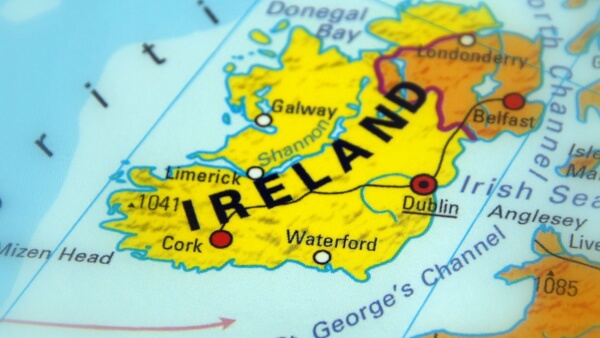
Complete your Ireland Startup Visa UK application with our comprehensive guide. Learn about eligibility, requirements, and steps for a successful relocation.

Complete your France Startup Visa UK application with our comprehensive guide. Learn about eligibility, requirements, and steps for a successful relocation.

Learn key considerations when exporting to Europe from the UK. From regulation, managing payments and tax.

Learn how PayPal Goods and Services works for UK businesses. Our guide covers fees, protection, disputes and international payments for UK online sellers.