
Best Ways to Use Wise Business as a Freelancer in the UK
Find out how to get the most out of a Wise Business account as a freelancer in the UK. Our guide covers all features with use cases for freelancers.


The crux of doing web development as a freelancer rather than for a company is making money on your own terms and being paid what you’re worth. But how do you charge for the epic websites you’re keen to build without driving clients away?
This guide explains how to price web development projects the right way and why Wise Business is a fantastic solution for freelancers who want to invoice clients and manage payments received from clients in 40+ currencies*.

**Disclaimer: The UK Wise Business pricing structure is changing with effect from 26/11/2025 date. Receiving money, direct debits and getting paid features are not available with the Essential Plan which you can open for free. Pay a one-time set up fee of £50 to unlock Advanced features including account details to receive payments in 22+ currencies or 8+ currencies for non-swift payments. You’ll also get access to our invoice generating tool, payment links, QuickPay QR codes and the ability to set up direct debits all within one account. Please check our website for the latest pricing information.
Time-based pricing refers to charging hourly or daily rates for the project. This requires an understanding of the average number of hours of work you'll put in daily.
Example scenario for charging by the hour or day:
You’re building the initial sitemap and website for a new client. Previous similar projects have taken varying amounts of time, so you prefer charging for the time it takes to complete the project.In this case, it makes sense to charge a daily rate to fairly compensate you for the number of days it takes you to complete the project.
Project-based pricing, also known as flat-rate pricing, is when you charge a fixed price for the entire project, regardless of its duration.
Example scenario for project-based pricing:
You’re building a small e-commerce website for a fashion company based in Yorkshire. You anticipate it to take anywhere between 8 and 12 weeks.However, it’s an extensive project with multiple revisions and a potential increase in scope. Moreover, you normally charge a different rate for each task, which includes creating a custom responsive mobile-first website design, a product catalogue with search and filtering functions, a shopping cart and a secure checkout system, etc.Therefore, you charge for the whole project based on your rates for each part of the project. Your rate includes a set number of project iterations, irrespective of the time taken to complete the project.
Value-based pricing is when you charge based on the possible return on investment (ROI) that the client might gain from the web development project. This is usually a percentage of sales.
Example scenario for value-based pricing:
You’re creating an e-commerce website for a luxury jewellery store. From conversations with the client and the prices of the jewels, you estimate what the site would generate for the company.In this case, you agree with the client to charge 1% of all sales generated during the first 3 months of the site going live.The outcome might be higher than your usual price, but it's fair to bill based on value, especially if you have the experience and track record of delivering excellent work.
Things to note:
Charging per project means you'll bear the risk for multiple revisions, increased scope, or underestimating how long it will take to complete the project. Therefore, it’s advisable to limit the number of revisions on your agreement.
The upside of using time-based billing is that if it takes longer, you get compensated for your time. However, if a project takes longer than the clients think is necessary, they may dispute your rates. Keep this in mind before deciding on this pricing structure.
In the UK, the median daily rate of a web developer is £431/day1. In London, the median daily rate is £575/day2.
It’s worth noting that web developers often charge for projects, with prices coming in anywhere from £1,000 to £20,000 or more, depending on the complexity of the project.

Business goals:
Scope of work:
Content and assets:
Design and branding:
Technical requirements:
Maintenance and support:
Value and ROI:
Experience: Those who used to work in full-time web development before freelancing can charge more due to their experience working on several projects over the years. In contrast, a junior developer may need to charge less or do pro bono (free) work to build up their portfolio.
Project complexity: A web app with a member portal, self-service dashboards, and payment gateway integration for a payment reconciliation company will cost more than an author's static website with a few pages and a contact form. Both projects require very different amounts of time and resources. So, properly assess the scope and complexity of projects before billing.
Add-ons: If the client needs extra services such as training for their team, domain purchase/management, custom photography, ongoing maintenance, and more, you might want to charge a separate fee for these.

1. Estimate your business and personal expenses for each month. Business expenses include software subscriptions, taxes, equipment, marketing, etc. (for example, £1,500). Personal expenses include mortgage, food, elder care, rent, insurance, etc. (for instance, £1,800).
2. Measure your billable hours per week (say 30 hours). Include time off (sick days, holidays, or weekends, assume 4 weeks.)
3. Deduct your time off from the total yearly weeks (52 weeks - 4 weeks (in a year) = 48 work weeks).
4. Multiply your estimated working hours by your work weeks, i.e., 30 hours a week x 48 work weeks = 1440 hours a year.
5. Divide your yearly billable hours by months, i.e., 1440 hours yearly ÷ 12 months yearly = 120 hours monthly.
6. Divide the sum of your monthly expenses by your total monthly billable hours, i.e., £3,300 ÷ 120 hours = £27.5/hour.
Things to note:
This is only a minimum rate and could be well below the average rates other developers charge.
Ask other developers in the UK how much they charge for similar services.
Avoid using company salaries for web developers as a baseline for calculating your rates. This is because full-time developers usually enjoy benefits besides their salaries that you'd have to pay for as a freelancer.
1. Create your base package. This would include the core pages of the website you’re designing (like the homepage, about us page, etc.), the design style, a contact form and a foundational sitemap.
2. List all of the add-ons and price them according to the factors we mentioned earlier in the article. For instance, you could charge £150 for each additional page, £1,000 for a bespoke website design, £300 for UX/UI, etc.
3. Calculate the final price based on the add-ons selected by the client. Don’t forget to leave some room for negotiation and ensure you list everything in an itemised way when you invoice your client.
Your final web development rate card should have the following:
Your services: This refers to your core offerings, such as custom web development, API development, payment gateway integration, etc.
Pricing model: Are you charging by the hour/day or per project? What are the caveats to each method? List everything.
Payment terms: For instance, 50% upfront payment, late fees, etc.
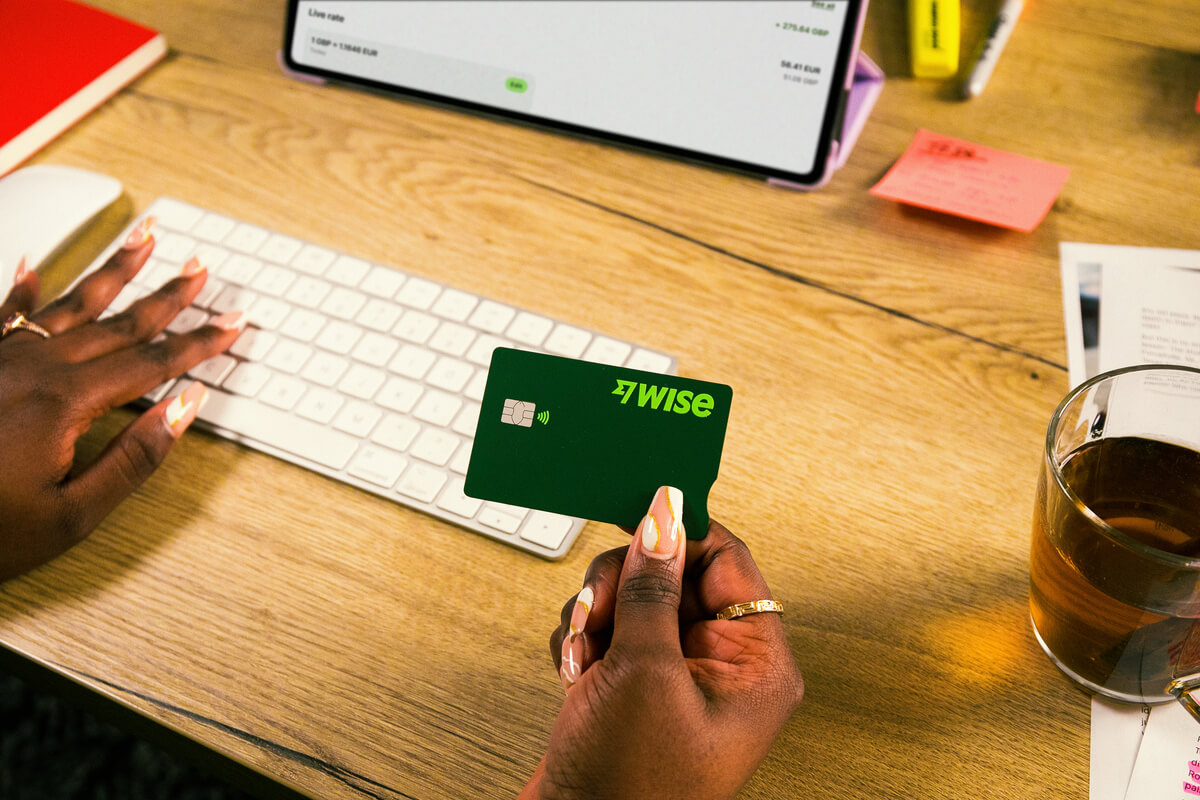
After working so hard to find freelance clients from around the world, complete projects, and earn your keep, why not protect your earnings from hidden fees?
With a Wise Business Advanced plan*, you can receive payments locally and internationally at the mid-market exchange rate with no hidden fees.
You can also create invoices, generate payment links, separate your personal expenses from business expenses, and manage your earnings.
Try Wise Business today.
Get started with Wise Business 🚀
**Disclaimer: The UK Wise Business pricing structure is changing with effect from 26/11/2025 date. Receiving money, direct debits and getting paid features are not available with the Essential Plan which you can open for free. Pay a one-time set up fee of £50 to unlock Advanced features including account details to receive payments in 22+ currencies or 8+ currencies for non-swift payments. You’ll also get access to our invoice generating tool, payment links, QuickPay QR codes and the ability to set up direct debits all within one account. Please check our website for the latest pricing information.
Sources:Sources last checked on September 29th, 2025
*Disclaimer: The UK Wise Business pricing structure is changing with effect from 26/11/2025 date. Receiving money, direct debits and getting paid features are not available with the Essential Plan which you can open for free. Pay a one-time set up fee of £50 to unlock Advanced features including account details to receive payments in 22+ currencies or 8+ currencies for non-swift payments. You’ll also get access to our invoice generating tool, payment links, QuickPay QR codes and the ability to set up direct debits all within one account. Please check our website for the latest pricing information.
*Please see terms of use and product availability for your region or visit Wise fees and pricing for the most up to date pricing and fee information.
This publication is provided for general information purposes and does not constitute legal, tax or other professional advice from Wise Payments Limited or its subsidiaries and its affiliates, and it is not intended as a substitute for obtaining advice from a financial advisor or any other professional.
We make no representations, warranties or guarantees, whether expressed or implied, that the content in the publication is accurate, complete or up to date.

Find out how to get the most out of a Wise Business account as a freelancer in the UK. Our guide covers all features with use cases for freelancers.

Learn the differences and potential implications of using a lifetime ISA vs a self-invested personal pension to save for retirement as a freelancer in the UK.

Find out how much it can cost UK businesses to outsource customer service. Our guide breaks down pricing and key things to consider.

Learn how freelance taxes work in Italy in 2026. Our guide explains regimes, VAT, deadlines, and more.

Learn how freelance and self-employed tax works in Germany in 2026. Our guide explains registration, income tax, VAT, and key deadlines.

Learn how self-employed taxes work in France in 2026. Our guide comprehensively explains residency, income tax, VAT, social contributions, and more.











