
Best Ways to Use Wise Business as a Freelancer in the UK
Find out how to get the most out of a Wise Business account as a freelancer in the UK. Our guide covers all features with use cases for freelancers.



Trying to decide between a Lifetime ISA (LISA) and a self-employed personal pension (SIPP) to retire after a career in freelancing requires a careful consideration of the implications of each option.
To help with making an informed choice, we've broken down the key differences a LISA and SIPP in this guide, covering how they work, their tax treatment, and when each option may be suitable depending on your goals.
We've also explained how Wise Business can help you manage your business finances more efficiently, making it easier to stay on top of your savings contributions.
Disclaimer: The information in this article is for reference purposes only and should not be considered financial advice. All investment decisions should be made after thorough research and consultation with a qualified financial advisor. Remember that investments, even in low-risk funds, are never guaranteed, and your capital is at risk.
| Topic | Notes |
| Government bonus vs tax relief | LISAs provide a 25% government bonus on contributions1, while SIPPs offer tax relief that depends on your income tax band2,5. |
| Contribution Limits | Pension contributions eligible for tax relief are limited to the lower of £60,000 per year (annual allowance) or 100% of your relevant UK earnings. The annual allowance may be reduced for higher earners4. |
| Primary Purpose | LISAs can be used for a first home (under £450,000) or retirement3, while SIPPs are designed specifically for retirement income. |
| Access Rules | LISA funds can be withdrawn tax-free from age 60, or earlier for a qualifying first home purchase or terminal illness3.
SIPPs are generally accessible from age 55, rising to 57 in 20285. |
| Withdrawal Fees | Unauthorised LISA withdrawals incur a 25% charge, which may reduce the value of your original contributions3.
SIPPs allow a 25% tax-free lump sum once you reach the minimum age, up to a maximum of £268,2754. |
| Taxation on Income | Eligible LISA withdrawals are tax-free1, while SIPP income beyond the initial tax-free portion is taxed as regular income7. |
When investing, your capital is at risk. The value of your investments can go down as well as up and you may get back less than you put in. Tax treatment depends on your individual circumstances and may be subject to future change. The content of this article is provided for informational purposes only and is not intended to be, nor does it constitute, any form of personal advice.
Investments in a currency other than GBP are exposed to currency exchange risk. Currency exchange rates are constantly changing, which may affect the value of the investment in GBP terms. You could lose money in GBP even if the stock price rises in the currency of origin. Stocks listed on overseas exchanges may be subject to additional dealing and exchange rate charges, and may have other tax implications, and may not provide the same, or any, regulatory protection as in the UK.
A Lifetime ISA is a savings account designed to help with buying your first home or saving for retirement1. For the self-employed, it offers a way to boost savings through a 25% government bonus, up to £1,000 per year.
A Self-Invested Personal Pension, or SIPP, is a retirement savings product that allows you to choose and manage your investments.
Contributions made to a SIPP are eligible for tax relief2, which means the government effectively refunds some of the income tax you’ve already paid and adds it to your pension. This can increase the value of your contributions depending on your tax band.
For example, if you’re a basic-rate taxpayer and contribute £80, the government adds £20 in tax relief, making your total contribution £100. Higher- and additional-rate taxpayers may be able to claim even more through their Self Assessment tax return.
SIPPs are designed specifically for long-term retirement saving.
With a LISA, the government adds a 25% bonus to contributions, up to £1,000 per year1.
For example, if you’re a freelance graphic designer earning £30,000 annually and contribute £4,000 to a LISA, you would receive 25% of £4,000 as a bonus from the government, which is £1,000 on top of your £4,000 contribution.
With a SIPP, tax relief is linked to your income tax band, meaning the government adds back the tax you’ve already paid on the money you contribute. In simple terms, some of your income that would have gone to HMRC is instead redirected into your pension.
For instance, if the same freelancer in the example above contributes £4,000 to a SIPP, they would actually pay £4,000 from their bank account, and their provider would claim £1,000 in tax relief from the government — bringing the total pension contribution to £5,000.
A LISA can be accessed penalty-free for a first home purchase, from age 60, or in cases of terminal illness. Withdrawals outside these conditions may incur a 25% charge3.
In contrsat, a SIPP is generally accessible from age 55 (rising to 57 in 2028), with up to 25% available tax-free and the remainder taxed as income4.
Both LISAs and SIPPs can be used to invest in assets such as stocks and shares. SIPPs can offer a wider range of investment options, which may provide more flexibility depending on your investment approach.
When investing, your capital is at risk. The value of your investments can go down as well as up and you may get back less than you put in. Tax treatment depends on your individual circumstances and may be subject to future change. The content of this article is provided for informational purposes only and is not intended to be, nor does it constitute, any form of personal advice.
Investments in a currency other than GBP are exposed to currency exchange risk. Currency exchange rates are constantly changing, which may affect the value of the investment in GBP terms. You could lose money in GBP even if the stock price rises in the currency of origin. Stocks listed on overseas exchanges may be subject to additional dealing and exchange rate charges, and may have other tax implications, and may not provide the same, or any, regulatory protection as in the UK.
LISAs can support either buying your first property or saving for retirement, while SIPPs are solely for the provision of income in retirement, which may make them more suitable if your primary goal is long-term financial planning.
You can contribute to both a LISA and a pension, allowing you to benefit from different types of incentives, depending on your circumstances.
For example, a UK-based freelance writer might use a LISA to build a deposit for their first home while also contributing to a SIPP to reduce their taxable income and boost long-term retirement savings.
Meanwhile, a global freelancer, such as a remote developer working with international clients, has the option to prioritise pension contributions during higher-earning years to benefit from tax relief, while still using a LISA as a secondary, flexible savings option for later life.
The right balance depends on factors like income stability, short-term goals and tax position, which can vary widely for self-employed individuals.
Note: Consider speaking with a qualified professional to determine what approach best suits your situation. All of the information in this blog is for general guidance only and should not be considered financial advice.
Disclaimer: The information in this article is for reference purposes only and should not be considered financial advice. All investment decisions should be made after thorough research and consultation with a qualified financial advisor. Remember that investments, even in low-risk funds, are never guaranteed, and your capital is at risk.
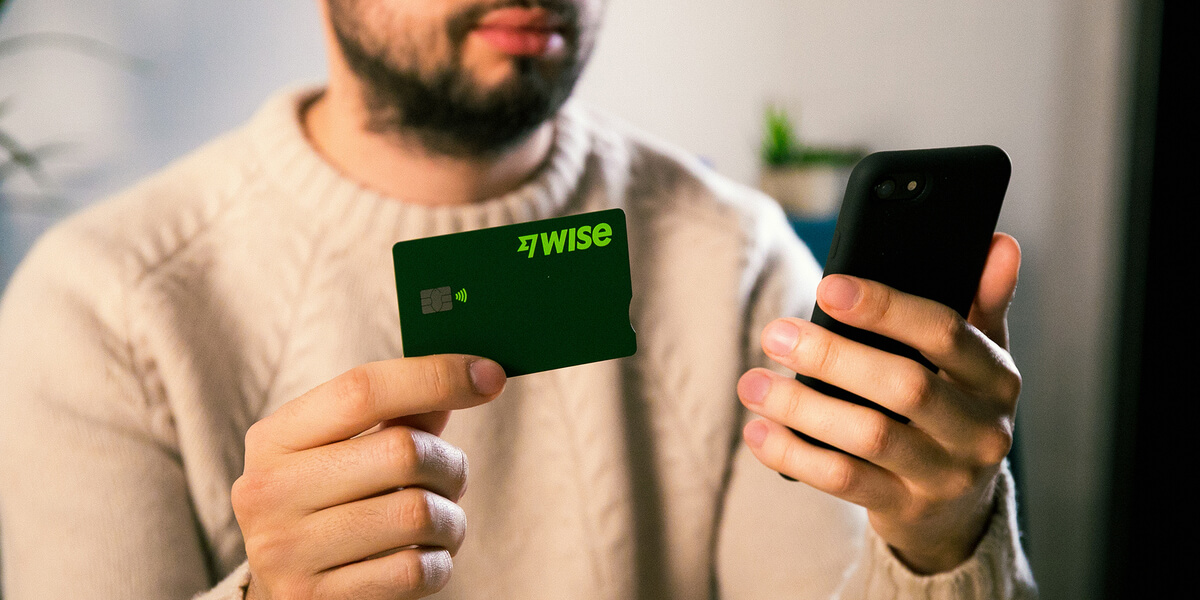
Managing payments, expenses, and savings contributions becomes easier when everything is in one place.
With Wise Business, you can:
Make the wise choice when selecting a business account for all your domestic and global needs.
Be Smart, Get Wise.
*Disclaimer: The UK Wise Business pricing structure is changing with effect from 26/11/2025 date. Receiving money, direct debits and getting paid features are not available with the Essential Plan which you can open for free. Pay a one-time set up fee of £50 to unlock Advanced features including account details to receive payments in 22+ currencies or 8+ currencies for non-swift payments. You’ll also get access to our invoice generating tool, payment links, QuickPay QR codes and the ability to set up direct debits all within one account. Please check our website for the latest pricing information.
Yes, you can contribute to both, subject to their respective annual limits.
You must be aged 18 to 39 to open a LISA6, and contributions are capped at £4,000 per year1.
Sources:
Sources last checked on 21 April 2026
*Please see terms of use and product availability for your region or visit Wise fees and pricing for the most up to date pricing and fee information.
This publication is provided for general information purposes and does not constitute legal, tax or other professional advice from Wise Payments Limited or its subsidiaries and its affiliates, and it is not intended as a substitute for obtaining advice from a financial advisor or any other professional.
We make no representations, warranties or guarantees, whether expressed or implied, that the content in the publication is accurate, complete or up to date.
Find out how to get the most out of a Wise Business account as a freelancer in the UK. Our guide covers all features with use cases for freelancers.

Find out how much it can cost UK businesses to outsource customer service. Our guide breaks down pricing and key things to consider.

Learn how freelance taxes work in Italy in 2026. Our guide explains regimes, VAT, deadlines, and more.

Learn how freelance and self-employed tax works in Germany in 2026. Our guide explains registration, income tax, VAT, and key deadlines.

Learn how self-employed taxes work in France in 2026. Our guide comprehensively explains residency, income tax, VAT, social contributions, and more.
Discover the best business debit cards for freelancers in the UK. Our guide covers features and fees of top options like Wise Business, Monzo, Tide, and more.











