Employee relocation: how it works, costs, and best practice
A comprehensive guide to employee relocation, including how relocation packages work, UK costs, tax considerations and best practices for staff support.


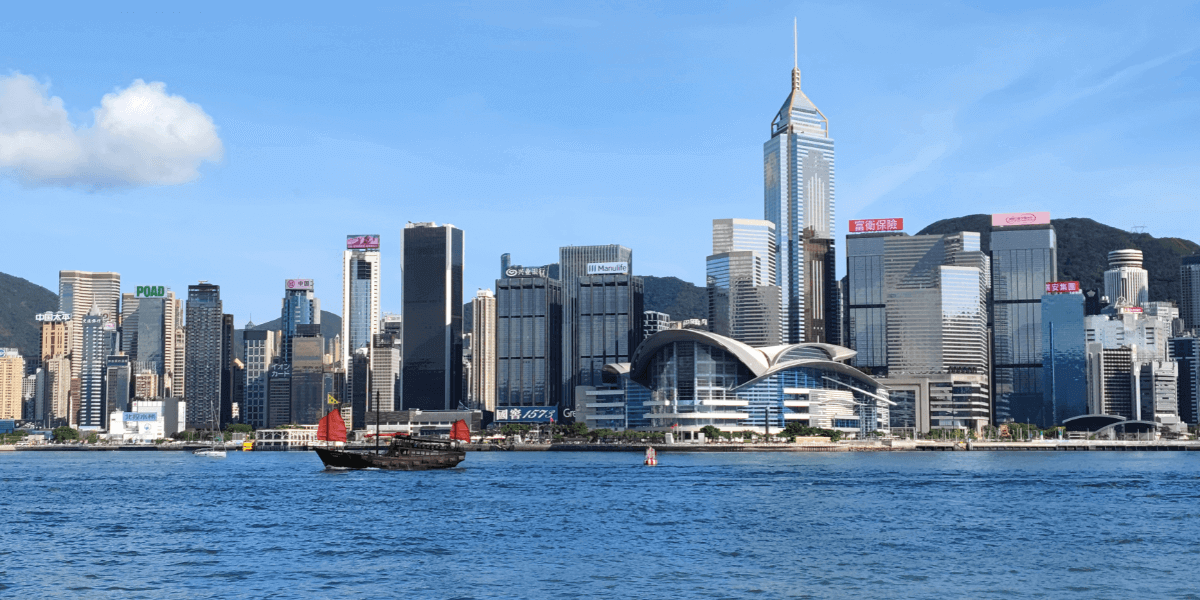
The Hong Kong Entrepreneur Visa is your ticket to live and operate your business in one of the world’s top financial hubs, provided you put your best foot forward with your application.
Miss a requirement, underestimate your capital, or submit the wrong documents, and you can lose a substantial amount of money and time before you even launch.
This guide breaks down the process step by step, covering everything from incorporation to visa approval and registering your Hong Kong ID, so you know exactly what’s required and how to get it right the first time.
And since immigration expects you to demonstrate real operating capital — often across GBP and HKD — we’ve explained how Wise Business can help you move money at the mid-market exchange rate with no hidden fees.

*Disclaimer: The UK Wise Business pricing structure is changing with effect from 26/11/2025 date. Receiving money, direct debits and getting paid features are not available with the Essential Plan which you can open for free. Pay a one-time set up fee of £50 to unlock Advanced features including account details to receive payments in 22+ currencies or 8+ currencies for non-swift payments. You’ll also get access to our invoice generating tool, payment links, QuickPay QR codes and the ability to set up direct debits all within one account. Please check our website for the latest pricing information.
| Point | Note |
|---|---|
| 👤 Who it's for | Founders and investors planning to actively run a HK-registered business and hire local staff. |
| 🛠️ How to apply | Incorporate a Private Limited Company first as this signals compliance and allows you to lease office space. |
| 📋 What are the steps? | Incorporate, appoint a local sponsor, secure an office, draft a business plan, and submit forms ID 999A/B. The complete steps are outlined in this article. |
| 🤝 Who helps you? | A local sponsor (individual or company) is required to act as your official contact with the Immigration Department. |
| 📍 Where to work | You must have a physical business premises. While co-working spaces are accepted, residential addresses are not. |
| 📝 The main document | A rigorous 2 to 3 year business plan is vital, proving your firm's viability and its economic benefit to Hong Kong. |
| 💰 Money matters | No set minimum investment exists, but you must demonstrate enough capital to cover at least 6 months of operations. |
| ⏱️ How long it takes | Processing typically takes 4 to 6 weeks. Once approved, the initial e-visa is usually valid for 24 months. |
| 🆔 What happens next | You must register for your Hong Kong ID card (HKID) within 30 days of arriving in the city. |
| 🏠 Family & residency | You can bring your spouse and children, and staying for seven years qualifies you for Permanent Residency. |
| 💱 Move funds with Wise Business | Use Wise Business - it gives you mid-market exchange rates for GBP to HKD transfers, ensuring your shown capital isn't lost due to hidden fees. |
Hong Kong Entrepreneur Visa requirements start with setting up a Hong Kong-registered company. This process is generally fast and affordable, with most applications being handled through the Companies Registry under the Companies Ordinance of Hong Kong.
The costs included are:
Note:
Most entrepreneurs choose a private limited company (Pvt. Ltd). It’s the standard structure that offers limited liability protection to its owner(s), with shares held within the company.
More importantly, having a registered entity signals to the ImmD that you’re serious, compliant, and ready to operate.
It’s also a necessary requirement for the next steps, such as opening a business bank account or leasing office space, and preparing the documents Immigration expects to see.
You don’t need to be physically present in Hong Kong to complete this process - it can be handled remotely by appointing a local secretary or incorporation service provider. That said, immigration will carefully review your financial documents.
Plan to demonstrate at least six months of operating cash in the company account, along with sufficient backup capital.
If you’re currently in Hong Kong as a visitor, timing matters.
Once you decide to start a business, you must submit your entrepreneur visa application as soon as possible - delaying it can put you at risk of breaching your visa conditions.
Submitting early ensures ImmD is aware of your intentions and can access your case appropriately before it becomes a compliance issue.
To apply for entry for a business, you must nominate a local sponsor. This individual can either support you as a company or as an applicant.
Your sponsor should be5:
This sponsor’s role stays administrative. They act as a local point of contact for the Hong Kong Immigration Department and do not take on financial responsibility for you or your business.
Here are the documents your sponsor is required to provide:
| When the Sponsor is a Company | When the Sponsor is an Individual |
|---|---|
|
|
Hong Kong immigration authorities expect your business to have a physical operating address.
Compared to London commercial leases, Hong Kong co-working spaces can be significantly cheaper for early-stage founders - and Immigration accepts them if they match your business scale.
Your company must also maintain a local registered office address in Hong Kong for official correspondence and legal notices. This address must be a physical location - P.O. boxes are not accepted.
Residential addresses are generally not suitable for Entrepreneur Visa applications.
You need to provide evidence, such as a tenancy agreement or service contract, to show that your business has an operational workspace that aligns with its activities.

A strong business plan is one of the most important parts of your visa application.
ImmD uses your business plan to assess whether your company will make a meaningful economic contribution to Hong Kong.
This includes reviewing your business model, financial resources, planned investment level, job creation potential, and any new skills, expertise, or technologies your business may introduce to the local market.
Generally, applicants are expected to submit a three-year business plan6, along with financial projections.
These typically include profit and loss forecasts, cash flow statements, and balance sheets, to demonstrate the business's commercial and financial viability.
Your plan should clearly explain:
ImmD may consult other government bodies or organisations when reviewing your application.
Strengthen your application with evidence of investment capability, such as bank statements or letters from financial institutions.
** 💡Recommended reading:** Doing business in Hong Kong
Next, complete and submit7:
Download both forms - ID 999A and ID 999B - from the Hong Kong Immigration Department website and fill them out accurately.
Errors, omissions, and mismatched information can cause delays in processing or trigger additional requests from Immigration.
Alongside Forms ID 999A and ID 999B, you should gather and scan a set of supporting documents.
Accepted file formats include JPEG, PDF, GIF, PNG, or TIF. Documents with photographs must be in colour, while others can be in greyscale.
Checklist of forms and documents to be submitted8:
Personal documents:
Background and eligibility
Employment and business role
Business plans and operations
Company financials and registration
Office and staffing
If a government-backed or incubator programme supports your business, you’ll need to include a letter confirming that support.
ImmD may request additional documents depending on your business model, background, or investment structure.
Submit your completed application, supporting documents, and the application fee (non-refundable) to the Immigration Department.
The department will review your case, typically taking 4-6 weeks9, though complex applications may require longer processing times.
If approved, you will be issued a Visa/Entry Permit QR code approval letter with instructions on how to pay the visa issuance fee online via the GovHK website or the ImmD mobile app.
Accepted payment methods include credit cards (VISA, Mastercard, UnionPay, JCB), Payment by Phone Services (PPS), Faster Payment System (FPS), and selected Mainland e-wallets (Alipay, WeChat Pay, and UnionPay App).
The visa fee is non-refundable once paid.
Once you have paid the visa issuance fee, you can instantly download your e-Visa, which is usually valid for up to 24 months.
If your company is newly established, the visa is often issued under business review, meaning your company’s performance and financials will be reassessed when you apply for the Hong Kong entrepreneurial visa renewal.
After arriving in Hong Kong on your e-Visa, register for a Hong Kong Identity Card (HKID) within 30 days10.
Your HKID serves as your primary form of identification while living and operating a business in Hong Kong, and you’ll need it for banking, leases, and official registrations.

Moving your business and personal funds across borders can add unexpected costs. That’s where Wise Business comes in.
With the Wise Advanced plan*, you can send and receive payments, keep track of your team’s expenses, and hold 40+ currencies - including Hong Kong dollars - that too at the mid-market exchange rateswith no hidden fees.
During visa setup, renewal, and scaling, founders typically need to move funds between the UK, Hong Kong, and suppliers abroad. Wise Business supports these moments:
Be Smart, Get Wise.
*Disclaimer: The UK Wise Business pricing structure is changing with effect from 26/11/2025 date. Receiving money, direct debits and getting paid features are not available with the Essential Plan which you can open for free. Pay a one-time set up fee of £50 to unlock Advanced features including account details to receive payments in 22+ currencies or 8+ currencies for non-swift payments. You’ll also get access to our invoice generating tool, payment links, QuickPay QR codes and the ability to set up direct debits all within one account. Please check our website for the latest pricing information.
On average, maintaining the same lifestyle in Hong Kong costs slightly less than in London. To match a £6,800 monthly standard of living in London (including rent), you would need around £5,896 (HK$61,858) in Hong Kong.
This comparison assumes that the cost of living in both cities is based on the Cost of Living Plus Rent Index, which takes into account net earnings after income tax.
While everyday living can be marginally cheaper in Hong Kong, business costs such as office space, company registration, and salaries should also be considered when planning your move.
Note: This publication is provided for general information purposes and does not constitute legal, tax or other professional advice from Wise Payments Limited, its subsidiaries or affiliates, and it is not intended as a substitute for obtaining business advice from a tax advisor or any other professional.
The Entrepreneur Visa is designed for non-local investors and entrepreneurs who wish to establish or operate a business in Hong Kong that contributes to the local economy.
Approval depends on your business plan, investment, and potential local impact; you must also actively manage a Hong Kong-registered company.
The Top Talent Pass (TTPS) or QMAS, on the other hand, are points-based immigration schemes for highly skilled professionals or talent in certain fields.
Applicants do not need to start a business; instead, the approval depends on education, achievements, and work experience (along with contributions to Hong Kong’s economy).
Yes. As a Hong Kong Entrepreneur Visa holder, you can sponsor your spouse, unmarried children under 19, and, in some cases, parents aged 60 and above to join you.
Requirements for dependents:
Each application is considered individually, and eligibility may be subject to change.
Yes. The Hong Kong Entrepreneur Visa can eventually lead to Permanent Residency, also known as the “Right of Abode.” To qualify, you must reside in Hong Kong for at least seven years.
No. There isn’t a fixed capital requirement to apply for the Entrepreneur Visa. What matters is demonstrating to the Immigration Department that your business is viable and will contribute to Hong Kong’s economy, especially by creating jobs for local employees and supporting growth.
The Entrepreneur Visa is typically issued for a period of up to 24 months. You can extend it if your business remains active and continues to contribute to Hong Kong’s economy.
For renewal, the Immigration Department reviews your company’s performance, financial health, and local impact before granting an extension.
No, you don’t need to be in Hong Kong every single day, but the Immigration Department expects you to spend time in the city to manage your business actively.
Extended absences without a valid reason could put your renewal at risk.
Sources:
Sources last checked on 26th January 2026
*Please see terms of use and product availability for your region or visit Wise fees and pricing for the most up to date pricing and fee information.
This publication is provided for general information purposes and does not constitute legal, tax or other professional advice from Wise Payments Limited or its subsidiaries and its affiliates, and it is not intended as a substitute for obtaining advice from a financial advisor or any other professional.
We make no representations, warranties or guarantees, whether expressed or implied, that the content in the publication is accurate, complete or up to date.

A comprehensive guide to employee relocation, including how relocation packages work, UK costs, tax considerations and best practices for staff support.

Learn how to structure and manage relocation packages, including costs, policies, implementation steps and global considerations for employers in the UK.

In today’s economy, there’s one thing business owners can be certain of: uncertainty. Volatility has fundamentally changed the way businesses operate. And...

Compare Revolut GlobalHire and Papaya Global across features, pricing and payroll capabilities to find the right solution for your business.

Learn how much it can cost to outsource social media in the UK. Our guide explains average rates, pricing models, cost drivers, and more.

Startups today have never faced tougher competition. With investor expectations as sky high as valuations, nearly 20% fail because they are outcompeted and...