
Expat health insurance for Indonesia: A complete guide
Learn everything you need to know about expat health insurance for Indonesia, from finding the best providers to accessing healthcare and managing costs.


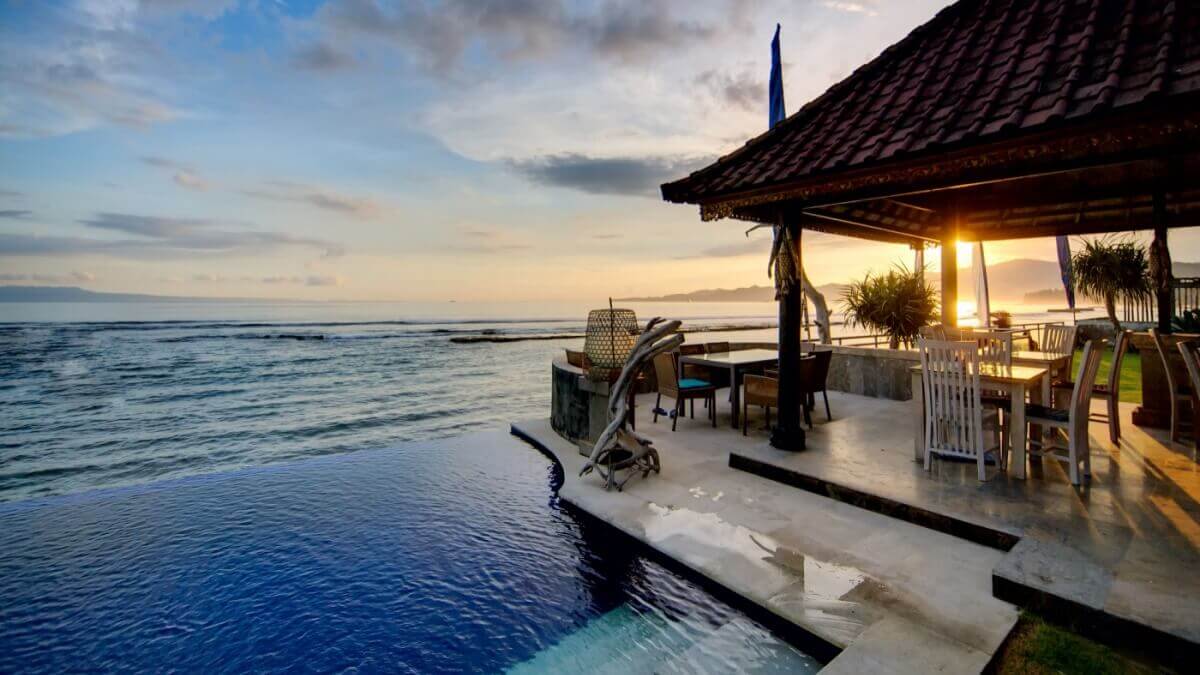
Gorgeous beaches, fantastic seafood and historic temples are just some of the reasons that make Bali a destination for dream vacations and permanent homes. Dubbed the Island of the Gods, Bali holds an allure for many would-be British expats who long to live in a tropical paradise.
If you’re one of these people, this comprehensive guide is for you. We’ll go over the rules and steps for buying property in Bali for foreigners and look at the financial details like prices and taxes too. Plus, you’ll get tips on common pitfalls to avoid.
We’ll also introduce a reliable and cost-effective way to send and receive large sums internationally from the money services provider Wise. With low, transparent fees*, great mid-market exchange rates, and secure, trackable transfers, Wise makes international money transfers simple and stress-free.
Plus, you’ll get dedicated support and volume discounts when sending large amounts. On a £50,000 transfer, you could save up to £1,000 with Wise vs your bank.
Get expert support for your large transfer 📞
It helps to know what you’re getting into before you start shopping for properties in Bali. Here’s how the process typically works:
Indonesian property law is quite different from UK property law. As a foreigner, you can’t own land outright in Bali, though you can buy the right to use and build on land.
We’ll go over these specific rights later on. For now, just keep in mind that when we discuss buying property in Bali, we’re technically talking about leasing land, using land, or owning structures built on the land, not the ownership of the land itself.
Depending on how you buy your property, different documentation requirements apply. Typically, you’ll need a temporary or permanent residency permit alongside your passport and financial documents proving you have the means to buy a property.²
In addition, just as you would if you were buying a property in the UK, you should set a budget and, if necessary, get a mortgage offer in principle from a lender.
To find properties on your own, you can use online property websites such as Exotiq, Bali.Realestate and Propertia. Though it’s not required, you may also want to get the help of a registered, local property agent and a solicitor who understands local ownership laws and can check over all the documents.
Before signing on the dotted line, you’ll want to check all the property details. Your lawyer can take care of verifying the land certificate with the national land agency (BPN) and checking to make sure the land is zoned properly and the seller is the legal owner.
You may also want to arrange a building survey to prevent surprises about hidden defects or structural problems with the property.
Once you’re ready to buy the property, it’s time to make a competitive offer. If accepted, you’ll sign a conditional sale and purchase agreement (CSPA) that sets out terms and conditions.
You, or your solicitor with power of attorney, must be present to sign the sales contract before a notary licensed to act as a land deed official (PPAT) in Indonesia.⁴
Afterwards, you can transfer the rest of the money required and call yourself the proud owner of a property in Bali.
Some Indonesian banks offer mortgages to foreigners for certain ownership types, but extra rules and tougher conditions apply.
To start, you’ll likely need a residency permit, whether temporary or permanent. You may also need to open an Indonesian bank account.
Beyond that, banks will also ask for a hefty deposit, typically between 30% to 50% of the property value. Expect higher interest rates, shorter repayment periods, extra fees for administering the mortgage, and a bit of a wait, since the process is strict and requires a lot of documentation and checks.
The taxes and fees you’ll need to pay for your property will depend on the method you chose to buy your property, but typical costs include:
As well as those one-time costs, you’ll be responsible for an annual property tax (PBB) of up to 0.5% of the government-determined taxable value (NJOP).³ If you decide to rent your property, you’ll need to pay a 10% rental income tax on gross rent.¹¹
Bali has long had a booming tourism sector, but more recent changes on the island have made its property market especially attractive to buyers from all over the world.¹⁰
For one, thanks to broader infrastructure updates from roads to airports, Bali is growing better connected and more appealing to those interested in staying longer-term. In addition, Bali’s new visa policies have made it easy for digital nomads to make Bali a lifestyle base.
Basically, more people are choosing to live in Bali longer. That’s really heating up the property market, especially for luxury residences.
Technically, only Indonesian citizens can own land in Bali. That said, foreigners can still invest in property in Bali by leasing land long-term, buying the rights to use or build on land, or purchasing an apartment built on land.
Your options for buying property in Bali as a foreigner include:³
It’s also possible to buy property through a nominee system, where an Indonesian citizen is listed as the official owner on behalf of a foreign buyer. Nominee setups, however, have been voided by courts, and experts recommend avoiding them.²
No, you can’t automatically get residency simply by buying property. Indonesia offers a golden visa programme, but it’s tied to financial investments in areas like government, local shares or bank deposits, not property purchases.
But the country does offer a number of different visa and residency options for workers, family members, retirees and certain investors. Those permits can allow foreigners to buy property in Indonesia.
A key reason why Bali is so attractive to UK expats is that the cost of buying property there can be much cheaper than in UK locations. According to Numbeo, buying an apartment in Bali costs 84% to 92% less than in London, 75% to 81% less than Brighton, and 62% to 77% less than Bath.¹¹
On average, apartments in Bali cost around £271 GBP per square metre, while houses average about £1,645 per square metre.¹² Of course, costs vary quite a bit depending on location, property type and other factors. Luxury high-end villas can cost millions.

Typically, the cheapest places in Bali can be found outside the tourist areas, so avoid the more tourist-heavy zones like Seminyak and Ubud if you’re looking for lower prices. Towns and villages in the northern or eastern parts of Bali and inland locations further from major infrastructure also tend to be more affordable.¹³
In Bali, as elsewhere, the simplest way to start your property search is by checking online property listings or working with local property agencies.
Local agents can help you understand Bali’s ownership rules and guide you through different neighborhoods. Many agencies also work with notaries and legal teams. If you’re new to Bali, this support can be very useful as you negotiate a buy.
Browsing online listings can give you a feel for the market in general as well as key you in to specific properties. Popular websites for properties in Bali include:
As in any country, property scams can happen. In Bali, you’ll want to be extra careful around a few quirks of the system.
For example, ownership rules can be confusing. Because Indonesia offers several types of land titles and foreigners aren’t allowed to hold freehold land in their own names, risky workarounds like using an Indonesian nominee to hold the title are sometimes promoted to foreigners.² To avoid problems, it’s important to understand what type of ownership you’re getting into and to verify titles with the national land agency.
Infrastructure isn’t always reliable. You can’t assume that water, electricity, internet or road access will be consistent in all areas, so make sure you check these basics before signing agreements.¹⁴
Lastly, keep in mind that some who pose as property agents aren’t actually licensed. Experts recommend checking to make sure yours is. They also recommend hiring a notary or lawyer to carry out the due diligence and handle the paperwork.¹⁵
The right property depends entirely on your needs. If your goal is to live in Bali as a retiree, you’ll need to look for a very different property than if your goal is to generate rental income from tourists.
The property that best fits the price, location and other criteria will be the right property for you.
Tropical weather can take a toll on buildings, so buyers need to check the physical condition of a property carefully. An independent surveyor can help you assess the build quality, plumbing and electrics before you make a firm commitment to buy.
To make the transition to your new home more comfortable, you’ll want to take care of a few basic tasks before moving in.
There’s no requirement to carry property insurance on your home in Bali. That said, if you buy with a mortgage, your bank will likely mandate it.
Even if you’re paying in cash, most experts recommend getting cover. Bali is exposed to natural disasters like flooding and volcanic eruptions. Insurance can also protect you against everyday accidents and damage.
You may need to set up or activate water, electricity and internet service before moving into your Bali property. Some homes will already have them running, but it’s best not to assume.
Most homes run on bottled gas that’s delivered and placed locally, and some areas of Bali rely on groundwater. If your property falls into this category, you’ll want to check that the system is working.
In rural or less-developed parts where fixed internet isn’t available, you may have to rely on mobile data or satellite connections.
If your property is older or simply built without energy efficiency in mind, renovations like upgrading to modern appliances and adding solar panels can help keep your utility bills down and protect the environment.
Need a secure, convenient and low-cost way to send large sums of money abroad? Take a look at the Wise account from the money services provider Wise. It's not a bank account but offers some similar features and your money is safeguarded.
With Wise, you can send large amount transfers worldwide to 140+ countries for low, transparent fees* and the mid-market exchange rates with no markup.
| Here’s an overview of the main benefits of using Wise: |
|---|
|
**Investments in funds are never guaranteed and your capital can be at risk. In the UK, Interest and Stocks are provided by Wise Assets — this is the trading name of Wise Assets UK Ltd, a subsidiary of Wise. Wise Assets UK Ltd is authorised as an investment firm and regulated by the Financial Conduct Authority (FCA). Our FCA number is 839689. We do not give investment advice, and you may be subject to pay tax. If you're not sure, seek qualified advice. You can find more information about the funds on our website.
Sources used:
Sources last checked on date: 19-Sep-2025
*Please see terms of use and product availability for your region or visit Wise fees and pricing for the most up to date pricing and fee information.
This publication is provided for general information purposes and does not constitute legal, tax or other professional advice from Wise Payments Limited or its subsidiaries and its affiliates, and it is not intended as a substitute for obtaining advice from a financial advisor or any other professional.
We make no representations, warranties or guarantees, whether expressed or implied, that the content in the publication is accurate, complete or up to date.

Learn everything you need to know about expat health insurance for Indonesia, from finding the best providers to accessing healthcare and managing costs.

Read our complete guide to the Bali digital nomad visa, covering fees, documents, eligibility requirements and application process.

One important decision, if you’re moving to Indonesia with family, is how to ensure that your children have the best possible education. The public education...











