Best Accounting Software for Multiple Entities: Complete Comparison for UK Businesses
Discover the best multi-entity accounting software in the UK. Our guide explains the features and fees of each software to help you make an informed decision.


If you send or receive money involving a US bank account, you may be asked for an ABA number, a routing number, an ACH routing number or a SWIFT code. For a UK business, that can get confusing fast, especially when the payment form does not explain which code is needed.
In this guide, we've explained what ABA numbers and routing numbers mean, when UK businesses may need them, how to find the right one, and how they differ from account numbers and international payment codes.
We've also explained how Wise Business can help when your business works with US customers, suppliers or platforms and needs a clearer way to manage international payments.

Disclaimer: The UK Wise Business pricing structure is changing with effect from 26/11/2025 date. Receiving money, direct debits and getting paid features are not available with the Essential Plan which you can open for free. Pay a one-time set up fee of £50 to unlock Advanced features including account details to receive payments in 22+ currencies or 8+ currencies for non-swift payments. You’ll also get access to our invoice generating tool, payment links, QR codes and the ability to set up direct debits all within one account. Please check our website for the latest pricing information.
| Topic | What UK businesses should know |
|---|---|
| ABA number vs routing number | In most everyday US payment contexts, these terms usually refer to the same nine-digit US bank identifier. |
| Payment type matters | Domestic US wires commonly need a routing number and account number, while international wires may need a SWIFT/BIC code. |
| Account number difference | The routing number identifies the financial institution; the account number identifies the recipient account. |
| Checking details | Always confirm the recipient name, account number, routing number and payment type before sending money. |
An ABA number, short for American Bankers Association number, is a nine-digit routing number used by banks to identify specific financial institutions.1
You may also see it called an ABA routing number, routing transit number or RTN. The ABA says LexisNexis Risk Solutions is currently the official registrar for ABA routing numbers.2
The code helps route payments to the correct US financial institution. ABA information can be used for payment activity including checks, ACH transactions and wire instructions, depending on the payment type and bank setup.1,2,3
A routing number is the broader everyday term many people use for the same kind of US bank identifier. The ABA policy says the primary purpose of the routing number is to identify the bank responsible for paying, giving credit, or receiving payment or credit for a check or electronic transaction.3
In practice, this means a routing number points the payment system towards the financial institution. It does not replace the account number, which is why domestic US wires usually ask for both the routing number and the recipient's account number.4
Yes, in most business payment contexts, an ABA number and a routing number mean the same thing. The Federal Reserve describes an ABA number as a nine-digit routing number, and the ABA's routing number policy says the routing number was devised by the American Bankers Association.1,3
This can still cause confusion for UK businesses. A payment form may say ABA number, a supplier invoice may say routing number, and a US bank page may say routing transit number or RTN.
The practical question is less about the label and more about the payment route. Ask whether the payment is a domestic US payment, a domestic US wire, an ACH payment or an international wire before you send funds.
An ACH routing number is a routing number used for Automated Clearing House payments. In plain English, ACH is a US electronic payment rail used for bank-to-bank transfers.
ABA policy defines electronic transactions as including wire transfers and ACH debit and credit entries.3 The Federal Reserve also says ABA numbers are often used for wires and ACH transactions.1
In practice, you may see "ACH routing number" when a payment needs to go through ACH rather than by cheque or a wire route. If the recipient has different routing numbers for different payment types, use the one specified in their official instructions.
The ABA or routing number identifies the financial institution, while the account number identifies the specific recipient account. For domestic wires, Wells Fargo says senders need the recipient bank's routing ABA/RTN number and the recipient's account number.4
On a US cheque, the ABA says the routing number is the left-most number at the bottom, followed by the account number and then the cheque number.2
If you use the right routing number but the wrong account number, the payment may still fail, be returned or go to the wrong place. Check both details carefully before authorising a business payment.
A routing number is mainly used in US domestic payment contexts. A SWIFT code, also called a BIC, is used to identify the bank that will receive an international wire transfer.4
Wells Fargo says domestic wires need a routing ABA/RTN number and account number, while international wires need the recipient bank's SWIFT/BIC. Some countries may also require local codes, such as a UK sort code or Canadian routing number.4
For a UK business sending money to a US bank account, the required details depend on the route. Some international wires rely on SWIFT/BIC details, while domestic US payment requests may ask for a routing number and account number.
You may need an ABA or routing number when a payment touches the US banking system in a domestic way. Common examples include paying a US supplier from a US balance, receiving money from a US client into US local account details, or setting up ACH-based payments.
You may also come across it when a US platform asks for local bank details for payouts. In those cases, check whether the platform wants an ACH routing number, a domestic wire routing number, or international bank details.
A common question is whether you always need a routing number for payments to a US bank account. The answer is no. For international wires, the payment instruction may need SWIFT/BIC details instead, depending on the bank and payment route.4
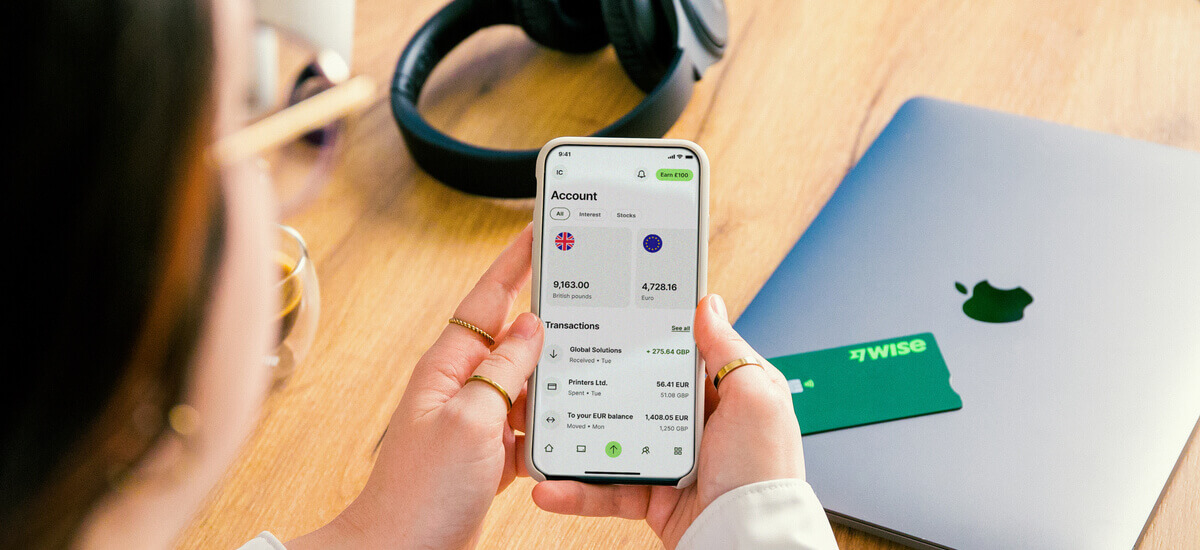
💡 With Wise Business, you can get local account details for currencies, including USD and EUR, to let customers pay in a currency they know and trust - convenience for them and peace of mind for you.
Disclaimer: The UK Wise Business pricing structure is changing with effect from 26/11/2025 date. Receiving money, direct debits and getting paid features are not available with the Essential Plan which you can open for free. Pay a one-time set up fee of £50 to unlock Advanced features including account details to receive payments in 22+ currencies or 8+ currencies for non-swift payments. You’ll also get access to our invoice generating tool, payment links, QR codes and the ability to set up direct debits all within one account. Please check our website for the latest pricing information.
The most common place to find an ABA or routing number is on a US cheque. The ABA says the ABA routing number appears at the bottom of cheques as the left-most number, before the account number and cheque number.2
You can also usually find routing and account number information in online banking. Wells Fargo says routing numbers and account numbers are available in Wells Fargo Online.5
Some banks use different routing numbers based on state, account type or payment method. Do not assume that one routing number works for every payment scenario.
Before sending money, confirm the recipient name, account number, routing number and payment type. That last point matters because a domestic US wire and an international wire can require different banking details.4
If you use the wrong bank identifier or account number, the payment may be delayed, returned or sent to the wrong destination. For business payments, that can mean missed supplier deadlines, extra charges or reconciliation problems.
A practical rule is to verify the details from the recipient's official bank instructions. If anything is unclear, ask whether the payment is going by ACH, domestic wire or international wire before you authorise it.

If your UK business works with US customers, suppliers or platforms, payment details can quickly become hard to track. Wise Business can help you manage international payments with ease, and you can get local account details for 8+ currencies - all from one account.
With Wise Business, you can:
Make the wise choice when selecting a business account for all your domestic and global needs.
Be Smart, Get Wise.
Disclaimer: The UK Wise Business pricing structure is changing with effect from 26/11/2025 date. Receiving money, direct debits and getting paid features are not available with the Essential Plan which you can open for free. Pay a one-time set up fee of £50 to unlock Advanced features including account details to receive payments in 22+ currencies or 8+ currencies for non-swift payments. You’ll also get access to our invoice generating tool, payment links, QR codes and the ability to set up direct debits all within one account. Please check our website for the latest pricing information.
Yes. The Federal Reserve describes an ABA number as a nine-digit routing number, and the ABA policy describes the routing number structure as a nine-digit number.1,3
No. UK bank accounts do not normally use ABA numbers for domestic UK payments. UK payments usually use a sort code and account number.
Not always. Wells Fargo says domestic wires need a routing ABA/RTN number and account number, while international wires need a SWIFT/BIC code and may require extra details depending on the country.4
An ABA number identifies a US financial institution for routing payments. A SWIFT/BIC code identifies the bank that will receive an international wire transfer.1,4
Yes. ABA policy says a bank may have up to nine additional routing numbers beyond its principal office routing number, and additional numbers beyond that need Routing Number Administrative Board approval.3
The payment may be delayed, returned or fail. Before sending funds, confirm the recipient's official payment instructions and check whether you need ACH, domestic wire or international wire details.
Sources:
Sources last checked on 18 June 2026
*Please see terms of use and product availability for your region or visit Wise fees and pricing for the most up to date pricing and fee information.
This publication is provided for general information purposes and does not constitute legal, tax or other professional advice from Wise Payments Limited or its subsidiaries and its affiliates, and it is not intended as a substitute for obtaining advice from a financial advisor or any other professional.
We make no representations, warranties or guarantees, whether expressed or implied, that the content in the publication is accurate, complete or up to date.

Discover the best multi-entity accounting software in the UK. Our guide explains the features and fees of each software to help you make an informed decision.

Learn how to withdraw money from your Shopify store in the UK. Our guide covers all the steps encompassing payouts, verification, schedules, and more.

Learn how to withdraw money from TikTok Shop as a UK seller. Our guide covers everything from settlement timelines to payout setups and more.

Learn how Amazon seller payouts work for UK businesses. Our guide covers payout timing, fees, reserves, withdrawals and cash flow basics with seller tips.

Learn how to create and send PayPal invoices as a UK businesses. Our guide explains fees, invoice details, payment options, billing costs, and more.

A comprehensive guide to the best international payment gateways for UK businesses in 2026, including features, fees, supported currencies and more.