
Guide on how to calculate break even point
Learn how to calculate your break-even point. Discover the standard formula, step-by-step methods, and managing global costs.


Setting up direct debits can help your business to get paid on time without manually chasing invoices every month. This offers quite a few benefits, including steadier cash flow and less admin to sort, but it’s not always clear for small businesses how to get a ‘mandate’ from customers to take these regular payments.
In this guide, we’ll explain what a direct debit is, how they work in Australia, and how to get them set up with providers, plus detail some of the costs involved.
| Table of Contents |
|---|


A direct debit is an automatic payment where a customer lets a business withdraw money from their bank account using their BSB and account number. Unlike a standard bank transfer, where all the details are manually entered and money sent, the business triggers the payment with the customer’s permission.
In Australia, direct debits run through the Bulk Electronic Clearing System (BECS), which the Australian Payments Network oversees. It’s essentially the backbone for account-to-account (A2A) payments – the system banks and businesses rely on when money needs to move securely between local accounts¹.
If you’ve ever set up recurring or scheduled payments, these are likely to have been direct debits. It’s commonly used for things like utilities and monthly streaming subscriptions, removing the need for customers to manually pay bills.
For businesses, direct debits offer structure and predictability by automating collections, reducing the chances of missed payments, which can hit cash flow.
With a direct credit, the payment flow is reversed, with the business sending or ‘pushing’ money to the recipient’s account using their bank details. Direct credits are often used to pay salaries and issue refunds, or make payments to other businesses. The recipient of a direct credit could be a customer, employee, or supplier.
Direct debits make the payment process much more efficient and are widely used by businesses and consumers.
Business uses:
Consumer uses:
The process for direct debits is very similar in Australia compared to other countries like the UK or the US, with the main difference being that they use the rules and infrastructure of the BECS network. Here’s how it works, step-by-step:
This is a back-and-forth exchange that takes very little time in reality, but the payment still needs to move through banking and clearing systems before it fully settles in the recipient’s account.
A direct debit takes around 1-3 business days to process and settle in Australia. While the money may leave your account on a particular date, the processing that comes after (bank authorisation, clearing, etc.) can extend the time it takes to clear and reach the recipient.
The exact time it takes for a direct debit to settle depends on a few key factors.
Direct debits are an efficient way to automate recurring payments for businesses.
Instead of relying on customers to manually pay invoices or services, you can schedule payments to be taken automatically on agreed dates, so you don’t have to worry about chasing money you’re owed. It also improves cash flow, giving you a clearer view of your finances, which is better for forecasting and decision making, while reducing admin.
To start taking direct debits, your business will need a direct debit provider or payment platform that supports BECS direct debit payments. These third-party platforms facilitate the payments, sorting the infrastructure and authorisations to make direct debits work.
Here’s how to set up a direct debit for your Australian business:
Start by researching a few potential providers, like GoCardless or Ezidebit, that support direct debit payments. Many of these integrate with accounting and invoicing to automate the whole payment process. When comparing options, look closely at transaction fees, integrations, customer payment experience, and local support.
There are a few ways you can get customers to authorise direct debits. You can include it as an option at an online checkout, for example, or by sending them a payment form via email. Customers will usually provide their account name, BSB, and account number along with payment authorisation during this process.
Now that you’ve been given the green light to take payments, you can start scheduling the direct debits through your provider platform for things like recurring subscriptions and ongoing invoices. You’ll also have to give customers a heads-up that payments will be taken, usually a few days beforehand.
Your provider is likely to have a dashboard where you can keep track of all your direct debits and flag any failed transactions. This makes it easier to manage cash flow and reconcile everything with your accounting software.
There are a few different fee types you’ll need to factor in when taking direct debits from customers. These costs will vary depending on the provider you choose and how often you take payments.
Here’s a breakdown of the common direct debit costs:
| Cost type | What it covers |
|---|---|
| Setup fees | One-off onboarding or account setup |
| Transaction fees | A small flat fee and/or percentage per payment |
| Monthly platform fees | Access to your provider’s platform or payment systems |
| Failed payment fees | Charges when a payment fails |
| Chargeback or dispute fees | Admin costs related to disputes with customers |
For a traditional banking setup, it can be expensive. For example, with ANZ, there is a $200 AUD + GST establishment fee for using a direct debit facility². But the upfront costs are typically much lower with third-party providers like GoCardless. These often use a pay-as-you-go model with per-transaction charges and optional monthly subscriptions.
Traditional business accounts may seldom restrict your automated payments to local currency accounts, causing unnecessary hurdles if your operations span across borders.
A Wise Business account helps solve this friction by allowing you to set up direct debits in multiple global currencies, including AUD, USD, GBP, EUR, and CAD.
In addition, businesses have the flexibility to choose if they would want to automatically convert the missing amount from other currencies using the lowest possible fee to ensure that the automated payments run smoothly. This ensures that direct debit payments occur even if there is no balance in that specific currency.
Setting up an automated payment from your account is simple, digital, and typically takes just a few days to finalize.
Maintaining complete visibility over your business expenses is vital, so Wise gives you the tools to track or stop your payments instantly from your dashboard.
Important note: To ensure a payment does not leave your account, you must cancel the direct debit at least 1 working day before the next scheduled payment date.
Expanding a business globally opens up exciting opportunities, but also new challenges like receiving payments across borders. Hidden foreign transaction fees and hefty currency conversions involved with international payments can eat into your profits and time.
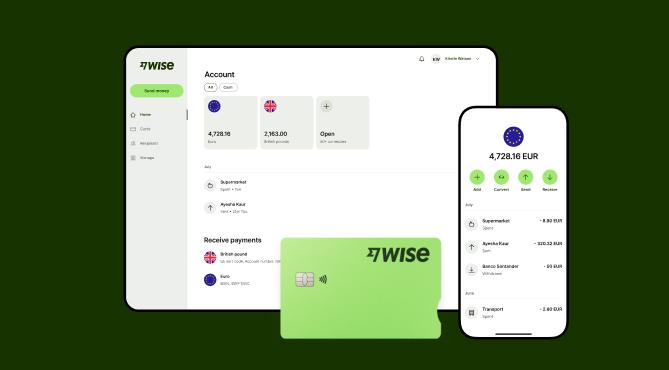
Wise Business serves as a cost-effective solution where you can receive money from around the world at the speed and price of local payments.
Transform the way you receive payments with Wise Business:
Sign up for the Wise Business account! 🚀
This general advice does not take into account your objectives, financial circumstances or needs and you should consider if it is appropriate for you.
1. How to cancel a direct debit?
In Australia, it’s generally recommended to contact the business first to notify them that you want to cancel, and then let the bank know. Some providers might need advance notice, ie, 3 days before the next billing date, to prevent money from going out.
2. What happens if a direct debit payment fails in Australia?
A direct debit payment usually fails due to insufficient funds or incorrect account details. When this happens, the business may try to take the payment again a couple of days later, while contacting the customer to either update their details or use an alternative payment method.
3. How much notice does a business need to give before taking a direct debit?
You’ll need to provide advance notice before debiting a customer’s account, typically around 3 days before the payment date. However, the exact notice period will depend on the agreement and provider terms. Most businesses provide 14+ days' notice if there are any changes to payment amounts or schedules.
4. Is direct debit safe for customers to use?
Yes, direct debit is considered safe and secure as payments pass through regulated banking systems and require explicit permission from the customer to be taken. Customers are also protected by direct debit guarantees and dispute procedures in most cases.
Sources:
*Please see terms of use and product availability for your region or visit Wise fees and pricing for the most up to date pricing and fee information.
This publication is provided for general information purposes and does not constitute legal, tax or other professional advice from Wise Payments Limited or its subsidiaries and its affiliates, and it is not intended as a substitute for obtaining advice from a financial advisor or any other professional.
We make no representations, warranties or guarantees, whether expressed or implied, that the content in the publication is accurate, complete or up to date.

Learn how to calculate your break-even point. Discover the standard formula, step-by-step methods, and managing global costs.

Learn about expense reimbursement in Australia. ATO rules, FBT compliance, setting up a clear policy, and streamlining business payouts.

Understand the meaning of liquid assets, how they differ from illiquid holdings. Optimizing business cash flow and global liquidity buffer. Read here

Learn how to build a global go-to-market framework. Discover step-by-step strategies, key operational components, and common financial pitfalls to avoid.

Learn the types of business liquidation, the step-by-step winding up process, asset realization, and proactive financial strategies for directors.

Discover how to build an end-to-end invoice automation workflow, avoid the pay-out gap, and scale your business with integrated payment solutions.











