Guide on selling a business in Australia: Tips, steps & more
Considering selling a business in Australia? From valuations to negotiating with buyers and fulfilling tax obligations, we’re covering the need-to-know info.


Are you a budding entrepreneur with your sights set on starting a business in Australia as a foreigner? You’re in good company. More than 400,000 startups entered the market in 20241.
In this blog, we’ll break down everything you need to know about getting your business up and running as a non-citizen in Australia. We’ll cover visa types and legal requirements, and introduce Wise as an option for business banking.
| Table of contents |
|---|

It is possible for a foreigner to start a business in Australia. But they typically face more difficulties than an AU citizen, depending on their resident status. These include acquiring a very specific type of visa — a regular tourist visa isn’t enough — and understanding the unique business registration laws in Australia.
You’ll need a visa to start a business if you aren’t an Australian citizen2. Unfortunately, it’s much harder to acquire one in 2025. The government closed its Business Innovation and Investment Program (BIIP) with several visa types in July 20243.
It has now replaced it with a new National Innovation visa (NIV) Subclass 858, which is invite-only4. This visa is for “exceptionally talented migrants,” including entrepreneurs who want to start a business.
You can register your interest by completing the Expression of Interest (EOI) form on the government’s Home Affairs website12.
With an NIV, you can stay in Australia permanently to work and study, with a path to citizenship if you are eligible. It costs from 4,840 AUD5.
After securing a visa, you can focus your efforts on setting up a business. The process for foreigners isn’t too different compared to Australian citizens, but there are certain factors to be aware of. Let’s take a look at what’s required to start a business as a foreigner.
First, you’ll need to define a business structure. There aren’t any limitations in terms of structure for non-AU residents, but the four most popular are sole trader, partnership, company, and trust6. Each of these has different tax and legal obligations.
The business.gov website13 has a guide on how to choose a business structure if you’re unsure. The main consideration is selecting a structure that fits your business needs. For example:
Next, it’s time to register a business name, which requires an Australian Business Number (ABN) — an 11-digit number that’s unique to your business for taxes and invoicing. Those two are essential, but you might also need to register for Goods and Services Tax (GST). It’s optional for new startups, but everyone including non-residents have to sign up for GST when business turnover exceeds $75,000 per year7.
Another thing you’ll need is a Tax File Number (TFN) to submit your tax returns. This is issued automatically by the Australian Taxation Office (ATO) when you apply for an ABN8. Sole traders can use their personal TFN.
There are a couple more steps for companies — registering with the Australian Securities and Investments Commission (ASIC) and applying for a director ID9. The latter is a unique identifier that helps prevent fraud.
In addition to registration, you must acquire the necessary licences and permits to trade. These usually vary by state, territory, and government areas in Australia. There are also business-specific licences. For example, if you want to open a pop-up restaurant, you’d typically have to get a licence from the local council and a food business permit to ensure you meet food safety regulations.
You can use the Australian Business Licence and Information Service (ABLIS) to find the exact licences you’ll need to start and run your business.
If you’re currently renting a property and planning to use it as a base for the business, you should also notify the landlord about your plans.

Tax is as much a certainty in business as in general life. You must submit income tax returns annually, even if you don’t expect to surpass the minimum tax threshold. This isn’t an immediate concern after just starting up, but manage your finances with tax reporting in mind. That’s why many startups, even sole traders, open a business bank account to easily track income and expenses.
Additional info: If you plan on having employees or contractors, you’ll have to collect pay as you go (PAYG)14 withholding when you pay them.
Companies need to have directors. If you’re just starting a company, it’s likely to be a private or proprietary company. These must have at least one director who resides in Australia. All public companies — those that offer shares and trade on a stock exchange — are required to have three directors, with two of those in Australia10.
Australia has specific laws for employment, contracts, fair trading, product safety, marketing and other areas of business that you should be aware of before getting started.
For example, if you want to start a dropshipping business, you should familiarise yourself with import and export rules.
The government has a guide to the ‘legal essentials’ for a business in Australia.
Starting a company, partnership, or trust? You’re legally required to open a business bank account for these structures11. Sole traders can get by with a personal account, but separating business finances for simpler accounting and tax reporting is always a good idea.

You can open a business bank account as a foreigner if the business is registered in Australia with an address in the country. However, you might have to gather and submit more documents as evidence. The essentials you’ll need include:
A separate business bank account can also help you secure funding, so bear this in mind if you are going to look for loans or venture capital.
If you’re struggling to open a business bank account in Australia because you need proof of address or to verify it in person, you could opt for an online multi-currency account. This will give you the local account details needed to manage your finances.
Wise Business is a flexible, borderless account that gives you the tools to manage transactions within Australia and globally. As an alternative to traditional banks, Wise makes international finances cost-effective.
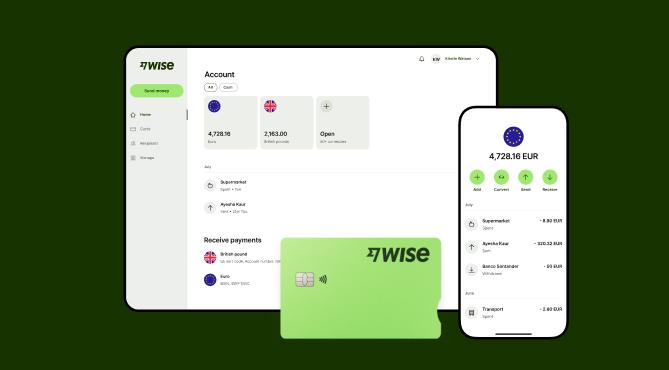
You can sign up for an account today — there’s no long-winded registration or tedious paperwork. You’ll just need to tell us some details about your business as part of the account verification process.
What's more, you'll benefit from the following with a Wise Business account:
Sign up for the Wise Business account! 🚀
Sources:
*Please see terms of use and product availability for your region or visit Wise fees and pricing for the most up to date pricing and fee information.
This publication is provided for general information purposes and does not constitute legal, tax or other professional advice from Wise Payments Limited or its subsidiaries and its affiliates, and it is not intended as a substitute for obtaining advice from a financial advisor or any other professional.
We make no representations, warranties or guarantees, whether expressed or implied, that the content in the publication is accurate, complete or up to date.

Considering selling a business in Australia? From valuations to negotiating with buyers and fulfilling tax obligations, we’re covering the need-to-know info.

Searching for the best small business payment gateway in Australia? We’re comparing the top options in this explainer guide.

Compare Pty Ltd vs sole trader in Australia. Learn the key differences, tax implications, and costs, and how to choose the right structure for your business.

Learn how to secure a small business loan in Australia. Explore loan types, eligibility requirements, and a guide to preparing your application and docs.

Learn about retained earnings, the formula, balance sheet impact, and how to use accumulated profits for sustainable growth. Read here.

Learn how to calculate GST in Australia. Understand inclusive vs exclusive pricing, claim GST credits, and avoid common pitfalls to ensure business compliance.