
How to Transfer AMEX Points to Qantas: Guide for Aussies
Learn how to link and transfer your AMEX Membership Rewards points to your Qantas Frequent Flyer account, check transfer ratios, and maximise your points.





*Pricing claim based on comparative data for select airports and passes. Live pricing is subject to exchange rate fluctuations.
📱Find out how to get lounge access
Australian tax residents may be obliged to declare and pay tax to the Australian Taxation Office (ATO) on income from around the world. That might mean paying ATO taxes if you’re an expat living in Australia, and earning rental income from abroad, or if you’re an Aussie freelancer working with overseas clients for example.
If you have earnings of any type from abroad, it’s important to understand the rules about foreign income tax in Australia, to stay on the right side of the law. Let’s take a closer look at how much foreign income is tax-free in Australia, and what happens if you have to pay tax on income in another country while residing in Australia. We'll also introduce to you Wise account which lets you send, spend, and receive money in different currencies.
This guide is for information only. Tax can be complex, particularly when working across borders. Seek professional advice if you’re unsure what income you need to declare to the ATO, and where you must pay taxes.
If you're an Australian tax resident you must declare foreign and worldwide income to the ATO in your normal annual Australian tax return¹.
Whether or not you’re considered an Australian tax resident can hinge on several factors including how long you’ve spent in Australia during the tax year, and your usual domicile. Your tax residency is not necessarily the same as your visa status or nationality - if you’re not sure whether or not you’re an Australian tax resident you’ll need to get professional advice to help you assess your residency based on ATO rules.
Foreign and worldwide income can then break down into several key categories - overseas annuities or pensions, business and employment income, assets or investments and capital gains.
If you have a super pension, or an annuity which is paying you an income from abroad, you may need to declare this to the ATO. If you receive a lump sum from a managed fund as part of a pension payout you’d also need to declare this.
If you’re employed by an overseas business, or earn income as a self employed person or freelancer from foreign clients you need to declare this as though it was earned in Australia. You’ll also need to declare other business income, directors fees and consultancy earnings made abroad.
Income from assets and investments held overseas, including offshore bank accounts, must be declared to the ATO. This can include a broad range of income types such as interest, dividends, royalties, and rent.
If you sell an asset you hold overseas you may need to pay Capital Gains Tax (CGT) in Australia. The calculations for this type of tax can depend on when you acquired the asset - before or after becoming an Australian tax resident. Get professional advice if you’re unsure as this can be a complex area of tax accounting.
The way the ATO treats foreign income depends on a number of factors including your tax residency, the amount earned abroad and the country in which the income originated².
In some cases tax may be owed in more than one country on the same income - where this happens you may be entitled to a foreign income tax offset in Australia to reduce your overall costs.
Here’s a summary of the tax treatment in a few common situations.
Australian tax residents will generally need to declare all foreign and worldwide income to the ATO, including business income, passive income, pensions and capital gains. If you have already paid tax on income from overseas you may be eligible for an offset which prevents you from paying tax twice on the same income.
Foreign residents in Australia must usually declare all Australia-sourced income including employment income, rental and capital gains to the ATO. You don’t usually need to declare foreign income unless you are the beneficiary of certain government supported loans.
Generally if you earn interest or dividends in Australia, tax is withheld by the bank or company and so you do not need to pay any further taxes on the amounts you receive.
Temporary residents are often not taxed on foreign income. However, this depends on the exact source of the income and whether the country you’re being paid from has a tax treaty with Australia already in effect. If you pay tax on foreign income overseas, you may be entitled to a tax offset in Australia to ensure you don’t pay tax twice on the same income.
If you’re an Australian tax resident you’ll usually have to include foreign earned income in your normal annual tax return to the ATO. The amount of tax you then pay depends on your overall earnings from all sources.
Australian tax rates are progressive, with a tax free amount offered to all tax residents - here are the 2025/6 rates as a reference³:
| Taxable income | Tax on this income |
|---|---|
| 0 – $18,200 | Nil |
| $18,201 – $45,000 | 16c for each $1 over $18,200 |
| $45,001 – $135,000 | $4,288 plus 30c for each $1 over $45,000 |
| $135,001 – $190,000 | $31,288 plus 37c for each $1 over $135,000 |
| $190,001 and over | $51,638 plus 45c for each $1 over $190,000 |
*Details correct at time of research - 18th May 2026
The ATO lists out some tax exemptions for international employment income including:
As the tax rules when working across countries can be complicated you may benefit from professional advice if you’re not sure whether or not an ATO exemption applies to you.
If you earn abroad you may be obliged to pay tax on your income in the country it originated in, as well as being required to declare your earnings to the ATO. In some cases, a Foreign Income Tax Offset (FITO)⁴ can apply to prevent you from needing to pay tax on the income twice - in the foreign country and then again in Australia.
Exactly how the rules work here will depend on both the type of income, and where it was sourced. Where income comes from countries that have a double taxation treaty with Australia there are protections to reduce the chance of you needing to pay additional tax on income sourced abroad.
If you’re claiming an offset of taxation paid abroad you can simply record the actual amount of tax paid in your ATO tax return, if it is under 1,000 AUD in value. If you’re claiming a higher amount of offset, you’ll need to calculate the offset limit which will apply.
The foreign income tax offset limit is calculated by working out your full taxable income, and then calculating your taxable income without foreign sourced income and deductions. You can then subtract one from the other to get the offset limit which will apply. Get help from the ATO to ensure you’ve calculated your FIFO tax offset limit correctly.
- Get professional help if you’re unsure when to declare or what tax should be paid to the ATO or overseas - penalties apply if you fail to properly report your income.
- Before you complete your ATO tax return you’ll need to convert your foreign sourced income to AUD, using the ATO Foreign Income Conversion Calculator⁵.
- If you’re getting paid from overseas, using a multi-currency account from Wise can help you receive income in foreign currencies with low or no fees.
Foreign earned income may be taxable in Australia if you’re an Australian tax resident. If you also pay tax overseas on foreign sourced income you might be able to apply for an offset from the ATO to lessen your overall tax burden in Australia.
Tax laws are relatively complex and so getting professional advice about the tax on foreign income for Australian residents can help you navigate your duties both in Australia and the country you’re earning foreign income from. Managing international earnings also means handling different currencies, tracking exchange rate fluctuations, and finding a secure way to move your money internationally.
If you are earning an income from overseas, you will need a cost-effective way to repatriate your funds back home to Australia. Wise is a simple way to receive money fast and conveniently. Open a Wise account for free; get paid however you like, wherever you are. You will get 8+ domestic account details in global currencies like USD, GBP, and more to receive money like a local.
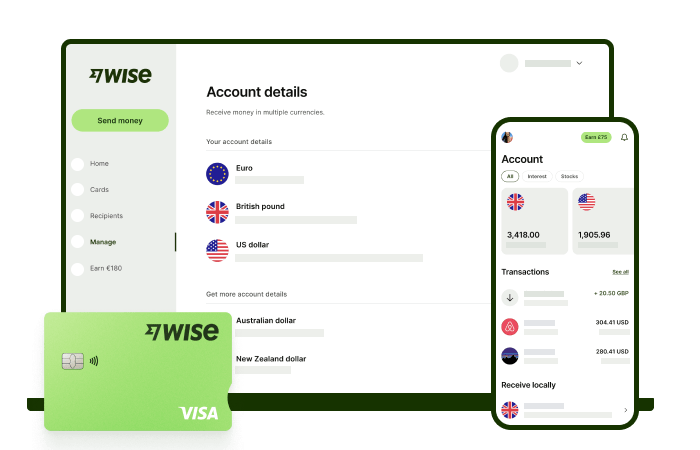
Easily manage transfers through the Wise app by sharing your account details, requesting with the Wise tag or syncing your contacts. After getting your funds, you can hold and exchange 40+ currencies in your Wise account. For all your currency exchanges, you can get the mid-market rate and low, transparent fees, which usually gives the best value for your money. Wise also lets you send money to 140+ countries or get a linked Wise debit card to spend internationally, all at the same great mid-market rate. Plus, you can activate Wise Interest to earn returns* on your eligible balances while keeping your money available to spend.
When it comes to international transfers, Wise makes things easier and cheaper.
*Growth is not guaranteed. Capital at risk.
Please see Terms of Use and product availability for your region or visit Wise Fees & Pricing for the most up to date pricing and fee information.
Sources:
*Please see terms of use and product availability for your region or visit Wise fees and pricing for the most up to date pricing and fee information.
This publication is provided for general information purposes and does not constitute legal, tax or other professional advice from Wise Payments Limited or its subsidiaries and its affiliates, and it is not intended as a substitute for obtaining advice from a financial advisor or any other professional.
We make no representations, warranties or guarantees, whether expressed or implied, that the content in the publication is accurate, complete or up to date.

Learn how to link and transfer your AMEX Membership Rewards points to your Qantas Frequent Flyer account, check transfer ratios, and maximise your points.

Is the Amex Explorer card worth it? Our review dives into the benefits, lounge access, insurance, and fees.
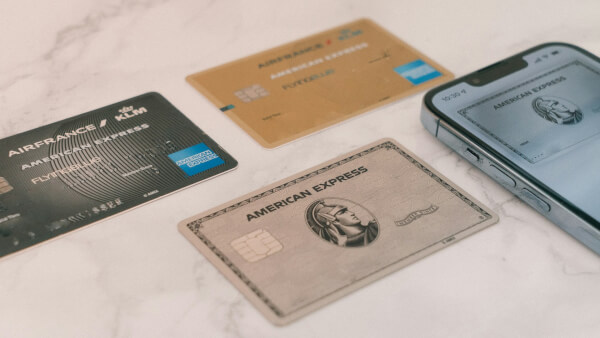
Compare the best AMEX cards for points in Australia. Discover AMEX cards for Qantas points, travel rewards, and sign-up bonuses to maximise your spend.

Learn how to check, redeem, and use your AMEX travel credit in Australia.

Follow the step-by-step instructions to order your Wise Visa FIFA World Cup 2026™ digital card, thanks to Visa

Looking for the best international debit card with no fees for your spending abroad? Compare debit cards for travel from Wise, HSBC, CommBank, and more.











