
Transferring your international driver's license to the US: step-by-step
Your full guide to updating your foreign driver's license to the US.



Before moving to the US, you’ll need to look into your visa requirements. If you have a sibling who is a US citizen, you may qualify for the F4 visa.
So, what is F4 visa? We take a look at everything you need to know, including eligibility, costs, and a step-by-step guide to applying for your visa.
We'll also introduce Wise — your international money transfer alternative. Use Wise to send stress-free transfers to over 140 countries - all at the standard mid-market exchange rate.
| Table of contents |
|---|
The F4 visa is a family-based immigrant visa. US citizens can sponsor their siblings for lawful permanent residency (LPR) in the US. With an F4 visa, an immigrant can also bring their spouse to the US, as well as any children under 21 years old.
This reunites international family members and ensures families can legally live and work in the US. Citizens will need to petition for residency for their sibling and their sibling’s family.
You’re eligible for the F4 visa if your sponsor is a US citizen and is at least 21 years old. You’ll also need to be your sponsor’s legal sibling (biological or adopted).¹
If your sponsor is a step-sibling, the marriage between your parents must have occurred while you were both under 18 years old.² If you plan to bring your children with you, they’ll need to be under 21 years old and unmarried.¹
This type of visa is subject to the laws and legal definitions of the US Citizenship and Immigration Service (USCIS) and the Department of State, so make sure to consult an immigration lawyer for more information.²
The F4 visa application process can be a little complicated, so it’s important to do your research. Speak to an experienced immigration lawyer for up-to-date advice.
Here’s a step-by-step guide to applying for your F4 visa.
Your sibling will need to petition for your right to come to the US by submitting Form I-130 to the USCIS. This form outlines your relationship and includes key details about you and your family.
Your sibling will need to sign the form and pay the filing fee. Once submitted, the USCIS will review your sibling’s petition. If approved, you’ll be assigned a priority date to confirm your spot in the visa queue.
You can track your spot via the US Department of State’s monthly Visa Bulletin.¹
If your sibling’s petition is accepted, your application will be passed to the National Visa Center (NVC). As a foreign applicant, you should receive a package that explains the next steps for your application.
You’ll need to fill out Form DS-260 on the Consular Electronic Application Center (CEAC) portal using your NVC case number. You’ll also need to submit any supporting documentation and pay your visa processing fees.¹
If your US sibling’s original petition is rejected, the USCIS will give a reason. Your sponsor (aka your sibling in the US) will then need to resubmit Form I-130 to restart the process.³
Once you’ve submitted all relevant information via the CEAC portal, the NVC will schedule an interview with you. This is typically an in-person interview at the US embassy or consulate in your home country.
The interview will include questions about your relationship with your US petitioner.³ You’ll also need to agree to a medical examination with an approved professional before your interview.¹
You’ll likely wait a long time for your application to be processed and approved. There’s a significant backlog, with many F4 visa applicants waiting several years for their applications to be processed.³
If your application is successful, you’ll receive a visa stamp and a sealed immigration packet. You can use these documents to officially enter the US and join your sibling.¹

You’ll need a few key forms and documents to support your F4 visa application, depending on your individual circumstances:
- You and your sibling’s birth certificates to prove you share at least one parent
- Birth certificates for your children
- A copy of your sibling’s US passport, naturalization certificate, or citizenship certificate
- Your passport
- A passport for your spouse and children
- Your marriage or divorce certificates
- Your adoption documents
- Police clearance certificates or criminal records
- Forms I-130 and I-864, signed by your sibling¹
- Confirmation page of Form DS-260
- Two passport-style photos per applicant
- Proof that you’ve attended a medical examination and had any required vaccinations³
You’ll need to provide translations of these documents if the originals aren’t in English. You may also need to provide additional information, depending on your personal situation.¹
There are some fees associated with the F4 visa. You or your sibling will need to pay to process forms like Form I-130 and Form DS-260.
Here are the costs of applying for the F4 visa at a glance.
| Fee | Cost |
|---|---|
| Processing Form I-130 | 325 USD³ |
| Processing Form DS-260 | 325 USD³ |
| Processing the Affidavit of Support (Form I-864) | 120 USD³ |
| USCIS Immigrant Fee | 535 USD³ |
| Medical examination | Roughly 200 USD to 500 USD¹ |
The processing fee for Form I-130 is typically paid by your US sponsor when they first submit their petition for your visa to the USCIS.
You’ll pay the USCIS Immigrant Fee after you receive your F4 visa, before you arrive in the US to rejoin your family.³
There may also be a few additional costs, such as for background checks and accurate document translations.²

Here are some frequently asked questions about the F4 visa, including how long it takes to process your application.
Yes, you may qualify for the F4 visa if your half-sibling or step-sibling is a US citizen. However, you’ll likely need to go through additional checks. Half-siblings will need to prove that they share one common biological parent, for example.
For step-siblings, you and your sibling will need to have been under 18 years old when the qualifying marriage between your parents took place. Adoptive siblings will also need to go through checks to ensure they qualify for the visa.²
F4 visa wait times can be very long, as the USCIS only processes a set amount of applications per year. This leads to a large backlog. Some applicants may wait up to 10 years for their application to be processed.¹
To speed up your F4 visa application, make sure to double-check all your details before submitting any important forms. You should also track your visa status at all stages of the application process to ensure you fulfil any obligations immediately.
You don’t have the right to live, work, or freely travel to and from the US while you wait for your F4 visa application to be approved. You’ll need to follow US immigration rules, particularly if you want to ensure your application is ultimately successful.²

……
The F4 visa is a useful option for immigrants with a sibling in the US. You can reunite with your family and explore new opportunities abroad.
However, you’ll need to do your research. The F4 visa application process can be long, draining, and complicated. You’ll need to follow US immigration procedures.
To explore your global spending options, check out Wise.
| Send money internationally with Wise to 140+ countries and 40+ currencies – all at the fair mid-market exchange rate with low, transparent fees. |
|---|
Sources
1. Remitly - From petition to green card: Your complete F4 family visa application guide
2. Davidson Morris - F-4 visa: Sibling green card rules and risks
3. IAS Services - F4 visa
Sources checked 03/26/2026
*Please see terms of use and product availability for your region or visit Wise fees and pricing for the most up to date pricing and fee information.
This publication is provided for general information purposes and does not constitute legal, tax or other professional advice from Wise Payments Limited or its subsidiaries and its affiliates, and it is not intended as a substitute for obtaining advice from a financial advisor or any other professional.
We make no representations, warranties or guarantees, whether expressed or implied, that the content in the publication is accurate, complete or up to date.
Your full guide to updating your foreign driver's license to the US.

Whatever your reason is for moving to the US, this guide aims to help you figure out the most important costs you'll face when you live there.

Find all you need to know about getting a personal loan for H-1B visa holders in this guide.
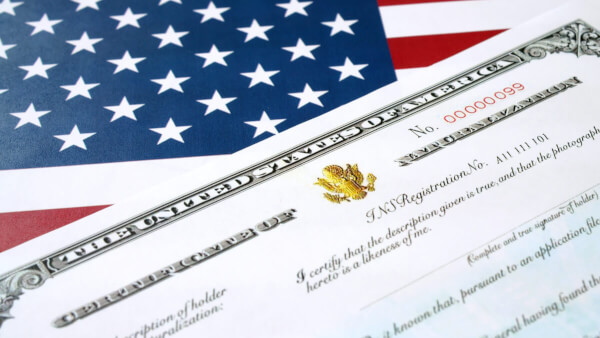
Everything you need to know about the US certificate of naturalization.

The US welcomes large numbers of new arrivals every year — and getting a great job to both gain experience and set down roots is a core part of the American...

Find everything you need to know about the US citizenship test, including the USCIS questions and answers.











