

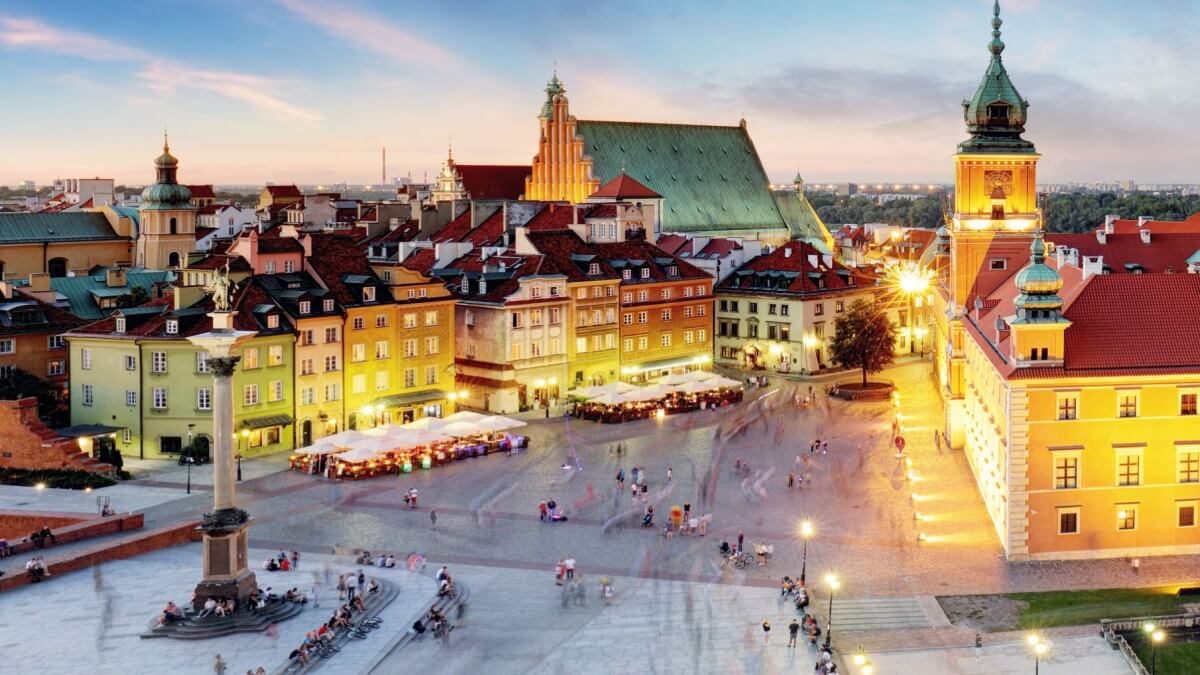
Moving to Poland from USA: Everything you need to know

Poland might not be the first place Americans think of when planning a move abroad, but it quickly wins people over. Historic cities, efficient public transport, and a growing economy make it an easy country to settle into. Whether you prefer Warsaw’s urban energy or Kraków’s cultural atmosphere, there are plenty of ways to enjoy.
Thinking about moving to Poland from the USA? This guide will answer questions about visas, housing, healthcare, and what everyday life actually looks like there.
We'll also introduce Wise — your international money transfer alternative. Use Wise to send stress-free transfers to over 140 countries - all at the standard mid-market exchange rate.
| Table of contents |
|---|
Quick facts about Poland
Before we look at visas, living costs, and what daily life is like for Americans in Poland, here are a few key facts to help you get familiar with the country.
| Capital | Warsaw |
|---|---|
| Language | Polish |
| Population | 38 million¹ |
| Currency | Polish Zloty (PLN) |
| Government type | Parliamentary republic |
| Religion | Predominantly Christian, mainly Roman Catholic |
| Weather | Cold winters, mild to warm summers |
| Tax treaty | Yes² |

Visa options for Americans in Poland
If you want to live in Poland for a period longer than a short visit, you’ll need the right visa or residence permit. Here are the main pathways Americans use when relocating to Poland, along with official sources for each option.
Entry visas for Poland
Americans can visit Poland without a visa for up to 90 days within a 180-day period. If you need to stay longer or want a formal entry document, you may apply for a Schengen C visa or a National D visa.
A C visa allows short stays across the Schengen Area, while the D visa lets you remain in Poland for more than 90 days and up to one year.
Applications usually require a valid passport, a completed form, a photograph, proof of payment, and medical insurance with at least 30,000 EUR of coverage.³
Temporary residence permit for work
If you want to work in Poland, you usually need a temporary residence and work permit. This permit is tied to a specific employer and job, and it lets you live in Poland for longer than 3 months, often up to 3 years.⁴
To qualify, your salary must meet Poland’s minimum wage requirements and match what local employees earn for similar roles. Most applicants submit a valid work contract, proof of health insurance, and documents confirming a place to live.
You apply in person at your regional voivode office. Once approved, you receive a residence card that confirms your right to work.
Temporary residence permit for studies
If you plan to study full-time in Poland, you can apply for a temporary residence permit for studies. It covers university programs, doctoral studies, and approved Polish-language preparatory courses.
First-year students usually receive a 15-month permit. Students continuing their program can get a permit for the full duration of their studies, up to 3 years.⁵
You will need proof of enrollment, tuition payment, housing, health insurance, and enough funds to support yourself. Once enrolled, you can also work in Poland without getting a separate work permit.
Temporary residence permit for business activity
If you’re moving to Poland to run a business, you can apply for a temporary residence permit based on business activity. This permit is applicable to founders, company shareholders, board members, and general partners in limited partnerships.
To qualify, you’ll need to show that your business is active and financially healthy. That usually means proving regular income, submitting tax statements, and showing that the company either generates revenue, employs at least two people full-time, or has the financial potential to do so in the near future.⁶
You’ll also need proof of health insurance, a place to live, and no outstanding tax debts.
Permanent residency
Americans who want to stay in Poland long-term can apply for permanent residency after maintaining several years of legal, continuous stay.
A standard Permanent Residence Permit is issued indefinitely, and the card is valid for 10 years before replacement. It’s usually granted through long-term residence, marriage to a Polish citizen, or Polish origin.⁷
Poland also offers an EU Long-Term Residence Permit. To qualify, you need five years of legal stay, a stable income, health insurance, proof of housing, and B1 Polish language skills. The card is valid for five years and can be renewed.⁸

Cost of living in Poland
Poland offers a relatively affordable cost of living compared to the US, which is one reason many expats choose cities like Warsaw and Kraków.
Daily expenses, groceries, and transportation tend to be lower than in major American cities, although costs vary depending on where you decide to live. Here’s a general snapshot of average prices in Poland:
| Expense | Approximate cost (USD)⁹ |
|---|---|
| Meal at an inexpensive restaurant | 11 USD |
| Meal for two at a mid-range restaurant | 50 USD |
| 1-bedroom apartment in the city centre | 786 USD |
| 3-bedroom apartment in the city centre | 1,298 USD |
| Basic utilities | 312 USD |
| Internet | 18 USD |
| Monthly public transport pass | 33 USD |
| Fitness club membership | 40 USD |
| International school tuition (yearly) | 9,662 USD |
For a single person, monthly living costs average 826 USD before rent. A family of four typically spends around 2,775 USD before rent.
Your biggest expense will probably be housing. City-centre apartments cost more, while smaller cities and suburbs offer noticeably lower rents. Day-to-day life stays affordable, especially with reasonably priced public transport, groceries, and entertainment.
| 💡 If you’re moving with children, consider the cost of international schooling, as many expat families prefer private options. |
|---|
Opening a bank account in Poland
You’ll likely need a Polish bank account to manage everyday expenses, pay rent, and handle utilities. Most major banks allow foreigners to open accounts, but requirements vary depending on residency status.
Good places to start include:
- PKO Bank Polski
- Bank Pekao
- mBank
- Santander Bank Polska
- ING Bank Śląski
To open an account, you’ll typically need a valid passport, proof of address in Poland, and sometimes your PESEL number or residence permit. Non-residents can still open accounts at some banks, though the process may take longer.
| 💡 English-speaking staff are common in larger cities, but not guaranteed everywhere. |
|---|
Tax implications for Americans in Poland
Just like anywhere abroad, US citizens living in Poland need to understand both Polish tax rules and their continuing IRS obligations.
Poland taxes residents on their worldwide income, while non-residents pay tax only on income earned in Poland. If you live in Poland for more than 183 days in a year, you are generally considered a tax resident.¹⁰
As a US citizen, you must still file a US tax return every year, even if you’re fully taxed in Poland. The US taxes worldwide income regardless of residence.
The good news is that the US and Poland have a tax treaty and Totalization Agreement, which helps prevent double taxation.¹¹ You may also use IRS provisions like:
- Foreign Earned Income Exclusion (FEIE)
- Foreign Tax Credit (FTC)
These can lower or eliminate your US tax liability depending on your situation. For complex cases, professional tax advice is strongly recommended.
Getting accommodation in Poland
Housing costs in Poland are generally lower than in many major US cities, but prices vary significantly between regions. Warsaw and Kraków tend to be the most expensive, while cities like Łódź and Lublin offer more affordable options.
Renting
Many Americans start with a short-term rental before choosing a long-term neighborhood. This gives you time to explore districts, understand transport links, and compare apartments in person.
For both renting and buying, begin with online listings to get a sense of prices and availability.
🎯 Popular Polish property sites include:
- Otodom.pl
- Morizon.pl
- Gratka.pl
- Facebook groups
Once you know the city and area you prefer, working with a local real estate agent can help you find more listings and avoid common pitfalls like unclear contracts or hidden fees.
Here’s a snapshot of how much rent typically costs in some major Polish cities:¹²
| City | 1 bedroom (city centre) | 3 bedroom (city centre) |
|---|---|---|
| Warsaw | 1,216 USD | 2,101 USD |
| Kraków | 953 USD | 1,581 USD |
| Gdańsk | 963 USD | 1,566 USD |
| Wrocław | 954 USD | 1,563 USD |
| Łódź | 624 USD | 1,118 USD |
Always get your rental contract in writing. Some landlords prefer informal arrangements, but a written agreement protects you and is often required when registering your address or applying for a residence permit.
Buying property in Poland
Foreigners, including Americans, can buy most types of real estate in Poland without restrictions. The main exceptions are agricultural land and forests, which require special permission from the Ministry of Interior.
Here are average purchase prices (per square meter in central areas):¹³
| City | Buy apartment price (per square meter in a central location) |
|---|---|
| Warsaw | 6,785 USD |
| Kraków | 5,841 USD |
| Gdańsk | 5,796 USD |
As with anywhere, it’s important to work with a trusted real estate agent and a property lawyer. They’ll check ownership records, confirm the property is free of debts, and oversee the transfer process.
| 💡 If a price seems too good to be true, it probably is (especially in high-demand areas or historic districts). |
|---|

Healthcare system in Poland
Poland’s healthcare system is managed by the National Health Fund, which provides universal public coverage to people who are insured.¹⁴ The system includes public hospitals, outpatient clinics, and a wide network of private providers.
Only individuals who pay into Poland’s health insurance system can access subsidized public care. This includes employees contributing through ZUS, students insured through their university, and residents who sign a voluntary NFZ insurance agreement.
Foreigners don’t receive automatic access to NFZ. You must be legally insured through work, family coverage, or a voluntary contract before you can access public services.
Many expats use a hybrid approach. NFZ covers essential care, and private clinics offer faster appointments and shorter wait times.
Best cities to live in Poland as an expat
Here are some of the most popular places Americans and other foreigners consider when moving to Poland.
Warsaw
Warsaw is Poland’s economic center and the most international city in the country. Expats choose it for its job opportunities, modern public transport, and a wide range of English-friendly services. The lifestyle is urban and fast-paced, with the city offering numerous cafes, restaurants, and coworking spaces. Housing costs are higher compared to other Polish cities, but many expats find the convenience and professional opportunities well worth it.
Kraków
Kraków attracts expats who want history, culture, and a slower rhythm of life. The Old Town and the Kazimierz district offer a mix of traditional Polish charm and modern amenities. The city has a large student population and a strong international community, which makes it easier to meet people. Kraków is also known for its lower living costs, especially for rent, while still offering good access to jobs in tourism and tech.
Wroclaw
Wroclaw is a growing expat hub with a strong tech and business services sector. The city is known for its islands, bridges, and lively social scene. Many international companies operate here, and English is widely used in the workplace. The cost of living is moderate, and the quality of life is high, which makes Wroclaw a popular choice for younger professionals and remote workers.
Is it safe to live in Poland?
Poland is considered one of the safer countries in Europe, and most expats find day-to-day life calm and predictable. Major cities like Warsaw, Kraków, and Wroclaw have low violent crime rates compared to many cities in the US, and public squares are generally well-lit and busy.
Petty crime can happen, especially in crowded areas or tourist hotspots. Pickpocketing on public transport and around major train stations is the most common issue.
For most expats, Poland feels safe and manageable. Keeping your bag zipped, avoiding leaving valuables on tables, and staying aware in busy places usually goes a long way.
Bottom line
Now that you have a better sense of what to expect before moving to Poland, it’s worth remembering that Poland offers a high quality of life, but it’s not an exact replica of the US.
You’ll gain reliable public transport, walkable cities, and a cost of living that often feels refreshingly manageable. But you’ll also run into processes that move a little slower than you may hope, especially when paperwork or residency applications are involved.
Buying local goods instead of imported brands keeps your budget steady, and learning a bit of Polish goes a long way in everyday situations. Healthcare is accessible, residency paths are structured, and most expats find a comfortable routine within a few months.
If you’re open to adapting rather than expecting everything to work like home, Poland can be a rewarding and surprisingly easy place to settle into.
| With the Wise account you can have local account details in 10 currencies, including USD, EUR, and GBP — all in one place.* |
|---|
*Eligibility is subject to verification of customers' identity.
Sources
- Worldometers — Poland population
- HomeTreasuryGov — Convention between US & Poland - avoid double taxation
- GovPol — Types of Visas
- MigrantInfo — Residence and work permit
- MigrantInfo — Temporary residence permit for studies
- MigrantInfo — Temporary residence permit for conducting business activity
- MigrantInfo — Permanent residence permit
- MigrantInfo — EU long-term residence permit
- Numbeo — Cost of living Poland
- OECD — Poland - Information on residency for tax purposes
- SSA Gov — Agreement Between The US And Poland
- Numbeo — Cost of living Poland (City Specific - renting)
- Numbeo — Cost of living Poland (City Specific - buying property)
- NCBI — Health System Context Poland
Sources checked 12/19/2025
*Please see terms of use and product availability for your region or visit Wise fees and pricing for the most up to date pricing and fee information.
This publication is provided for general information purposes and does not constitute legal, tax or other professional advice from Wise Payments Limited or its subsidiaries and its affiliates, and it is not intended as a substitute for obtaining advice from a financial advisor or any other professional.
We make no representations, warranties or guarantees, whether expressed or implied, that the content in the publication is accurate, complete or up to date.











