
Malta Golden Visa Program: Full guide
Everything you need to know about getting a Golden Visa in Malta.


Malta draws many American professionals, retirees, and digital nomads who want European residency in an English-speaking environment, but still with Mediterranean sea charm.
If you're thinking about moving to Malta from the USA, you probably have questions about your visa options, healthcare access, and what daily life looks like on this EU island.
This guide covers Malta residency programs, accommodation hunting, taxes, and all the practical details Americans need to know to successfully relocate there.
We'll also introduce the Wise account, which allows you to send, spend, and receive your money across the globe in over 40 currencies – all at the fair mid-market rate.
| Table of contents |
|---|
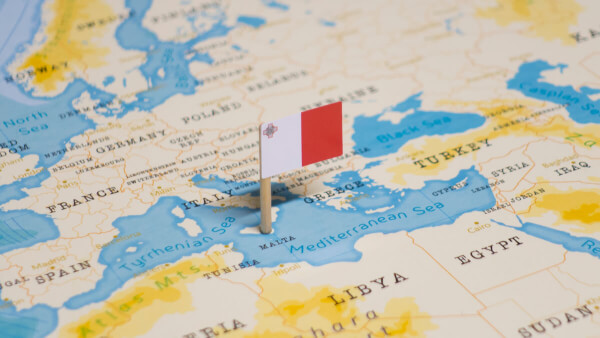
Malta sits in the Mediterranean between Sicily and North Africa. It's welcoming toward foreigners, and its business-friendly policies have made it a hub for international companies, especially in the finance and technology sectors.
Here are some quick facts:
| Capital | Valletta |
|---|---|
| Language | Maltese and English (both official) |
| Population | 548,616¹ |
| Currency | Euro (EUR) |
| Government type | Parliamentary republic |
| Religion | Predominantly Roman Catholic |
| Weather | Hot, dry summers and mild, wet winters—typical Mediterranean climate |
| Tax treaty | Yes |
Malta has several residency programs, but many of them require buying property and making large financial contributions. For example, the Permanent Residence Programme and Global Residence Programme mostly target wealthy investors.
That said, there are also more affordable ways for Americans and other non-EU nationals to move to Malta, including the digital nomad visa and student visa for remote workers and students.
This program gives you permanent residency if you invest in Malta. You'll need to either buy or rent property, plus pay government fees and make donations.
You'll also need to confirm assets of:²
- At least 500,000 EUR with 150,000 EUR in liquid financial assets, or
- 650,000 EUR with at least 75,000 EUR in liquid assets
To qualify, you can either sign a 5-year lease on a rental or buy your own property.
Here's what the costs break down to:
| Expense | Rental route² | Property purchase route² |
|---|---|---|
| Property/rental minimum | 14,000 EUR/year (5-year lease) | 375,000 EUR |
| Administrative fee | 60,000 EUR | 60,000 EUR |
| Contribution fee | 37,000 EUR | 37,000 EUR |
| Charitable donation | 2,000 EUR | 2,000 EUR |
| Translation, apostille, notary | 5,000 EUR | 5,000 EUR |
| Health insurance | 500 EUR | 500 EUR |
If you're going down the property purchase route, you must keep the property for at least 5 years after getting residency. After that, you can sell it and recover part of your investment.²
Your spouse, children of any age, parents, and grandparents can also qualify for permanent residency with your application.
| 💡 Learn more about the Malta Golden Visa. |
|---|
The Global Residence Programme is another popular Malta visa option that requires you to buy or rent property, plus pay administration fees.
Here's what the minimum investment breaks down to:
| Location | Rental (per year)² | Property purchase² |
|---|---|---|
| South Malta or Gozo | 8,750 EUR | 220,000 EUR |
| North or Central Malta | 9,600 EUR | 275,000 EUR |
With all fees, you'll pay a total minimum of 34,150+ EUR if you're renting and 270,200+ EUR if you're buying a property in Malta to qualify for residency.²
This residence permit comes with special tax treatment. You'll pay:
- 15% on foreign income transferred to Malta
- 0% on foreign income not transferred to Malta
- 35% on income earned in Malta
But your minimum annual tax payment has to be at least 15,000 EUR per family.²
Your spouse, children under 25, siblings, parents, and grandparents can also qualify for residency with your application.
The Malta Digital Nomad Visa lets remote workers live in Malta for up to 4 years. You can qualify for this visa option if you work for a foreign company remotely or are a freelancer.²
This visa option is also called the Malta Nomad Residence Permit.
You'll need to show a monthly income of at least 3,500 EUR from sources outside Malta. You must also secure housing, either rented or owned, for the entire duration of your residence permit.²
The permit lasts 12 months at first, and you can renew it 3 times for another year each time.² Your spouse and children can join you, but this visa option doesn't lead to permanent residency or citizenship in Malta.
Eventually, you’ll have to leave or transition into another visa status.
If you're studying in Malta full-time at a university or another accredited program, you can get a student visa for the duration of your studies.
You'll need an acceptance letter from your school, proof of sufficient funds to cover tuition and living expenses, and private health insurance valid in Malta.
You may be able to work part-time on this visa with proper authorization, but there are limits on hours and job types.
Malta has jobs in tech, finance, and gaming, but getting a Malta work visa isn't easy.
Your employer must sponsor your work permit and prove that no EU citizen can do the job. This makes work visas realistic only for highly skilled professionals with rare expertise.
Keep in mind that the Malta Permanent Residence Programme and Global Residence Programme don't let you work automatically. You need separate permission to work in Malta, even after getting residency through these programs.
This program lets retirees from any country live in Malta with favorable tax treatment. To qualify, you must receive at least 75% of your taxable income from a pension.³
You'll also need to buy or rent property in Malta with the following minimums:
| Location | Rental minimum (per year)³ | Purchase minimum³ |
|---|---|---|
| Gozo or South Malta | 8,750 EUR | 220,000 EUR |
| Malta | 9,600 EUR | 275,000 EUR |
You must live in Malta at least 90 days per year (averaged over 5 years) and can't spend more than 183 days annually in any other country.³
Malta will tax your foreign pension income at 15% when you transfer it to Malta, and the minimum tax you have to pay is 7,500 EUR per year, plus 500 EUR for each dependent.³
The Malta retirement program is a great option for Americans who want to enjoy the Mediterranean lifestyle and rich history after decades of hard work.
If you want to qualify for a Maltese passport, Malta grants citizenship to people who make exceptional contributions to the country or humanity.
The Malta Citizenship by Merit program recognizes achievements in fields like science, sports, arts, business, technology, and philanthropy.
The Maltese government doesn't specify the exact requirements, but you'll need to meet at least one of these criteria:⁴
- Provide exceptional service to Malta or humanity through major achievements in your field
- Make notable contributions through investment, philanthropy, or initiatives that create jobs and opportunities
- Possess skills or expertise considered vital to Malta's national priorities and long-term interests
Your family members can also qualify for citizenship with your application.
There used to be a way to obtain citizenship through a financial investment, but the Malta Citizenship by Investment program was abolished in 2025.⁵

Malta is more affordable than many US cities.
Overall, you can expect your living expenses to be about 18% lower. There's an even bigger difference in rent, with Malta's rentals running about 30% cheaper.⁶
A family of four can expect monthly costs of around 2,814 EUR, and a single person needs about 760 EUR monthly, both excluding rent.⁶
That said, your actual living costs in Malta heavily depend on your lifestyle choices. For example, sending your children to a private international school or dining out frequently will naturally push your expenses higher.
Here's what common expenses look like on average:
| Expense | Cost⁶ |
|---|---|
| 1-bedroom apartment (city center) | 1,016 EUR per month |
| 3-bedroom apartment (city center) | 1,712 EUR per month |
| Meal at inexpensive restaurant | 15 EUR |
| Meal for 2, mid-range restaurant (3 courses) | 70 EUR |
| Utilities | 94 EUR per month |
| Mobile phone plan | 23 EUR per month |
| Toyota Corolla (or equivalent new car) | 33,593 EUR |
| International school (annual per child) | 9,403 EUR |
Keep in mind that the purchasing power in Malta is also lower than in the US. The average monthly salary after tax is 1,591 EUR in Malta, compared to 4,254 USD in the US.⁶⁷
If you're earning US income or living off business profits and passive income, Malta's costs will feel quite manageable. But if you're working locally, you'll likely need to budget carefully.
That said, skilled professionals in tech, finance, and gaming often earn competitive salaries that make a comfortable living possible.
You'll need a Maltese bank account to pay rent, set up utilities, and handle daily expenses.
However, most banks won't open accounts for tourists. You'll need a residency status, a work permit, a student visa, or other legal ties to Malta first.
What you need to open an account varies from bank to bank, but common requirements include:
- Valid passport
- Proof of Maltese address (rental contract or utility bill)
- Residency permit or visa
- Proof of income or employment
- Tax identification number from the US
Banks like Bank of Valletta and HSBC Malta are popular with American expats, and it's usually pretty easy to set up your account. But it’s important to be in legal status and have all of your documents in order.
Malta taxes residents on their worldwide income using progressive rates from 0% to 35%.² Just like in the US, tax rates vary based on your filing status (single, married, or parent) and income level.
Malta uses a remittance-based system for non-domiciled residents, meaning you only pay tax on Maltese income or foreign income you bring into Malta.
It's important to remember that Americans living in Malta still have to file US taxes.
The US taxes citizens on worldwide income regardless of where they live, so you have tax obligations in both countries. That said, Malta and the US have a tax treaty that typically prevents double taxation.

Many American expats decide to rent in Malta first, unless they're purchasing property to qualify for residency.
Renting gives you an opportunity to explore different cities and neighborhoods before settling down somewhere permanently. Buying property is a good investment, but it makes more sense after you've lived in Malta and understand which areas suit your needs.
It's common to find apartments through Facebook groups or word of mouth in expat communities. Real estate agents can also help, though they typically charge fees.
Overall, renting in Malta is relatively similar to renting in the US. Just make sure to inspect properties carefully before signing—some older buildings lack modern amenities or proper insulation.
Malta offers both public and private healthcare.
The public system provides free or low-cost care to Maltese citizens and residents who contribute to social security. Public hospitals and clinics handle most medical needs, but wait times for non-emergency care can be pretty long.
Many expats use private healthcare for faster service and more flexibility.
Private health insurance isn't cheap, but it's still accessible for most Americans, with costs ranging from 300 EUR to 600 EUR for basic plans and 1,200 EUR to 2,500 EUR for comprehensive coverage per year.²
You may also consider getting an international health insurance if you're planning to split your time between Malta and another country.
Sliema is one of Malta's most popular expat hubs. It's a coastal town that has modern apartments, waterfront promenades, and plenty of restaurants and cafes. English is widely spoken, and you'll find large international communities here.
Rent costs more than in other parts of Malta, but the convenience and seaside location appeal to many professionals and families.
St. Julian's sits next to Sliema and attracts younger expats working in gaming, tech, and finance companies. The area has a lively nightlife scene, beaches, and plenty of entertainment options. Many international companies base their offices here.
It can feel a little crowded and touristy, especially in the summer, but you’ll have easy access to work and social activities.
Malta's capital city is one of the best places for expats, especially if you want culture, quieter neighborhoods, and proximity to government services. The city is compact and walkable, with museums, theaters, and harbors.
If you're relocating with your family, you can also look at areas just outside Valletta for more space, but still stay close to the capital.
Malta consistently ranks as one of the safest countries in the EU. Violent crime is rare, and you'll likely feel comfortable walking around at any time of day or night.
Petty theft, like pickpocketing, can happen in tourist areas, but it's still uncommon compared to larger European cities. Overall, the country has reliable emergency services, good healthcare services, and stable infrastructure.
Traffic is probably the biggest safety concern—Maltese roads are narrow, and driving can feel chaotic if you're used to American road systems.
Malta welcomes foreigners, especially investors who qualify for programs like the Malta Permanent Residence Programme or Global Residence Programme. You can also relocate as a student, digital nomad, or retiree through other visa options.
However, Americans living in Malta often lose money on international transfers because of high bank fees and poor exchange rates. Even with a Maltese bank account, banks charge markups when converting between USD and EUR.
These costs add up fast when you're paying rent, managing financial assets, or moving money regularly between countries.
Optimizing how you transfer money matters, especially for long-term expats, because seemingly small percentage differences in exchange rates and fees can cost you hundreds or thousands of dollars annually.
| With Wise, you can send up to 1,000,000 USD per wire transaction to 140+ countries, with the mid-market exchange rate and low, transparent fees. |
|---|
Get a Wise Account
in minutes 💰
Sources
Sources checked 01/29/2026
*Please see terms of use and product availability for your region or visit Wise fees and pricing for the most up to date pricing and fee information.
This publication is provided for general information purposes and does not constitute legal, tax or other professional advice from Wise Payments Limited or its subsidiaries and its affiliates, and it is not intended as a substitute for obtaining advice from a financial advisor or any other professional.
We make no representations, warranties or guarantees, whether expressed or implied, that the content in the publication is accurate, complete or up to date.

Everything you need to know about getting a Golden Visa in Malta.
All you need to know about getting a Malta work visa or permit as an American.











