
How to open a bank account in Israel as a foreigner: US guide
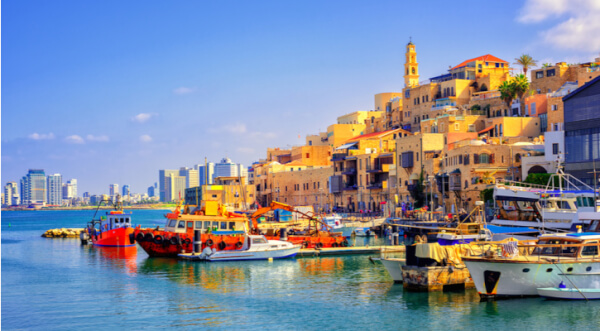
Learn all about opening a bank account in Israel as an American, including costs, requirements, and alternatives.



Moving to Israel from the USA can feel like a big shift, but for many, it’s a personal journey. Israel offers a strong job market, a close-knit social culture, and easy access to beaches, history, and food scenes that punch well above their size.
Before your move, prepare for the essentials. The details you handle now will make settling in much easier. While the region can experience periods of tension, most expats live safely and enjoy everyday life. Staying informed and planning carefully helps you navigate any uncertainties.
We'll also introduce Wise — your international money transfer alternative. Use Wise to send stress-free transfers to over 140 countries - all at the standard mid-market exchange rate.
| Table of contents |
|---|
For someone who used to live in the US, some things in Israel will feel familiar, while others will feel very different. These basics provide context for Americans in Israel before getting into the day-to-day details of living there.
| Capital | Jerusalem |
|---|---|
| Population | 9.5 million¹ |
| Currency | Israeli New Shekel (ILS) |
| Language/s | Hebrew (English is widely spoken in tourist and expat areas) |
| Time zone | Israel Standard Time (UTC+2), daylight saving UTC+3 |
| Government | Parliamentary democracy |
| Healthcare | Universal health care with mandatory public health fund membership; private options available |
| US tax treaty | Yes |

Americans heading to Israel can choose from different options based on the length and purpose of their stay.
Planning your next big trip to Israel? Americans visiting Israel for up to 90 days must apply for an Electronic Travel Authorization (ETA‑IL) before travel.² This replaced informal visa‑free entry starting January 2025.
The ETA‑IL is valid for multiple entries for up to two years or until your passport expires. It allows tourism, short business, or non‑degree study visits. You must apply online before departure, as airlines may deny boarding without a completed application.
Americans who wish to live and work in Israel long-term need a B-1 work visa, accompanied by a job offer from an Israeli employer.
Your employer starts the process by getting approval from the Population and Immigration Authority (PIBA), then you submit your application at the consulate. Once you arrive, you register with the Ministry of Interior to get your entry stamp.
The B-1 visa is typically valid for one year and can be renewed annually for up to five years.³ Certain jobs, like high-tech specialists, may have extra requirements, such as proving your skills or salary.
Students planning to study in Israel for more than 90 days must apply for an A-2 student visa before arrival. This visa covers semester programs, full degrees, and other approved long-term courses at recognized institutions.
To qualify, applicants must provide a letter of acceptance, a valid passport for the entire duration of the study period, proof of sufficient funds for tuition and living expenses, passport photos, and valid health insurance.
The A-2 visa is typically issued for up to one year and can be renewed annually for the duration of the program. It can also be issued with a multiple-entry permit, allowing students to leave Israel for vacation and return without needing to apply for a new visa.⁴
Employment is generally not permitted, except in limited cases tied to academic institutions. Renewals are handled in Israel through the Ministry of Interior.
Volunteering in Israel is usually done with a B-4 volunteer visa, used for placements with approved organizations such as kibbutzim, schools, youth programs, and nonprofit groups.
The visa is typically issued for the duration of the volunteer program, which is often up to one year, and may be extended if the sponsorship continues.
Other options include B-2 visitor visas for longer short-term stays, A-3 visas for clergy, and A-4 visas for dependents of certain visa holders (such as students or clergy). Each has its own eligibility rules and permitted length of stay, depending on the purpose of your visit.
Americans who qualify under Israel’s Law of Return have a clear path to living in Israel, with flexible options along the way. The A-1 temporary residence visa is available to eligible Jews and certain family members, allowing you to live and work in Israel for up to five years while you decide whether citizenship is right for you.⁵
Family reunification options are also available for spouses and dependents of Israeli citizens or long-term residents.

Israel has a vibrant lifestyle that many expats enjoy, but it comes at a higher price than some might expect.
Here’s a look at the cost of living in Israel for some common expenses:
| Expense | Approximate cost (USD)⁶ |
|---|---|
| Meal at an inexpensive restaurant | 25 USD |
| Meal for two at a mid-range restaurant | 93 USD |
| 1-bedroom apartment in the city centre | 1,300 USD |
| 3-bedroom apartment in the city centre | 2,087 USD |
| Basic utilities | 266 USD |
| Internet | 35 USD |
| Monthly public transport pass | 74 USD |
| Fitness club membership | 77 USD |
For a single person, monthly living costs in Israel average 1,226 USD before rent. A family of four typically spends around 4,388 USD per month before rent.
Housing is usually the biggest expense. Other everyday costs, such as groceries, restaurants, and public transportation, are generally comparable to or slightly higher than in the US, but can be managed with proper budgeting.
| 💡 Moving with children? Keep in mind that international schools can be another major expense, as international or private schooling is popular among expats. |
|---|
Opening a bank account in Israel streamlines daily finances, whether you’re paying rent, bills, or receiving income. Most banks require an in-person visit to open an account, especially for expats or new residents.
You’ll typically need:
Popular banks include Bank Hapoalim, Bank Leumi, Discount Bank, Mizrahi-Tefahot, and Bank of Jerusalem. English-speaking staff are common in larger cities.
Americans living in Israel need to consider both Israeli taxes and US tax obligations. Israel taxes its residents on worldwide income, while non-residents pay taxes only on income sourced in Israel. You’re generally considered a tax resident if you spend enough time in the country under Israeli rules.
Meanwhile, the US also taxes its citizens on worldwide income, so you must file a US tax return every year, even if you’re paying taxes in Israel. You may also need to report foreign bank accounts through the Foreign Bank Account Report (FBAR) and Foreign Account Tax Compliance Act (FATCA).
To avoid double taxation, US citizens can utilize the Foreign Earned Income Exclusion (FEIE) or the Foreign Tax Credit (FTC).⁷,⁸ The US–Israel tax treaty also helps reduce overlap.
Because rules can get tricky, consulting a tax professional is a smart move for anyone living in Israel.
Finding accommodation in Israel can be competitive, especially in major cities like Tel Aviv, Jerusalem, and Haifa, where demand and prices are higher. Rental markets move quickly, and landlords typically expect leases with significant upfront payments, so starting your search early helps.
Many Americans start with a short-term rental before committing to a long-term option. This gives you time to explore cities, understand commute options, and compare apartments in person.
For both renting and buying, start by browsing online listings to get a sense of prices and availability.
Popular Israeli property sites include:
- Yad2.co.il – Widely used for rentals and sales
- Homeless.co.il – Listings for apartments and houses
- Anglo-List – Focused on English-speaking expats
- Facebook groups – Local housing communities
Here’s what you can expect to pay for rent in top Israeli cities:
| City | 1 bedroom (city centre) | 3 bedroom (city centre) |
|---|---|---|
| Tel Aviv⁹ | 1,856 USD | 3,424 USD |
| Jerusalem¹⁰ | 1,776 USD | 3,347 USD |
| Haifa¹¹ | 1,060 USD | 1,664 USD |
| Petah Tivka¹² | 1,130 USD | 1,865 USD |
As you can see, rent in Israel varies widely depending on the city. Tel Aviv and Jerusalem are the priciest cities, but places like Haifa, Petah Tikva, or smaller towns can offer more affordable rent without giving up key amenities.
Living outside urban centers can save money, though you may need to consider longer commutes to work or longer travel to access certain services.
After choosing your preferred city and neighborhood, a local real estate agent can show more options and help steer you clear of issues like hidden fees, confusing contracts, or language barriers.
Americans can buy property in Israel without major restrictions. Most residential and commercial real estate is available for purchase, though some restrictions apply to agricultural land or properties near certain security zones.
While the process is generally straightforward, it’s important to work with a licensed real estate agent and a local attorney to navigate contracts, taxes, and registration requirements.
Here’s a look at average property prices per square meter in city center locations:
| City | Buy apartment price (per square meter in a central location) |
|---|---|
| Tel Aviv | 20,220 USD |
| Jerusalem | 18,004 USD |
| Haifa | 8,669 USD |
These property prices show that buying property in Israel, especially in Tel Aviv and Jerusalem, can be quite costly. High demand, limited space, and prime locations drive costs up. Haifa offers a more affordable option without sacrificing urban amenities.
Despite the price tag, this can be a smart long-term investment. The real estate market is stable, and owning a home allows you to put down roots in thriving, historic cities with strong cultural and economic opportunities.

Israel has a universal healthcare system, meaning every resident gets access to essential medical services through one of four nonprofit health funds (Kupot Holim): Clalit, Maccabi, Meuhedet, and Leumit.¹³ This includes doctor visits, hospital care, prescriptions, and preventive services.
Residents pay a health tax through the National Insurance Institute (Bituach Leumi), usually deducted from their salary. Expats with legal residency or work status can register with a Kupat Holim, typically needing an Israeli ID (Teudat Zehut) and proof of address.
| For anyone moving temporarily or visiting Israel, it’s important to have travel or private health insurance. You won’t be able to rely on the Kupot Holim until you become a resident and enroll in one of the funds. |
|---|
Israel has a range of cities that appeal to expats, from dynamic urban centers to coastal hubs with strong communities and job markets.
Here are some of the most popular choices Americans and other newcomers consider when moving to Israel, each with its own character and lifestyle benefits.
Tel Aviv is Israel’s most international city and a magnet for expats, especially young professionals and tech workers. It has a vibrant startup scene, lively nightlife, and easy access to beaches. Public transport and bike lanes make getting around simple, and many services cater to English speakers.
The cost of living and rent tend to be highest here, but the job opportunities and lifestyle perks draw people from around the world.
Jerusalem blends history, culture, and modern urban life. Expats who enjoy cultural depth, museums, and diverse neighborhoods often choose Jerusalem. The city’s international community is robust, offering numerous English-speaking services, schools, and cultural events.
While daily life there can feel more traditional than in Tel Aviv, many expats appreciate its unique character and sense of community.
Haifa is a more affordable coastal city with a relaxed feel and a good mix of urban amenities and nature. It’s known for its beaches, green spaces, and a diverse population. Haifa attracts families and professionals who want city life without the cost pressure of Tel Aviv or Jerusalem.
The tech scene around the city, combined with access to universities, also makes it appealing for long-term expats.
Safety is a main question nowadays for anyone considering a move to Israel. Overall, day‑to‑day life in cities like Tel Aviv, Jerusalem, and Haifa is stable, and most residents go about their routines without issues.
Because of ongoing regional tensions, advisory services note that certain areas near borders and in parts of the West Bank may be riskier, and protests or clashes can occur unexpectedly.¹⁴
Still, most expats find life in Israel comfortable, with well‑managed public spaces, secure neighborhoods, and friendly communities. Local authorities and robust security systems make daily life feel safe.

Moving to Israel from the USA comes with numerous exciting opportunities, and preparation pays off.
Understanding the costs, rental procedures, and local systems helps you settle in confidently. Take the time to research neighborhoods, connect with expat communities, and plan your finances, including banking and tax considerations.
Taking these steps upfront can ease your transition and let you fully enjoy life, work, and experiences in Israel.
| With the Wise account you can have local account details in 10 currencies, including USD, EUR, and GBP — all in one place.* |
|---|
*Eligibility is subject to verification of customers' identity.
Sources
Sources checked 12/19/2025
*Please see terms of use and product availability for your region or visit Wise fees and pricing for the most up to date pricing and fee information.
This publication is provided for general information purposes and does not constitute legal, tax or other professional advice from Wise Payments Limited or its subsidiaries and its affiliates, and it is not intended as a substitute for obtaining advice from a financial advisor or any other professional.
We make no representations, warranties or guarantees, whether expressed or implied, that the content in the publication is accurate, complete or up to date.
Learn all about opening a bank account in Israel as an American, including costs, requirements, and alternatives.
Wondering if you're eligible for Israeli citizenship? Find everything you need to know in this handy guide.











