
When to exercise stock options: US guide
Have a look at a practical guide to when to exercise stock options: tax trade‑offs, timelines, and liquidity events to help you choose the best moment today.



| This publication is provided for general information purposes and does not constitute legal, tax or other professional advice from Wise US Inc. or its affiliates, and it is not intended as a substitute for obtaining business advice from a Certified Public Accountant (CPA) or tax lawyer. |
|---|
As a US citizen, you're subject to American tax laws no matter where you live or work.
But if your family is international (for example, maybe you're married to someone from another country, or you have assets in multiple places), estate planning can get complicated.
Without a solid plan, you could end up paying more in taxes than necessary, or your heirs could receive less than you intended.
This guide covers the key points of international estate planning for US citizens that you should think about, including US taxes, wills and trusts, country-specific laws, and reporting requirements.
We'll also introduce the Wise account, which allows you to send, spend, and receive your money across the globe in over 40 currencies – all at the fair mid-market rate.
| Table of contents |
|---|
The US is one of the very few countries in the world that taxes its citizens on their worldwide assets, even after death. It doesn't matter if you've lived abroad for 20 years — if you're a US citizen, the IRS can tax your entire estate.
For people with straightforward situations, this might not be a big deal. But if your life spans multiple countries, there are many things to think about when it comes to cross-border estate planning.
For example, if you:
- Own property overseas
- Are married to someone who isn't a US citizen
- Have savings in a foreign bank account or have retirement funds in another country
In any of these cases, a standard US estate plan probably won't cover everything you need, and it might not even be legally valid where you live.
Different countries have different rules about who can inherit your assets, how much they'll be taxed, and whether they'll even recognize your US will.
For example, some countries require that a portion of your estate go to certain family members (like your children), no matter what your will says. You may also deal with a country that doesn’t recognize trusts or other things that are common in the US.
Without planning for these differences, your family could face unexpected taxes, legal battles, or delays in receiving their inheritance.
But with good estate planning for international families, you can make sure that your wishes are carried out and that your heirs keep as much as possible.
The US taxes its citizens on everything they own, everywhere in the world.
When you die, the IRS looks at all your assets, including your foreign assets, such as real estate, savings held in a foreign bank, and other investments.
For cross-border families, this means that you might already be subject to estate or inheritance taxes in the country where you live, but on top of that, the US wants its share, too.
| 💡 Learn more about US taxes on foreign income in our full guide. |
|---|
When you own assets in multiple countries, there's a risk that both the US and the foreign country will try to tax the same money. For example, if you own a home in France, both the US and France might want a piece of your estate when you die.
The US has estate tax treaties with 15 countries, including the UK, France, Germany, Canada, and Japan.¹ These treaties help prevent double taxation by clarifying which country gets to tax what and by allowing credits for taxes paid to the other country.
If there's no treaty with your country of residence, you may still be able to claim a foreign tax credit to offset some of the double taxation. But it gets complicated, and you'll likely need professional help to sort it out.
If your spouse isn't a US citizen, the usual estate tax rules don't apply the same way.
Normally, you can leave unlimited assets to a spouse tax-free, but for non-citizen spouses, there's no unlimited marital deduction.
This means that if you die and leave everything to your non-citizen spouse, your estate could owe taxes right away instead of deferring them until your spouse passes.
But luckily, there are ways to plan around this, including a special trust called a QDOT (more on that below).
As a US citizen, you have a combined lifetime exemption on gift and estate taxes that covers both the gifts you give while alive and the assets you leave when you die.
For 2025, this exemption is 13.99 million USD per person. Anything above that gets taxed at a rate as high as 40%. Married couples can combine their exemptions for up to 27.98 million USD.²
In 2026, the exemption increases to 15 million USD per person and 30 million USD for married couples, and will continue to be adjusted for inflation going forward.²
You can also give up to 19,000 USD per person per year (2025) without touching your lifetime exemption at all. This is called the annual gift tax exclusion, and it's a useful way to transfer wealth over time without triggering any taxes.²

Paying for your US taxes or receiving a tax refund can be tricky — the payment options are often slow and costly, and this doesn’t get better when you’re not in the country and/or manage different currencies.
Whether you’re a US expat, a resident alien, or you have a foreign business, Wise can be an excellent option. With a Wise account, you can either pay your taxes from abroad or receive your tax refund easily. And if you manage more than one currency, you’ll save a lot on exchange rate markups and conversion fees.
When you fill out your tax forms, use your Wise USD Account and routing numbers.
| 🎯 You can find them under “Account Details.” This will let you: |
|---|
|
Wise has no subscription fees or minimum balance requirements, and you can set up an account in minutes.**
You can send, receive, hold, and spend your money in multiple currencies, always with the real exchange rate, and with just a small and transparent fee.*
Get a Wise Account
in minutes 🚀
**Eligibility claim is subject to verification of customer’s identity.
If you own property or have significant assets in another country, your US will might not be enough. As a result, many US expats and cross-border families set up separate wills for each country where they have assets.
These are sometimes called "situs wills" because they cover assets in a specific location. The idea is that each will follow the local laws of that country, which can make probate faster and smoother.
However, if the wills aren't carefully coordinated, one could accidentally cancel out the other. This is why it's important to work with lawyers who understand estate planning in all the relevant countries.
Another option is a single international will.
Some countries recognize wills drafted under the Hague Convention, but not every country has signed on, so this doesn't work everywhere.
In the US, trusts let you control how your assets are distributed, avoid probate, and sometimes reduce taxes. But trusts are a common law concept.
Countries with civil law systems, like France, Germany, Spain, Italy, and much of Latin America, don't have the same legal framework for trusts, and some don't recognize them at all.
If you move abroad with an existing US trust, or if your beneficiaries live in a civil law country, the trust might not work as intended. In some cases, it could even make things worse from a tax perspective.
So, make sure to consult with a tax professional or a lawyer to make sure that your trust(s) will be recognized and treated favorably in all the countries involved.
If your spouse isn't a US citizen and you want to leave them a large inheritance, a QDOT can help reduce the tax burden.
Normally, leaving assets to a non-citizen spouse means that the estate tax is due immediately, but a QDOT defers that tax.
Your spouse can receive income from the trust and use the assets during their lifetime, but the estate tax is postponed until the assets pass to your other heirs (usually your children) or until your spouse withdraws principal.
That said, a QDOT has specific requirements. Most importantly, at least one trustee must be a US citizen or US corporation, and the trust must meet certain IRS rules.³
In other words, you'll need a qualified lawyer to set up a trust like this, and it may not be the best option for every family.
In the US, revocable living trusts are popular because they let you keep control of your assets while avoiding probate. You can change them anytime during your life.
Irrevocable trusts are more rigid, and once you set them up, you generally can't take the assets back. But they can offer estate tax benefits because the assets are no longer considered a part of your taxable estate.
For international families, the choice between revocable and irrevocable trusts depends on tax laws in both the US and your country of residence.
An irrevocable trust that saves you from US estate taxes might still trigger a big tax bill overseas, so it's worth getting legal advice for your unique situation.

In the US, you can generally leave your assets to whoever you want. For example, if you want to give everything to your best friend and nothing to your kids, legally, you're free to do that.
But many countries don't have the same laws.
In places like France, Spain, Germany, Italy, and parts of Latin America, laws require that a certain portion of your estate go to your family members, usually your children or spouse.
This is called forced heirship.
In these cases, it won't matter what your will says. If you own property in a country with forced heirship laws, local courts may divide that property according to their rules and not your wishes.
These two terms sound similar, but they mean different things for your taxes.
Residency is where you currently live, and domicile is where you consider your permanent home with no intention of leaving. You can be a resident of one country while being domiciled in another.
Many countries base their estate taxes on domicile instead of residency.
So even if you've lived in the UK for a few years, you might not be considered domiciled there for tax purposes. On the flip side, if you've put down roots and plan to stay, you could become domiciled and subject to that country's estate tax on your worldwide assets.
Each country has its own rules for determining domicile, and some have multiple categories with different tax consequences, so it's worth consulting with a lawyer about this to understand what your status means for your international estate planning.
How you own assets with your spouse can affect what happens when one of you dies.
In community property systems, most assets acquired during the marriage are considered equally owned by both spouses, regardless of whose name is on the account. When one spouse dies, only their half is part of the estate.
Some US states (like California and Texas) follow community property rules. So do several countries, including France, Spain, and Germany.
Other places use common law rules, where ownership depends on whose name is on the title.
If you and your spouse have lived in multiple places or own property in different countries, you might have a mix of community and separate property, and sorting this out is an important part of estate planning for international families.
If the combined value of your foreign bank accounts is over 10,000 USD at any point during the year, you need to file an FBAR.⁴ This includes checking accounts, savings accounts, and any account where you have signature authority (although there are certain exemptions).
You'll need to file FBAR separately from your regular US tax return through the Financial Crimes Enforcement Network (FinCEN). The deadline is April 15, with an automatic extension to October 15.⁴
Make sure to file this form on time to avoid penalties, which can be very steep.
| 💡 Learn more about FBAR filing instructions in our full guide. |
|---|
FATCA is another foreign asset reporting requirement, but it has higher thresholds and covers more than just foreign bank accounts.
If you live abroad and your foreign financial assets exceed **200,000 USD **at the end of the year (or 400,000 USD at any point), you need to file Form 8938.⁵
Living in the US lowers FATCA thresholds to 50,000 USD at year-end or 75,000 USD at any point.⁵
Filing FATCA doesn't mean that you have to pay any additional taxes on your foreign investments. It's just a reporting requirement, but it’s an important one.
| 💡 Learn more about FATCA filing requirements in our full guide. |
|---|
If you receive a gift or inheritance from a foreign person, you may need to report it on Form 3520, even though the US doesn't tax you on it.
The threshold is 100,000 USD in total gifts or bequests from foreign individuals or estates during the year.⁶
Form 3520 is also used to report transactions with foreign trusts. If you're a beneficiary of a foreign trust or have transferred money to one, you'll likely need to file.
International estate planning for US citizens can get pretty complicated, since there are so many inheritance tax laws and general tax implications to keep track of.
If you're a global family, a US expat, or someone who splits time and money between multiple countries, you're probably also dealing with the everyday challenge of moving money internationally.
For example, sending funds to family overseas, paying bills in another currency, or just using your card while traveling all cost you money because banks charge high fees and mark up the exchange rate.
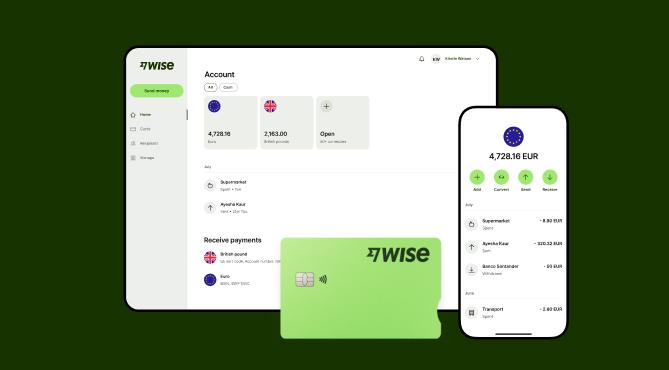
A smart option if you’re sending money overseas: meet Wise.
| With Wise, you can send up to 1,000,000 USD per wire transaction to 140+ countries, with the mid-market exchange rate and low, transparent fees. |
|---|
Over 70% of Wise payments arrive instantly* — and all Wise transfers are deposited directly into your recipient's bank account for convenience.
No ongoing fees, no hidden charges and no hassle — just fast, transparent international transfers that can beat the banks.
🚀Get started with high amount transfers
| See how Wise compares with international bank transfers in our full guide |
|---|
*Transaction speed claimed depends on funds availability, approval by Wise’s proprietary verification system and systems availability of our partners’ banking system, and may not be available for all transactions.
Sources
*Please see terms of use and product availability for your region or visit Wise fees and pricing for the most up to date pricing and fee information.
This publication is provided for general information purposes and does not constitute legal, tax or other professional advice from Wise Payments Limited or its subsidiaries and its affiliates, and it is not intended as a substitute for obtaining advice from a financial advisor or any other professional.
We make no representations, warranties or guarantees, whether expressed or implied, that the content in the publication is accurate, complete or up to date.

Have a look at a practical guide to when to exercise stock options: tax trade‑offs, timelines, and liquidity events to help you choose the best moment today.

Understand how equity vesting works for Americans: common schedules, cliffs, taxes, and what happens when you leave – so you can plan and decide confidently.

Learn how US stock options are taxed – ISOs vs NSOs, exercise vs sale timing, AMT rules, and how to reduce surprises when you cash out.

How does stock option vesting work in the US? Learn vesting schedules, cliffs, taxes, and what happens when you leave a job or change roles.

Read on for a step-by-step guide to selling inherited property abroad, including fees, taxes, and timelines.

Thinking of moving to Spain or Portugal? Find out what tax programs they have for expats to decide which might be better for you.











