
How to Expand Your Business Internationally: A US Guide
Discover actionable steps for US businesses to expand internationally; research markets, plan effectively, and manage finances to achieve global growth.


United States consumers have become accustomed to buying many Japanese products. Unfortunately, US companies that want to import these goods must pay import duties and customs fees to get them to this side of the Pacific Ocean. This article will explain what that means and how it affects your business.


The import tarriff for Japan is now 24%. Imported cars are subject to a higher 25% tariff. From 3 May, foreign automobile parts will also be subject to the 25% tarriff.7
Duties and fees aren’t the only import cost for Japan exports. International trade is expensive. Companies specializing in USA imports are frequently challenged by supply chain disruptions, foreign policy changes, and government regulations that can impede the sale of Japanese products on American soil.
Japan has been an ally and trade partner to the United States for decades. Sadly, deteriorating conditions in Southeast Asia have made it more difficult for Americans to do business there, including tensions with other nations in the South China Sea and Sea of Japan. Be prepared to pay extra if your goods are moving by water.
International trade is tricky and should be handled only by experienced traders. Read the customs guide for the nation you’re doing business in and ask your local consulate about trade regulations. Once that’s done, you can do the tax calculation. To help you with that, the section below breaks down how the import tax from Japan to the USA works.

There’s a difference between importing goods from Japan for personal use and commercial imports. Products for personal use valued under $800 are tax-free under De Minimis rules.1 These rules were put in place to reduce paperwork and encourage international imports from domestic consumers and tourists traveling to and from Japan.
Personal imports and shipments valued at less than $2,500 may be imported as an informal entry. That means US Customs and Border Protection (CBP) will do the paperwork and assign the duty rate and tariff classification number. Items valued over $2,500 are considered commercial freight and require a formal entry.
A formal entry may subject you to additional fees that include customs clearance charges, importer security filing fees, customs bonds, and other charges. You can use the CBP’s HTS Lookup Tool to calculate some of these fees.2 The next section will explain how the import taxes are calculated and which factors affect your import costs.
Import taxes are calculated with a Harmonized System (HS) code that’s used to classify all products coming into the United States. The HS code is a six-digit number that can be found using the US Census Bureau’s Schedule B search engine.3 You can use this tool to calculate the customs value of your item for taxes and insurance.
The next fee you’ll pay on Japan exports is a merchandise processing fee (MPF) assessed by the CBP.4 The minimum MPF for an informal entry is $2.53, while the minimum for a formal entry is $31.67. The maximum MPF for a formal entry is $614.35. This is also known as the “ad valorem” rate, which is 0.3464%.
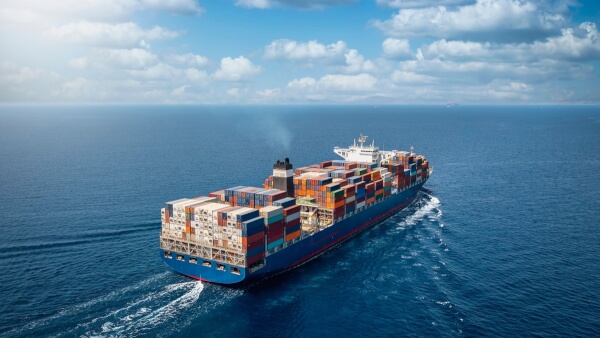
If your USA imports are traveling by ship, you’ll need to pay a harbor maintenance fee (HMF) of 0.125% on the value of your cargo. Add that to your shipping costs. The HMF can be avoided if you ship by air, but that may not be possible or cost-effective for items like automobiles and larger household appliances.

The mode of transportation you use for shipping is one of the more variable costs. Moving products by air is usually the simplest way to do it. Larger items require containerized ocean transport. That can cost you anywhere from $4,500 to $6,500 to ship from Japan to the USA, depending on the size of the container (20-foot or 40-foot).
Prices on shipping by water vary so much because you can choose a full container load (FCL) or a less than container load (LCL). It’s best to have an experienced shipper negotiate these rates because the pricing can be arbitrary and randomly marked up by the shipping company. You’re not protected against that in Japan.
For comparison, moving a 4,600-pound pallet of air cargo from Japan to the United States could cost you $11,000 to $14,000, but it takes just ten hours to get here.5 This is a cost that should be weighed carefully against the personal value or potential profit you can gain from the product you’re importing. International traders typically keep those numbers on hand.
President Trump has vowed to charge higher import tariffs on all US imports coming from nations that have a trade imbalance with America. This will affect the automotive industry the most. Previous tariffs for motorcycles were 2.4%, automobiles are taxed at 2.5%, and trucks are taxed at 25%.6 These are some of the more popular items shipped into the US.
| Latest update (April 10, 2025): The import tarriff for Japan is now 24%. Foreign cars sold in the US are subject to a higher 25% tariff. From 3 May, foreign automobile parts will also be subject to the 25% tarriff.7 |
|---|
You can use the HTS code method described above to calculate duties on other items you import from Japan. The average duty rate for all products imported to the US from Japan is 24%.7 Textiles and apparel are typically taxed at a much higher rate, sometimes as much as 30% or more.
It’s important to note that tariffs and duties could change at any time by executive order of the President of the United States. The US recently increased import tariffs from Canada and Mexico to 25%, only to back off for thirty days to negotiate new trade deals. That’s likely to happen with Japan also, so expect this information to change.
Tariffs and duty rates are beyond your control, but shipping methods and order quantities are not. Using ocean transport instead of air cargo could save you money. You could also take advantage of trade agreements on certain products or apply for duty drawbacks on exported or destroyed goods imported from Japan.
Another way to minimize import tax is to take advantage of the currency exchange rate between the US dollar and the Japanese yen. You can do this with the Wise Currency Converter. When the yen is strong, convert to dollars to pay your import taxes. If it’s weak, convert your dollars to yen.
Setting up rate alerts makes it easy to keep track of the exchange rate and know when to convert funds.
It’s impossible to put fixed prices on goods and materials when you’re trading internationally. Merchants who do it frequently treat every deal separately, taking advantage of reduced pricing when it’s available and weak currencies to increase their buying power. It’s best to contact an import-export consultant if you need help with this.
Wise is not a bank, but a Money Services Business (MSB) provider and a smart alternative to banks. Currency exchange isn’t the only advantage to using Wise. You’ll also be able to make international payments at mid-market rates and with no monthly fees. Wise allows you to hold 40+ currencies and receive payments like a local with major currency details.
Find out more about Wise Business
Wise is designed to manage multiple currencies all in one place. It also connects to accounting software such as QuickBooks to track bill payments, so you can see price fluctuations from order to order. These are valuable features if you’re importing goods or materials from Japan to the United States.
| Read the guide on how to open a Wise Business account |
|---|
| Some key benefits of Wise Business include: |
|---|
|

Sources:
1 De Minimis: A Vital Tax Exemption - National Foreign Trade Council
2 Everything You Need To Know About Import Costs From Japan | USA Customs Clearance
3 Schedule B Search Engine
4 Merchandise Processing Fee | U.S. Customs and Border Protection
5 Everything You Need To Know About Import Costs From Japan | USA Customs Clearance
6 Import Duties From Japan to USA - Complete Guide - Ship4wd
7 New Tarriff rates for Japan
All sources checked March 2025.
*Please see terms of use and product availability for your region or visit Wise fees and pricing for the most up to date pricing and fee information.
This publication is provided for general information purposes and does not constitute legal, tax or other professional advice from Wise Payments Limited or its subsidiaries and its affiliates, and it is not intended as a substitute for obtaining advice from a financial advisor or any other professional.
We make no representations, warranties or guarantees, whether expressed or implied, that the content in the publication is accurate, complete or up to date.
Discover actionable steps for US businesses to expand internationally; research markets, plan effectively, and manage finances to achieve global growth.

Looking for a Philippines Business Visa? Our guide for US citizens covers requirements, fees, and processing steps for a smooth trip.

Learn how to register a US business in Australia. Navigate legal requirements, foreign company registration with ASIC, and the Australian tax system.

Understand Australia's corporate tax rates for 2025-26: a base rate of 25% for small businesses and a standard 30% for all other entities.

Learn how to register a business in India from the US. Our guide details steps, documents, and key financial considerations for aspiring entrepreneurs.

Learn how to get your India business visa. A step-by-step guide for US professionals on requirements, applications, and costs.











